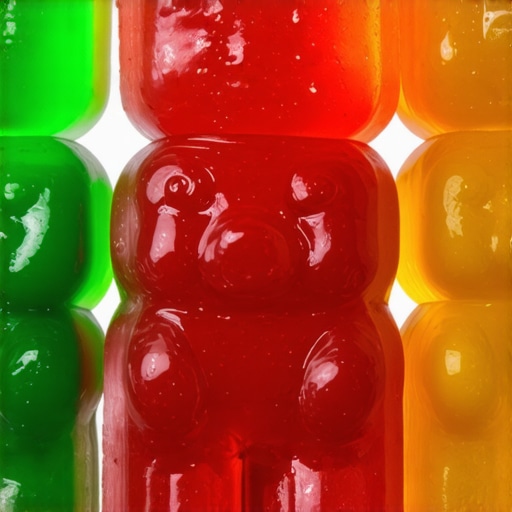
I sat there, staring at the fluorescent lights of the dental office, my stomach doing backflips as the dentist pointed out a dark spot on my seven-year-old’s X-ray. "But we don’t even buy soda!" I practically whispered. I felt like a total failure. I had spent years meticulously choosing organic, dye-free, fruit-juice-sweetened gummy vitamins, thinking I was the poster child for family dentistry focus. Little did I know, I was basically handing my child a daily dose of "tooth glue" that was slowly eating away at her enamel.
Those Cute Little Bears Are Basically Cavity Magnets
The problem isn’t just the sugar content; it’s the consistency. When your child chews a gummy vitamin, that gelatinous goo gets pressed deep into the pits and fissures of their teeth. It’s no coincidence that why your back molars always get the most cavities is a recurring theme in pediatric offices. Unlike a piece of chocolate that melts away or an apple that rinses off with saliva, gummies stay put. They are designed to be "shelf-stable" and "chewy," which in dental terms means "impossible to wash away."I made the mistake of thinking that because they were "vitamins," they were somehow exempt from the rules of oral hygiene. I’d give them to her right after breakfast, or worse, right before bed if we forgot. According to the American Academy of Pediatrics, frequent consumption of sticky, sugar-containing foods is a primary driver of tooth decay because it provides a constant feast for bacteria. By the time we caught it, her molar needed help. If you’ve ever wondered how a small chip can lead to a massive tooth crack, imagine what months of acid-producing bacteria can do to soft, young enamel.[image_placeholder]
Wait, aren’t they better than no vitamins at all?
This is exactly what I asked my dentist while trying to defend my parenting choices. We want our kids to be healthy, right? But here is the kicker: most kids with a balanced diet don’t even need a daily multivitamin. We are often sacrificing their oral health routine for a nutritional supplement that mostly ends up being expensive urine anyway. If you really need to supplement, there are way better options that won’t lead to a surprise professional deep cleaning or, heaven forbid, a filling.I’m curious—have you ever found yourself in that dental chair, completely blindsided by a cavity despite your best efforts? It’s a frustrating spot to be in, but it’s the exact reason we need to rethink the "healthy" labels on our kids’ snacks and supplements. Let’s look at what’s actually happening to that enamel once the gummy is gone.
Stop Treating Vitamins Like Healthy Snacks
Imagine your child’s tooth as a microscopic landscape of canyons and crevices. When they chew a gummy, it’s like pouring hot asphalt into those canyons. It hardens, sticks, and refuses to move. This is one of the 5-dental-habits-that-are-actually-ruining-your-enamel. Instead of a quick treat, you’re creating a 24-hour buffet for the Streptococcus mutans bacteria. Every time they eat sugar, the bacteria produce acid for about twenty minutes. Because gummies stick, that ‘acid attack’ can last for hours. To fix this, we have to stop viewing these supplements as ‘health food’ and start viewing them as candy with benefits. The first thing I did after that dental appointment was audit our pantry. If it sticks to your finger, it’s going to stick to the enamel. I found three different brands of ‘organic’ gummies that were all basically corn syrup with a sprinkling of Vitamin C.
Swap the Stickiness for Dental-Safe Alternatives
You don’t have to give up on supplements entirely, but you do need to change the delivery method. My dentist recommended switching to sugar-free drops or even a powder that can be stirred into a morning smoothie. If your child is old enough to swallow a pill, that’s the gold standard because it bypasses the teeth entirely. When we made the switch, I looked for the best snacks for kids that won’t cause instant cavities to replace the ‘treat’ aspect of the vitamin. Sliced peppers or cheese sticks became our go-to. I remember the first morning I tried a liquid vitamin supplement; I spilled the neon-orange liquid everywhere. It was a mess, but as I scrubbed the counter, I knew it was better than scrubbing decay off a molar later. This switch is a small but vital part of any family dentistry focus because it prevents the ‘sugar bath’ children endure daily.
Timing is Everything When Sugar is Involved
If you absolutely must use gummies—maybe because of sensory issues or a very stubborn toddler—never, ever give them at night. Saliva production drops significantly while we sleep, which is our body’s natural way of rinsing the mouth. Without that saliva, that ‘tooth glue’ sits there undisturbed for twelve hours, boring holes into the protective layer. Incorporating them into an oral health routine means giving them right before a main meal. The increased saliva from eating other foods helps neutralize the acids. Following up with teeth-cleaning secrets like a quick water rinse or a xylitol-based wipe can also help mitigate the damage. I’ve even started having my daughter drink water immediately after her ‘vitamin time’ to act like a mini-power wash for her molars.
How to Manage the Damage When a Cavity Hits
Sometimes, despite our best efforts, the damage is already done. For my daughter, the decay had progressed far enough that a simple filling wasn’t going to cut it. We had to talk about understanding the role of crowns in modern smile makeovers, even for a baby tooth. People often ask me why we’d crown a tooth that’s going to fall out anyway. The truth is, those baby teeth act as placeholders. If they rot away early, the adult teeth can come in crooked or impacted. We also discussed the truth about fluoride varnish for young children as a way to harden the remaining enamel. It’s not about over-treating; it’s about preserving the foundation of their future smile and preventing the need for a professional deep cleaning later in life.
But even when we step up our game with restorative work, there is a dangerous nuance that most patients—and even some parents—completely overlook. Let’s dig deeper into the ‘armor’ myth. Most of us view a dental restoration as a permanent shield, a suit of metal or porcelain that makes the tooth underneath invincible to the gummy vitamins of the world. However, the contrarian truth is that a crown actually creates a new, high-maintenance ‘seam’ in the mouth that requires more attention than a natural tooth ever did.
The Invisible Trap of the Crown Margin
This seam, known as the margin, is the precise line where the porcelain meets your natural tooth structure. Bacteria don’t need a wide-open door to cause trouble; they just need a microscopic ledge. If you have ever wondered how to fix the gap between your gum and your crown, you are actually identifying the primary failure point of most dental work. When plaque accumulates at this margin, it can cause ‘recurrent decay’—a cavity that forms underneath the expensive crown where you can’t see it or feel it until it’s too late. It’s one of those oral health tips every family should follow in 2025: a crown is only as strong as the gum line supporting it.
The ‘Oops’ Factor of Abrasive Toothpastes
Here is a common trap I see: parents who switch to ‘extra-whitening’ or high-abrasive charcoal toothpastes to keep the rest of their teeth as bright as their new porcelain crown. This is a massive mistake. Abrasive particles can micro-scratch the protective glaze of the porcelain. Once that glaze is compromised, the crown becomes a magnet for the very stains and biofilm you are trying to avoid. Following maintaining your dental crowns dos and donts for best results means using a non-abrasive gel to preserve that smooth finish. If you don’t, you might eventually find yourself wondering why your new crown smells and how to fix it, which is often a sign of trapped bacteria in those micro-scratches.
Can a Crown Fail if the Tooth Underneath is Still Healthy?
Absolutely. A study published in the Journal of Prosthodontic Research highlights that the longevity of a restoration depends more on the biological environment of the margin than the material of the crown itself. Even if the tooth underneath was perfectly prepped, a lack of systemic care can lead to gum recession, exposing the root and inviting decay. This is why the impact of regular teeth cleaning on overall oral wellness cannot be overstated. It’s not just about a pretty smile; it’s about managing the inflammatory response that threatens the very foundation of your dental investments. To get the best outcome, you need expert advice on crowns and teeth cleaning for lasting results that focuses on subgingival health—cleaning the areas your toothbrush simply can’t reach. Have you ever fallen into the ‘set it and forget it’ trap with a crown or filling? Let me know in the comments.
Stop Guessing if You Cleared the Crown Margin
The traditional C-shape flossing technique is a gold standard for natural teeth, but once you have a crown, the geometry of your mouth changes. I personally switched to using a cordless water flosser twice a day because manual string often glides right over the ‘ledge’ where the porcelain meets the tooth. This pulse action is the only thing that effectively dislodges the microscopic food particles that lead to that dreaded ‘old food’ scent. If you are struggling with tight gaps, learning the proper way to use interdental brushes for best results can be a total game-changer. These tiny brushes reach the concave areas of your molars that a flat piece of string simply cannot touch.
How do I keep my dental work from failing after five years?
Maintenance isn’t just about what you do at home; it’s about the professional ‘reset’ you get every six months. I used to think of a cleaning as a simple polish, but now I view it as an audit of my investment. To ensure longevity, you need the secrets to making your professional cleaning last longer, which includes using a pH-balanced mouthwash to keep your saliva from becoming too acidic. When your mouth stays in an alkaline state, the minerals in your saliva actually help harden the area around the crown margin rather than letting it soften and decay. This is one of the most overlooked maintaining your dental crowns dos and donts for best results that I wish I knew a decade ago.
The New Standard in Biofilm Management
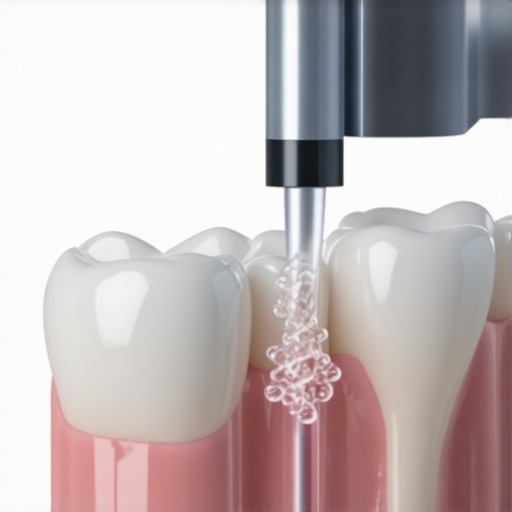
I recently learned about a protocol called Guided Biofilm Therapy (GBT). Unlike the old-school ‘scrape and poke’ method, GBT uses a warmed, pressurized spray of erythritol powder to gently remove every trace of bacteria without scratching your expensive porcelain. According to the Swiss Dental Academy, this method is significantly less abrasive on dental hardware than traditional ultrasonic scaling. When you combine this with expert advice on crowns and teeth cleaning for lasting results, you’re not just cleaning; you’re preserving the integrity of the bond. If you’ve noticed a funky smell near a restoration, it’s time to learn how to stop your crown from smelling like old food by upgrading your toolkit to include a non-alcoholic, antimicrobial rinse.
Your Next Crown Might Be Printed in Thirty Minutes
Looking ahead, the future of family dentistry focus is moving toward near-instant gratification and incredible precision. We are seeing a massive shift toward AI-driven CAD/CAM technology where a crown is 3D-printed or milled right in the office. This means no more messy impressions and no more ‘temporary’ crowns that pop off at dinner. This trend is especially important for the back of the mouth, which is why zirconia crowns are often better for back molars—they are virtually indestructible. I predict that within the next few years, we will all have digital ‘mouth maps’ stored in the cloud, allowing dentists to spot a failing margin long before it ever becomes a cavity. For now, your best move is to be proactive. Try this today: Run a piece of floss around your crown and smell it; if there’s an odor, you aren’t reaching the margin, and it’s time to switch to an interdental brush or water flosser immediately.
Three Truths That Changed My Family’s Dental Health Forever
After that first difficult appointment, I realized that ‘healthy’ is often a marketing term rather than a medical one. I learned that my daughter’s enamel was softer and more vulnerable than I thought, and that we needed to stop relying on luck. One major lightbulb moment was discovering the truth about why your gums bleed only when you floss; it isn’t a sign to stop, but a signal that the crown margin needs even more attention. Another big realization was that a crown isn’t a ‘set it and forget it’ solution; it’s more like a high-performance engine that requires specific fuel and maintenance to keep running. Finally, I accepted that we aren’t failures for needing restorations; we are just evolving our approach to the impact of regular teeth cleaning on overall oral wellness.
[image_placeholder]
My Non-Negotiable Tools for a Lifetime of Healthy Smiles
I’ve trimmed our routine down to the essentials that actually work. First, I recommend a cordless water flosser for anyone with a crown or tight spacing; it reaches the depths of the gum line where bacteria hide. Second, I’ve started using the secrets to making your professional cleaning last longer by incorporating xylitol mints after meals, which helps balance the mouth’s pH levels. Lastly, I always look for a soft-bristled electric toothbrush to avoid the trap where why hard brushing actually makes your teeth look darker by wearing down the very enamel we are trying to save.
Take the First Step Toward a Cavity-Free Future
Changing your family’s dental trajectory doesn’t happen overnight, but it does start with a single choice—like trading that gummy vitamin for a sugar-free drop. As you refine your own family dentistry focus, remember that consistency beats perfection every time. You have the power to protect those little smiles and your own dental investments by simply staying proactive and informed. Don’t wait for a toothache to make a move; start building these habits today and watch how your confidence grows along with your dental health. Have you ever discovered a ‘healthy’ habit was actually hurting your teeth? Let me know in the comments!