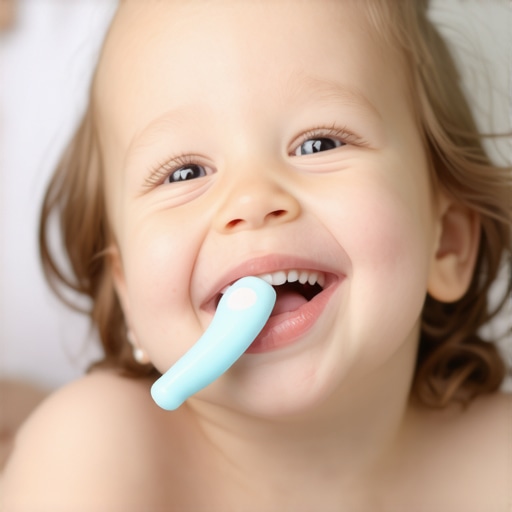
I will never forget the morning my three-year-old, Leo, looked up at me after breakfast and let out a yawn that could have wilted a houseplant. It wasn’t just the smell; it was that thick, milky-white coating on his tongue that looked like he’d been licking a chalkboard. Being the over-eager, dental-conscious parent I am, I grabbed a soft-bristled brush and went for it. Two seconds later, Leo was gagging, tears were welling up in his eyes, and I felt like the world’s worst dad. It was a visceral failure. I realized then that oral health tips every family should follow in 2025 don’t always account for the sensitive anatomy of a tiny human who doesn’t understand why you’re poking their throat. That gag reflex is no joke, and if you trigger it once, your chance of getting back in there for a second try is basically zero. Today, I am going to share exactly how I moved past that traumatic morning to develop a routine that is fast, effective, and—most importantly—vomit-free.
Stop the Morning Battle at the Bathroom Sink
We often focus so much on those first few teeth that we completely ignore the muscular carpet of bacteria sitting right in the middle of their mouths. If you’ve noticed that the real reason your tongue turns white even after brushing is usually a buildup of biofilm and food debris, imagine how much worse it is for a toddler living on a diet of milk and fruit pouches. My mistake was simple but common: I treated his tongue like a kitchen floor that needed scrubbing. In reality, a toddler’s gag reflex is positioned much further forward on the tongue than an adult’s. This means even a gentle touch near the middle of the tongue can feel like a full-blown throat invasion to them. By shifting our approach from “scrubbing” to “sweeping” and using a few psychological tricks, we can maintain a healthy mouth without the drama. This is a core part of our family dentistry focus building a lifetime of healthy smiles.
Does my kid actually need their tongue cleaned this early?
I get the skepticism; I really do. It feels like one more chore in an already exhausted day filled with tantrums and lost socks. You might wonder if it’s actually worth the struggle when they are just going to lose these teeth anyway. However, oral bacteria are opportunistic and don’t wait for adult teeth to arrive to start causing trouble. According to researchers at the American Academy of Pediatric Dentistry, the tongue is the primary reservoir for mouth bacteria that can lead to early childhood caries. Beyond just the “yuck factor” of bad breath, keeping that surface clean helps prevent the issues we discuss in our oral health routine strengthening your smile every day. It’s about more than just fresh breath; it’s about making sure their primary teeth have a clean, balanced environment to live in. Have you ever had your little one nearly lose their breakfast because you brushed a fraction of an inch too far back? Tell me your bathroom battle stories—I promise I’ve been there too, and I’ve learned the hard way so you don’t have to.
Pick the Right Tool for Small Mouths
The first mistake I made was using a standard nylon toothbrush. To a toddler, that feels like a giant, scratchy broom. If you want to keep the peace, you need a tool that is non-threatening. I switched to a small, silicone finger brush—the kind with the tiny nubs. This change is one of the most underrated teeth cleaning secrets effective home practices for family dental health. Silicone is softer on their delicate taste buds and far less likely to cause irritation if they suddenly jerk their head. I remember the first time I tried the silicone brush with Leo; he actually let me keep it in his mouth for more than five seconds because it felt more like a gum massage than a medical procedure. If your child is a bit older, a dedicated plastic tongue scraper with a very low profile can work, but you have to be careful. You might wonder why your breath smells bad even after using a tongue scraper, and the answer is usually technique or poor tool choice—the same applies to kids. #IMAGE_PLACE_HOLDER_B#
The Magic of the Front-to-Back Sweep
Once you have the tool, the technique is everything. Forget the circular scrubbing motion you use on teeth. For a toddler’s tongue, you want a single, gentle sweep from the back to the front. But here is the secret: start much further forward than you think. Since their gag reflex is so sensitive, I start by cleaning just the front third of the tongue for a few days. Once they are used to that sensation, I move back another millimeter. This gradual progression is a cornerstone of our the impact of regular teeth cleaning on overall oral wellness. When I finally reached the ‘danger zone’ near the middle of Leo’s tongue, he didn’t even flinch because we had built up that tolerance over a week of ‘practice’ sweeps.
Stop the Gag Reflex Before It Starts
The physical act of cleaning is only half the battle; the other half is positioning. Never try to clean their tongue while they are lying flat on their back. This is a recipe for a gagging disaster as saliva and any residual paste slide toward the throat. Instead, have them sit upright or lean slightly forward. This puts them in control of their own swallowing reflex. While you are at it, make sure they aren’t trying to swallow the cleaning agent. Learning how to get your child to stop swallowing their toothpaste is a vital step here, as the taste or texture of the paste often triggers the urge to gag or gulp. I found that using just a smear of water or a tiny amount of fruit-flavored gel made the ‘sweep’ much smoother.
Turn the Routine Into a Mimicry Game
Toddlers are hardwired to copy everything you do, which is why I started cleaning my own tongue right in front of him. I make a big show of it—sticking my tongue out as far as it goes and making a silly ‘aaaah’ sound. This isn’t just for laughs; it actually flattens the tongue, making the surface easier to clean and less likely to bunch up against the brush. Even though our adult mouths might eventually require more complex care, like expert advice on crowns and teeth cleaning for lasting results, the habit starts with these simple, playful moments. Last month, Leo actually grabbed his own little brush and tried to ‘sweep’ his tongue himself while looking in the mirror. It was messy, and he mostly just licked the silicone, but the fear was gone. That’s the real win in any oral health routine strengthening your smile every day.While we’re teaching our kids the basics of the bathroom sink, many of us adults are secretly falling for a massive dental myth: the idea that once a tooth is capped with a crown, it is basically indestructible. I used to think of my back molar crown as a sort of ‘super-tooth’ that didn’t need the same finessed care as my natural enamel. This is a dangerous trap. In reality, the most critical part of your oral health routine involves the ‘margin’—the microscopic line where the crown meets your gum. If you aren’t meticulous, bacteria set up camp there like it’s a five-star hotel. This is why expert advice on crowns and teeth cleaning for lasting results emphasizes the gum line more than the porcelain surface itself. Have you ever assumed a crown meant you could slack off on that specific tooth? Let me know in the comments—I definitely did until my dentist gave me a reality check.
Why do my gums still bleed around a perfectly fitted crown?
It’s a sophisticated question that points to a nuance most people miss. You might think you’re being thorough, but you could be falling victim to the ‘halo effect’—cleaning the visible parts of the tooth while neglecting the sulcus, the tiny pocket between the gum and the crown. A study published in the Journal of Prosthodontics highlights that secondary caries at the restorative margin are a leading cause of crown failure, often because patients assume the porcelain is immune to decay. To combat this, caring for crowns essential tips for longevity and shine suggests using a specific ‘wiggle’ technique with your brush to ensure bristles actually reach under the margin. If you’ve noticed why your gums recede even if you brush twice a day, it might be that you’re applying too much horizontal pressure, which is particularly destructive around delicate dental work. #IMAGE_PLACE_HOLDER_C# One major ‘oops’ factor I see often is the use of high-abrasion toothpastes. Many ‘extra whitening’ or charcoal-based products are effectively like liquid sandpaper. While they might scrub away surface stains, they can create micro-scratches on the surface of your porcelain, making it look dull over time and actually attracting more plaque. This is one of the more overlooked teeth cleaning secrets effective home practices for family dental health: stick to low-RDA (Relative Dentin Abrasivity) pastes. If you aren’t sure, check if your paste feels ‘gritty’ between your fingers—if it does, it’s likely too harsh for your crowns. Following maintaining your dental crowns dos and donts for best results means prioritizing gentle chemistry over brute force scrubbing. Remember, why hard brushing actually makes your teeth look darker is a lesson usually learned the expensive way. Let’s make sure we’re protecting our family’s smiles with precision, not just pressure.Moving from the ‘how’ to the ‘what’ is the final piece of the puzzle. You can have the best technique in the world, but if you’re using tools that aren’t designed for the modern mouth, you’re essentially trying to perform surgery with a spoon. For our family, the real shift happened when we moved away from the one-size-fits-all approach and started looking at our bathroom counter as a specialized toolkit. Whether it’s maintaining Leo’s baby teeth or protecting the investment I made in my molars, the gear matters just as much as the habit.
Why I Swapped String Floss for Tiny Brushes
If you have crowns or tight spacing, traditional string floss can often feel like it’s doing more harm than good—especially when it shreds and gets stuck. I’ve found that the proper way to use interdental brushes for best results is a total game-changer for the health of my gums. These tiny, mascara-wand-like brushes can get into the nooks and crannies that string simply skips over. The Cochrane Database of Systematic Reviews has noted that interdental brushes are significantly more effective at plaque removal than flossing alone, particularly for people with existing dental restorations. I personally keep three different sizes on hand: a larger one for the gaps in my lower teeth and a micro-sized one for the tight margins around my crowns. This helps me avoid that panicked feeling of how to keep your dental crown from popping off while chewing, because I know the foundation is clean and inflammation-free.
How do I maintain my dental work over time?
Consistency is the boring but honest answer, but the secret is in the ‘reset’ provided by your hygienist. No matter how good your home routine is, minerals in your saliva will eventually create tartar that you cannot brush away. This is where how a professional scale and polish brightens your smile becomes your best friend. It’s not just a cleaning; it’s a structural inspection. I’ve learned that the secrets to making your professional cleaning last longer include using a pH-balanced mouthwash and avoiding snacking on sticky carbs right before bed. If you’re worried about why your teeth feel brittle and prone to chipping, it might actually be a sign that your bite needs a minor adjustment, something your dentist can spot during these routine visits. #IMAGE_PLACE_HOLDER_D#
The Future of Your Bathroom Counter
Looking ahead, I predict we are going to see a massive shift toward bio-active dental products. We’re already seeing toothpastes that don’t just clean, but actually ‘re-mineralize’ the surface by mimicking natural enamel. In the next few years, I expect smart-brushes with integrated pH sensors to become the norm, telling you exactly which side of your mouth is too acidic after a cup of coffee. This level of data will make understanding the role of crowns in modern smile makeovers even easier, as we’ll be able to prevent the decay that leads to them in the first place. Before your next appointment, remember the one thing you must do before your next dental cleaning: track your sensitivity for a week. It gives your dentist a roadmap of exactly where to look. I challenge you to grab a pack of interdental brushes this week and try them on just your back molars—you might be shocked at what your regular brush has been leaving behind.
What Years of Toddler Tantrums Taught Me About Real Life Care
I spent years thinking I had to be perfect, but I eventually realized that trust is the most important tool in any parent’s kit. If I pushed too hard and triggered that gag reflex, I didn’t just lose that morning’s cleaning; I lost a week of cooperation. This taught me that oral health tips every family should follow in 2025 are really about patience and small wins rather than brute force. I also learned that a dental crown is a second chance, not an invincible shield, and treating it with respect is the only way to avoid more time in the chair. Finally, I discovered that the most common cause of oral discomfort is often over-scrubbing, which can lead to unnecessary sensitivity and gum irritation.
The Gear That Actually Lives on My Bathroom Counter
I’ve narrowed my toolkit down to the essentials that actually work for a busy household. For the kids, a high-quality silicone finger brush is non-negotiable for building comfort before they transition to a standard brush. On the adult side, I prioritize a low-abrasion toothpaste because I know how to keep your porcelain crown from staining over time starts with protecting the finish from micro-scratches. I also keep a variety of interdental brushes on hand as they are far more effective than string for cleaning the tight gaps where plaque loves to hide. Lastly, a simple pH-balanced rinse is my secret weapon after coffee to keep the environment in my mouth neutral and healthy throughout the day.
Start Your New Drama-Free Morning Routine Tonight
You don’t have to change everything at once to see a massive difference in your family’s oral health. Start by making tonight’s routine just five percent more gentle, whether that’s a shorter sweep for your toddler or a lighter touch with your own brush. A solid family dentistry focus building a lifetime of healthy smiles is built one tiny habit at a time, not through a single hour of intense scrubbing. If you’ve been worried about the hidden reason your gums still throb after flossing, remember that consistency and gentleness will always beat pressure in the long run. Take the win today, no matter how small it feels. Have you ever struggled with a toddler who treats a toothbrush like a sworn enemy? Let me know your best distraction techniques below!