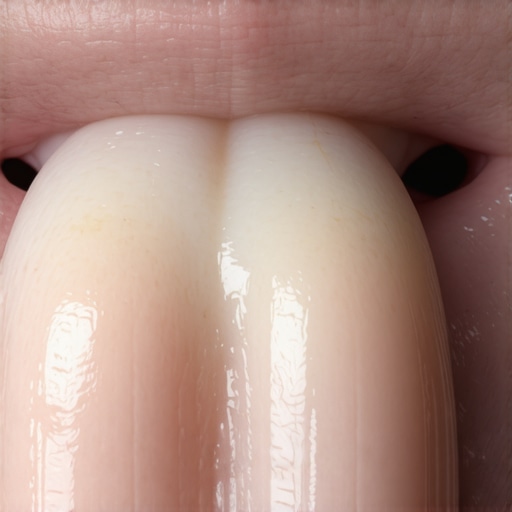
I will never forget the morning of my sister’s wedding; I was the best man, my suit was sharp, but when I looked in the mirror, my tongue looked like I had just licked a chalky white donut. I spent ten minutes scrubbing it until my taste buds felt raw, yet that stubborn, ghostly film refused to budge. It was visceral, frustrating, and honestly, a bit embarrassing. If you have ever felt like you are losing a secret battle against a white coating despite a rigorous oral health routine, you are definitely not alone. I used to think I just wasn’t brushing hard enough, which was my first big mistake—I ended up irritating my mouth without solving the root cause. Today, I am going to show you exactly why that film happens and how to actually clear it up for good. Have you ever felt that sinking feeling when your tongue stays white no matter how much effort you put into your morning routine?
Why Your Tongue Still Looks Like It Is Covered in Frost
The white stuff you see isn’t just ‘old food’—it is usually a buildup of bacteria, debris, and dead cells trapped between tiny bumps on your tongue called papillae. When these papillae get inflamed, they trap everything like a shag carpet. I learned the hard way that simply cleaning your teeth isn’t enough if you are ignoring the biological environment of your mouth. In fact, according to the Mayo Clinic, a white tongue can sometimes indicate oral thrush, a yeast overgrowth that no amount of standard brushing will fix. This is often why your breath smells bad even after using a tongue scraper or various mouthwashes. Understanding the ‘why’ is the first step toward a pink, healthy tongue.
Is this white film actually a sign of a bigger health problem?
It is easy to get caught up in the fear that a white tongue means something is terribly wrong. While it is usually just a sign of dehydration or mouth breathing, it can also be a signal for your dentist to check for leukoplakia or other issues. This is exactly why your dentist checks your tongue for spots and bumps during a regular family dentistry focus visit. My early mistake was assuming it was just ‘dirt,’ when in reality, my mouth was crying out for better hydration and a different approach to bacterial balance. We are going to dive into the specific habits that flip the switch from a white coating to a clean mouth.
Flood Your Mouth to Wash Away the Film
Think of your saliva as a natural pressure washer. When you are dehydrated, that washer shuts off, and your tongue becomes a stagnant pond where bacteria thrive. This is exactly why your mouth feels like sandpaper every morning. To fix this, you cannot just chug a glass of water and call it a day; you need consistent hydration to keep your saliva thin and flowing. When you are sick, for instance, you might notice why your saliva turns thick and sticky during a cold, which makes it even easier for debris to glue itself to your papillae. I started carrying a 32-ounce bottle everywhere, and within four days, the ‘frosty’ look on my tongue began to recede because my mouth finally had the fluid it needed to self-clean.
Stop Breathing Through Your Mouth
If you wake up with a white tongue, you might be a mouth-breather. This habit dries out the oral cavity instantly, killing off the good bacteria that keep the white film at bay. It is a subtle shift, but focusing on nasal breathing—especially at night—is one of those oral health tips every family should follow in 2025 to prevent chronic bacterial overgrowth.
Ditch the Brush for a Real Scraper
For years, I used my toothbrush to scrub my tongue. It felt like I was doing something, but I was actually just moving the bacteria around, pushing it deeper into the ‘shag carpet’ of my tongue. The breakthrough happened when I bought a dedicated stainless steel tongue scraper. The first time I used it, I was horrified—and fascinated—by the amount of opaque gunk that came off in one swipe. It was like finally using a squeegee on a foggy window instead of just rubbing it with a dry cloth.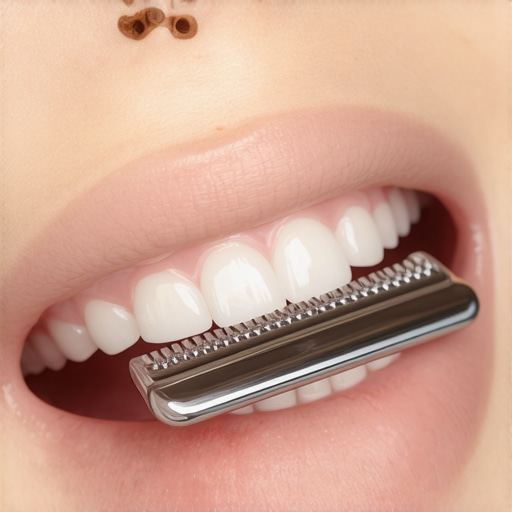
The Simple Switch That Stops Morning Breath for Good
If you want to see immediate results, use the scraper from the back of the tongue to the front, rinsing it after every single stroke. This is the simple switch that stops morning breath for good because it physically removes the sulfur-producing compounds that a brush simply cannot reach. Do not press so hard that it hurts; the goal is to glide, not excavate.
Rebalance Your Internal Garden
Once the physical debris is gone, you have to address the microscopic environment. Your mouth is like a garden; if you only pull the weeds but don’t plant any flowers, the weeds (white film) will just come back. This involves looking at the impact of regular teeth cleaning on overall oral wellness beyond just avoiding cavities. I began incorporating fermented foods and a specific oral probiotic into my oral health routine strengthening your smile every day. By introducing ‘good’ bacteria, you create a competitive environment where the film-producing microbes can’t get a foothold. I noticed that after a week of this ‘internal gardening,’ the white film didn’t just disappear—it stayed away, even after I enjoyed a cup of coffee or a late-night snack.Most people assume that if their tongue is white, they need to ‘kill’ the germs with the most aggressive chemicals possible. I fell into this trap too, reaching for the strongest, most medicinal-tasting mouthwash I could find. But here is the contrarian truth: that burning sensation isn’t the ‘clean’ feeling you think it is. In fact, many people find why your gums sting when you use alcohol-based mouthwash is actually the sound of your mouth’s protective barrier being stripped away. When you use harsh alcohol-based rinses, you aren’t just killing the ‘bad’ bacteria; you are nuking the entire ecosystem, which often allows the ‘white film’ microbes to repopulate even faster in a dry, damaged environment. This creates a cycle of dependency where your tongue looks worse the more you try to sanitize it. The ‘Oops’ factor here is something I call ‘The Over-Sanitization Cycle.’ To break this, you need to understand the impact of regular teeth cleaning on overall oral wellness—it is about balance, not annihilation. According to a study in the Journal of Oral Microbiology, oral biofilms are incredibly resilient and can actually adapt to chemical rinses if the natural microbial competition is removed. This is why a gentle, hydration-first approach consistently outperforms a ‘search and destroy’ mission.
Does that stubborn white coating stick to your dental crowns differently?
Advanced patients often ask me if their expensive dental restorations play a role in this persistent film. The reality is that if you have crowns or bridges, they can act as a secondary ‘anchor’ for bacteria if your oral environment is too acidic or dry. Getting expert advice on crowns and teeth cleaning for lasting results is vital because the margin where the crown meets your gum is a prime real estate spot for the same bacteria that coat your tongue. If your tongue is chronically white, your restorations are likely under a constant bacterial assault. This is also the reason your coffee habit is ruining your crowns’ sealant; the acidity creates the perfect environment for both staining and biofilm growth.  Another massive mistake is the ‘harder is better’ philosophy. I used to think that if I could just scrub hard enough with a stiff toothbrush, the film would vanish. But why your dentist wants you to stop using hard bristles is because you are likely causing microscopic abrasions on your tongue’s surface. These tiny cuts are essentially ‘potholes’ where bacteria can hide and thrive, shielded from your scraper. You aren’t cleaning; you are building a better fortress for the film. Instead, focus on a family dentistry focus that prioritizes soft tools and consistent, gentle maintenance. Have you ever fallen into this trap of over-cleaning only to find the problem gets worse? Let me know in the comments below, and let’s figure out how to reset your mouth’s natural balance together.
Flush Away the Gunk Where Your Brush Can’t Reach
If you are truly serious about eliminating that persistent white film, you have to look beyond the surface of your tongue. I personally swear by a cordless water flosser with a specialized tip for my dental work. For anyone with restorations, caring for crowns essential tips for longevity and shine often start with high-pressure irrigation. This tool doesn’t just clear out food; it disrupts the sticky biofilm that begins to migrate from your gum line onto your tongue every night. I found that by using lukewarm water mixed with a tiny drop of xylitol, the bacteria had a much harder time sticking to my enamel and my tongue’s papillae. This isn’t just about vanity; it is about protecting your investment. If you ignore the deep-cleaning aspect, you might eventually wonder the reason your crown feels loose when you wake up, which is usually a sign of underlying bacterial erosion or night-time grinding. 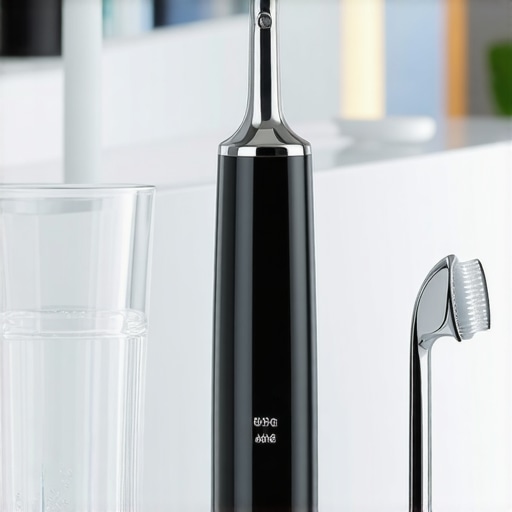
How can I keep my mouth pink and healthy for the long haul?
Maintenance isn’t a one-and-done event; it is a rhythmic habit. To keep the white film from returning, you need to understand how often you actually need a professional scaling to prevent bone loss and maintain a healthy tongue environment. I have transitioned to using an ultrasonic toothbrush specifically because the 30,000+ vibrations per minute create a ‘non-contact’ cleaning effect. Dr. Purnima Kumar, a leading researcher at the American Academy of Periodontology, emphasizes that the oral microbiome isn’t just about teeth—it’s a dynamic ecosystem that responds to our lifestyle choices in real-time. By using tools that disrupt this ecosystem gently, you prevent the ‘shag carpet’ effect on your tongue from becoming a permanent bacterial trap. I also highly recommend looking into how a simple night guard can save you thousands in future dental work, as it prevents the mouth-breathing and clenching that dries out your saliva and invites that white coating to take root. If you already use one, make sure you know how to clean a night guard without damaging the plastic, or you’ll just be reintroducing film-forming bacteria every night.
Why AI and Saliva Testing are the Next Big Thing in Dentistry
Looking forward, I predict we will soon move away from ‘one size fits all’ brushing and toward personalized oral microbiome testing. In the next few years, you will likely be able to use a simple at-home saliva kit to see exactly which bacterial strains are causing your white tongue and bad breath. This data-driven approach will allow us to tailor our oral health routine strengthening your smile every day with specific probiotic strains rather than just guessing. We are entering an era where ‘clean’ is measured by microbial balance, not just how hard you scrub. My challenge for you: Swap out your alcohol-based rinse for a pH-balanced oral probiotic tablet before bed tonight and see how much cleaner your tongue looks in just 48 hours.
The Breakthroughs That Changed My Reflection
I used to think that a white tongue was just something I had to live with, a permanent side effect of my morning coffee. But looking back at that morning of my sister’s wedding, I realize I was missing the bigger picture of biological balance. Here are a few lightbulb moments that shifted everything for me:
- Gentleness beats aggression every time: I learned that why your dentist wants you to stop using hard bristles isn’t just a suggestion; it’s about protecting the delicate surface of your tongue from micro-tears where bacteria hide.
- Dryness is the enemy: My habit of mouth breathing was essentially baking the debris onto my tongue. Once I addressed my hydration and breathing, the frosty look stopped forming.
- Biofilm isn’t just dirt: It is a living community. If you have dental work, caring for crowns essential tips for longevity and shine includes understanding that your restorations can harbor these same bacteria if you aren’t careful.
#IMAGE_PLACEHOLDER_E#
The Daily Kit That Keeps My Tongue Pink
Consistency is easier when you have the right tools. I have narrowed my routine down to three essentials that provide the highest return on investment for the impact of regular teeth cleaning on overall oral wellness:
- The Stainless Steel Scraper: Unlike plastic ones, these don’t harbor bacteria and provide a much cleaner sweep of the tongue’s surface.
- Oral Probiotics: These are game-changers for rebalancing the flora so the white film doesn’t just grow right back after you clean.
- pH-Balanced Rinses: Ditch the alcohol. Look for something that supports saliva production rather than drying you out. If you wear appliances, knowing how to clean a night guard without damaging the plastic is also crucial so you aren’t re-infecting your mouth every night.
Resetting Your Mouth for Good
Your journey to a healthier mouth doesn’t have to be an overnight miracle. It starts with a shift in your daily oral health routine strengthening your smile every day. By moving away from scrubbing and toward balancing, you aren’t just getting rid of a white film—you are building a foundation for long-term health. Don’t be discouraged if it takes a few days for your tongue to fully recover; your body is resetting an entire ecosystem. A consistent family dentistry focus will ensure that both your teeth and your tongue stay in peak condition for years to come. Have you ever noticed your tongue getting whiter after a period of stress or a change in your diet? Let me know below and let’s discuss what worked for you!