I remember one Tuesday night last October, sitting on the couch with a giant bowl of sea-salt popcorn and the latest thriller movie. Everything was great until one bite changed the trajectory of my entire week. It was that sharp, unmistakable scratch—a popcorn hull had wedged itself deep between my molar and the gum line. I spent the next three hours poking at it with my tongue until it felt like my whole jaw was vibrating. We have all been there, haven’t we? It is that tiny, translucent shell that feels like a jagged piece of glass in your mouth. Today, I am going to share exactly how to handle this without causing a dental emergency because, let’s be honest, your first instinct is usually to grab something sharp, and that is exactly what we need to avoid.
Stop Poking and Start Thinking Before You Hurt Your Gums
When you feel that nagging irritation, your brain screams for immediate relief. In my early days, I made the massive mistake of trying to use a sewing needle to fish out a hull. It was a disaster; I ended up with bleeding gums and a sore mouth that lasted for days. You see, the gingival tissue is incredibly delicate. If you push too hard, you might actually shove the hull deeper or cause an infection. This is why maintaining a consistent oral health routine is so important; it keeps your gums resilient. If you’ve already been digging at it, you might find the hidden reason your gums still throb is more about the trauma you caused than the popcorn itself. We want to be gentle neighbors to our teeth, not aggressive invaders.
Is it really worth the effort or will it just dissolve?
I get asked this all the time: ‘Can’t I just leave it there?’ The short answer is a resounding no. Unlike many other food particles, popcorn hulls (which are the pericarp of the kernel) are made of cellulose and are surprisingly resistant to being broken down by saliva. According to the American Dental Association, leaving a foreign object trapped under the gum line can lead to a localized abscess or significant inflammation within just a few days. This isn’t just about comfort; it is about protecting the foundation of your smile. When I think about building a lifetime of healthy smiles for my family, I realize that these small moments of care are what prevent major procedures later. Have you ever spent twenty minutes in front of the mirror with a flashlight, feeling like a DIY dental surgeon? It is a common frustration, but there is a better way. If the hull is truly stubborn, you might need specific tips on how to remove a popcorn hull stuck under your gum line safely without the drama. Let’s look at the tools you actually have in your cabinet that will do the job without the pain.
Flush the Area with a Gentle Saltwater Rinse
Before you reach for any tools, you need to create an environment where the hull can move freely. I always tell my friends that a warm saltwater rinse is like a tiny, soothing pressure washer for your mouth. Dissolve about half a teaspoon of salt in eight ounces of warm water and swish it vigorously around the affected area. This helps to reduce immediate inflammation and can sometimes dislodge the edge of the hull just enough to let it slide out on its own. It is one of those oral health tips every family should follow because it is non-invasive and incredibly effective for minor irritations.
Master the C-Shape Floss Technique
Standard flossing often fails because we just snap the string up and down. To catch a hull, you have to be more strategic. Think of your gum line like a small envelope; the hull is a letter tucked deep inside. Take a long piece of dental floss and gently slide it between the teeth. Instead of pulling it straight out, wrap the floss around the side of the tooth in a ‘C’ shape. Gently move it up and down, reaching slightly below the gum line. I remember a time when a piece of caramel corn was stuck so deep I thought I’d need a surgeon, but once I mastered this curve, the hull popped right out. For more details on this, checking out teeth cleaning secrets can give you a better visual of how to handle tight spaces.
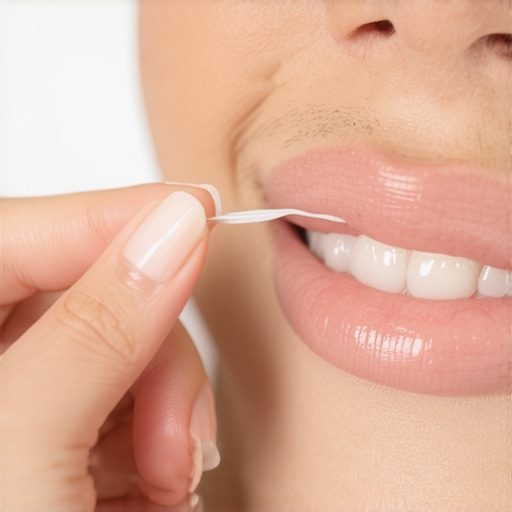
Use a Water Flosser for Stubborn Debris
If manual flossing doesn’t do the trick, a water flosser is your best friend. Set it to a low or medium pressure setting and aim the tip at a 90-degree angle toward your gum line. The pulsating stream can reach deep into the periodontal pocket where the hull is hiding. This is far safer than poking with a toothpick, which often just shoves the debris further in. We often discuss the impact of regular teeth cleaning on overall oral wellness, and having a water flosser in your arsenal is a huge part of that. It’s effective, gentle, and much less likely to cause the trauma that leads to bleeding.
Try a Soft Interdental Brush
When flossing and rinsing fail, I reach for a soft interdental brush. These look like tiny pipe cleaners and are designed to fit into the gaps between your teeth. I once had a hull stuck right behind a molar that no amount of flossing would touch. I dipped the interdental brush in a little bit of antiseptic mouthwash and gently wiggled it through the gap. The bristles caught the edge of the hull and pulled it right out. You must learn the proper way to use interdental brushes to avoid scratching your enamel or hurting the tissue. It’s about finesse, not force.
When Should You Stop Trying?
There is a fine line between being proactive and being dangerous. If you notice your gums are starting to look dark red, or if you see a small white bump forming, you might be dealing with more than just a piece of popcorn. You need to know why your gums are swollen and recognize when it is time to call a professional. If you’ve spent more than thirty minutes trying these methods with no luck, your gums need a break. Constant irritation can lead to a localized infection, making the situation much worse than the original hull ever was. If the area feels tender or warm to the touch, it is time to consider a professional deep cleaning to safely resolve the issue.
If you find yourself constantly fishing out debris from the same corner of your mouth, you aren’t just unlucky; you’re likely dealing with a structural ‘food trap.’ I see this all the time with patients who believe that getting a dental crown means they never have to worry about that tooth again. In reality, understanding the role of crowns in modern smile makeovers includes recognizing that the margin—the area where the crown meets the natural tooth—is prime real estate for bacteria and hulls. If that seal isn’t perfect, or if it has aged over the years, you’re essentially inviting irritation. A study published in the Journal of Periodontology indicates that food impaction is a leading cause of localized bone loss because it creates a constant state of inflammation that the body cannot resolve on its own. While you might think how crowns can transform your dental confidence is the end of the story, the truth is that they require a more sophisticated approach to hygiene than your natural molars. If you are not careful, you could be dealing with the reason your coffee habit is ruining your crowns sealant without even realizing the bond is weakening.
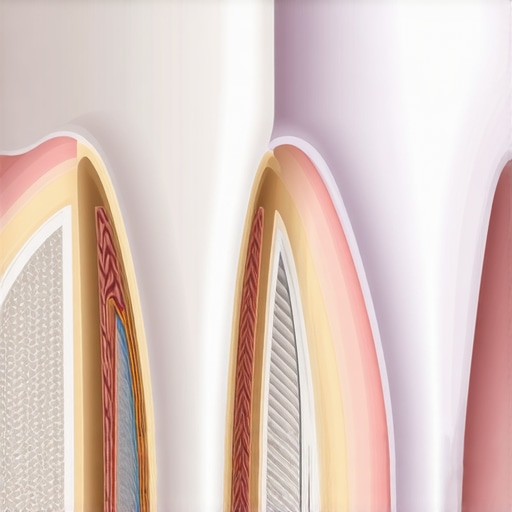
The Invincible Crown Myth That Actually Harms Your Gums
The biggest contrarian view I share with my patients is that your dental work is often more vulnerable than your natural teeth. Many believe that since a crown is porcelain or metal, it cannot ‘decay,’ so they lax their flossing routine. This is a dangerous trap. While the crown itself won’t get a cavity, the tooth structure underneath it absolutely can. When a popcorn hull gets lodged under a crown margin, it acts as a wedge, slightly opening that seal and allowing bacteria to seep in. You must prioritize maintaining your dental crowns with the same, if not more, intensity as your original teeth. A common ‘oops’ factor is using aggressive tools like metal picks to clear these gaps. This can scratch the porcelain or permanently damage the gum attachment. If you are worried about the stability of your dental work, knowing how to keep your dental crown from popping off while chewing can save you an emergency trip to the office. Have you ever fallen into this trap of thinking your dental work was bulletproof? Let me know in the comments.
Why Does the Same Spot Always Catch Debris?
It is a common myth that the gaps between your teeth stay the same throughout your life. In my experience, many people ignore the subtle shifts that happen as we age. You might notice the reason your teeth look longer than they used to is actually gum recession, which opens up ‘black triangles’ between the teeth. These are the ultimate traps for popcorn hulls. One of the biggest mistakes I see is people trying to close these gaps by over-brushing, but why hard brushing actually makes your teeth look darker and more sensitive is a lesson many learn too late. Instead of scrubbing, you should be focusing on expert advice on crowns and teeth cleaning for lasting results, which emphasizes precision over power. If you’re using a wooden toothpick, stop immediately. These can splinter or, worse, shove the hull deeper into the periodontal pocket. Staying on top of the secrets to making your professional cleaning last longer is far more effective than DIY dental surgery. Remember, your goal is to protect the foundation of your family dentistry focus and ensure your oral health routine is helping, not hurting. If you have been struggling with a stubborn hull for more than a day, please reach out via our contact us page before the inflammation turns into a more serious infection.
I have spent years experimenting with every dental gadget on the market, from vibrating toothbrushes that cost as much as a small television to bamboo picks that snapped at the first sign of resistance. What I have learned is that the difference between a mouth full of dental work and a natural, thriving smile usually comes down to three specific tools that most people ignore. If you are serious about your oral health routine, you need to move beyond the basic plastic brush. Personally, I never travel without my specialized interdental brushes. Unlike floss, which can sometimes just glide over a popcorn hull or a trapped seed, these tiny bristles expand to fill the space between your teeth, scrubbing the actual sides of your molars. When you are maintaining your dental crowns, these brushes are non-negotiable because they can reach the ‘recessed’ areas where the crown meets the gum—the exact spot where decay starts its sneak attack.
Invest in a Water Flosser with a Specialized Tip
If you find that standard flossing leaves your gums feeling raw, it is time to switch to a high-quality water flosser. I specifically recommend models that come with a ‘periodontal tip’ or a ‘plaque seeker tip.’ These attachments allow you to direct the stream of water with surgical precision, which is vital if you want to avoid how to stop your crown from smelling like old food. The smell is usually caused by anaerobic bacteria trapped in the tightest margins, and a manual brush simply cannot reach those depths. By using a water flosser, you are not just cleaning; you are oxygenating the area, which kills the bacteria that cause bad breath and gum disease. This is a core part of expert advice on crowns and teeth cleaning for lasting results that I wish I had known ten years ago. It turns a chore into a high-tech hygiene session that actually feels refreshing.
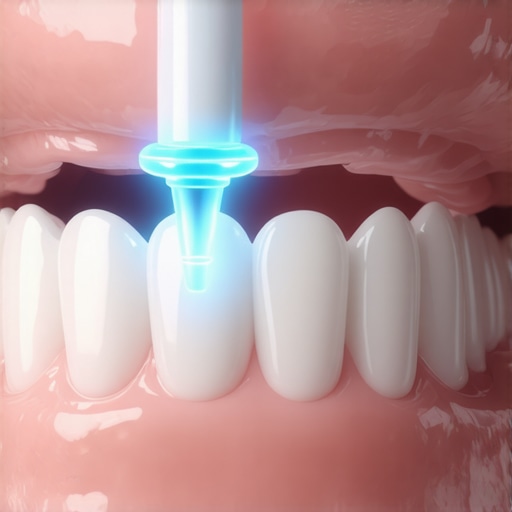
How do I maintain my crowns and gums for a lifetime?
Maintenance is not about a single deep clean; it is about the cumulative effect of small, precise actions. To ensure your dental work survives for decades, you must focus on the bio-film that reforms every twelve hours. Dr. Gordon Christensen, a world-renowned expert in clinical dentistry and founder of Clinical Research Associates (CRA), has often highlighted that the ‘margin’—the transition between your tooth and a crown—is the most vulnerable point in any restoration. If you ignore this area, even the most expensive porcelain will fail. I recommend ‘dipping’ your interdental brush into an alcohol-free antiseptic mouthwash before sliding it between your teeth. This delivers the medicine directly to the site of potential infection. This advanced technique is one of the many teeth cleaning secrets that can prevent thousands of dollars in replacement costs. We also need to recognize the impact of regular teeth cleaning on overall oral wellness, as your professional hygienist can see angles that you simply cannot.
The Future of Home Dental Monitoring
As we look toward the future, I predict that our bathrooms will soon be equipped with AI-integrated mirrors and smart-brushes that use bio-sensors to detect early signs of inflammation before you even feel a popcorn hull. We are moving away from reactive dentistry—where we only fix things once they hurt—toward proactive monitoring. Already, some toothbrushes use pressure mapping to tell you if you are causing recession, which is the reason your teeth look longer than they used to. By adopting these tools now, you are staying ahead of the curve and protecting your investment. If you haven’t yet, try the ‘antiseptic dip’ method with an interdental brush tonight; it is the single most effective way to keep your gum tissue firm and your breath fresh. For any questions about specific tools for your unique smile, feel free to visit our contact us page.
The Hardest Lesson I Learned About Protecting My Gums
Over the years, I have realized that the most dangerous thing in my bathroom isn’t a sharp tool, but my own impatience. First, I learned that bleeding is a signal, not a goal. If you are flossing so hard that you see red, you are likely missing the hull and damaging the tissue. Second, the hidden reason your gums still throb after you finally get the debris out is often because of the micro-trauma from the ‘surgery’ you performed. Finally, I’ve accepted that why your gums recede even if you brush twice a day is often linked to these aggressive cleaning habits. Gentleness is a skill that takes time to master.
My Survival Kit for Every Popcorn Lover
I don’t leave my dental health to chance, especially when I know I’m indulging in snacks. My toolkit includes a high-quality water flosser equipped with a periodontal tip to reach those deep pockets. I also swear by soft interdental brushes, but you must know the proper way to use interdental brushes to ensure you don’t irritate the area further. For those of us with restorations, caring for crowns involves using an alcohol-free rinse to keep the margins clean without drying out the gums. I trust these tools because they focus on removing biofilm and debris without physical scraping. #IMAGE_PLACE_HOLDER_E#
Your Smile Deserves a Little Extra Patience
Taking ten minutes to carefully remove a piece of popcorn today is a small price to pay for avoiding an extraction or an abscess next month. When you prioritize a consistent oral health routine, you are doing more than just cleaning teeth; you are investing in your future comfort and confidence. We often talk about a family dentistry focus that spans generations, and it starts with these tiny daily habits. Don’t let a small husk turn into a big headache. Have you ever had a popcorn hull stay stuck for more than a day? Tell me your ‘removal horror story’ or what finally worked for you in the comments below!