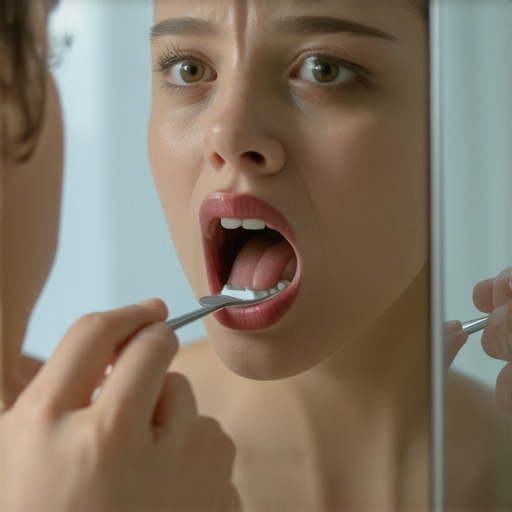
I remember standing in the bathroom, staring at my reflection with a mix of frustration and genuine confusion. I had just spent five minutes meticulously using my stainless-steel tongue scraper until my tongue was a healthy pink, followed by a vigorous rinse. Yet, twenty minutes later, that familiar, swampy taste returned. It was humiliating. I was supposed to be the guy who prioritized a solid oral health routine, yet I felt like I was failing at the most basic level of hygiene. It wasn’t just ‘morning breath’; it was a persistent cloud that made me lean away from people during conversations. I realized then that I was treating the symptoms while completely ignoring the biological hideouts where the real odors were manufactured.
The Hidden Bacteria Pockets Your Scraper Can’t Reach
We often think of the tongue as a flat surface, but it is actually more like a shag carpet. Those tiny bumps, called papillae, create deep crevices where anaerobic bacteria thrive. These bacteria produce volatile sulfur compounds (VSCs), which are the actual source of the ‘rotten egg’ smell. One mistake I made early on was pressing down way too hard with my scraper, thinking that more pressure meant a deeper clean. In reality, I was just irritating the tissue and missing the bacteria nestled at the very back of the throat and in the tonsillar crypts. Scraping only cleans the surface; it doesn’t address the microbiome living deeper down or the impact of regular teeth cleaning on your overall mouth chemistry.
Is this whole tongue scraping thing actually worth the hype?
You might be wondering if you should just toss the scraper in the trash if it isn’t solving the problem. The truth is, scraping is a piece of the puzzle, but it isn’t the whole picture. According to research cited by the National Institutes of Health, tongue cleaning can reduce VSCs by roughly 75%, but that still leaves a significant amount of odor-producing material if your saliva flow is low or if you have underlying gum issues. If you’ve ever noticed the hidden reason your gums still bleed even when you’re careful, you know that the mouth is an interconnected system. Odors can also get trapped around dental work, which is why maintaining your dental crowns is just as vital for fresh breath as cleaning your tongue. Have you ever felt like you’re doing everything right and still catching a whiff of something off? It is a common struggle, and today we are going to break down exactly how to target those invisible odor zones once and for all.
Master the Gentle Glide Technique
The biggest mistake most people make is treating their tongue like they are trying to scrape paint off a rusty fence. If you apply too much pressure, your tongue reacts by producing more mucus to protect the irritated tissue, which actually feeds the bacteria you are trying to remove. Think of your tongue scraper like a squeegee on a glass window. You want a firm, even contact that glides from the very back to the tip in one smooth motion. I remember the first time I consciously lightened my grip; I stopped seeing red, irritated patches and instead saw a much more consistent removal of that yellowish biofilm. This subtle shift is one of the many teeth cleaning secrets that separates a basic routine from a professional-grade result. Aim for 5 to 10 slow strokes every morning before you eat or drink anything, rinsing the scraper under hot water between every single pass to ensure you aren’t just redistributing the gunk.
Protect the Seal Around Your Crowns
If you have restorative work, your fresh breath strategy needs to be even more precise. Bacteria love the microscopic margins where a crown meets your natural gum line. If these areas aren’t cleaned properly, they become tiny factories for odor. When I finally invested in a set of crowns, I didn’t realize that caring for crowns required focusing on the junction between the tooth and the gum. Use a soft-bristled brush at a 45-degree angle to gently sweep away debris from these edges. If you notice a persistent smell specifically coming from one tooth, it might not be your tongue at all—it could be a sign that the cement is aging or the seal is compromised. Keeping those areas pristine is a core part of maintaining your dental crowns for the long haul.
Ditch the Alcohol and Save Your Gums
For years, I thought that stinging sensation from my mouthwash meant it was working. In reality, I was dehydrating my mouth and killing off the good bacteria along with the bad. Alcohol-based rinses are notorious for causing dry mouth, and a dry mouth is a smelly mouth. Without saliva to wash away food particles and neutralize acids, the VSCs on your tongue will skyrocket within an hour of rinsing. You might even find that your gums sting when you use alcohol-based mouthwash, which is a clear signal from your body to stop. Switch to an alcohol-free, pH-balanced rinse. This keeps your mouth moist and supports a healthy microbiome, making your tongue scraping efforts significantly more effective.
Get a Professional Deep Clean for Hard-to-Reach Zones
Sometimes, the odor isn’t coming from the surface of the tongue, but from deep within the gum pockets. No amount of home care can reach the tartar that has calcified under the gum line. I spent months frustrated with my breath until a hygienist explained that I had early-stage inflammation that was trapping odors. Knowing how often you actually need a professional scaling can be the turning point for your oral health. If it has been more than six months since your last visit, or if you are experiencing bleeding, you might need to find out what to expect during your first deep cleaning session. These sessions clear out the reservoirs of bacteria that no scraper, brush, or floss can ever touch, providing a truly clean slate for your daily routine.
Most people assume that if a toothpaste is marketed as ‘whitening’ and ‘natural,’ it must be a safe bet. I used to think the same until I realized that many charcoal-based products are basically like using sandpaper on your teeth. Everyone says charcoal is a miracle for stains, but in my experience, the long-term cost to your enamel isn’t worth it. The truth about charcoal toothpaste is that it can be highly abrasive, wearing down the protective layer and eventually making your teeth look more yellow as the dentin underneath shows through. The American Dental Association (ADA) frequently warns about the Relative Dentin Abrasivity (RDA) of certain products, and if you are using a hard brush on top of that, you are accelerating the damage. This is exactly why your dentist wants you to stop using hard bristles immediately.
The Danger of the Set It and Forget It Mindset with Crowns
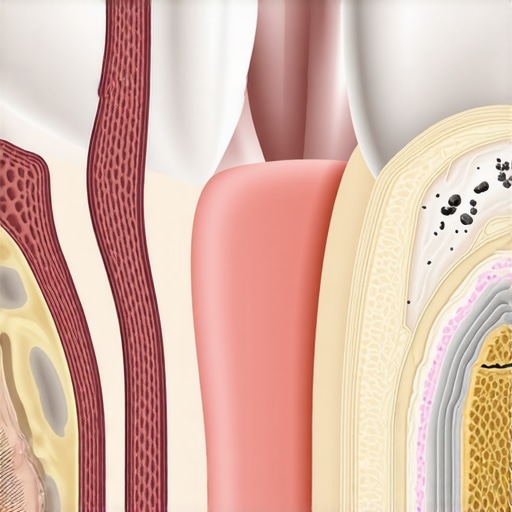
One of the most common ‘traps’ I see people fall into is thinking that once a tooth is capped, it is invincible. They stop being precise with their expert advice on crowns and teeth cleaning because they think the porcelain can’t decay. While it’s true the crown itself won’t get a cavity, the natural tooth structure underneath is still vulnerable at the margins where the material meets the gum. If you aren’t maintaining your dental crowns with the same—if not more—rigor than your natural teeth, you risk recession that exposes the root. Have you ever fallen into this trap? Let me know in the comments.
Why Your Crown Might Feel Sensitive to Cold Years After Placement
If you’ve had a restoration for a while, you might be surprised by a sudden zing when drinking iced coffee. This doesn’t always mean the crown has failed, but it could indicate that the gum line has shifted or the cement has begun to microscopically degrade. Knowing why your crown might feel sensitive to cold even years after placement is crucial for avoiding a major emergency. It could be a sign of ‘micro-leakage,’ where bacteria find a way past the seal. This is why a consistent family dentistry focus isn’t just about the kids; it’s about tracking these structural changes in adults over several decades.
Your Saliva is Your Secret Defense Weapon
We often talk about brushing and flossing, but we rarely talk about the chemistry of our spit. A major nuance people miss is how their systemic health, like medications or hydration levels, changes the pH of their mouth. If your saliva is too acidic, no amount of scraping will stop the bacterial bloom from returning almost instantly. This is where the impact of regular teeth cleaning goes beyond just removing plaque; it resets the entire oral environment. According to research in the Journal of Clinical Periodontology, professional cleanings significantly lower inflammatory markers in ways that home care simply cannot replicate. By ensuring you know how often you actually need a professional scaling, you are protecting the biological foundation of your entire smile. It is time to stop looking at dental care as a generic chore and start seeing it as a precision-tuned oral health routine that must adapt as your body changes. Whether you’re managing restorative work or teaching your kids the basics, being proactive about these invisible shifts is the real secret to avoiding a lifetime of expensive repairs.
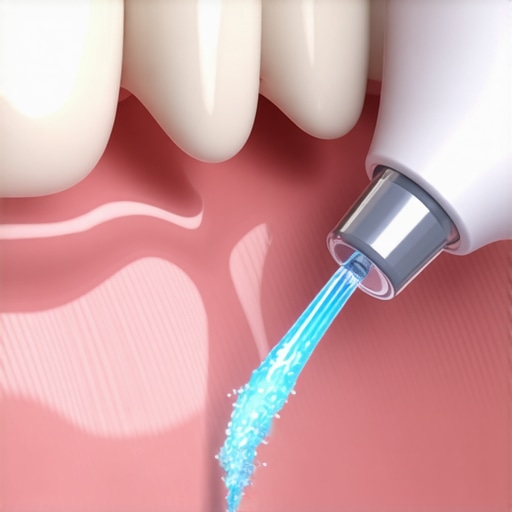
After I got my saliva pH under control, I realized that my hardware needed an upgrade. I spent way too many years using a standard manual brush and cheap string floss, wondering why my dental bills were still climbing. I’ve since switched to a high-end water flosser paired with a specialized periodontal tip—a tiny, rubberized nozzle designed to deliver a low-pressure stream right into the gingival sulcus. While standard flossing is great, it often skips the microscopic ‘nook’ where a crown meets the gum. Using this tool has been a game-changer for maintaining your dental crowns because it flushes out debris that manual tools simply cannot reach without causing irritation.
Stop treating your crowns like they are indestructible
The most dangerous mindset you can have is believing that porcelain is ‘set it and forget it.’ I personally check the seal of my restorations every single night using a magnifying mirror and a high-lumen penlight. It might sound overkill, but catching a tiny bit of inflammation early can save you a full replacement later. According to the American Academy of Periodontology, the synergy between professional intervention and specific home tools can reduce the risk of secondary decay around restorations by nearly 30%. This is why caring for crowns requires a level of precision that goes beyond just ‘brushing twice a day.’ If you aren’t looking at the margins, you aren’t really cleaning them.
How do I keep my dental work working for over a decade?
The secret isn’t just in the tools; it’s in the frequency of professional ‘recalibrations.’ I’ve moved to a schedule where I get a professional cleaning every four months rather than the standard six. This prevents the biofilm from ever reaching a state of maturity where it can damage the cement under my restorations. Knowing how often you actually need a professional scaling is vital because, for some of us with a higher mineral content in our saliva, tartar builds up twice as fast. This proactive approach ensures the impact of regular teeth cleaning is felt year-round, keeping the foundation of your smile rock-solid. It is about playing the long game with your health rather than reacting to pain when it’s already too late.
The future of your bathroom vanity is getting smarter
I predict that by the time we hit 2030, we won’t be guessing about our oral health anymore. We are already seeing the emergence of ‘smart’ toothbrushes that utilize biosensors to detect high acidity levels in real-time. I’ve been following research from the University of Washington regarding wearable sensors that track oral biomarkers, and it is clear that the next step in a family dentistry focus will be personalized data. Instead of a generic routine, you’ll have oral health tips every family should follow in 2025 tailored specifically to your mouth’s unique bacterial profile. We are moving away from ‘one size fits all’ hygiene and into an era of biological precision.
Your next step toward a permanent fix
If you want to stop the cycle of endless dental repairs, you have to upgrade your methods. I highly recommend investing in a water flosser with a dedicated ‘pik pocket’ tip today. It is one of those teeth cleaning secrets that dental hygienists wish everyone knew about. Don’t wait for your next check-up to start being meticulous. Grab a bottle of pH-balanced rinse and a specialized flosser, and spend five extra minutes tonight focusing specifically on the gum line around your dental work. Your future self—and your bank account—will thank you for the extra effort.
Lessons Learned From a Decade of Dental Trial and Error
I spent years thinking I could ‘scrub’ my way to health. The biggest lightbulb moment was realizing that biofilm is a living community, not just a stain to be removed. If you kill every organism with harsh chemicals, you are essentially inviting the most aggressive bacteria to recolonize your mouth first. Another realization? Your tongue is a messenger. If it is constantly coated despite scraping, it might be time to look at your hydration levels or even your gut health. Finally, I have learned that maintaining your dental crowns is truly about the health of the gum margin, not the porcelain surface itself. If that tissue is not healthy, the restoration will eventually fail.
The Gear That Keeps My Smile From Cracking
I do not believe in over-complicating things, but I do believe in the right tools. Here is what actually stays in my cabinet: First, a medical-grade stainless steel scraper; unlike plastic, it does not harbor bacteria in microscopic scratches. Second, a water flosser with a specialized tip is non-negotiable for reaching the areas where family dentistry focus often sees the most hidden decay. Third, a pH-balanced, non-alcoholic mouthwash helps ensure my saliva remains my best defense. Finally, I prioritize a consistent oral health routine over an aggressive one. It is the small, daily habits that prevent the need for knowing how to fix a small chip in your front tooth down the road.
Stop Reacting and Start Protecting Your Smile
The transition from reactive dental care to proactive health is a powerful one. It saves you from the anxiety of sudden pain and the financial burden of emergency repairs. By integrating these small shifts—from the way you scrape your tongue to the way you protect your restorations—you are building a foundation that will last decades. Your oral health routine is more than just hygiene; it is a vital part of your overall well-being. Don’t be afraid to adjust your methods as you age, because your mouth is a living, changing system that deserves your attention. Have you ever tried tongue scraping only to find the bad breath returns within the hour? Let me know your experience in the comments below!