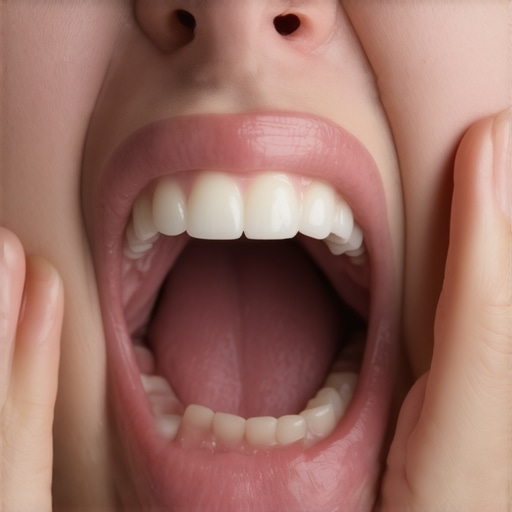
I remember sitting at the dinner table last summer, biting into a crisp apple, and feeling a sudden bolt of lightning shoot through my back molar. I froze. “It’s just the cold,” I told myself, clutching my cheek while my family looked on with concern. I spent the next three weeks playing a dangerous game of ‘dodge the apple’ and switching to lukewarm water. I convinced myself I just had a bit of sensitivity. That was my first big mistake. By the time I finally sat in the dentist’s chair, that little “zing” had blossomed into a full-blown cavity that was dangerously close to needing a root canal. I felt silly for waiting, and my bank account definitely felt the sting of my procrastination.
Stop Guessing About That Sharp Pain in Your Molar
Today, I want to pull back the curtain on that nagging question keeping you up at night: is this a minor annoyance I can brush away, or is my tooth literally rotting? We’re going to look at the specific triggers—like temperature, sugar, and pressure—that differentiate a passing phase from a dental emergency. If you’ve noticed that the reason your tooth hurts when you bite down hard is becoming a daily occurrence, it’s time to stop the guesswork. I want to help you catch these issues while they are still small, cheap, and easy to fix. Have you ever ignored a toothache only to have it turn into a weekend nightmare? I’d love to hear your “I should have gone sooner” stories in the comments.
Is it actually worth the stress of a dental visit for a tiny twinge?
It’s easy to feel like you’re being “extra” by calling the dentist for a little sensitivity. You might even worry that they’ll think you’re overreacting. But here’s the thing: your teeth are one of the few parts of your body that can’t heal themselves. Once the enamel is gone, it’s gone. According to the World Health Organization, untreated dental caries is the most common health condition globally, affecting billions because people wait for severe pain before acting. I made the mistake of thinking my oral health routine was enough to “reverse” the damage on its own. It wasn’t. Understanding how to tell if your tooth sensitivity is actually a secret cavity is the difference between a quick filling and a permanent crown. Even why your new crown feels cold can be a confusing sensation, but it’s nothing compared to the sharp, localized pain of active decay. Let’s look at the three big signs that mean your tooth is calling for backup.
Track Your Reaction to Ice and Coffee
The first thing you need to do is become a detective of your own discomfort. If you take a sip of iced tea and feel a flash of pain that vanishes in three seconds, you might just have thin enamel. But if that pain lingers for thirty seconds or feels like a dull, throbbing headache in your jaw, the nerve is likely under attack. Think of your enamel like the insulation in your house; when it wears thin, the pipes (your nerves) are prone to freezing. I used to ignore these signals until I realized that how to tell if your tooth sensitivity is actually a secret cavity often comes down to the stopwatch. If the sensation stays long after the stimulus is gone, the decay has reached the dentin.
Why Sugar is the Ultimate Cavity Litmus Test
Healthy teeth shouldn’t react to a piece of chocolate or a sugary soda. If you feel a sharp zing specifically when eating sweets, that is a massive red flag. Bacteria that cause decay thrive on sugar and produce acid as a byproduct. This acid travels straight through the tiny holes in a cavity to irritate the nerve. It’s like pouring salt into a paper cut. During one particularly busy holiday season, I kept feeling a pinch every time I ate a candy cane. I told myself it was just the crunch, but it was actually the sugar seeping into a crack. If you’re experiencing this, you need to revisit your teeth cleaning secrets at home, but more importantly, you need a professional to look at that spot before it hits the pulp.
Stop Ignoring the Throb When You Bite Down
Pressure is the final warning sign. If your tooth feels fine while you’re sitting still but shouts at you the moment you chew a piece of crusty bread, you’re likely dealing with a structural issue or a deep infection. This is often the reason your tooth hurts when you bite down hard, and it can signal a cracked tooth or a failing filling.  I remember a family BBQ where I bit into a corn cob and heard a distinct ‘click’ followed by a wave of heat in my gums. My crown had actually shifted. I learned the hard way what to do when your temporary crown pops off at dinner, which mostly involved a lot of panic and a frantic call to my dentist. Don’t wait for the click; if the pressure feels ‘off,’ the tooth’s structural integrity is compromised.
Protect Your Work with Proactive Maintenance
Once you’ve had work done, whether it’s a simple filling or a complex restoration, the game changes to preservation. You can’t just set it and forget it. Seeking expert advice on crowns and teeth cleaning for lasting results is essential for anyone who wants to avoid the dental chair for the next decade. If you already have restorations, maintaining your dental crowns involves avoiding ‘sticky’ traps like taffy and ensuring you are flossing around the margins where the crown meets the gum line. This is where most secondary decay starts. A crown is like a high-performance helmet for your tooth; it only works if the straps are secure and the shell is intact.
Stop Rinsing Your Progress Down the Drain
One of the most persistent myths I see—and one I lived by for decades—is the idea that you need to rinse your mouth with water immediately after brushing. It feels “cleaner,” doesn’t it? You want that foamy residue gone. However, if you do this, you are effectively washing away the most expensive and beneficial part of your toothpaste: the fluoride. Fluoride needs time to bond with your enamel to remineralize those tiny microscopic weak spots before they become full-blown cavities. Experts at the British Dental Foundation have long advocated for the “spit, don’t rinse” method, noting that rinsing can reduce the protective effect of fluoride by over 50%. This is a huge reason why you should stop rinsing with water immediately after brushing if you want your enamel to stay iron-clad.
Scrubbing Harder Is Actually Wearing Your Smile Away
We’ve been conditioned to think that more “elbow grease” equals a cleaner surface. In the world of family dentistry focus, this is one of the most common mistakes parents and adults make alike. If you’re using a medium or hard-bristled brush and scrubbing like you’re cleaning grout in the shower, you’re performing “toothbrush abrasion.” This doesn’t just hurt your gums; it actually thins your enamel, revealing the yellowish dentin underneath. This is the irony of over-achieving: why hard brushing actually makes your teeth look darker is a shock to many patients who think they are whitening their teeth through sheer force. 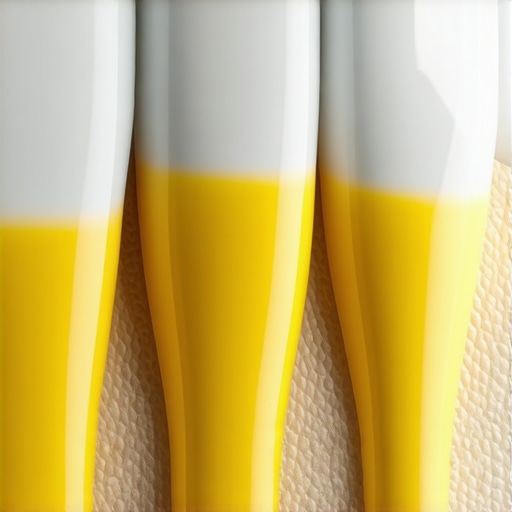 It’s one of those subtle 5 dental habits that are actually ruining your enamel without you even realizing it.
Why does my gum line look lower even though I brush twice a day?
This is a sophisticated question that often points to the “Oops factor” of technique. It’s not just about how often you brush, but the angle and pressure. When you apply too much horizontal pressure, you physically push the delicate gum tissue away from the tooth. Once that tissue recedes, it doesn’t grow back. Understanding why your gums recede even if you brush twice a day is crucial for long-term stability. You might think you’re being thorough, but you’re actually creating a trap for bacteria to hide under the newly exposed root surface. Have you ever fallen into this trap, thinking you were doing your teeth a favor by brushing extra hard? Let me know in the comments.I decided to stop fighting my own teeth and started investing in tools that actually do the work for me. The single best purchase I ever made for my mouth wasn’t a fancy whitening kit; it was an electric toothbrush with a built-in pressure sensor. Specifically, models like the Oral-B iO series use a smart sensor that turns red when you push too hard. This is the ultimate fix for that ‘hard brushing’ habit we talked about. By letting the micro-vibrations do the cleaning, I noticed my gums stopped stinging almost overnight. If you are serious about your oral health routine, this switch is non-negotiable. It is about precision, not power. Next up is the gap game. If you have tight spacing or dental work, traditional string floss can sometimes feel like it is sawing through your gums. I have switched almost entirely to interdental brushes. These tiny, mascara-wand-looking tools are far more effective at removing biofilm from the concave surfaces of your molars. Using the proper way to use interdental brushes for best results has changed how my mouth feels after a long day. It is that ‘just-left-the-dentist’ smooth sensation. 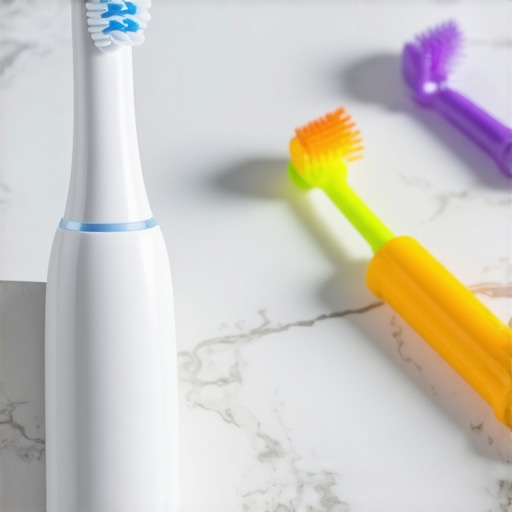 For those who need to know how to clean between teeth if you have tight spacing, finding the right size is key—if you have to force it, it is too big.
How can I make my dental restorations last a lifetime?
Keeping your work in top shape requires a shift in mindset. You have to treat a crown or a bridge like a luxury car. You would not skip an oil change on a Porsche, so do not skip your professional check-ups. I have found that maintaining your dental crowns involves a ‘low-acid’ diet and being mindful of how you chew. If you have ever wondered why your new crown smells, it is often because bacteria is hiding in a tiny gap you have missed. Consistent, expert advice on crowns and teeth cleaning for lasting results suggests that professional help is the only way to clear out the hard tartar that home tools cannot touch. Looking ahead, I suspect we are moving toward a world of ‘biometric dentistry.’ Niche experts, such as those published in the Journal of Clinical Periodontology, are already highlighting the potential of salivary diagnostics—using a simple spit test to detect systemic diseases or specific bacterial overgrowths before a single cavity forms. In the next few years, your family dentistry focus might shift from ‘fixing holes’ to ‘balancing your oral microbiome.’ For now, my best advice is to stop rinsing after you brush tonight. Just spit and let that fluoride sit. It is a free upgrade to your daily defense. If you are ready to level up, I challenge you to swap your manual brush for an electric one this week. Your enamel will thank you in ten years.
Lessons My Molars Taught Me the Hard Way
Reflecting on my own dental journey, I have realized that the biggest mistake isn’t having a cavity—it is the silence we keep when we first feel it. We tend to treat dental discomfort as a challenge to be endured rather than a signal to be decoded. One of my biggest lightbulb moments was realizing that pain is actually the last stage of decay, not the first. By the time it hurts, the battle is already halfway lost. I also learned that a generic oral health routine is not a one-size-fits-all solution; your specific anatomy, like deep grooves or tight spacing, requires a tailored strategy. Finally, I had to accept that dental work isn’t a permanent shield. Even with the best dentist, maintaining your dental crowns is a daily commitment, not a one-time fix. Consistency beats intensity every single time.
My Fail-Proof Toolkit for a Lasting Smile
If you want to avoid the emergency chair, you need the right gear in your bathroom cabinet. I personally swear by three specific things. First, a high-quality electric toothbrush with a pressure sensor—it is the only way to ensure you aren’t accidentally scrubbing away your enamel. Second, I recommend keeping a pack of various-sized interdental brushes nearby; they reach the plaque that floss often jumps right over. You can find more about these in my guide on teeth cleaning secrets. #IMAGE_PLACEHOLDER_E Finally, I always suggest a fluoride-rich toothpaste that you don’t rinse away. I trust these tools because they remove the human error from the equation, making it much harder to fail at your hygiene goals.
Take Back Control of Your Oral Health Today
The transition from dental anxiety to dental confidence happens the moment you stop reacting to pain and start acting on prevention. You have the power to change the trajectory of your smile by making tiny, informed adjustments to how you brush and eat. Remember, the impact of regular teeth cleaning on overall oral wellness goes far beyond just preventing holes; it protects your heart, your breath, and your wallet. Do not wait for the next sharp zing to remind you that your teeth need attention. Start with the ‘spit, don’t rinse’ rule tonight and see how much stronger your enamel feels. Have you ever ignored a ‘zing’ in your tooth only to have it turn into a major dental bill later? Let me know your story in the comments below!