
I was sitting in that crinkly leather chair, squinting at the X-rays, when my dentist pointed to my second molar. I’d spent years focusing on my ‘social six’—the ones everyone sees when I laugh—and I thought I was doing a great job. But the truth was hidden in the back, where a tiny shadow had turned into a full-blown cavity. It’s frustrating, isn’t it? You scrub away at the front, but those molars seem to have a mind of their own. It felt like a personal failure, especially since I never missed a morning brush. Today, I’m going to share exactly why your back teeth are basically cavity magnets and, more importantly, how you can finally break the cycle of constant fillings and expensive dental crowns. We are going to look at the anatomy, the habits, and the simple tech shifts that turned things around for me.
The Back of the Mouth Tax Is Real
It’s not just you. There is a physiological reason why the back of your mouth feels like a construction zone every time you visit the dentist. Years ago, I made the mistake of thinking that as long as my breath was fresh, my oral health routine was solid. I was wrong. I was ignoring the ‘blind spots’ of my mouth. According to the American Dental Association, about 80% of cavities in permanent teeth occur in the pits and fissures of the molars. These deep grooves are often narrower than a single toothbrush bristle, making them the ultimate hiding spot for bacteria. Even with focused family dentistry habits, these areas are tough to navigate. The molars are also located right next to the salivary glands, which means they are constantly bathed in minerals that can harden plaque into tartar faster than you can say ‘floss.’
Does this mean I’m just bad at brushing?
I used to ask myself this all the time. I felt like a failure every time I saw a new spot on an X-ray. But the reality is that molars are literally built to trap food. They are the grinders of your mouth, and their complex topography makes it nearly impossible to keep them perfectly clean with a manual brush alone. This is often what actually happens if you skip your dental cleaning for even a few months; the bacteria in those grooves harden into tartar that you simply can’t reach at home. Have you ever walked out of a check-up with a clean bill of health for your front teeth, only to find out your molars need a new filling? I’ve been there, and I promise, there are ways to fix it that don’t involve a three-hour bathroom routine. We’ll look at everything from why dental sealants are a game changer to the specific mechanical tools that actually reach those stubborn back corners.
Ditch the Manual Brush for Something Smarter
When I finally switched to an electric toothbrush, it felt like going from a push-broom to a high-powered vacuum. I remember the first time I used it; I pressed so hard I actually made my gums bleed because I was treating it like my old manual brush. But that’s the mistake—you have to let the vibration do the work in those back corners. High-quality electric brushes use sonic technology to create micro-bubbles that reach into the tiny fissures of your molars. If you’ve noticed that your gums bleed when you switch to an electric toothbrush, do not panic. It’s often just your tissue adjusting to the increased circulation and deep cleaning power. Think of your back teeth like the corner of a room where dust always settles; you need a tool that can agitate that debris out of the grooves without you having to scrub like a maniac.
Angle Your Way to Success
One night, I stood in front of the mirror and actually looked at how I was brushing my wisdom teeth area. I was just hitting the flat tops. The real trick is the 45-degree angle. You need to tilt the bristles so they tuck under the gum line and wrap around the back-most surface of the last molar. If you just go back and forth, you’re missing the “wrap-around” where most decay starts. Remember that why hard brushing actually makes your teeth look darker is often due to wearing down the enamel, so use a light touch and let the brush’s motion handle the heavy lifting.
Seal the Deal Before Decay Starts
If your molars have deep pits—the kind where a popcorn hull always seems to get stuck—you might want to talk to your dentist about sealants. I used to think these were just for kids. I was wrong. Sealants act like a rain jacket for your teeth, filling in those microscopic valleys so bacteria can’t set up camp. Many parents wonder does your child really need dental sealants on their first molars, and the answer is almost always a resounding yes. But for adults with “virgin” teeth (no fillings yet), they are an incredible insurance policy against future drills. #IMAGE_PLACE_HOLDER_B#
How to Prevent Cavities Between Teeth
The most frustrating cavities are the ones you can’t see in the mirror. These “interproximal” cavities happen right where your molars touch. Because these teeth are so wide, the contact point is huge. Standard floss often just glides over the plaque instead of scraping it away. I started using interdental brushes—those tiny little Christmas tree-looking things—and the amount of “gunk” they pulled out from between my back teeth was eye-opening. Learning how to prevent cavities between teeth where you can’t see is mostly about mechanical disruption. You have to physically break up that biofilm every single day. If you neglect this, you’re looking at a future of expert advice on crowns and teeth cleaning just to keep your smile intact. It’s much cheaper to spend thirty seconds with a water flosser or an interdental brush than to pay for a porcelain replacement. This proactive approach highlights the impact of regular teeth cleaning on overall oral wellness, keeping the foundation of your mouth strong for decades.
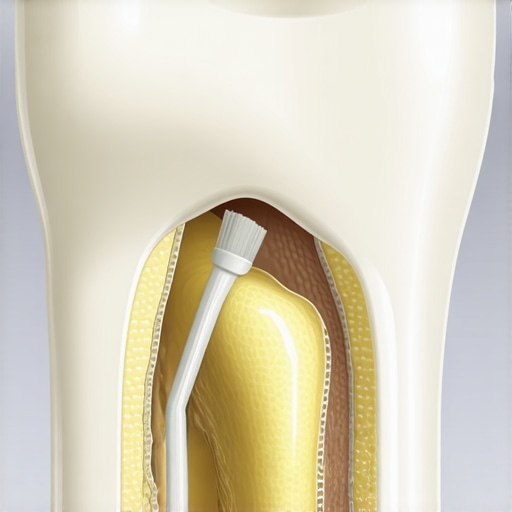
Let’s dig deeper into a nuance most people miss: the ‘over-cleaning’ paradox. You might think that more friction equals less decay, but this is a dangerous myth. In my experience, patients who scrub with the most intensity are often the ones who end up with the most sensitivity. This is why hard brushing actually makes your teeth look darker; you’re literally scouring away the white enamel to reveal the yellowish dentin underneath. It’s a classic ‘oops’ factor. You think you’re being proactive, but you’re actually weakening the structural integrity of your teeth and exposing the very layers you want to protect.
The alcohol-based mouthwash trap
Then there’s the mouthwash mistake. Many people reach for the strongest, most ‘medicinal’ smelling rinse they can find to combat morning breath or target back-molar bacteria. However, the reason why your mouth stings when you use alcohol-based mouthwash is actually a warning sign. Research published in the Journal of Clinical Periodontology suggests that over-reliance on high-alcohol rinses can disrupt the delicate oral microbiome, killing off the beneficial bacteria that naturally fight decay. It dries out your tissues, and a dry mouth is a breeding ground for the very bacteria that cause cavities in those back molars we’ve been talking about. You’re essentially nuking your mouth’s natural defense system in exchange for thirty minutes of minty freshness.
Why does your crown feel sensitive even though the nerve is gone?
This is a question that stumps almost everyone. If you’ve had a root canal, the tooth shouldn’t feel ‘pain,’ right? Wrong. The tooth is held in place by a periodontal ligament that is very much alive and packed with nerves. If your bite is even a fraction of a millimeter off, or if you are clenching at night, that ligament gets inflamed. This is a crucial part of expert advice on crowns and teeth cleaning: the hardware might be artificial, but the foundation is biological. Understanding why your dentist recommends a crown after a root canal is only half the battle; the other half is realizing that the surrounding tissue requires even more precision than a natural tooth. If you ignore that ‘tight’ feeling, you’re risking more than just a sore jaw.
Stop ignoring the micro-shifts in your smile
One specific trap to avoid is ‘retainer complacency.’ If you notice why your teeth feel tight after you haven’t worn your retainer, do not just force it on or, worse, ignore it. That tightness indicates shifting that can create new, impossible-to-clean gaps between your molars. These tiny shifts are how ‘perfect’ teeth suddenly develop cavities at age 35. Maintaining a consistent oral health routine isn’t just about the ‘now’; it’s about preventing these micro-movements that compromise your molars. Have you ever fallen into this trap where you thought you were doing everything right, only to be surprised at your check-up? Let me know in the comments. We need to shift our family dentistry focus from just ‘cleaning’ to ‘preserving’ the ecosystem of the mouth for the impact of regular teeth cleaning on overall oral wellness to truly take hold and last a lifetime.
Make Your Water Flosser Work Harder Than Your Manual Brush
I personally swear by the Waterpik Ion for one reason: the pressure-to-size ratio. Most people treat water flossing like a quick, refreshing rinse, but the pro move is to trace the gumline at a 90-degree angle, pausing for two seconds at every interproximal space. This is the only way I have found to successfully manage how to clean under a permanent retainer without the struggle. It is about disrupting the biofilm before it has the chance to calcify into tartar. A study in the International Journal of Dental Hygiene highlights that pulsating water pressure is significantly more effective at reducing gingival inflammation than string floss because it reaches deeper into the periodontal pockets. If you are just spraying haphazardly, you are missing the point of the tool; you need that focused stream to flush out the debris hiding behind your back-most molars.
Why the RDA Scale is the Secret to Keeping Your Enamel Intact
I used to buy whatever toothpaste was on sale until I learned about the RDA (Relative Dentin Abrasivity) scale. This is a technical metric that measures how much a toothpaste wears down your teeth. According to the Journal of Clinical Dentistry, toothpastes with an RDA over 100 can be too abrasive for daily use, especially on restorative work. To ensure caring for crowns actually works, I switched to a paste with an RDA under 70. This low-abrasion approach is essential for how to keep your porcelain crown from staining over time because it prevents the micro-scratches where coffee and tea pigments love to settle. If you are using a high-grit whitening paste on your porcelain, you are basically sanding away the smooth glaze that protects your investment, leading to a duller smile over time.
How do I keep my smile stable for the next twenty years?
The answer isn’t a new miracle product; it is the integration of data and habit. I predict that within the next few years, we will see smart brushes that do not just track time but use bio-sensors to measure the acidity of your saliva in real-time, alerting you to pH shifts before they cause decay. Until then, you have to be your own sensor. Following the oral health tips every family should follow in 2025 means being proactive about professional maintenance. You cannot just set it and forget it. You need to combine modern tech with the specific dos and donts for best results to ensure your dental work outlasts its warranty. My challenge to you: Look up the RDA value of your current toothpaste tonight. If it is over 100, swap it for a gentler alternative and watch how much less sensitive your teeth feel within a week.
What My Dentist Finally Told Me About Those Back Corners
I used to think my dental health was a matter of luck, but it’s actually a matter of physics. One of the biggest ‘lightbulb moments’ for me was realizing that my back teeth take the brunt of every meal, yet get the least amount of my attention. I learned that consistency beats intensity every time. If you scrub too hard, you’re just inviting sensitivity. Following expert advice on crowns and teeth cleaning taught me that the goal isn’t to polish the tooth until it squeaks, but to gently disrupt the bacteria that call those deep grooves home. It’s about being a strategist, not a soldier, in your own mouth.
Another hard lesson? Your gums are the early warning system. If they’re red or tender near the back, they’re trying to tell you that your current oral health routine has a blind spot. I stopped ignoring the ‘tight’ feeling in my jaw and started paying attention to how my bite felt. This awareness is a cornerstone of family dentistry focus—it’s about preserving the natural structure before you ever need a drill.
#IMAGE_PLACEHOLDER_E#
The Toolkit That Saved My Molars From Another Filling
To really change the game, you need the right gear. I cleared out my cabinet and focused on three things: a soft-bristle electric brush, an RDA-conscious toothpaste, and a reliable water flosser. These aren’t just gadgets; they are the frontline defense for maintaining your dental crowns and natural teeth alike. I also recommend keeping a digital copy of the oral health tips every family should follow in 2025 on your phone as a reminder that dental care is an evolving science. Trusting the data—like the RDA scale—is far more effective than trusting a flashy marketing campaign on a box of whitening strips.
Your Path to a Lifetime of Pain-Free Smiles
The journey to better oral health doesn’t happen overnight, but the results are worth every second of extra effort in front of the mirror. When you prioritize the back of your mouth as much as the ‘social six’ in the front, you’re making an investment in your future self. You’re choosing fewer appointments, less discomfort, and a much higher quality of life. The impact of regular teeth cleaning on overall oral wellness is profound, extending far beyond just a bright smile. Don’t wait for a toothache to be your wake-up call—start your new habit tonight. Have you ever felt like you were brushing correctly only to be surprised by a cavity in the back? Let me know in the comments below!