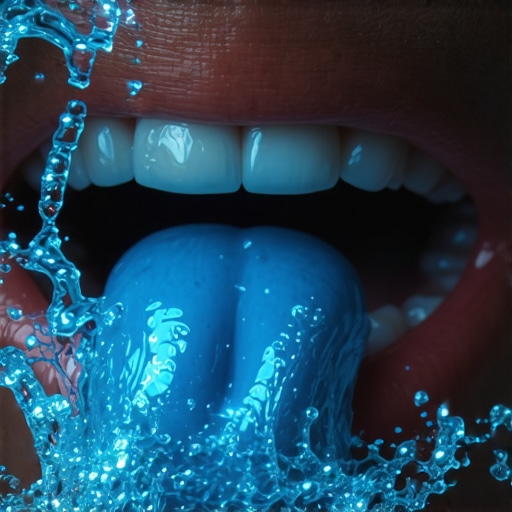
I vividly remember the morning I thought my gums were actually melting off. I had just swished a bright blue, alcohol-heavy mouthwash, and within three seconds, I was doubled over the sink, tears pricking my eyes. It felt like I’d gargled with a blowtorch. Like many of you, I grew up with the idea that ‘if it burns, it’s working.’ It turns out, that logic is about as outdated as using a rotary phone to send a text. For years, I made the mistake of thinking that physical discomfort was a prerequisite for a clean mouth, but I was actually sabotaging my own progress. Today, I’m going to show you exactly why that sting happens and how you can achieve a professional-level clean without the agony.
Stop Punishing Your Gums with Every Rinse
The truth is, that sting isn’t the sound of bacteria screaming in defeat; it’s the sound of your delicate oral tissues begging for mercy. I spent far too long believing that teeth cleaning secrets involved some level of grit and endurance. Alcohol is a desiccant, which is a fancy way of saying it sucks the moisture right out of your mouth. When your mouth gets dry, you lose the protective power of saliva, which is your body’s natural defense against decay. This is precisely why your gums sting when you use alcohol-based mouthwash; the ethanol is irritating the mucosal lining, causing micro-trauma to the very areas you’re trying to protect.
Is that intense burning sensation actually necessary?
Short answer: No. In fact, it’s often counterproductive. According to the American Dental Association, while alcohol acts as a solvent for other ingredients, it can also lead to significant oral dryness. Have you ever noticed that the more you use the ‘strong stuff,’ the more your mouth feels like sandpaper every morning? That’s not a coincidence. You’re stripping away the healthy microbiome that keeps your breath fresh. We need to shift our focus toward a sustainable oral health routine that prioritizes comfort and long-term wellness over a five-second chemical burn. Have you ever had to spit out your mouthwash early because the pain was just too much to handle? If so, you aren’t alone, and you aren’t failing at hygiene—you’re just using the wrong tools.
Master the Soft-Touch Technique for Better Results
To get a professional-level clean, you have to stop treating your mouth like a construction site. I vividly remember a phase where I thought the more pressure I applied, the whiter my teeth would get. I once spent ten minutes aggressively scrubbing a stubborn coffee stain with a hard-bristled brush, convinced I was doing ‘deep work.’ The result? I didn’t get the stain off, but I did manage to make my gums bleed for an hour and developed a lingering ache that lasted for days. This is exactly why your dentist wants you to stop using hard bristles. You aren’t removing stains; you’re eroding your enamel, which is the only thing standing between you and a world of sensitivity. Think of your brush like a high-end detailing tool for a classic car; you want to gently buff away the biofilm without scratching the finish.
Swap Your Power-Washer Mindset for a Gentle Buff
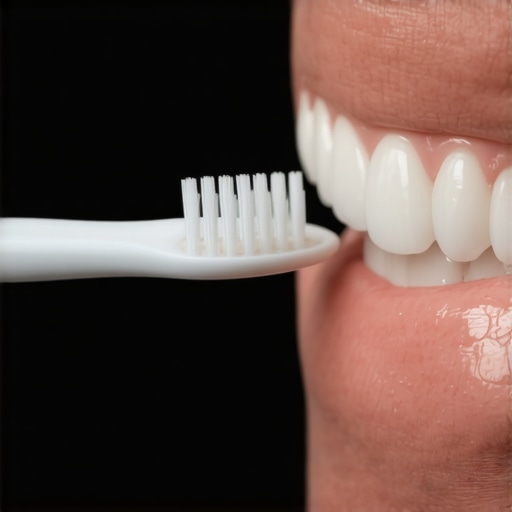
The most effective motion isn’t a back-and-forth saw. Instead, angle your brush at 45 degrees toward the gum line and use small, circular ‘wiggling’ motions. This allows the bristles to slip just under the edge of the gum where the most damage occurs. If you’ve noticed your teeth feel ‘fuzzy’ even after brushing, it’s likely because you’re missing these transition zones. This gentle approach is a core part of a modern family dentistry focus, ensuring that everyone from toddlers to seniors keeps their natural teeth for a lifetime. It’s about precision, not power.
The C-Shape Strategy for Flossing Success
Flossing shouldn’t feel like you’re trying to cut a piece of cheese with a wire. Most people snap the floss straight down, hitting the gum with a painful thud. Instead, once the floss is between your teeth, wrap it around the side of one tooth in a ‘C’ shape. Slide it up and down against the tooth surface, then switch to the other side. This is vital because brushing alone leaves about 35% of your tooth surfaces untouched. If you ignore these gaps, you eventually face the reality of how often you actually need a professional scaling to prevent bone loss. It’s much easier to spend two minutes flossing correctly now than an hour in a specialist’s chair later.
Protecting the Work You’ve Already Paid For
If you have dental work, your strategy changes slightly to ensure longevity. For those with restorations, caring for crowns requires a balance of thoroughness and caution. You don’t want to use abrasive ‘whitening’ toothpastes on porcelain or resin, as they can create micro-scratches that actually catch more stains over time. I learned this the hard way when I used a gritty charcoal paste on an old restoration and ended up having to learn how to manage sudden tooth sensitivity to hot coffee or tea because I’d compromised the seal. Now, I stick to pH-neutral, non-abrasive gels that clean without the chaos, ensuring my dental work looks as good as the day it was placed.
Stop Chasing the Natural Label at the Expense of Your Enamel
We live in an era where ‘natural’ is marketed as the gold standard for everything from deodorant to floor cleaner. But in the world of dentistry, this trend can be surprisingly dangerous. I see so many people switching to fluoride-free alternatives because they want to avoid chemicals, only to realize too late why natural toothpastes without fluoride might be a risk for your kids and themselves. Fluoride isn’t just a buzzword; it’s a necessary mineral that remineralizes enamel. Without it, you’re essentially leaving your teeth unarmed against acid attacks. I’ve also watched friends jump on the ‘DIY whitening’ bandwagon, using abrasive substances like activated charcoal. While it might scrub away a surface stain, the truth about charcoal toothpaste and why it might be ruining your enamel is that it’s often too gritty, literally sanding down the protective layer of your teeth. Have you ever fallen into this ‘natural’ trap? Let me know in the comments.
Why does my crown feel sensitive to cold even years after placement?
It’s a common misconception that once a tooth is crowned, it’s ‘fixed’ forever and immune to pain. I’ve had patients come in baffled because their porcelain investment is suddenly throbbing. Often, the reason why your crown might feel sensitive to cold even years after placement has less to do with the crown itself and more to do with gum recession or a micro-leakage at the margin. A study published in the Journal of Dentistry emphasizes that the ‘marginal fit’—the microscopic space where the crown meets your natural tooth—is the primary site for secondary decay. If that seal is compromised, bacteria can sneak underneath. This is why expert advice on crowns and teeth cleaning for lasting results always emphasizes precision cleaning at the gum line, not just the surface of the ceramic.
Don’t Let Your Morning Latte Dissolve Your Dental Investment
One of the biggest ‘oops’ factors I see is the assumption that crowns are invincible. People treat them like bulletproof armor, but they are actually quite delicate at the interface. For example, the reason your coffee habit is ruining your crowns sealant isn’t just about the staining; it’s the constant acidity that can slowly degrade the bonding cement over years of heavy consumption. This ‘silent’ erosion is why we look at more than just cavities during a checkup. We are looking for systemic connections, too. There is a profound connection between your heart health and your last dental cleaning because chronic inflammation in your gums doesn’t stay in your mouth—it travels through your bloodstream. Treating your oral health as an isolated ‘mouth issue’ is the most advanced mistake you can make. It’s all connected, and keeping those crown margins clean is just as much about your heart as it is about your smile.
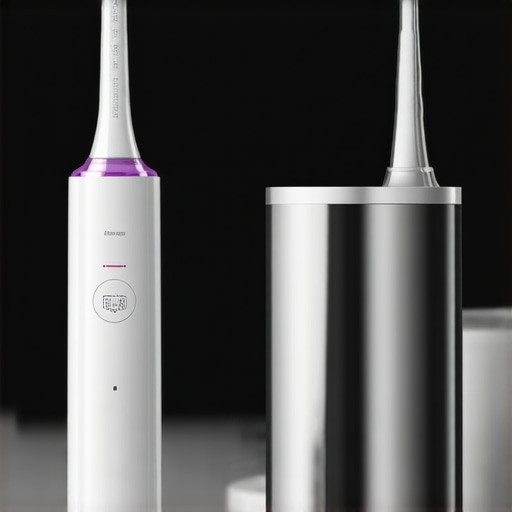
I’ve spent years experimenting with every gadget on the market, from vibrating toothbrushes that feel like a jackhammer to water flossers that turned my bathroom into a splashing mess. If you’re serious about longevity, especially for restorations, you need to invest in a brush with a built-in pressure sensor. I personally switched to an oscillating-rotating model because it physically breaks up the biofilm more effectively than sonic vibration alone, which is a key part of expert advice on crowns and teeth cleaning for lasting results. This isn’t just about bells and whistles; it’s about preventing the accidental damage we discussed earlier. When I used a manual brush, I was guessing; now, my brush literally glows red if I push too hard, protecting my enamel from my own over-eagerness.
Ditch the String and Level Up Your Interdental Game
If you have crowns or a permanent retainer, traditional floss can feel like a chore you’re destined to fail. I’ve found that a high-quality water flosser is the single most important tool for caring for crowns and keeping that marginal seal intact. The pressurized stream gets into the nooks that string simply cannot reach. According to a meta-analysis published in the Cochrane Library, powered toothbrushes—specifically oscillating-rotating ones—showed a 11% reduction in plaque after one to three months of use compared to manual brushes. When you combine this with the precision of a water flosser, you’re not just cleaning; you’re performing a daily mini-maintenance session on your dental investments. This synergy is exactly how you achieve a professional-level oral health routine that lasts a lifetime.
How do I maintain my crowns and natural teeth for the next twenty years?
Consistency beats intensity every single time. You don’t need a deep-clean marathon once a month; you need two minutes of focused, gentle care twice a day. This involves monitoring your gum health closely—if you see changes, don’t wait. Understanding how often you actually need a professional scaling to prevent bone loss is vital because even the best home care can’t reach everything. For my own family, I make sure we follow oral health tips every family should follow in 2025, which includes using a fluoride-based rinse at night to let those minerals soak in while we sleep. It’s about building a fortress, one brick at a time.
The Future of Your Smile is Smart and Data-Driven
Looking ahead, I predict we are going to see a massive shift toward AI-integrated oral care. We are already seeing brushes that map your mouth in real-time on a smartphone app, showing you exactly which molar you’re neglecting. This data-driven approach removes the guesswork and ensures that the impact of regular teeth cleaning on overall oral wellness is maximized. We will soon move away from the ‘one-size-fits-all’ dental advice and toward personalized biometrics that tell you exactly when your microbiome is out of balance. For now, the best thing you can do is focus on maintaining your dental crowns by using non-abrasive tools and staying ahead of the curve. I challenge you to try this today: swap your manual brush for an electric one with a pressure sensor for one week, and I promise you’ll never go back to the ‘scrub and hope’ method again.
Hard Truths from My Decade of Dental Mistakes
I used to think that a little blood in the sink was just part of the process, but I finally realized that healthy gums simply do not bleed. If they do, your body is sounding an alarm. Another lightbulb moment was discovering that expensive dental work is only as good as the hygiene behind it. I’ve seen people spend thousands on understanding the role of crowns in modern smile makeovers only to let them fail because they ignored the gum line. Lastly, I learned that ‘white’ doesn’t always mean ‘healthy.’ You can have a bleached smile and still be dealing with bone loss. True the impact of regular teeth cleaning on overall oral wellness is about the foundation, not just the facade.
#IMAGE_PLACEHOLDER_E#
The Toolkit That Saved My Smile
After years of trial and error, I’ve narrowed my routine down to three essentials. First, a high-quality water flosser is non-negotiable if you want to know the truth about how long a porcelain crown actually lasts before replacement. It flushes out the bacteria that string floss often leaves behind at the crown’s edge. Second, I swear by a pH-balanced fluoride rinse; it’s the secret to keeping your smile white without expensive kits by preventing the micro-etching that leads to staining. Finally, I recommend the ADA MouthHealthy database for any technical questions; it’s the only source I trust for unbiased, science-backed dental advice.
Take Pride in the Future of Your Smile
Your journey toward a healthier mouth doesn’t have to be painful or overwhelming. It starts with a simple choice to be more intentional with your daily oral health routine. When you shift your perspective from ‘cleaning’ to ‘preserving,’ everything changes. You aren’t just brushing away breakfast; you are protecting your confidence and your long-term wellness. You deserve to feel the empowerment that comes with knowing how crowns can transform your dental confidence and keep your natural teeth strong for decades. Have you ever struggled with keeping a consistent routine when your gums felt sensitive? Let me know your experience below!