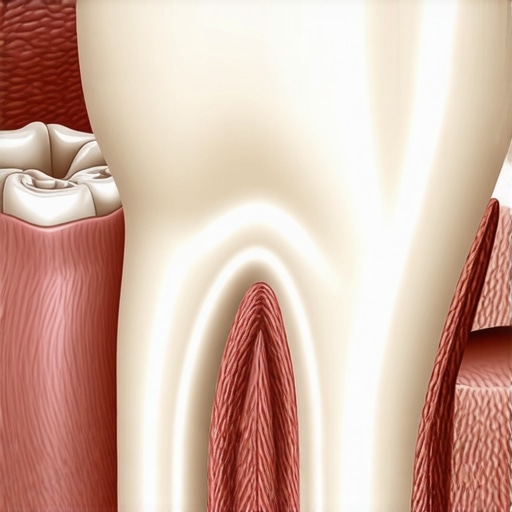
I was standing in front of my bathroom mirror last Tuesday, scrubbing away like I was trying to polish a diamond, when I noticed something unsettling. My canine teeth didn’t just look yellow; they looked… stretched. For a second, I thought it was just the lighting, but then I realized the gum line was definitely higher than it used to be. It is a jarring moment when you realize your smile is literally changing shape right before your eyes. I felt that immediate surge of panic we all get when something feels ‘off’ with our health. I spent years thinking that if I just brushed harder, I would have a cleaner mouth, but I was actually doing the opposite. [IMAGE_PLACEHOLDER]
Your Smile Might Be Changing Shape Without Permission
We often ignore the subtle shifts in our mouths until one day the reflection looks different. If you have started noticing that you look a bit ‘long in the tooth,’ you aren’t imagining it. There is a specific reason your teeth look longer as you get older, and it usually boils down to gum recession. Your gums are the frame for your teeth, and when that frame starts to pull back, it exposes the roots that were never meant to see the light of day. Today, I want to walk you through why this happens and, more importantly, how we can stop the retreat before you find yourself needing major dental work. I’ll share the exact mistake I made—thinking I was being ‘extra clean’ while actually destroying my own gum tissue. According to the American Academy of Periodontology, nearly half of adults over 30 suffer from some form of gum disease, which is the silent engine driving this recession.
Is it actually possible to fix this without surgery?
This is the big fear, right? We assume that once the gums are gone, they are gone for good, and we are headed straight for a painful grafting procedure. While gums don’t exactly ‘grow back’ like a fingernail, the situation is far from hopeless if you catch it early. The first step I had to learn was that my technique was my own worst enemy. I had to understand why your dentist wants you to stop using hard bristles immediately. Using a stiff brush is like using sandpaper on silk; your gums just can’t take that kind of abuse daily. We also have to look at the impact of regular teeth cleaning on overall oral wellness, because tartar buildup is another physical wedge that pushes your gums away from your teeth. Have you ever looked in the mirror and felt like your teeth were suddenly twice as big as they were five years ago? If so, you’re in the right place, because we are going to dive into the daily habits that actually keep your gums exactly where they belong.
Stop treating your gums like a kitchen floor
My biggest mistake was thinking that force equaled cleanliness. I used to scrub my teeth with a ‘firm’ bristle brush until my hand ached, thinking I was winning the war against plaque. In reality, I was sandblasting my gingival tissue right off the bone. You have to realize that your gums aren’t a durable surface like tile; they are more like the delicate skin on the inside of your cheek. The first actionable step is to swap your hard brush for a soft or extra-soft version. If you find yourself scrubbing horizontally, stop immediately. You want to use circular motions at a 45-degree angle toward the gum line. This technique, known as the Bass method, massages the tissue instead of shredding it. It was a hard habit to break, but once I switched, that raw, tender feeling after brushing vanished within a week. I also learned that an oral health routine isn’t about power, it’s about consistency and precision.
Switch to an electric brush without the panic
When I finally listened to my dentist and bought an electric brush, I actually freaked out on day three. My sink looked like a crime scene because of the bleeding. I thought the vibration was too aggressive for my receding gums, but I later realized why your gums bleed when you switch to an electric toothbrush: it’s often the removal of deep-seated bacteria that your manual brush was simply skipping over. The trick is to let the brush do the work. Don’t press; just glide. If you’re using a manual, you need to be even more disciplined about your pressure. I found that holding the brush with just my fingertips, rather than my whole fist, helped me lighten the load. 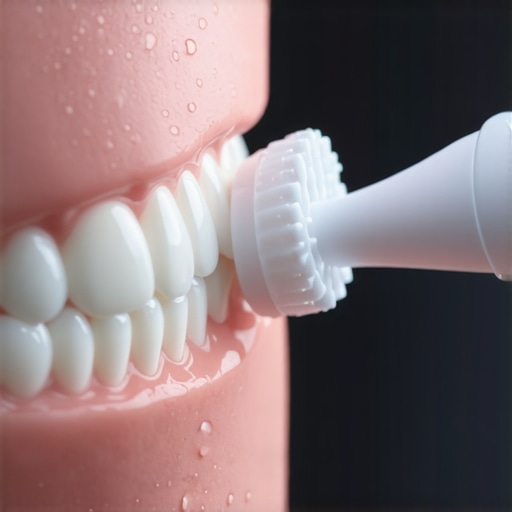
Don’t ignore the dark lines around your dental work
If you already have restorations, gum recession reveals itself in a very specific, annoying way. You might start seeing a dark, metallic line at the base of a tooth you thought was fixed forever. This is often a sign that the gum is pulling away from a porcelain-fused-to-metal restoration. Understanding why some crowns look like real teeth while others have a dark line is crucial for your confidence. When the gums retreat, they expose the margin of the crown. To prevent this from getting worse, you have to be meticulous about caring for crowns with the same gentleness you use on natural teeth. I noticed a small gap forming under my back molar crown last year, and my dentist explained that food was getting trapped there, acting like a wedge. I had to start using a water flosser to flush out that ‘no man’s land’ between the crown and the gum.
The salt water trick for sudden inflammation
Sometimes your gums look ‘long’ because they are inflamed and pulling away due to irritation. Before you reach for a harsh, alcohol-based mouthwash that dries out your mouth, try the salt water trick. It sounds like an old wives’ tale, but the salt water trick that calms gum inflammation in minutes is actually backed by science because it creates an alkaline environment that bacteria hate. I use a half-teaspoon of salt in warm water whenever I feel a ‘heavy’ or itchy sensation in my gums. It’s an immediate reset button for your mouth’s ecosystem. This is especially important for family dentistry practices, as it’s a safe way to treat gum sensitivity in kids without using chemicals.
The silent power of professional scaling
No matter how good your home game is, you cannot remove tartar (calculus) once it has hardened. Tartar is like barnacles on a ship; it’s rock-hard and creates a rough surface that invites more bacteria to hunker down. This is why you need to know how often you actually need a professional scaling to prevent bone loss. When that gunk builds up under the gum line, it physically pushes the tissue away from the tooth. I used to skip my six-month cleanings because ‘nothing hurt,’ only to find out that the silent buildup was the exact reason my canines were starting to look so long. If you’ve been avoiding the chair, it’s time to realize that a deep cleaning is the only way to stop the mechanical ‘push’ against your gums.
Your crown is not a suit of armor
Let’s be honest: we often treat a dental crown like a ‘get out of jail free’ card for that specific tooth. There is a common myth that once a tooth is capped, it’s invincible to decay. In my experience, this is the most dangerous assumption you can make. While the porcelain or zirconia itself won’t rot, the natural tooth structure underneath is still very much alive and vulnerable. The real battleground is at the margin—that tiny seam where the crown meets your gum line. If your oral hygiene slips, bacteria congregate at that seam, leading to ‘recurrent decay.’ I’ve seen cases where the entire tooth structure under a beautiful restoration was lost because the owner thought they didn’t need to floss there anymore. This is why maintaining your dental crowns requires more precision than a standard tooth. You aren’t just cleaning a surface; you are defending a seal.
The subtle signs of a failing seal
The biggest ‘oops’ factor I’ve encountered is ignoring a tiny, occasional sensation. If you feel a slight ‘twinge’ when you bite down or a momentary ‘click,’ your brain might tell you it’s just a piece of food. In reality, why your dental crown feels like it has a click when you bite often points to a break in the cement seal. Once that cement washes out, even a fraction of a millimeter, saliva and sugar enter the space. A study published in the Journal of Oral Rehabilitation highlights that marginal leakage is a primary cause of restoration failure, often occurring long before any pain starts. If you wait for a toothache, you’ve waited too long. You need to know how to tell if your dental crown has a small leak before the internal structure is compromised.#IMAGE_PLACE_HOLDER_C#
Is it possible for a crown to leak without any pain?
This is the question that trips up even the most diligent patients. The answer is a definitive yes. If the tooth had a root canal before the crown was placed, there are no nerves left to scream ‘help’ when bacteria invade. You could have a massive cavity growing under that expensive porcelain and never feel a thing until the crown literally falls off. This is why professional imaging is non-negotiable. Beyond the technical side, expert advice on crowns and teeth cleaning emphasizes that your home tools matter. For example, the truth about how long a porcelain crown actually lasts depends entirely on the health of the surrounding tissue. If the gums recede, the ‘safe’ margin is exposed, and the clock starts ticking faster on that restoration.
Don’t let ‘natural’ labels give you a false sense of security
In the world of family dentistry, I often see parents switching to fluoride-free, ‘natural’ toothpastes for their kids, thinking it’s the healthier choice. However, why some children get cavities despite never eating candy often boils down to a lack of remineralization. Without fluoride, the enamel doesn’t have the tools to repair the micro-damage caused by natural fruit sugars. It’s a sophisticated trap: you think you’re being extra careful with their health while inadvertently leaving their teeth defenseless. Following oral health tips every family should follow in 2025 means balancing holistic choices with proven science. Have you ever fallen into this trap of thinking a ‘protected’ tooth or a ‘natural’ product was doing more work than it actually was? Let me know in the comments.
I used to think that as long as I didn’t have a visible cavity, I was in the clear. But then I learned about the mechanical side of oral health—the physical wear and tear that happens while we sleep. If you have crowns or sensitive gums, you absolutely must consider a night guard. It sounds like something only old people use, but how a simple night guard can save you thousands in future dental work is no exaggeration. I personally started wearing one after noticing micro-cracks in my natural teeth. The pressure of grinding, or bruxism, can actually pop the seal on a crown or accelerate gum recession by putting lateral stress on the tooth root. It is the single most effective way to protect your financial and physical investment in your smile.
Why I finally traded my string floss for a water jet
For years, I struggled to get traditional floss around the base of my crowns without it shredding or getting stuck. That friction was actually irritating my gums and making the recession worse. I eventually switched to a high-powered water flosser, and it changed everything. I use it specifically because the pulsating stream can reach into the pocket between the gum and the restoration without mechanical abrasion. This is a core part of expert advice on crowns and teeth cleaning that most people ignore. If you want the real teeth cleaning secrets, it is about flushing out the anaerobic bacteria that love to hide where your toothbrush cannot reach.
How do I keep my dental work from failing over time?
The key to longevity is not just what you do at home; it is how you supplement it with professional help. Many people fear the scraper, but why ultrasonic cleaning is faster and more comfortable than hand scaling is something you should discuss with your hygienist during your next visit. A study published in the Journal of Clinical Periodontology found that ultrasonic devices are significantly more effective at disrupting biofilm in deep periodontal pockets compared to traditional hand instruments. I make sure my hygienist uses the ultrasonic tip around my crowns to ensure no calcified plaque is sitting there quietly dissolving my cement seal. 
The future of your bathroom mirror
Looking ahead, I predict we are less than five years away from widespread smart mirrors that use specialized UV light to highlight plaque buildup in real-time. We will not have to guess if we missed a spot behind a molar; the mirror will literally map it out for us. Until then, we have to be our own advocates. Maintaining your dental crowns and natural teeth in 2025 requires a mix of high-tech tools and low-tech consistency. My challenge to you: Tonight, do not just brush. Take thirty seconds to really look at the base of your teeth with a small handheld mirror and a bright light. If you see any redness or a tiny ledge of tartar, call for a professional scaling immediately. Do not wait for the pain to tell you there is a problem.
Lessons from the Dental Chair You Won’t Hear in a Waiting Room
After years of trial and error, I’ve realized that oral health isn’t just about avoiding sugar—it’s about respect for your body’s architecture. One of my biggest lightbulb moments was learning that if I have a minor imperfection, there are ways how to fix a small chip in your front tooth without a full crown, which can save the integrity of the natural tooth for much longer. I also discovered that sensitivity isn’t always a ‘bad’ sign; for instance, understanding why some dental crowns feel cold when you drink iced coffee helped me realize that my restorations are still part of a living system that needs care. Finally, I learned that for the most visible part of my smile, why ceramic crowns are the best choice for your front teeth is because they mimic the light-reflecting properties of enamel while being gentle on the surrounding tissue.
The Tools That Actually Earn Their Keep
Your bathroom counter shouldn’t look like a pharmacy, but a few specific tools are non-negotiable. I personally vouch for a high-quality water flosser because it reaches the ‘danger zone’ where a crown meets the gum without the risk of shredding. I also swear by a custom-fit night guard; protecting your investment from the sheer force of grinding is the best insurance policy you can buy. For those with kids, check out teeth cleaning secrets that turn a chore into a habit, ensuring the next generation doesn’t repeat our mistakes. If you’re looking for a roadmap for the whole house, these oral health tips every family should follow in 2025 provide a perfect balance of science and daily practicality.
A Lifetime of Confidence is Within Your Reach
It is easy to feel defeated when you notice recession or a failing restoration, but remember: your mouth is incredibly resilient when given the right environment. By committing to maintaining your dental crowns with precision and adopting a proactive oral health routine, you aren’t just preventing pain—you’re preserving your ability to laugh, eat, and speak with total confidence. The future of your smile isn’t written in stone; it’s written in the small, gentle choices you make every single morning and night. Have you ever noticed a dark line or a weird sensation around an old crown? Let me know in the comments below!