
I remember sitting in that tiny plastic chair at the pediatric dentist, clutching my coffee like a lifeline, while my four-year-old had her first real exam. I had been pretty relaxed about her brushing habits—after all, those teeth were temporary, right? When the dentist pointed out a dark spot that was dangerously close to becoming a major problem, I felt that familiar, hot prickle of parent-guilt. I had fallen for the biggest myth in modern parenting: the idea that baby teeth are just practice teeth. Today, I am going to show you why those little white nubs are actually the most important real estate in your child’s mouth and how we can keep them healthy without losing our minds or our bank accounts in the process.
Stop Treating These Teeth Like They Are Disposable
The truth is, your child’s primary teeth are far more than just cute placeholders for the Tooth Fairy. They are the architects of your child’s future face. They hold the exact amount of space needed for adult teeth to emerge straight, they allow for proper speech development, and they are essential for good nutrition during those critical growth spurts. If a baby tooth is lost too early due to decay, the surrounding teeth can shift like tectonic plates, leading to a crowded mess of orthodontic issues later. I learned this the hard way when I realized family dentistry should have been my priority from the very first sprout, not just a reactive measure when things went wrong.
Are these tiny teeth actually worth the stress?
It is a fair question to ask. Why should we obsess over something that is guaranteed to fall out anyway? But here is the kicker: according to the American Academy of Pediatric Dentistry, tooth decay is the most common chronic infectious disease among children in the United States, occurring five times more often than asthma. It is not just a little hole; it can lead to systemic infections and severe pain that keeps kids from sleeping or learning. Early on, I made the mistake of thinking juice at bedtime was a harmless comfort, completely unaware of the mistake most parents make with baby bottle tooth decay. We even have to be careful during those sweet infant months; learning how to protect your baby’s teeth while they are still nursing is a total game-changer for preventing early childhood caries. Have you ever felt that sudden panic when you realize a supposed healthy snack was actually a hidden sugar bomb? Let me know in the comments—I have definitely been there. We can start making better choices today by picking the best snacks for kids that won’t cause instant cavities, ensuring those little placeholders stay exactly where they belong until they are naturally ready to leave.
Master the Daily Dental Routine
Silicone finger brushes are great for tender gums, but once those back molars arrive, they are essentially useless for actual cleaning. It is like trying to sweep a gravel driveway with a feather duster. You need the mechanical action of nylon bristles to actually scrub away the sticky biofilm. When my youngest got her first back tooth, I kept using the gentle finger brush because she liked it and it was easier for me. Two months later, I noticed her back molars felt like they were covered in fuzzy sweaters. I had to learn how to transition your toddler to a real toothbrush practically overnight to stop the plaque from hardening. Choose a brush with a small head and soft bristles, and let them paint their teeth with water first to get used to the new sensation before adding paste.
Clean the Tongue Without Triggering the Gag Reflex
Bacteria do not just hang out on the enamel; they live in the carpet-like surface of the tongue, which is a major cause of bad breath even in preschoolers. However, most kids have a sensitive gag reflex that makes them fight the brush. If you shove a brush too far back, you have lost the battle for the next week. The trick is to have them stick their tongue out as far as possible and make a loud Ahhh sound. This relaxes the throat muscles. Use a very soft brush and sweep from the middle forward in one direction. Mastering how to clean your toddler’s tongue without the gag reflex is a total game-changer for preventing that sour morning breath and keeping the bacterial load low in their mouth.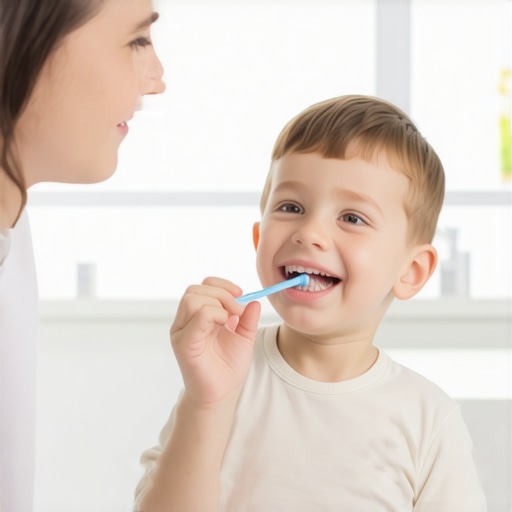
Don’t Rinse Away the Magic After Brushing
This was the hardest habit for me to break because I grew up doing the opposite. We have been conditioned to brush, spit, and then immediately rinse with a cup of water. But when you do that, you are washing away the concentrated fluoride or hydroxyapatite that is meant to sit on the enamel and remineralize it. Think of it like applying a protective wax to a car—you would not immediately spray it down with a pressure washer. You should encourage your child to spit out the excess paste, but why you should stop rinsing with water immediately after brushing becomes clear when you realize that slurry is actually a healing treatment for their thin enamel.
Protect Weakened Teeth with the Right Hardware
Sometimes, despite our best efforts, a baby tooth gets a cavity that is too large for a standard filling to hold. This is where understanding the role of crowns becomes vital even for children. A pediatric crown is essentially a helmet for a tooth that has been structurally compromised. If the structure is weak, a filling will eventually crack or fall out, but why your dentist recommends a crown is to ensure the tooth stays in place as a space maintainer until its natural expiration date. It prevents the need for early extractions and keeps their oral health routine on track without constant emergency repairs.Most of us were taught that a vigorous scrub is the only way to get that ‘dentist-clean’ feel at home. But here is the contrarian truth: you might be scrubbing your smile away. While we focus on removing stains, many parents unknowingly engage in 5 dental habits that are actually ruining your enamel by being too aggressive. When you use a hard-bristle brush or apply too much pressure, you aren’t just removing plaque; you are wearing down the translucent enamel layer. This is why hard brushing actually makes your teeth look darker over time—it exposes the yellowish dentin underneath. According to the American Dental Association (ADA), using highly abrasive toothpastes can lead to a Relative Dentin Abrasivity (RDA) score that is far too high for daily use, effectively sanding down your teeth.
Stop Scrubbing Like You Are Cleaning a Grout Line
It is a common mistake to equate friction with health. In reality, the impact of regular teeth cleaning on overall oral wellness depends on gentle, circular motions that disrupt the biofilm without traumatizing the gums. If you’ve noticed your gums receding despite brushing three times a day, you are likely a victim of ‘toothbrush abrasion.’ I fell into this trap myself, thinking I was being a ‘gold star’ patient, only to find my roots becoming sensitive and exposed. Have you ever fallen into the trap of thinking a harder brush meant a cleaner mouth? Let me know in the comments—I’d love to hear if you’ve made the switch to soft bristles yet.
Is your ‘squeaky clean’ feeling actually a sign of damage?
When your teeth feel ‘squeaky’ right after a meal, it might actually be a sign that acidic foods have temporarily softened your enamel. Brushing immediately after eating citrus or drinking soda is one of the biggest ‘oops’ factors in oral health routine management. You should wait at least 30 minutes for your saliva to neutralize the acid.
The Nuance of Living With New Restorations
If you or your child have recently received a restoration, the experience can be jarring. For instance, why your new crown feels cold when you breathe in is a question that catches many off guard. This sensitivity is often due to the tooth’s nerve reacting to the preparation process or the thermal conductivity of the material. It doesn’t mean the procedure failed, but it does mean you need expert advice on crowns and teeth cleaning for lasting results.  Mastering maintaining your dental crowns dos and donts for best results is about more than just brushing; it’s about understanding how these foreign materials interact with your biology. One major trap to avoid is skipping the prep work; the one thing you must do before your next dental cleaning is to track any minor shifts or sensitivities so your provider can catch micro-leaks before they turn into full-blown infections. By following oral health tips every family should follow in 2025, you ensure that every member of the household, from the toddlers with their first molars to the adults with their latest crowns, is building a foundation that lasts decades, not just until the next checkup.I used to think a standard manual toothbrush was fine, but my hygienist finally convinced me to switch to a sonic model. The difference isn’t just in the ‘clean’ feeling; it’s about the fluid dynamics—the way the vibrations push water and saliva into those tiny gaps between your teeth. If you have crowded teeth like I do, learning how to clean between teeth if you have tight spacing is essentially impossible with just a piece of string. I personally swear by the Waterpik for my nighttime routine because it flushes out the debris that my manual flossing misses, which is the secret to the secrets to making your professional cleaning last longer. When you invest in high-quality restorations, you have to treat them like the medical-grade equipment they are.
How do I keep my dental work from failing after five years?
The key is consistency and the right mechanical approach. For those of us with restorations, maintaining your dental crowns dos and donts for best results starts with avoiding the ‘yank’ method of flossing. Instead of pulling the floss back up through the contact point, you should pull it through the side to avoid catching the edge of the crown. I also recommend using the proper way to use interdental brushes for best results, especially around the base of a crown where bacteria love to hide. This prevents the dreaded ‘crown funk’ and explains how to stop your crown from smelling like old food by removing trapped organic matter that simple rinsing can’t touch. According to Dr. Gordon Christensen, a world-renowned expert in restorative dentistry and founder of the Clinicians Report, the longevity of a restoration is almost entirely dependent on the patient’s ability to manage the marginal biofilm daily. 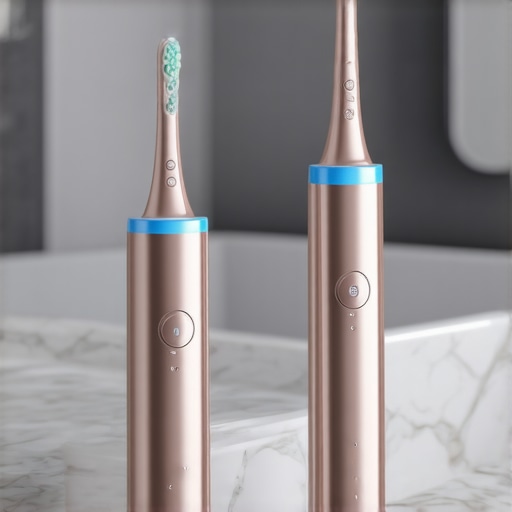
Look Into the Crystal Ball of Oral Health
I predict that in the next five years, we are going to see a massive shift toward AI-integrated home care. We are already seeing toothbrushes that map your mouth on your smartphone in real-time, but soon, these tools will be able to detect the chemical markers of a cavity before it even shows up on an X-ray. For families, this means oral health tips every family should follow in 2025 will include monthly ‘teledentistry’ scans from your own bathroom. This level of monitoring is the ultimate way of family dentistry focus building a lifetime of healthy smiles. My best advice? Start small. Pick one ‘advanced’ tool this week—whether it’s a tongue scraper or an interdental brush—and commit to it for seven days. You will be amazed at how much the impact of regular teeth cleaning on overall oral wellness transforms your energy levels and your confidence.
The Realities of Raising Cavity-Free Kids I Wish Someone Had Told Me Earlier
Reflecting on my journey from that panicked day in the pediatric dentist’s chair, I’ve realized a few hard truths that aren’t usually in the pamphlets. First, the ‘it’s just a baby tooth’ mentality is the fastest way to expensive orthodontic bills later. Second, dental health is a team sport; if I wasn’t modeling good habits with my own oral health routine, I couldn’t expect my kids to care. Lastly, the the impact of regular teeth cleaning on overall oral wellness goes far beyond the mouth—it’s about teaching them that their bodies are worth protecting. I also learned that teeth cleaning secrets effective home practices for family dental health often involve more listening to their sensory concerns and less lecturing about sugar.
The Daily Toolkit That Saved My Sanity and Their Enamel
If you want to move from reactive to proactive, there are a few tools I swear by. A high-quality sonic toothbrush is non-negotiable once those permanent molars arrive because the vibrations do the heavy lifting for uncoordinated hands. I also highly recommend keeping a dedicated ‘dental diary’ on your phone to track when a crown feels ‘off’ or when a child complains of sensitivity; tracking these details is the one thing you must do before your next dental cleaning to ensure your provider has the full picture. For those in the family with restorations, following caring for crowns essential tips for longevity and shine will prevent that ‘old food’ smell and keep the ceramic looking natural for decades. If you are looking for professional results for yourself, remember why professional whitening beats over the counter strips when it comes to safety and long-term enamel integrity. #IMAGE_PLACEHOLDER_E#
A Legacy of Healthy Smiles Starts Today
Transforming your family’s dental health doesn’t happen overnight, but every small change adds up to a massive shift in wellness. Whether you are discovering how crowns can transform your dental confidence after years of hiding your smile, or you are simply trying to get a toddler to stay still for two minutes, you are doing the hard work that matters. Your commitment to these oral health tips every family should follow in 2025 is an investment in their future confidence, speech, and physical comfort. Don’t be afraid to start fresh tomorrow morning with a new attitude and a soft-bristled brush. Have you ever struggled with getting your kids to actually enjoy their brushing routine, or is it a nightly battle in your house? Let me know below!