I remember the exact moment it happened—a Tuesday evening, a slice of sourdough toast, and a sudden, sharp zinger of pain that felt like an electric shock straight into my jaw. It was not the kind of dull ache that lingers after a long day; it was a precise, angry protest that vanished as quickly as it appeared. I sat there, fork frozen in mid-air, wondering if I had just imagined it. But the next bite confirmed the truth. Something was definitely wrong. For months, I made the classic mistake of being my own “at-home” dentist. I told myself it was just a fluke or that I was biting too hard, and I simply started chewing on the other side of my mouth. I did not realize that by ignoring that sharp “ping,” I was letting a tiny problem turn into a massive headache for my family dentistry team to solve. Today, we are going to dive into the mystery of why your tooth only screams when you put it to work, and I will show you how to tell if it is a minor hiccup or a sign you need to act fast.
Why Your Tooth Only Complains When You Are Eating
It is a bizarre sensation, isn’t it? You can drink ice-cold water or hot coffee without a flinch, but the moment you hit a sunflower seed or a piece of crusty bread, it feels like a lightning bolt. When I first felt it, I assumed it was a standard cavity. But here is the thing: cavities usually ache or react to sugar. When pain is strictly pressure-sensitive, we are often looking at a structural issue, like cracked tooth syndrome. According to the American Association of Endodontists, cracked teeth are a leading cause of tooth loss because the fractures are often invisible to the naked eye. I spent months thinking I was saving money by avoiding the office, but I was actually risking a much more involved modern smile makeover down the road.
Is this sharp pain actually worth the dental bill?
I get it. Every time I hear the words “dental work,” my wallet starts to sweat. You might be wondering if that momentary zap is really worth the fuss or if your provider is just looking for an excuse to suggest a crown after a root canal. The truth is, a tiny crack acts like a wedge. Every time you bite, that crack opens and closes, irritating the sensitive pulp inside. If you catch it early, a simple adjustment or even just a professional deep cleaning to check the health of the surrounding tissue might be the first step. But if you wait, that crack spreads. Have you ever found yourself avoiding your favorite crunchy snacks because you are scared of that one specific tooth? Drop a comment below—I would love to know I was not the only one playing musical chairs with my dinner!
The Stealthy Culprits Hiding Under the Surface
When I finally stopped playing the “chew-around-the-pain” game, I learned that the reason your tooth hurts when you bite down hard can be quite sneaky. In my case, it was a loose filling that was flexing under pressure. It is one of those oral health routine nuances no one really tells you about until it happens. Whether it is a hairline fracture, a high filling that needs shaving down, or an old restoration that has seen better days, the specific “why” matters. For those already maintaining your dental crowns, you know that keeping the seal tight is half the battle. If that seal fails, pressure becomes your enemy. By identifying the root cause now, we can keep your smile intact and your dinner plans enjoyable.
Pinpoint the Pain Like a Pro
To fix the problem, you first have to find it. I remember sitting at my kitchen table with a popsicle stick, trying to replicate the exact angle of my sourdough-induced agony. I was convinced I needed a full extraction. When I finally dragged myself into the chair, my dentist didn’t reach for the drill. He reached for a piece of blue articulating paper. It turned out my bite was just a fraction of a millimeter off—a ‘high spot’ from a recent repair. Two minutes of polishing later, the lightning bolts were gone. If why your new filling feels sensitive to cold air or pressure is keeping you up at night, it might be as simple as a minor bite adjustment. 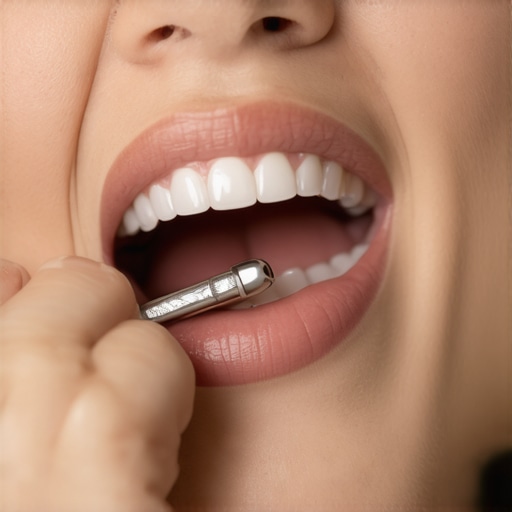
Try the Tooth Sleuth Method at Home
While you should never perform surgery on yourself, you can be a better patient by identifying the culprit. Use a clean, damp Q-tip and bite down on it tooth by tooth. If you feel a sharp pain only when you release the bite, that is a classic sign of a fracture. This information is gold for your dentist because it bypasses the guesswork. This is the same level of precision needed for expert advice on crowns and teeth cleaning for lasting results. By knowing exactly which cusp is flexing, you can avoid unnecessary procedures and target the real issue.
Why a Night Guard Might Be Your New Best Friend
Sometimes the pain isn’t about a single bite; it is about the cumulative stress of eight hours of clenching while you sleep. Think of your teeth like tiny shock absorbers. If you are constantly bottoming them out, the ligaments get inflamed. I found that how a simple night guard can save you thousands in future dental work is not just marketing—it is structural insurance. If your tooth hurts when you bite down, but the X-ray looks clean, you might just be bruising the tooth’s ‘suspension system’ through nocturnal grinding.
Manage the Pressure While You Wait
Until you can get into the office, treat your jaw like a sprained ankle. Avoid the ‘crunch’ factor. This means no ice, no hard pretzels, and definitely no using your teeth as tools. If you are currently caring for crowns, this period is critical to ensure you don’t turn a small crack into a total failure. If a piece of your tooth actually breaks off, know what to do when you lose a filling while chewing gum so you don’t panic.
When a Quick Polish Beats a Major Surgery
Most people assume a painful tooth equals an expensive root canal. However, many times the fix is an ‘occlusal adjustment.’ This is where the dentist lightly buffs the surface of the tooth so it no longer takes the brunt of the force. It is the dental equivalent of balancing the tires on your car. Following this up with the most comfortable way to get a professional deep cleaning ensures that no hidden tartar is contributing to gum-level sensitivity. Keeping up with oral health tips every family should follow in 2025 will help you spot these structural shifts before they become ‘lightning bolt’ moments.Let’s address the ‘forever fix’ fallacy. I used to think that once I got a crown, that tooth was basically made of steel. I figured it was sealed away from the world, immune to the sugar and acids that haunt the rest of my mouth. This is the single biggest trap in a family dentistry focus building a lifetime of healthy smiles. In reality, a crown only protects the top part of your tooth. The most critical area—the margin where the porcelain meets your natural tooth—remains a biological battleground. Maintaining your dental crowns dos and donts for best results isn’t just about avoiding sticky candy; it’s about meticulous plaque control at that specific seam. If you’ve ever thought, ‘I have a crown there, I don’t need to floss it as much,’ you’re falling into the ‘Oops’ factor that leads to premature failure.
Why does my tooth still feel ‘off’ even if the root canal ‘killed’ the nerve?
It’s a common misconception that a root-canaled tooth is a dead object. While the nerve is gone, the ligaments surrounding the tooth are very much alive and packed with sensors. This is why expert advice on crowns and teeth cleaning for lasting results is so vital. If the bite is even slightly misaligned, or if there is inflammation in the surrounding tissue, your brain will register that as pain or pressure. According to a report in the Journal of Prosthetic Dentistry, even a 10-micron discrepancy in the crown’s fit can cause long-term periodontal stress and sensitivity.
Stop Treating Your Crown Like an Invincible Shield
If you think professional cleanings are just about a bright white smile, you are missing the most important part of the impact of regular teeth cleaning on overall oral wellness. It’s about the ‘biofilm’—a sticky community of bacteria that loves to hide under the edges of your restorations. I learned the hard way that the reason your coffee habit is ruining your crowns sealant isn’t just the staining; it’s the way the acidity weakens the cement bond over time. When that bond fails, bacteria move in, and you won’t even feel the cavity forming because the nerve is missing. This is the ‘silent decay’ trap. By the time you notice the reason your crown feels loose when you wake up, the damage might already be deep.
The Invisible Gap That Ruins Perfect Dental Work
Most people believe that hard scrubbing equals a cleaner mouth. In my experience, and backed by teeth cleaning secrets effective home practices for family dental health, aggressive brushing actually creates micro-scratches in your porcelain. These scratches act like Velcro for plaque. Instead of scrubbing, focus on ‘massaging’ the gumline where the crown meets the tissue. This keeps the seal intact and prevents recession, which is key for how to keep your porcelain crown from staining over time. Have you ever fallen into the trap of thinking your dental work was invincible? Let me know in the comments—I’ve certainly been there, and catching it early is the only way to save your investment.Transitioning from the initial shock of a repair to a long-term maintenance phase changed how I look at my vanity mirror every morning. It is no longer about just avoiding pain; it is about protecting a significant investment. When you move into the ‘scaling’ phase of your dental health, the standard drugstore toothbrush often stops being enough. I personally switched to an electric brush with a dedicated pressure sensor because I realized I was a ‘scrubber’ by nature. This small change is vital for maintaining your dental crowns dos and donts for best results, as it prevents the gum recession that exposes the vulnerable margins of your restoration.
Equip Your Bathroom Like a Professional Dental Lab
To keep everything working, I recommend a high-pressure water flosser specifically for those hard-to-reach areas where a crown meets the natural tooth. Standard floss is great, but a water flosser can flush out the microscopic biofilm that settles into the ‘invisible gap’ we discussed earlier. This is a core part of a family dentistry focus building a lifetime of healthy smiles. I also use plaque-disclosing tablets once a month. It feels like a middle school science project, but seeing exactly where the pink dye sticks to my crown margins tells me exactly where I am failing. This level of detail is exactly the one thing you must do before your next dental cleaning to ensure you aren’t just going through the motions.
How can I make my dental work last twenty years instead of ten?
The secret lies in the ‘static load.’ Ivoclar Vivadent, the industry leader in dental ceramics, notes in their technical documentation that while materials like IPS e.max are incredibly strong, they are still susceptible to fatigue from chronic grinding. This is why how a simple night guard can save you thousands in future dental work is the most important advice I can give. By wearing a custom-fitted guard, you are essentially offloading the mechanical stress from your expensive porcelain onto a replaceable piece of plastic. I also suggest incorporating teeth cleaning secrets effective home practices for family dental health like using a pH-balancing mouthwash after your morning coffee to neutralize the acids that slowly eat away at dental cement.
What happens when technology catches up to our smiles?
Looking ahead, I predict we are moving toward a ‘smart’ era of oral health tips every family should follow in 2025. We are already seeing the rise of AI-integrated toothbrushes that map your mouth in real-time, and I believe biocompatible, 3D-printed resins will soon make ‘lost filling’ emergencies a thing of the past. For now, the most advanced thing you can do is focus on the ‘seal.’ If you feel any change in your bite, even a tiny one, don’t wait. Use our contact page to get it adjusted immediately. My final challenge to you: buy a pack of disclosing tablets this week and ‘audit’ your own brushing—you might be surprised at what you’ve been missing near those crown edges.
Hard Truths About Why Crowns Fail Before Their Time
Over the years, I have realized that the real work happens in the quiet moments between appointments. One major lightbulb moment was discovering that the reason your tooth hurts when you bite down hard often stems from cumulative stress rather than a single event. It is easy to think of a restoration as ‘set and forget,’ but your mouth is a dynamic environment. Here are a few hard-won lessons I have gathered from the chair:
- The Marginal Line is the Front Line: Most failures do not happen on the top of the crown; they happen at the seam where the tooth meets the gum. If that area is neglected, the whole structure is at risk.
- Mechanical Stress Trumps Hygiene: You can brush five times a day, but if your bite is even slightly misaligned, the porcelain will eventually fatigue. Balancing your bite is as important as flossing.
- Early Detection Saves Thousands: That tiny ‘zing’ you feel while eating is your tooth’s only way of shouting for help before the structural integrity is fully compromised.
My Daily Arsenal for Dental Defense
I no longer rely on just a standard toothbrush. To truly succeed at maintaining your dental crowns dos and donts for best results, you need specialized gear. I swear by my Water Flosser, which acts like a pressure washer for the hidden gaps around restorations that traditional floss often misses. I also keep Plaque Disclosing Tablets in my vanity; using them once a month is a humbling reality check on my brushing technique. Finally, I never sleep without my custom guard, because I have seen firsthand how a simple night guard can save you thousands in future dental work by absorbing the nocturnal grind that we cannot control. #IMAGE_PLACEHOLDER_E#
Don’t Wait for the Next Lightning Bolt
Your smile is a masterpiece of biological engineering and professional craftsmanship. By sticking to a consistent oral health routine and acknowledging the impact of regular teeth cleaning on overall oral wellness, you are doing more than just preventing cavities—you are protecting your quality of life. If you feel that familiar sourdough-induced zap, do not play the waiting game. A quick adjustment today can prevent a major surgery tomorrow. If your bite feels off or a tooth is acting up, reach out to our team and let’s get your smile back in perfect balance. Have you ever felt a sharp pain while eating something totally soft like bread or cake? Let me know your experience in the comments below!