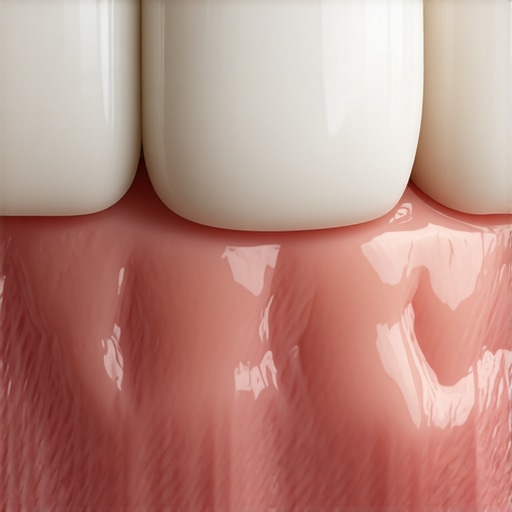
I remember sitting on my bathroom floor, staring at the mirror with a piece of bloody floss wrapped around my fingers, wondering what on earth I was doing wrong. I had done everything ‘right’—brushed for two minutes, used the fancy mouthwash, and scraped between every single tooth. Yet, five minutes later, my gums were not just tingling; they were throbbing. It felt like a tiny, annoying heartbeat was living in my jawline. I thought I was being thorough, but in reality, I was just irritating the tissue even more. It is a frustrating cycle. You try to be the ‘gold star’ patient for your next family dentistry visit, only to end up with more discomfort than when you started. Today, we are going to dive into why this happens and how to finally find some peace for your mouth.
I Flossed Every Night and My Gums Still Ached
I spent years thinking that if I just pulled harder or went deeper, I would magically reach oral health nirvana. I made the classic mistake of ‘sawing’ into my gums rather than gently hugging the tooth. If you are experiencing that persistent ache, it is often because your gums are already in a state of chronic inflammation, and your aggressive technique is just throwing fuel on the fire. You might even find that your gums feel sore after flossing for the first time in weeks, which is normal, but when the throb persists every single night, something else is at play. We often think of flossing as a ‘scrubbing’ job, but it is more of a delicate sweeping mission. Have you ever finished your routine only to have your mouth feel like it is vibrating with a dull ache? I have been there, and it usually means you are fighting an uphill battle against trapped bacteria that your string just can’t reach. To get the best results, you need to understand the teeth cleaning secrets that pros use to keep inflammation at bay without traumatizing the tissue.
Is professional cleaning actually worth the hype?
You might be sitting there thinking, ‘I do all this at home; why do I need a pro to do it?’ Believe me, I used to be the biggest skeptic. I thought home care was the end-all-be-all. But there is a biological limit to what a piece of string can do. According to the American Academy of Periodontology, nearly half of adults over 30 have some form of periodontal disease, which often hides in deep pockets that floss simply cannot reach. This is exactly why ultrasonic cleaning is faster and more comfortable than trying to do the heavy lifting yourself at home. If you have ever noticed that your gums look pale instead of pink or stay swollen no matter how much you brush, it is a sign that the bacteria have moved into ‘rent-free’ territory under the gum line, causing that deep, rhythmic throb. Letting a professional clear that out is the only way to reset the clock.
Stop Sawing and Start Hugging Your Teeth
I’ll never forget the night I learned the ‘sawing’ lesson the hard way. I was in a rush, snapping the floss between my molars with way too much force. Suddenly, I felt a sharp ‘zip’ followed by that unmistakable metallic taste. I hadn’t just cleaned my teeth; I’d sliced right into the delicate gum tissue. It took nearly ten days for that spot to stop stinging every time I drank orange juice. That’s when I realized that effective care is about the ‘C-shape’ wrap. Instead of a straight vertical snap, you want to curve the floss around the base of the tooth, sliding it gently under the gumline. This ‘hugging’ motion clears out the biofilm without turning your bathroom into a crime scene. When you master this, you avoid the trauma that leads to inflammation and ensure you’re actually strengthening your smile every day rather than wearing it down.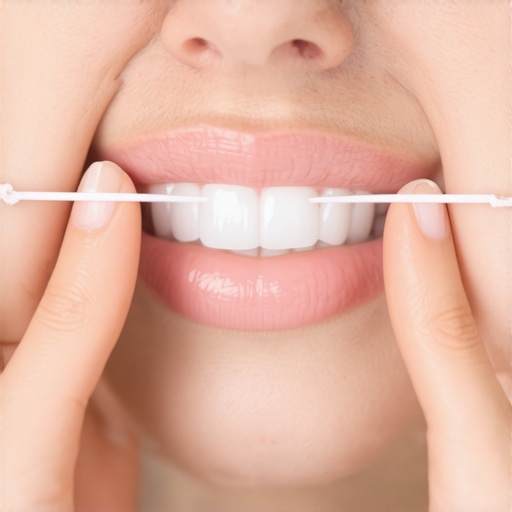
Protect Your Investment by Cleaning Around Crowns
If you have restorative work, your technique needs to be even more precise. I used to think my porcelain caps were invincible, but the margin where the crown meets your natural tooth is a magnet for bacteria. I once ignored a slight ‘tight’ feeling around a back molar, only to find out later that plaque had started to calcify right at the edge of the material. Following expert advice on crowns and teeth cleaning can save you from a failed restoration and another expensive trip to the chair. Always floss around a crown by pulling the floss through the side rather than snapping it back up, which can sometimes catch the edge of the dental cement. This is one of the most critical dos and donts for best results when dealing with high-end dental work. Proper maintenance ensures that the seal remains intact, preventing the underlying tooth from decaying.
Reset Your Oral Health with Professional Scaling
Even with a perfect home routine, calculus—also known as tartar—is like a stubborn barnacle on a ship hull; it simply won’t budge for a standard toothbrush or string. If you feel a persistent throb even after you’ve fixed your flossing technique, it is likely that the plaque has hardened into a wall of bacteria. This is how often you actually need a professional scaling to keep the bone supporting your teeth healthy and dense. Professional scaling isn’t just about aesthetics; it’s about managing ‘pocket depth.’ Your gums should ideally have a tiny 1-3mm gap around the tooth. When bacteria sit there too long, that gap grows, creating a cavern where floss can’t reach. By utilizing modern technology like ultrasonic cleaning, professionals can vibrate that debris loose without the aggressive scraping sensations of the past. Beyond just physical comfort, a clean mouth significantly impacts your social confidence; many people find that the simple switch that stops morning breath for good isn’t a new mouthwash, but rather getting that deep-seated bacteria removed from beneath the gumline.Most people assume that once a crown is cemented in place, they have a ‘free pass’ for that tooth. I used to think the same until a mentor pointed out that a crown is only as strong as its margin. The biggest mistake you can make is assuming that because the porcelain can’t decay, the tooth underneath is safe. In reality, that tiny seam where the crown meets your gum is the most vulnerable point in your mouth. If you are too aggressive with your brush, you aren’t just cleaning; you’re risking recession that exposes the natural tooth structure. I have seen patients who were so dedicated to their oral health routine strengthening your smile every day that they actually wore down the protective sealant around their restorations. It is a classic ‘oops’ factor: over-maintenance can be just as damaging as neglect. Have you ever fallen into this trap? Let me know in the comments.
Ditch the abrasive trends before they ruin your smile
There is a common belief that ‘natural’ means ‘better,’ especially when it comes to the charcoal whitening craze. Everyone says it is a miracle for stains, but in my experience, it works like sandpaper on a finished piece of wood. A study published in the Journal of the American Dental Association (JADA) warns that high-abrasivity pastes can lead to irreversible enamel loss and increased dentin hypersensitivity. This is especially dangerous for restorative work, as the truth about the charcoal whitening trend is that it can scratch the surface of your porcelain, making it more prone to future staining. If you want to keep your smile bright, focus on caring for crowns with non-abrasive, fluoride-rich pastes that support the bond rather than eroding it. 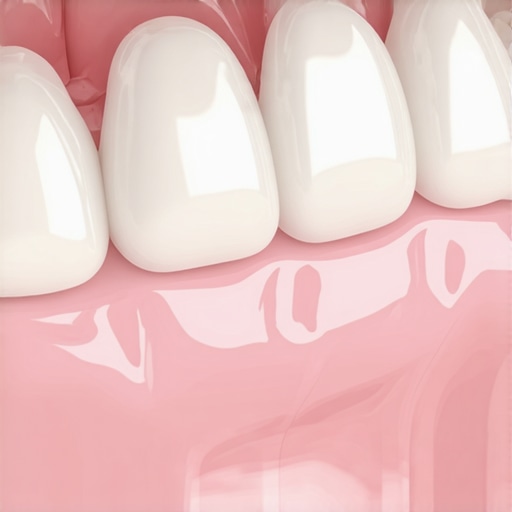
Can a crown still feel pain if there is no nerve left?
It sounds like a paradox, doesn’t it? How can something without a nerve throb? This is a sophisticated nuance many miss: while the tooth might be ‘dead’ after a root canal, the surrounding periodontal ligaments and bone are very much alive. If your bite is slightly off, or if bacteria have infiltrated the margin, you might experience a sharp sensation. This is why your crown might feel sensitive to cold or pressure even years later. In many cases of family dentistry, we find that the issue isn’t the crown itself, but the way it interacts with your overall bite. Ignoring a ‘high’ spot on a crown is a recipe for chronic inflammation. To truly protect your investment, you must balance home care with expert advice on crowns and teeth cleaning to ensure that every layer of your smile—from the porcelain to the bone—remains stable and pain-free.I used to walk right past those tiny ‘Christmas tree’ brushes in the dental aisle, assuming they were only for people with braces. I was wrong. After a particularly frustrating check-up where I thought I’d done everything right, I learned that even the best string floss can leave behind 40% of the plaque in wider gaps. If you want to stop the cycle of recurring inflammation, you have to upgrade the gear you’re using to fight it.
The tiny brush you probably ignored is a total game-changer
While I still love my floss for tight contacts, interdental brushes have become my secret weapon for maintaining the margins of my dental work. According to the FDI World Dental Federation, interdental brushes are significantly more effective at removing plaque in the open spaces between teeth than traditional floss. For me, using these meant that those deep, annoying throbs finally disappeared because I was actually clearing out the debris that my string floss was just sliding over. It’s about being surgical rather than just going through the motions. When you combine this with teeth cleaning secrets like using a non-alcoholic rinse, you create an environment where bacteria simply can’t gain a foothold.
How do I keep my dental work in peak condition for years?
Maintaining crowns and fillings isn’t just about what you do in the morning; it is about preventing trauma while you sleep. I spent years waking up with a dull ache in my jaw, assuming it was just stress, until I realized I was grinding my teeth into oblivion. Learning how a simple night guard can save you thousands in future dental work was a lightbulb moment for me. By wearing a custom guard, you protect the porcelain from the immense pressure of clenching, ensuring that you won’t have to deal with the heartbreak of a cracked crown. This is one of the most vital dos and donts for best results: treat your restorations like the high-end investments they are. 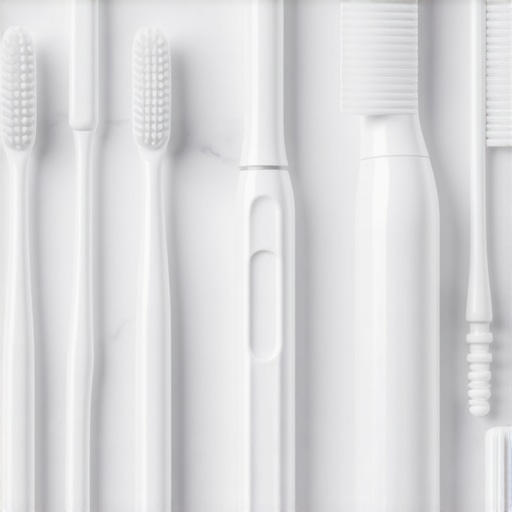
Why sonic tech beats manual scrubbing every single time
I know there are purists who say why manual toothbrushes are still effective if you use the right technique, and they aren’t wrong, but most of us don’t have the discipline to brush perfectly for two minutes. Switching to a sonic toothbrush changed my life because it does the work of 30,000 strokes in a fraction of the time. It’s about efficiency. The high-frequency vibrations create ‘fluid dynamics’ that push toothpaste and water into the nooks and crannies where a manual bristle can’t reach. This is especially helpful for how to keep your porcelain crown from staining over time, as the gentle but rapid movement prevents stains from setting into the microscopic pores of the material. Looking toward the future, I predict we will see brushes equipped with AI that maps your biofilm in real-time, essentially giving you a professional-grade report card every morning. For now, following oral health tips every family should follow in 2025 means investing in tools that reduce human error. If you really want to level up your routine today, try this: the next time you floss around a crown, don’t snap the floss back out through the top. Instead, release one end and pull the string out through the side. This prevents you from accidentally catching the edge of the crown and ensures the seal remains perfectly intact.
Realizations That Ended My Bathroom Floor Frustrations
Reflecting on my journey, I discovered that oral health isn’t about being a warrior in the bathroom; it is about being a gentle caretaker of your biological systems. One of the biggest shifts for me was recognizing that the impact of regular teeth cleaning on overall oral wellness goes far beyond just a bright smile; it’s about calming the chronic inflammation that makes your gums feel tender and sensitive to every touch.
I also had to accept that the ‘twinge’ of pain I felt while scrubbing wasn’t the feeling of ‘clean’—it was the feeling of trauma. For years, I ignored the fact that why your dentist wants you to stop using hard bristles is rooted in science: soft bristles and gentle movements are actually more effective at disrupting the bacterial colonies that cause that deep, annoying throb.
The final lightbulb moment was realizing that my gums were not the enemy. When you stop fighting the tissue and start supporting it with the right technique, the throbbing stops, the bleeding vanishes, and the anxiety about your next check-up finally fades away.
#IMAGE_PLACEHOLDER_E#
The Essentials That Finally Saved My Smile
If you’re ready to overhaul your routine, you don’t need a cabinet full of expensive gadgets, but you do need tools that work. First, I recommend a high-quality sonic toothbrush to handle the heavy lifting without the risk of recession. Second, if you wake up with jaw pain, I found that how a simple night guard can save you thousands in future dental work is the single most important lesson for protecting porcelain crowns from the stress of clenching.
To keep everything hygienic, I always follow the best practices on how to clean a night guard without damaging the plastic, ensuring I’m not reintroducing bacteria into my mouth every night. Finally, using a non-alcoholic rinse and interdental brushes for wider gaps has made my home care feel like a professional session every single day.
Take Back Control of Your Dental Confidence
Your smile is one of your most valuable investments, and it deserves to be treated with care. By focusing on family dentistry focus building a lifetime of healthy smiles, you aren’t just fixing a tooth; you’re preserving your confidence and your health for the long haul. You have the knowledge to move from frustration to peace—starting tonight. Have you ever felt like your flossing routine was doing more harm than good, or have you discovered a trick that finally stopped the soreness? Let me know in the comments below!