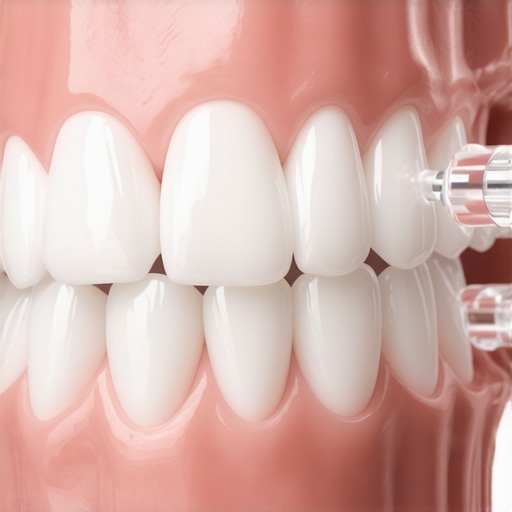
Last Tuesday, I found my clear plastic retainer tucked behind a stack of old magazines. I’d missed exactly eleven nights. "No big deal," I thought. I popped it in, and the sensation was immediate. It wasn’t just snug; it was a throbbing, pulse-quickening pressure that made me feel like my jaw was shrinking. I’ve been through getting expert advice on crowns and deep scaling sessions, but this? This was a self-inflicted squeeze that I brought on myself by being lazy. It’s a panic-inducing moment when you realize your teeth have already started their slow, quiet march back to where they used to be. Today, I’m going to explain why that pressure happens so fast and what you should actually do before you accidentally crack your enamel trying to force a fit.
Your Teeth Are More Restless Than You Think
I made a massive mistake early in my post-braces journey. I assumed that once the orthodontist said I was "done," my teeth were locked in like concrete. I was wrong. I once tried to force a retainer in after a month-long "vacation" from it, and I woke up with such a headache that I had to research how to stop clenching your teeth just to find some relief. The truth is, your teeth are held in place by the periodontal ligament, which is a living, elastic tissue. According to the American Association of Orthodontists, teeth are in a constant state of potential movement due to the everyday forces of chewing, speaking, and even the way you breathe. When you remove the barrier of the retainer, those ligaments begin to shift back toward their original, "natural" positions almost immediately. This is why a consistent oral health routine is about more than just preventing cavities; it’s about structural maintenance. Have you ever felt that heart-sinking moment when your retainer just won’t click into place?
Is Forcing the Retainer Back in Actually Dangerous?
You might be tempted to just bite down hard and "tough it out." Please, don’t do that. When I tried to force mine back in during that month-long gap, I ended up with gums that looked like they’d been through a war zone. I should have checked out tips on why gums feel sore before I caused that much inflammation. Forcing a tight retainer can actually cause minor trauma to the root of the tooth or, in extreme cases, lead to a cracked retainer that you’ll have to pay hundreds of dollars to replace. In our family dentistry focus, we always emphasize that comfort is a signal. If the tightness is so intense that you can’t think about anything else, your teeth have shifted too far for a DIY fix. You need to know the difference between "realigning" and "damaging," and that starts with understanding how much pressure is too much.
Stop Forcing and Start Assessing the Damage
The first thing you need to do isn’t to push; it’s to look. If you feel a springy resistance, that is your teeth signaling that they have already begun their journey back to their original alignment. I remember one night, desperate to get my retainer back in after a week of skipping, I actually tried to bite it into place using a washcloth for leverage. It was a disaster. I ended up with a sharp, shooting pain that felt exactly like the time I had to learn how to manage sudden tooth sensitivity. Instead of brute force, use a mirror to assess the gap. If the retainer sits more than two millimeters away from the biting surface of your teeth, do not force it. Think of your teeth like a shelf of books that started leaning the moment you took the bookend away. If you try to slam the bookend back in without straightening the books first, you will simply damage the covers and the shelf itself.
Look for the Two Millimeter Warning Sign
Before you even attempt a full night of wear, check the structural integrity of the plastic. If you have been clenching your jaw while the retainer was out, you might have changed your bite slightly. In some cases, a tight retainer can put immense pressure on existing dental work, making it crucial to follow maintaining your dental crowns dos and donts to avoid a costly breakage. If the retainer is only slightly off, try wearing it for just 20 minutes during the day. This creates a gentle, gradual pressure that allows the periodontal ligaments to stretch back slowly. This is far safer than forcing a 10-hour sleep session with a tray that doesn’t quite fit. 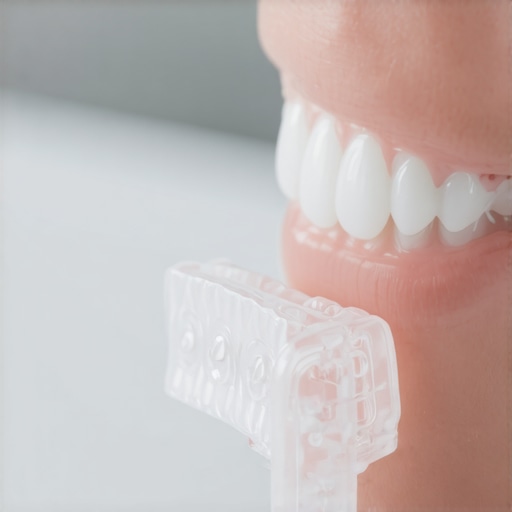
Sanitize Your Hardware to Avoid Trapping Bacteria
You should never put a dusty or old retainer back into your mouth without a deep clean. Bacteria and plaque can harden on the plastic, making it even thicker and tighter than it originally was. If you are unsure of the protocol, learning how to clean a night guard without damaging the plastic provides the perfect blueprint: use lukewarm water and a non-abrasive cleanser. Avoiding hot water is vital because heat can warp the tray, turning a minor tightness into a permanent misfit. This level of hygiene is an essential part of the teeth cleaning secrets that keep your gums from becoming inflamed while you re-adjust to the hardware.
Recognizing When the Shift is Permanent
There is a fine line between a dull ache and a dangerous throb. If your gums begin to look bright red or bleed, similar to how gums bleed when you switch to an electric toothbrush, your teeth have likely moved too far for a DIY fix. A sharp sensation where your tooth hurts when you bite down hard is a clear indicator that the retainer is putting pressure on the root rather than the crown. If you cannot get the tray to seat fully after three days of gradual 20-minute sessions, it is time to admit defeat. In these scenarios, you might need a new scan or even a temporary transition to a different device. Investing in how a simple night guard can save you thousands in the future is often the better move than trying to save an old retainer that no longer serves its purpose.
Why Your Obsession with ‘Squeaky Clean’ Might Be Backfiring
Most of us were taught that more is better when it comes to hygiene, but in the world of family dentistry focus, I’ve learned that aggressive maintenance is often a silent smile-killer. Many people assume that if their retainer feels tight, they should just brush their teeth harder to ‘clear a path’ for the plastic. In reality, over-scrubbing can lead to gum recession, making your teeth feel even more unstable. I’ve found that why manual toothbrushes are still effective if you use the right technique is a lesson in patience; it’s about soft, circular motions, not sheer force. If you’re scrubbing away your enamel while your teeth are already under the stress of a tight retainer, you’re just doubling the structural damage.
Can Forcing a Fit Permanently Change Your Jaw?
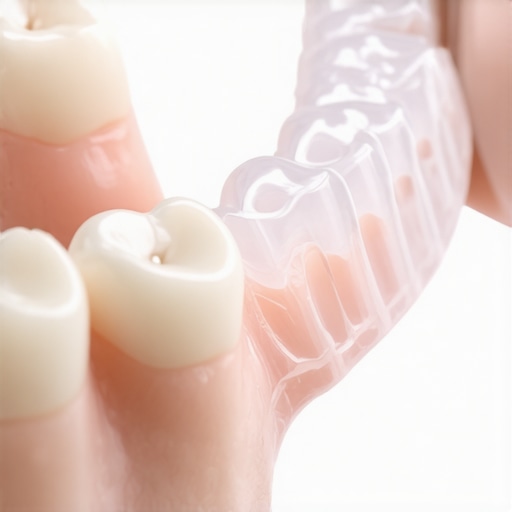
There is a common myth that a retainer only affects the visible part of your teeth. The ‘hidden nuance’ here is that your teeth are part of a complex mechanical system involving your jawbone and the temporomandibular joint (TMJ). According to a study published in the Journal of the American Dental Association (JADA), adult physiological tooth migration is a lifelong process, often referred to as ‘mesial drift.’ When you force a retainer that is no longer aligned, you aren’t just moving teeth; you are potentially putting improper torque on your jaw joints. This can lead to those dull, mysterious morning headaches or even a clicking sound when you chew. I’ve seen people prioritize their alignment so much that they forget the importance of caring for crowns essential tips for longevity and shine, accidentally popping a restoration loose because the retainer was exerting force at the wrong angle.
Avoid the Whitening Trap During Re-Alignment
Here is an ‘oops’ factor I see constantly: the urge to whiten your teeth the moment you get back into your retainer routine. It seems logical—you want the perfect, bright, straight smile. However, using charcoal or high-acid strips while your teeth are actively shifting is a massive mistake. The American Journal of Orthodontics notes that shifting teeth have slightly more ‘open’ pores and sensitive ligaments. If you add harsh chemicals to the mix, you’re practically inviting chronic sensitivity. Instead, focus on expert advice on crowns and teeth cleaning that emphasizes gentle maintenance. I once thought my coffee habit was the problem, only to realize the reason your coffee habit is ruining your crowns sealant is actually worsened when you’re also stressing the tooth structure with a misaligned tray.
Why Does the Back Molar Shift Faster Than the Front?
You might notice the retainer fits your front teeth but ‘hovers’ over the back molars. This is because your molars bear the brunt of your bite force, and if you’ve been clenching due to stress, those teeth can tilt slightly inward. This is where the impact of regular teeth cleaning on overall oral wellness becomes structural—if you have tartar buildup between those molars, the retainer will never sit flat. If you find yourself in this situation, don’t just keep pushing. Admit that the ‘shelf of books’ has tilted too far. Have you ever fallen into this trap of trying to ‘fix’ a month of neglect in a single night? Let me know in the comments below, and let’s talk about how you got your smile back on track.
Tech That Actually Keeps Your Teeth in Place
I used to think that a standard toothbrush and a bit of string floss were enough to fight the ‘mesial drift’ I mentioned earlier. I was wrong. When you are dealing with hardware like retainers, night guards, or even expert advice on crowns, you need tools that can reach the microscopic level. My personal game-changer was switching to a dedicated ultrasonic cleaner for my dental appliances. I am not talking about the industrial ones; I mean the compact, home-use versions that use high-frequency sound waves to create cavitation bubbles. These bubbles implode against the surface of your retainer, blasting away biofilm that a brush simply cannot touch. This is one of those teeth cleaning secrets that pros use but rarely talk about at the check-in desk.
The Tool That Ended My Scrubbing Frustration
Why do I swear by this? Because manual scrubbing with a toothbrush actually creates microscopic scratches in the plastic where bacteria love to hide. By using an ultrasonic device, you are following the best way of how to clean a night guard without damaging the plastic. This is not just about aesthetics; it is about structural integrity. If your retainer is free of calcified plaque, it fits better and puts less uneven stress on your teeth. I have found that why ultrasonic cleaning is faster and more comfortable than hand scaling applies to home maintenance just as much as it does to the dentist’s office. It saves time and ensures that when you pop that tray in, you are not introducing a colony of bacteria into your gums.
#IMAGE_PLACE_HOLDER_D#
How do I maintain my alignment and oral health over the next decade?
The secret is not just better tools; it is better data. I have started using a high-resolution intraoral mirror and an LED light kit to do my own weekly ‘structural audits.’ According to a study in the Journal of Clinical Periodontology, patients who use interdental brushes—specifically those sized to their unique gaps—see a 34 percent greater reduction in plaque compared to traditional flossing alone. I personally use specialized brushes with plastic-coated wires, which is vital when you are working around maintaining your dental crowns. If you cannot get a tiny brush through the gap, that is your early warning sign that a shift is happening.
Where This is All Heading in the Future
I predict that within the next five years, our oral health routine will involve personalized microbiome testing. Instead of just brushing away ‘everything,’ we will be using targeted probiotics to keep the ‘good’ bacteria thriving while suppressing the ‘bad’ ones that cause inflammation. We are moving away from a ‘one-size-fits-all’ family dentistry focus and toward hyper-personalized care based on DNA and saliva samples. For now, your best defense is a rigorous, tech-assisted home routine. I challenge you to try this: swap your string floss for a set of varied-size interdental brushes for one week. You will be shocked at what your standard routine was leaving behind, and your gums will thank you for the extra breathing room.
The Reality Check My Orthodontist Forgot to Mention
I used to think that ‘tight’ feeling was just a sign of a good workout for my teeth. I was wrong. It’s actually a signal of acute inflammation in the periodontal ligament. One major lesson I learned is that consistency beats intensity every time; don’t skip your oral health tips every family should follow in 2025 just because you had a long day. I also discovered that the hidden reason your gums still bleed even if you floss every day is often because a shifting tooth has created a microscopic pocket that your usual routine can’t reach yet.
Tools That Stop the Drift Before it Starts
For me, a standard bathroom mirror wasn’t enough to see why my alignment was failing. I invested in a medical-grade LED intraoral mirror to spot exactly where the ‘shelf’ of my molars was tilting. I also swear by the switch to ultrasonic maintenance; understanding why ultrasonic cleaning is faster and more comfortable than hand scaling applies to your hardware too. It removes the calcified grit that makes a retainer feel tighter than it actually is. Finally, always keep a set of interdental brushes handy—if they don’t fit between your teeth anymore, you know you’ve waited too long to wear your tray.
#IMAGE_PLACEHOLDER_FINAL#
Trust Your Body More Than Your Calendar
Your teeth are part of a living, breathing system, not just static objects. If your retainer feels like a vice, it’s a sign to slow down and consult a professional rather than forcing a fit. Whether you are maintaining your dental crowns or protecting your natural enamel, patience is the only way to avoid long-term damage. Avoid the temptation of quick fixes like the truth about the charcoal whitening trend when your teeth are already under stress. Have you ever found an old retainer in a drawer and felt that immediate ‘should I or shouldn’t I’ panic? Let me know how you handled it in the comments below!