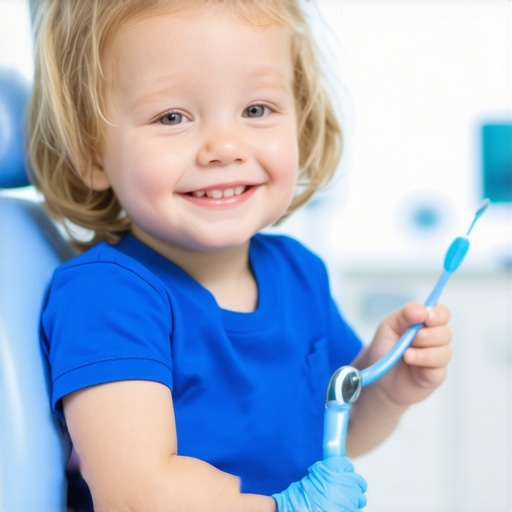
I remember the cold sweat prickling my neck as my two-year-old, Toby, transformed into a thrashing, screaming octopus the moment we crossed the threshold of the clinic. It wasn’t just a tantrum; it was a full-blown dental mutiny. I was that parent—the one desperately trying to pin down a flailing toddler while the hygienist offered a strained, polite smile that screamed, “Please don’t let him kick the expensive equipment.” It felt like a personal failure. If I couldn’t get him to sit still for five minutes, how was I supposed to manage his oral health routine and strengthen his smile for the next decade?
The Sensory Overload No One Tells You About
We often forget that a dental office is a nightmare for a toddler’s senses. The bright overhead lights, the high-pitched whine of the tools, and the strange smells are overwhelming. Early on, I made the massive mistake of trying to “surprise” Toby with the visit, thinking that if he didn’t have time to worry, he wouldn’t fight. Big mistake. He felt ambushed, and that lack of trust set us back months. I quickly realized that family dentistry focus isn’t just about the teeth; it’s about the psychological prep work we do at home first.
Today, I’m going to show you exactly how I flipped the script. We’re moving past the wrestling matches and toward a routine where your child actually feels empowered. We will cover the specific “bridge” techniques I used to turn the dentist from a scary stranger into a familiar friend. If you’ve ever felt the urge to cancel an appointment just to avoid the public meltdown, this is for you. Whether you’re worried about why your child might be a mouth breather or just a routine cleaning, the preparation remains the same.
Is peaceful cooperation actually possible for every kid?
I know the skepticism. You’re thinking, “My kid is different. My kid has the strength of ten grown men when they’re scared.” I thought that too. I even tried to explain the dental drill to my nervous child using words like “it won’t hurt,” which, ironically, is the first thing that makes a kid think it will hurt. However, according to the American Academy of Pediatric Dentistry, the key to success is the “Dental Home” concept—establishing a relationship with a dentist by age one to normalize the environment. Research suggests that children who start early have significantly lower dental anxiety as they age. Have you ever had a dental visit that felt more like a cage match than a check-up? Tell me I’m not alone in this!
It’s not just about the chair time, either. It’s about what happens in the kitchen and at the sink. For instance, I didn’t realize that fruit snacks are often worse for kids than chocolate bars because of how they stick to the molars, making those exams even more stressful when the dentist finds “sticky spots.” By changing how we talked about oral health tips for our family, the exam became just a small part of a larger, positive story we told every day.
Turn Your Living Room Into a Mini Clinic
The secret to a scream-free visit isn’t luck; it’s exposure. I started by turning our couch into a ‘pretend’ dental chair and letting Toby be the doctor. We used the ‘Tell-Show-Do’ method. First, you tell them what the tool is (the ‘tooth tickler’), show them how it works on their hand, and only then do you use it on their teeth. When I first tried this, Toby was terrified of the vibrations. I realized I needed to show him the truth about manual vs electric toothbrushes for kids by letting him feel the buzz on his palm first. By the time we got to the office, the sensation wasn’t a threat; it was just a ‘tickle’ he already knew.
How to Explain the Scary Noises Without the Fear
Toddlers are hyper-aware of sound. That high-pitched whine that makes us adults cringe? To them, it sounds like a siren. I used a small electric fan at home to mimic the sound while we practiced role-playing. I explained why your hygienist uses that high-pitched water tool on your gums, calling it a ‘power washer for sugar bugs.’ If your child needs a more involved procedure later, you must know how to explain the dental drill to a nervous child without using words like ‘pain’ or ‘needle.’ Use analogies: the drill is a ‘whirring eraser’ that rubs away the bad spots so we can make the tooth strong again. This reframing removes the mystery, and mystery is where fear lives.
Fix the Toothpaste Struggle Before the Appointment
If your child fights you at the sink, they will fight the hygienist at the chair. Many parents don’t realize that sensory processing issues often start with flavors or textures. I spent weeks learning how to help a toddler who hates the taste and texture of toothpaste by simple trial and error. We moved away from ‘spicy’ mint to flavorless or strawberry options, which lowered his guard immediately. This is a crucial part of a proactive oral health routine and strengthening your smile. If they can’t handle the paste at home, the professional-grade grit during a cleaning will feel like sandpaper to them. Practice with a soft brush at home to build tolerance for the textures they will encounter.
Switch to Electric Without a Morning Meltdown
One morning, I decided to swap Toby’s manual brush for an electric one, thinking it would be ‘fun.’ He acted like I was trying to hand him a live wire. I had to learn how to transition your child to an electric toothbrush without a fight by letting him use it on his favorite stuffed dinosaur, Rex, first. Seeing Rex ‘get his teeth cleaned’ made Toby curious enough to try too. This shift is vital because the impact of regular teeth cleaning on overall oral wellness is too great to ignore even at age two. Once he accepted the electric brush, he was much more compliant when the dentist brought out the professional polishing tool. It’s all about building these micro-habits that mirror the clinical experience.
Check for Physical Clues That Cause Resistance
Sometimes the resistance isn’t just behavioral; it’s physical. For instance, if your child has a sore spot, they’ll be defensive. I learned to look for signs like why your toddler has bad breath despite brushing, which can sometimes signal an infection or a trapped object that makes the mouth sensitive to touch. If they are mouth breathing, it might change their experience of the chair entirely, so understanding why your child might be a mouth breather and how it affects their jaw helps you communicate better with the dentist before the exam even starts. Every bit of data you gather at home makes the ‘meat’ of the appointment go twice as fast.
Let’s look at the ‘sugar-free’ trap. Most parents believe that if they cut out the gummy bears, they’ve won the battle. I was one of them until I learned why some children get cavities despite never eating candy. It’s often the high-carbohydrate ‘healthy’ snacks like crackers or goldfishes that sit in the grooves of the molars for hours, fueling acid-producing bacteria. This is where expert advice on crowns and teeth cleaning for lasting results becomes essential. We often think of crowns as an adult problem, but in pediatric care, understanding the role of crowns in modern smile makeovers is actually about saving a baby tooth’s structure so the adult tooth has a healthy path to follow. Have you ever fallen into this trap of thinking ‘sugar-free’ meant ‘cavity-free’? Let me know in the comments.
Can a standard cleaning actually reverse deep gum issues?
I get asked this a lot by parents who notice redness at the gumline. While a standard cleaning is great for surface stains, it’s not a miracle cure for every issue. You need to understand the impact of regular teeth cleaning on overall oral wellness beyond just a shiny smile. If there’s deep-seated inflammation, a quick polish won’t fix the underlying cause. One major ‘oops’ factor I see is the urge to scrub harder when teeth feel ‘fuzzy’ after a meal. Specifically, knowing why you should never brush your teeth immediately after eating citrus is a nuance most miss. According to a study in the Journal of the American Dental Association, acid softens the enamel, and brushing immediately can literally scrub your child’s protection away. Instead of aggressive scrubbing, focus on teeth cleaning secrets and effective home practices like waiting thirty minutes for the saliva to neutralize the pH. Even if you prefer manual toothbrushes which are still effective if you use the right technique, the timing of the brush is more important than the force used. It’s these small, counter-intuitive shifts that move us from just surviving the dental chair to mastering our family’s long-term health.
Toby is older now, and the era of the ‘octopus tantrums’ is thankfully behind us, but the transition from toddler-proofing to long-term maintenance brought a whole new set of challenges. I used to think that once the ‘big’ dental work was done—like those initial restorations—I could just coast. But as any parent or patient knows, maintenance is where the real battle for health is won. If you or your child has had restorative work, like a crown, you cannot simply set it and forget it. I learned through trial and error that caring for crowns and essential tips for longevity and shine is a daily commitment that starts with the right equipment.
How do I keep these results for the next decade?
The secret isn’t just brushing more; it’s brushing smarter with tools that don’t quit. For my family, the biggest game-changer was moving away from the ‘standard’ approach and looking at what actually protects the work we’ve invested in. For instance, if you have back molars that have been restored, you should look into the benefits of choosing zirconia crowns for back molars because they withstand the incredible grinding forces we apply while sleeping. According to the Academy of General Dentistry (AGD), zirconia’s high flexural strength makes it nearly twice as resistant to fractures as traditional porcelain-fused-to-metal options. To protect that investment, I’ve become an advocate for the ‘nightly reset.’ This involves a thorough cleaning followed by a protective layer—literally. If you’ve ever woken up with a sore jaw, how a simple night guard can save you thousands in future dental work cannot be overstated. It’s the cheapest insurance policy you’ll ever buy for your teeth.
Stop Treating Your Teeth Like Kitchen Tiles
We have a tendency to scrub, but your enamel—and certainly your dental work—requires a gentler touch. I’ve personally switched my entire family to high-frequency water flossers. Why? Because manual flossing around the base of a restoration is where most people fail, leading to ‘leaks’ or secondary decay. If you want maintaining your dental crowns dos and donts for best results, number one is: never skip the gumline. A water flosser flushes out the bacteria that a string often just pushes around. Looking ahead, I suspect we are moving toward a world where bio-active materials will be the norm. I predict that in the next decade, we will see ‘smart’ crowns embedded with sensors that alert your phone if they detect a change in acidity or a micro-crack before it becomes a painful emergency. Until that tech arrives, we rely on the gold standard: the impact of regular teeth cleaning on overall oral wellness. It is the only way to catch the small things before they become big, expensive problems. My challenge for you this week: swap your manual flossing routine for a water flosser for thirty days. You will be shocked at what your toothbrush was leaving behind. If you have questions about your specific restorations, don’t hesitate to contact us to discuss a personalized maintenance plan.
Stop Dreading the Waiting Room with These Mental Shifts
One major realization I had is that the dentist isn’t the enemy—the lack of preparation is. I used to think a minor imperfection was a disaster, but learning how to fix a small chip in your front tooth without a full crown showed me that modern dentistry is incredibly conservative if you catch things early. Also, don’t wait for a problem to start your family dentistry focus; normalization is the most powerful tool in your parenting arsenal. Finally, remember that your child watches how you treat your own teeth—if you are diligent about your own teeth cleaning and maintain a positive oral health routine and strengthening your smile, they will naturally follow your lead. The goal isn’t just a clean check-up; it’s a child who grows up without the dental trauma many of us carry.
The Toolkit That Keeps My Family Out of the Chair
I’ve narrowed our routine down to a few essentials that actually move the needle for our oral health. First, for those of us with restorations, knowing the truth about how long a porcelain crown actually lasts before replacement led me to invest in a high-quality water flosser to protect the margins of my work. We also switched the whole family to an alcohol-free mouthwash for dry mouth, which is much gentler on sensitive gum tissue and doesn’t have that ‘burn’ kids hate. These aren’t just gadgets; they are the frontline defense that ensures our expert advice on crowns and teeth cleaning for lasting results actually pays off over the years.
Take the First Step Toward a Fearless Future
It’s easy to feel overwhelmed by the technicalities of crowns or the fear of a toddler’s next meltdown, but you are already doing the work by being informed and proactive. Whether you’re curious about how crowns can transform your dental confidence or simply trying to get through tomorrow’s cleaning without a struggle, remember that every small effort counts toward a lifetime of health. Consistency beats perfection every time. If you’re feeling stuck or need a partner in this journey to navigate the complexities of family dentistry, feel free to contact us for guidance tailored to your family’s unique needs. You’ve got this, and your child’s future smile will thank you. Have you ever tried a ‘practice visit’ or role-playing at home before a dental appointment? Let me know in the comments below!