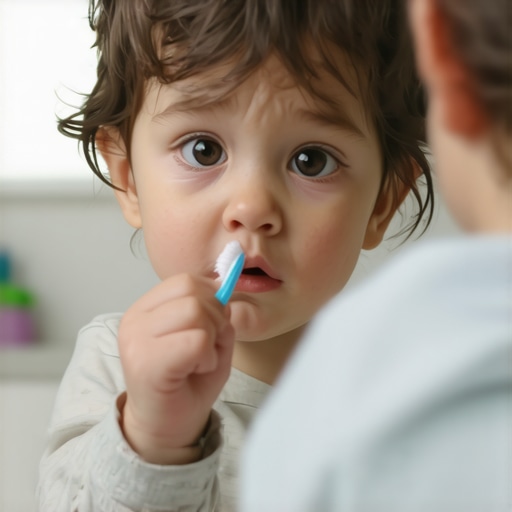
The smell was like a combination of old gym socks and sour milk. My two-year-old, bless her heart, had just woken up from a nap, and as she leaned in for a sweet cuddle, I actually had to pull back. It hit me like a physical wall. We had just brushed before that nap. I’m talking the full works—the singing, the tiny toothbrush, the “open wide like a lion” routine. Yet, there it was. That lingering, funky odor that made me wonder if I was failing at basic parenting. I used to think that as long as we saw some bubbles, we were good, but I was dead wrong. Have you ever spent ten minutes wrestling a toddler into a toothbrushing session only to have them exhale a cloud of “old cheese” right in your face five minutes later?
Your Kid’s Morning Breath Shouldn’t Last All Day
It turns out, the brushing we do is often just surface-level theater. Early on, I made the mistake of thinking the flavor of the toothpaste mattered more than the actual mechanics. I would let her chew on the brush for thirty seconds and call it a win. But bad breath in little ones isn’t usually about forgetting to brush; it is often about what is happening while they sleep or what they ate hours ago. We need to look at our family dentistry focus with a more critical eye. Sometimes, the culprit is as simple as those fruit snacks that stick to the molars like glue, or perhaps your child might be a mouth breather, which dries out the mouth and lets bacteria throw a party. Today, we are going to peel back the layers of this smelly mystery and get your toddler’s breath back to that neutral scent so you can enjoy those cuddles again.
Does this smell mean my child has a cavity already?
This is the fear that keeps us up at night, right? We worry that the smell is a sign of rot. While chronic halitosis can occasionally point to a cavity, it is often just a sign of a disrupted oral biome. According to the Cleveland Clinic, the majority of pediatric bad breath cases are actually linked to things like large tonsils, sinus infections, or simple dehydration rather than deep decay. I remember feeling so guilty, thinking I had let her teeth go to ruin, but it was actually a combination of a stuffy nose and a toothbrush that just was not doing the job. If you are still using a manual brush and getting nowhere, you might want to look into manual vs. electric toothbrushes for kids to see which one clears the plaque better. We are going to tackle the most common mistakes I made and how you can fix them tonight.
Think of your child’s tongue like a deep-pile shag carpet. Every time they eat, tiny bits of milk, fruit snacks, and bread get ground into those fibers. If you only brush the teeth, you’re basically vacuuming the hardwood floor but leaving the rug filthy. I remember the first time I actually looked at my daughter’s tongue with a flashlight; there was a thin white coating that no amount of singing or lion-impersonations was going to fix.
Scrub the Shag Carpet for a Cleaner Smile
The Tiny Tongue Scraper is Your Secret Weapon
Most parents skip the tongue because toddlers gag or wiggle away. I started using a soft silicone scraper specifically designed for small mouths. It’s much gentler than a toothbrush head and pulls that “sour milk” film right off. The first time we did it, she was skeptical, but when I showed her the “gunk” on the scraper, she thought it was fascinating. These small teeth cleaning secrets are what actually move the needle when the morning funk won’t fade.
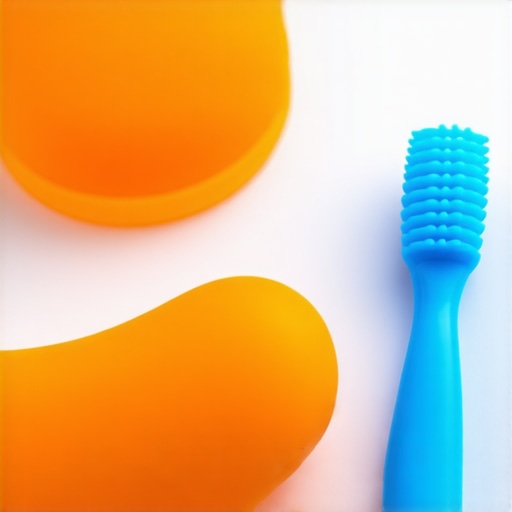
Keep the Saliva Moving to Wash Away Bacteria
Saliva is like a 24/7 car wash for the mouth. When a child sleeps with their mouth open—common if they have allergies or a slight cold—that car wash shuts down. A dry mouth is a breeding ground for the sulfur-producing bacteria that cause the “gym sock” smell. I began focusing on hydration right up until thirty minutes before bed and then again the second she woke up. If you notice your little one is constantly congested, you should look into why your child might be a mouth breather because it’s usually more about air intake than hygiene.
Upgrade Your Gear to Stop the Plaque Build-Up
Switch to an Electric Brush to Win the Plaque War
If you are still using a manual brush, you are fighting a losing battle against a moving target. My toddler’s attention span is about 14 seconds on a good day. An electric brush delivers thousands of strokes in the time it takes me to do ten manual ones. We had to learn how to transition to an electric toothbrush by letting her “brush” her favorite stuffed animal first. The vibration actually helps break up the sticky film that fruit snacks leave behind, which is often where the smell originates.
Help Them Handle the Taste and Texture Struggle
Some kids fight the brush because the toothpaste feels like sand or tastes like fake “sparkle berries.” If your child is sensitive, you need to know how to help a toddler who hates the taste by trying unflavored or non-foaming options. Once we removed the sensory “scare factor,” she actually let me get the brush back to those rear molars where the real odor-causing bacteria hide. Consistent oral health tips like these ensure that the smell doesn’t just go away for an hour, but stays away for the whole day.
Wait, if we’re doing everything right, why does the funk persist? Here’s a nuance most parents miss: the “acid window.” We often think brushing immediately after a sugary or acidic snack—like those “healthy” orange slices or juice—is proactive. It’s actually destructive. You’re essentially using the toothbrush to scrub acid into the softened enamel, accelerating wear. You should never brush your teeth immediately after eating citrus or fruit snacks. Instead, rinse with water and wait 30 to 60 minutes for the saliva to naturally remineralize the teeth. This was a huge “oops” moment for me; I was literally weakening my daughter’s teeth in an attempt to save them.
Stop Rushing to Brush Right After Breakfast
Why does that funky smell return just hours after a professional scaling?
It’s incredibly frustrating when you invest in a professional cleaning and that “dragon breath” returns by Tuesday. The American Academy of Pediatric Dentistry (AAPD) notes that biofilm—a complex community of bacteria—can begin to reorganize and colonize the tooth surface within hours of a cleaning. If your child has deep, naturally occurring grooves in their molars, even what a professional prophy cleaning removes can be replaced by new bacteria if those pits aren’t protected. This is often the reason your child might need a sealants on their molars. Think of it as putting a smooth laminate over that “shag carpet” tongue texture we discussed, ensuring that food particles and sulfur-producing bacteria have nowhere to hide.#IMAGE_PLACE_HOLDER_C#
Save the Space to Save Their Future Smile
Another common mistake is treating baby teeth as “disposable.” I’ve heard many well-meaning parents say, “Why bother with a crown for a tooth that’s going to fall out anyway?” However, a primary tooth lost too early due to decay can cause the surrounding permanent teeth to drift into the gap, leading to severe crowding and expensive orthodontic issues later. Seeking expert advice on crowns and teeth cleaning for lasting results is just as important for a toddler as it is for an adult. Sometimes, a pediatric crown is the only way to preserve the structural integrity of the jaw. The impact of regular teeth cleaning on overall oral wellness cannot be overstated; it is about the health of the entire biological system. We also have to address the “hidden sugar” trap. You can avoid the candy aisle entirely and still find yourself dealing with cavities. This explains why some children get cavities despite never eating candy—starchy snacks like crackers or white bread break down into simple sugars that stick to teeth longer than chocolate does. Furthermore, check their sleeping habits; why your morning breath is worse when you sleep with your mouth open is due to the lack of saliva, which normally acts as a natural cleanser. If they are congested, why your saliva turns thick and sticky during a cold will only exacerbate the odor. Have you ever fallen into this trap? Let me know in the comments.Aside from timing our brushing to avoid the acid window, I had to completely overhaul the toolkit sitting on our bathroom counter. I realized that my child’s oral health was not just about the two minutes of scrubbing, but about the 22 hours in between. If you want results that last beyond the next snack, you have to focus on an oral health routine strengthening your smile every day. This means moving past the dollar-store toothbrushes and looking at what actually disrupts biofilm.
Stop Guessing and Start Timing Your Brushing
For my family, the biggest game-changer was the transition to a sonic-powered brush with a pressure sensor. It’s not just about the vibration; it’s about the fact that it forces us to stay in each quadrant for thirty seconds. According to a study published in the Journal of Clinical Periodontology, mechanical plaque removal is significantly more effective when power brushes are used correctly compared to manual brushing, especially in patients who struggle with technique. I use an electric brush that syncs with an app on my phone to show me exactly where my daughter (and I) missed a spot. This isn’t just a gimmick; it’s about visual accountability. When we started, we realized we were completely ignoring the back molars, which is exactly where that sour smell was originating. If you’re dealing with more than just natural teeth, maintaining your dental crowns requires this same level of precision to prevent decay at the margin of the restoration.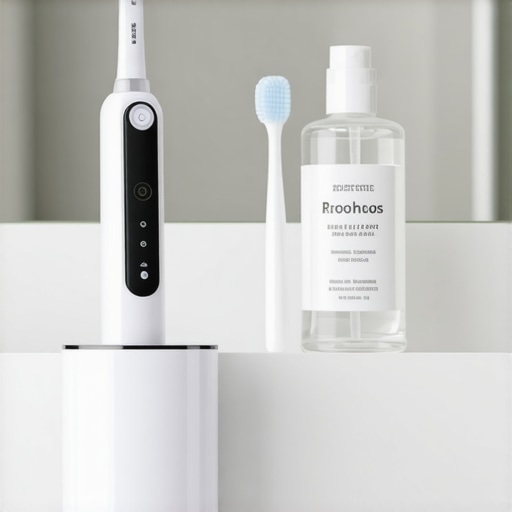
Why Professional Scalers Go Where Your Brush Can’t
Even with the best tools, there are places a parent simply cannot reach. This is why I stopped viewing the dentist as just a ‘check-up’ and started seeing it as a necessary reset. You need to understand the impact of regular teeth cleaning on overall oral wellness. When a hygienist uses a specialized tool, it removes calcified tartar that acts like a sponge for bacteria. I always ask why your hygienist uses that high-pitched water tool on your gums because it’s actually an ultrasonic scaler that blasts away biofilm using sound waves and water pressure—something your manual brush could never replicate. We also started looking at expert advice on crowns and teeth cleaning for lasting results to ensure that any work we had done stayed sealed and fresh.
How do I maintain this oral health routine over time?
The key to long-term success is consistency over intensity. You can’t brush for ten minutes once a week and expect a clean mouth. I recommend a ‘three-pillar’ approach: mechanical cleaning (brushing/flossing), chemical balance (using the right paste), and professional intervention. I predict that in the next few years, we will see a massive shift toward home-based microbiome testing kits that tell you exactly which bacteria are causing your child’s bad breath in real-time. Until then, my best advice is to focus on the basics but use better tools. I challenge you to try a silicone tongue scraper just once tomorrow morning; you will be shocked at the difference it makes in that ‘morning breath’ intensity. Focusing on your family dentistry focus now will save you thousands of dollars and hours of stress in the years to come.
Why the Brush Alone Rarely Wins the War Against Bad Breath
After months of trial and error, I realized that focusing only on the teeth was like cleaning the windows of a house while the trash was still inside. One big lightbulb moment was discovering how much of the odor actually lived in the soft tissues of the mouth, not just on the enamel. Also, I learned that how often you actually replace your toothbrush matters because old bristles just move bacteria around instead of removing it. Another hard-learned lesson? I found that manual toothbrushes are still effective if you use a very specific circular motion, but for most toddlers, the machine does the heavy lifting better. Lastly, I realized that teeth cleaning secrets aren’t about magic products; they’re about being consistent even when your child is tired or cranky.
The Small Toolkit That Finally Cleared the Air
If you want to stop the guesswork, I highly recommend building a simple dental station. First, a sonic brush with a built-in timer takes the ‘how long is long enough’ debate off the table. Second, don’t underestimate the power of an alcohol-free rinse if your child is old enough to spit, as it supports a healthy oral biome without drying them out. Third, for those of us managing more complex cases, getting expert advice on crowns and teeth cleaning ensures that any existing dental work isn’t acting as a trap for food and bacteria. I also suggest bookmarking a guide on caring for crowns if your little one has had any restorations, as these require a bit of extra finesse to stay fresh and odor-free.
Getting Back to Those Sweet Smell-Free Cuddles
Don’t be discouraged if the morning funk doesn’t vanish overnight. It took us about two weeks of a strict oral health routine to see—and smell—a permanent change. By staying curious and adjusting your approach, you’re setting your child up for a lifetime of confidence and healthy habits. Have you ever noticed a specific food or habit that makes your child’s breath worse? Let me know in the comments below!