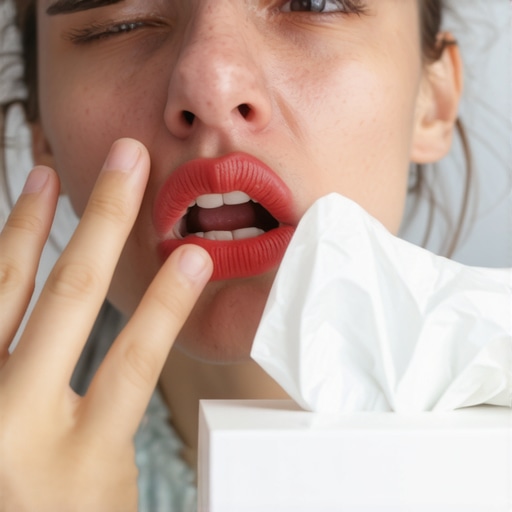
I remember lying in bed three winters ago, clutching a box of tissues and wondering if my jaw was literally about to fall off. Every time I coughed, a sharp, electric shock shot through my upper molars. I was convinced a crown had failed or I’d somehow developed a massive infection overnight. I even called my dentist in a panic, only for him to ask, “How is your nose feeling?” It was a humbling moment. I had spent years being obsessive about my oral health routine, yet I did not know the basic anatomy of my own face. My biggest mistake early on was assuming that every bit of mouth pain required a drill and a filling. Today, I want to show you exactly why your mouth turns against you when you are sick and how to tell if you actually need to see a professional or just need a decongestant.
Your Sinuses Are Hovering Right Over Your Tooth Roots
It is a bit of a design flaw in the human body if you ask me. Your maxillary sinuses—the ones right behind your cheekbones—sit directly on top of the roots of your upper teeth. When you get a cold, those sinuses fill with fluid and become inflamed. This inflammation puts physical pressure on the nerves of your teeth. I have spent nights wondering why the reason your teeth feel loose when you have a cold was happening, only to realize my teeth were fine; they were just being crowded out by my own head. It is incredibly easy to mistake this pressure for a tooth that is sensitive to heat or a deep-seated cavity. According to the Mayo Clinic, maxillary sinusitis is one of the most common non-dental causes of toothaches, often affecting several teeth at once rather than just one specific spot. Have you ever felt that rhythmic thumping in your gums while trying to nurse a fever?
Is this actually a dental emergency or just a bad flu?
It is the question that keeps us up at 2:00 AM. If you notice that the pain shifts when you lean over or stand up quickly, you are likely dealing with the sinus connection rather than a structural dental failure. A real cavity usually does not care if you are standing on your head, but sinus pressure definitely does. We are going to look at the specific signs that mean you can stay in bed and when you actually need to drag yourself to the clinic.
Check the Gravity Test Before You Call the Dentist
The fastest way to determine if your toothache is a dental emergency or just a side effect of a stuffed nose is the ’tilt test.’ Stand up straight and then slowly lean forward as if you are reaching for your toes. If you feel a sudden, heavy pressure or a throbbing sensation that intensifies in your upper teeth, that is almost certainly sinus fluid shifting around. A structural issue, like a cavity or a crack, usually stays consistent regardless of your posture. I learned this the hard way last February when I was convinced I had a major infection. I performed this exact test and felt my entire upper jaw pulse in sync with my heartbeat. Instead of rushing for an emergency root canal, I focused on clearing my nasal passages, and the ‘toothache’ vanished within an hour.
Why Your Teeth Feel More Sensitive When You Are Bedridden
It is not just the sinus pressure; your body’s environment changes when you are sick. You are likely breathing through your mouth because your nose is blocked, which leads to a parched mouth. This is dangerous because why your saliva is your best defense against decay becomes obvious when it is gone. Without that protective spit, the acids in your mouth go to town on your enamel, making your teeth feel ‘fuzzy’ or hypersensitive. You might even find that why your teeth hurt more when you lie down at night is due to the increased blood flow to your head combined with that lack of moisture. 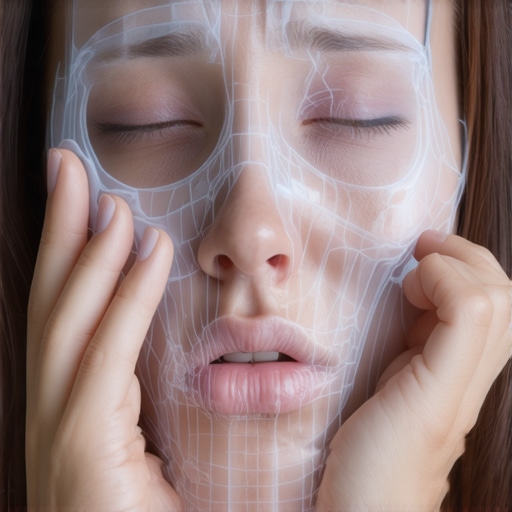
Protect Your Crowns and Fillings While You Recover
If you have existing dental work, like a bridge or a cap, the sensation can be even more confusing. I once had a patient who was terrified because their new crown felt cold when they breathed in during a bout of the flu. In reality, the inflammation in the surrounding gum tissue was making the area more reactive to air. When you are sick, caring for crowns means keeping the area clean without being aggressive. You should avoid the urge to ‘test’ the tooth by biting down hard or poking at it with your tongue, as this just irritates the nerve further. Focus on gentle effective home practices for family dental health, like using a warm salt water rinse to reduce gum swelling. This helps maintain the impact of regular teeth cleaning on overall oral wellness even when you can’t make it to the clinic. If the pain is isolated to one tooth and persists after your cold symptoms fade, then it’s time to find out how to tell if your tooth sensitivity is a cavity or something more serious.
There is a pervasive myth in the world of family dentistry that getting a crown is like giving your tooth a suit of armor. Most patients believe that once a tooth is capped, it is immune to decay. In my experience, this mindset is exactly how to keep your dental crown from popping off while chewing or, worse, failing from the inside out. While porcelain or zirconia crowns won’t rot, the natural tooth structure underneath and the gum line surrounding it are more vulnerable than ever. If you assume your dental work is bulletproof, you are falling into the most common trap in restorative care.
Stop treating your crowns like they are indestructible
The biggest mistake is assuming that since the porcelain cannot get a cavity, the ‘tooth’ is safe. The margin—the tiny line where the crown meets your real tooth—is the most high-risk real estate in your mouth. Patients often spend thousands on modern smile makeovers only to lose the foundation teeth five years later because they stopped flossing that specific area. Everyone says the crown protects the tooth, but the crown actually creates a more complex environment that requires higher-level maintenance than a natural tooth. If you have ever wondered how to fix the gap between your gum and your crown, you are likely already witnessing the effects of this neglected maintenance. 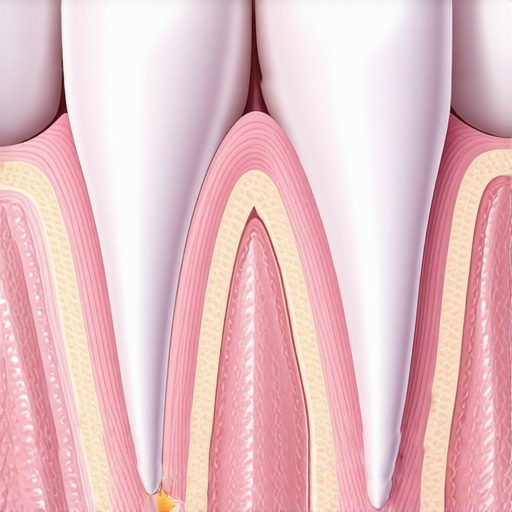
Can a perfectly placed crown still fail because of your gums?
Absolutely. Even with expert advice on crowns and teeth cleaning, systemic issues or poor technique can lead to ‘marginal leakage.’ This occurs when microscopic bacteria seep under the cap. Research cited by the American Academy of Periodontology suggests that ‘biological width’—the distance from the edge of the restoration to the bone—is the single most important factor in preventing gum recession and bone loss around a crown. If you have ever noticed a weird odor, learning how to stop your crown from smelling like old food is often about catching these micro-leaks before they turn into a full-blown infection. It is not always about the material of the crown; it is about the integrity of the seal.
The microscopic margin that determines your crown’s fate
This brings us to the ‘deep cleaning’ debate. Many see a scaling and root planing as an upsell, but what actually happens if you skip your dental cleaning when you have crowns is catastrophic. A standard cleaning only addresses what is visible, but for a crown to survive a decade or more, we must manage the impact of regular teeth cleaning on the gum tissue itself. If the gums recede even a millimeter, the vulnerable root of the tooth is exposed. Have you ever fallen into this trap of thinking your dental work was indestructible? Let me know in the comments.
If you want to survive the next ten years without needing a replacement for your dental work, you need to upgrade your arsenal beyond the basic plastic toothbrush. Most people think they are doing enough by brushing twice a day, but when you have restorations, the rules change. I’ve realized that standard string floss often just slides over the surface of a crown without actually cleaning the critical junction where the porcelain meets your gum tissue. This is why I have become an unapologetic advocate for the water flosser, specifically models with variable pressure settings. High-pressure streams can dislodge the microscopic biofilm that a regular brush simply cannot reach. When you combine this with the proper way to use interdental brushes for best results, you are essentially building a fortress around your investment.
Stop guessing and start using a water flosser
I personally use a countertop water flosser every night because it allows for a much higher water capacity and consistent pressure compared to the cordless versions. The key is to aim the tip at a 90-degree angle to your gum line and follow the contour of each tooth. For those with multiple crowns, this is the only way to ensure the ‘biological width’ remains healthy and free of inflammation. If you are just moving the brush back and forth, you are missing about 40% of your tooth surfaces. I also recommend dipping your interdental brush into a tiny amount of non-alcohol mouthwash before sliding it between teeth; this delivers antibacterial agents directly to the most vulnerable areas. This level of detail is what separates a crown that lasts five years from one that lasts twenty.
How do I maintain my dental work for the long haul?
Maintenance is not a static event; it’s an evolving strategy. Beyond your daily home care, you need to be strategic about your professional visits. I’ve found that the secrets to making your professional cleaning last longer often involve using a specific type of high-fluoride toothpaste at night that helps remineralize any exposed roots around the crown margins. According to clinical research published by the Clinicians Report (founded by Dr. Gordon Christensen), ultrasonic toothbrushes that utilize sonic technology provide a distinct advantage. These brushes create fluid dynamics that can clean several millimeters beyond where the bristles actually touch. This is essential for expert advice on crowns and teeth cleaning because it helps prevent the silent decay that often happens underneath the cap. Following these maintaining your dental crowns dos and donts for best results will save you thousands of dollars in the long run.
Smart crowns and AI diagnostics are coming sooner than you think
Looking ahead, the world of family dentistry is about to get much more high-tech. I predict that within the next decade, we will see the rise of ‘smart crowns’—restorations embedded with microscopic sensors that can detect changes in pH levels or bacterial load and alert your phone before a cavity even forms. We are already seeing AI-driven imaging that catches decay in its infancy, and I expect these oral health tips every family should follow in 2025 to become the standard. For now, your best bet is to stay proactive. Try this advanced tip tonight: spend thirty seconds ‘dry brushing’—brushing with no water or toothpaste first—to feel exactly where the plaque is ‘fuzzy’ on your crowns, then apply paste and brush as usual. You’ll be shocked at how much cleaner your mouth feels.
The Brutal Truth About Restorations No One Mentions
Looking back at my own dental journey, I realized that I spent too much time worrying about the ‘look’ of my smile and not enough on the architecture behind it. The hardest lesson I learned is that a crown is a partnership, not a replacement. If you ignore the gum line, you are essentially building a house on sand. I’ve seen too many people focus on modern smile makeovers only to forget that the real battle is fought at the microscopic level where the porcelain meets the flesh. Another ‘lightbulb moment’ for me was realizing that why you should stop rinsing with water immediately after brushing is the simplest way to keep that protective fluoride working for you while you sleep. Lastly, never underestimate the power of your own body; why your saliva is your best defense against decay becomes life-changing information when you are managing dry mouth from cold medications.
My Go-To Arsenal for a Lockdown-Ready Smile
I don’t just recommend these tools because they are popular; I use them because they saved my sanity during my last respiratory infection. My first essential is a high-quality water flosser. It’s the only way to flush the ‘sinus pressure’ debris away without irritating sensitive nerves. I also swear by interdental brushes; knowing the proper way to use interdental brushes for best results will change your next check-up entirely. For those concerned about oral health tips every family should follow in 2025, I suggest keeping a dedicated ‘sickness kit’ that includes a soft-bristled brush specifically for when your gums are inflamed and tender. This ensures caring for crowns remains gentle yet effective even when you feel like you can barely stand up. #IMAGE_PLACEHOLDER_E#
Your Investment Deserves a Lifetime of Care
At the end of the day, your mouth is a reflection of your overall health. Whether you are battling a seasonal flu or just trying to perfect your oral health routine, remember that consistency beats intensity every time. You don’t need a perfect mouth; you just need a proactive plan. Trust the process, listen to your body’s signals, and don’t let a temporary cold shake your confidence in your long-term family dentistry goals. Your smile is worth the extra thirty seconds of care tonight. Have you ever experienced a ‘phantom toothache’ during a bad cold that turned out to be just sinus pressure? Let me know your story in the comments below!