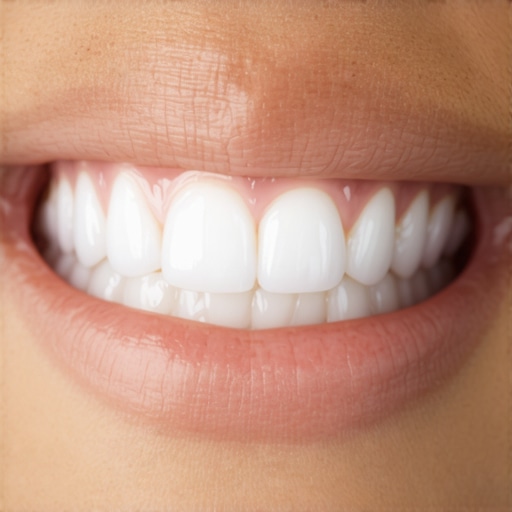
I stood in front of my bathroom mirror last Tuesday, scrubbing until my gums turned a worrying shade of pink, wondering why my teeth still looked… well, “tired.” I’d spent forty dollars on a whitening paste that promised Hollywood results in three days, yet those pesky stains near the gumline wouldn’t budge. It was a classic case of trying to fix a foundation problem with a fresh coat of paint. I realized then that my DIY approach was actually doing more harm than good. In fact, I eventually learned why hard brushing actually makes your teeth look darker—I was literally wearing away my bright enamel in a desperate attempt to clean them. I felt like I was failing at basic hygiene, even though I was trying harder than anyone I knew. This was my lightbulb moment: you cannot brush your way out of a professional-grade problem. [image_placeholder]
The Reality Check Your Toothbrush Can’t Give You
The truth is, even the most expensive electric toothbrush is no match for the calcified plaque we call tartar. Once it’s there, it’s like trying to remove dried cement with a sponge. You need the heavy machinery. Today, I’m going to show you how a professional scale and polish does what your morning routine simply can’t. We will dive into how it strips away years of coffee and tea stains while protecting your gums from the silent creep of gingivitis. My biggest mistake was thinking my oral health routine was bulletproof. I skipped my cleanings for eighteen months because life got busy, and the result was a duller smile and gums that bled every time I looked at floss. If you’ve ever wondered what actually happens if you skip your dental cleaning for too long, let me tell you: it is not just about yellow teeth; it is about losing the very bone that holds them in place.
Is the temporary sensitivity really worth the hype?
This is the big one that stops most people in their tracks. I used to dread the zingers after a cleaning. Many people avoid the dentist because they worry why your teeth feel sensitive right after a professional cleaning. But here’s the neighborly advice: that sensitivity is just your teeth finally breathing again after being smothered by biofilm. According to the American Dental Association, professional cleanings are the only way to effectively remove tartar below the gumline to prevent long-term tooth loss. It is a few hours of weird feelings for a lifetime of keeping your natural teeth. We are looking at the impact of regular teeth cleaning on overall oral wellness and why this single appointment is the ultimate reset for your confidence. Have you ever walked out of the dentist and could not stop running your tongue over your teeth because they felt so smooth? Or are you currently putting off an appointment because you are worried about the scraper? I’d love to hear your thoughts!
The Vibration That Shakes Off Years of Plaque
Think of an ultrasonic scaler as a tiny, high-speed jackhammer for your mouth. It uses electromagnetic forces to make a metal tip vibrate at incredible speeds, literally shattering the bond between the tartar and your enamel. It is accompanied by a constant stream of water that cools the tip and flushes away the debris. I have found that the one thing you must do before your next dental cleaning is to communicate any sensitive spots early. If you are like me, you might mistake that vibrating sensation for the tool hitting a nerve, but it is actually just the water and motion doing the heavy lifting where your toothbrush failed. This tool is the first line of defense in stripping away the biofilm that leads to gum recession.
#IMAGE_PLACE_HOLDER_B#
The Scraper Is Not Your Enemy
Once the power tools have done the bulk of the work, the hygienist switches to hand instruments. This is the part that makes many of us squirm—the sound of metal on tooth. However, this is where the precision happens. These tools allow the hygienist to feel for tiny irregularities that the ultrasonic might have missed. I remember an appointment where I was convinced I had a massive crack in my molar because it felt jagged to my tongue. Within thirty seconds, the hygienist had used a curette to remove a stubborn deposit I had been growing for months. It was not a crack; it was just calcified coffee. This process clears the path for your gums to reattach snugly to the tooth. In fact, if you have been avoiding the dentist for a while, you might notice why your teeth feel loose right after a professional cleaning—it is because the cast of tartar that was bridging your teeth together is finally gone, allowing your mouth to heal properly. It is also the time they might help you how to remove a popcorn hull stuck under your gum line if you have had a literal piece of theater snack stuck there for weeks.
Give Your Crowns the VIP Treatment
If you have restorative work, the cleaning process requires a specialized touch. You cannot just go at a porcelain crown with the same aggressive force as natural enamel. Hygienists often use plastic or resin-coated tips to ensure they do not scratch the surface. This is vital because a scratched crown is a magnet for new stains and bacteria. I have learned that caring for crowns: essential tips for longevity and shine starts in the chair; if your hygienist is not checking the margins—where the crown meets the gum—you are at risk for recurrent decay underneath that expensive porcelain. A professional eye ensures the seal remains intact, preventing the need for a full replacement later.
The Final Polish That Seals the Deal
The gritty toothpaste they use at the end is not just for show. It is a pro-grade abrasive that smooths out the microscopic scratches left behind by the scaling process. A smooth tooth surface is much harder for plaque to cling to. It is like waxing a car—the smoother the finish, the more the rain just beads off. Following these oral health tips every family should follow in 2025, the final step usually involves a high-concentration fluoride treatment. This is not the stuff in your tap water; it is a varnish that re-mineralizes your enamel, making it more resistant to the acid produced by bacteria. I used to think the fluoride was an optional add-on, but after seeing how it stopped a pre-cavity in its tracks on my daughter’s tooth, I never skip it now. This fluoride barrier is the ultimate insurance policy for your smile between appointments.
I used to believe that as long as I showed up for my twice-yearly appointment, I was doing everything right. But here is the contrarian truth that most of us miss: the ‘six-month rule’ is a marketing guideline, not a biological one. Depending on your genetics, your diet, and how quickly your saliva mineralizes plaque into tartar, you might actually need a professional touch every three or four months to stay ahead of bone loss. A landmark study published in the Journal of Periodontology emphasizes that personalized dental recalls are the gold standard for maintaining oral wellness, especially for those with a history of gingivitis. Waiting for the calendar to hit exactly six months can be a mistake if your mouth is a high-plaque environment.
The Dangerous Trap of the Amazon Dental Kit
One of the biggest ‘oops’ factors I see today is people buying those $10 stainless steel ‘dentist kits’ online to use at home. I’ve been tempted too—thinking I could just scrape away that little bit of yellow behind my bottom teeth. Please, stop. Your enamel is incredibly strong, but it is not invincible. Without the years of tactile training a hygienist has, you are likely to create microscopic scratches in your enamel or, worse, accidentally slice into the delicate attachment fibers of your gums. These tiny injuries become breeding grounds for bacteria and can lead to permanent recession. If you want to take control at home, focus on teeth cleaning secrets: effective home practices for family dental health rather than playing amateur surgeon with metal tools. It is also much safer than falling for the scary truth about buying diy whitening kits online which can chemically burn your tissues.
#IMAGE_PLACE_HOLDER_C#
Is a ‘Deep Cleaning’ actually necessary if my gums do not hurt?
This is the question that separates the pros from the beginners. Many patients feel like a deep cleaning—or scaling and root planing—is an ‘upsell’ because they do not feel any pain. However, periodontal disease is often a silent predator. By the time it hurts, the damage is often irreversible. These specialized cleanings are designed to reach the areas how to prevent cavities between teeth where you can’t see and where standard tools cannot reach. If your hygienist is suggesting this, they are trying to save your jawbone, not just polish your smile. I have found that asking about the most comfortable way to get a professional deep cleaning can ease the anxiety, as modern numbing gels make the process surprisingly easy.
Your Crowns Are Not Bulletproof Armor
Another nuance people get wrong is the ‘set it and forget it’ mentality with restorative work. I’ve seen people assume that because a crown is made of porcelain, it can’t get a cavity. While the crown itself won’t decay, the tiny sliver of natural tooth where the crown meets your gum is highly vulnerable. This is why expert advice on crowns and teeth cleaning for lasting results emphasizes cleaning that margin with extreme care. If you neglect this area, you might find yourself wondering how to prevent your crown from popping off while eating, only to find out the tooth underneath has softened. Proper maintaining your dental crowns: dos and don’ts for best results involves specific flossing techniques that don’t snag the edges. Have you ever fallen into this trap of skipping a visit because ‘nothing hurt’ or assuming your dental work didn’t need maintenance? Let me know in the comments!
I used to think my bathroom cabinet was a graveyard for unused dental gadgets until I found the ones that actually made a difference in my daily life. Maintenance isn’t about having a dozen different products; it’s about using the right ones with a level of precision that matches what happens in the dentist’s chair. For instance, I’ve finally swapped my standard string floss for a high-pressure water flosser. Why? Because I have a bridge and two crowns, and trying to navigate traditional string around them felt like a chore I was destined to skip half the time. By switching to a water flosser, I am finally seeing the impact of regular teeth cleaning on overall oral wellness in my own mirror every morning. It has also been my secret weapon for how to stop your crown from smelling like old food, as it flushes out the microscopic particles that manual brushing simply ignores.
How do I keep my smile fresh between professional visits?
The key to long-term results is a mix of consistency and the right tech that compensates for human error. I’m a huge advocate for electric toothbrushes that feature built-in pressure sensors. According to a landmark systematic review by the Cochrane Oral Health Group, power toothbrushes provide a 21% greater reduction in plaque and an 11% reduction in gingivitis compared to manual brushes after just three months of use. This data is crucial when you consider family dentistry focus: building a lifetime of healthy smiles, because it takes the guesswork out of the ‘how hard should I brush?’ question for both kids and adults. I’ve noticed that when I strictly follow the oral health tips every family should follow in 2025, my hygienist spends half the time scraping during my bi-annual check-up, which makes the whole experience much more pleasant.
Stop Letting Plaque Win the In-Between Battles
We often overlook the fact that our mouths are dynamic environments that change as we age. My prediction for the next five years is that we are going to see AI-integrated toothbrushes become the standard, mapping your mouth in real-time on your smartphone to show you exactly where you’re missing spots around your dental work. Until that tech is in every bathroom, we have to rely on proven teeth cleaning secrets: effective home practices for family dental health, like focusing on the gumline at a 45-degree angle to prevent recession. If you have restorative work, you absolutely need expert advice on crowns and teeth cleaning for lasting results to ensure the underlying tooth stays healthy. I personally use a non-abrasive gel to ensure my porcelain stays polished without being scratched by harsh whitening agents. If you want to level up your routine today, try this one tip: after your next cleaning, commit to using your water flosser on the lowest setting twice a day for one full week. You will be amazed at how much ‘hidden’ debris comes out even after you think your manual brushing was perfect. It is truly the ultimate way of maintaining your dental crowns: dos and don’ts for best results while protecting your investment in your smile. Setting a firm oral health routine: strengthening your smile every day is the only way to ensure those expensive crowns last for decades rather than years.
The Day I Realized White Teeth Aren’t Always Healthy
For years, I operated under the assumption that if my teeth looked bright in the morning light, I was winning the hygiene game. That was my biggest misconception. The most profound lesson I learned was that true health happens in the deep pockets and tight spaces where a standard toothbrush simply cannot reach. Another lightbulb moment occurred when I began understanding the role of crowns in modern smile makeovers; I realized these high-tech restorations actually require more vigilance than my natural enamel to prevent decay at the edges. I also learned that the ‘six-month rule’ is a generic baseline—listening to my own body’s pace of tartar buildup was the only way to stop my gums from receding.
My Personal Essentials for a Bulletproof Routine
I have tested dozens of gadgets over the years, but only a handful have earned a permanent spot on my bathroom counter. To keep your results looking ‘dentist-fresh’ for months, I recommend focusing on these three pillars: first, a high-quality water flosser is non-negotiable for anyone with dental work, as it reaches the debris that manual floss misses. Second, prioritize a pressure-sensitive electric toothbrush to ensure you aren’t accidentally wearing away your enamel. Third, I have found that the secret to keeping your smile white without expensive kits is often just a commitment to pH-balanced rinses after drinking coffee. If you do choose to use over-the-counter products, always seek out the safest way to use whitening strips without nerve pain to avoid damaging your roots.
#IMAGE_PLACEHOLDER_E#
Commit to the Future of Your Natural Smile
Your smile is one of your most valuable assets, and it deserves a level of care that goes beyond a quick two-minute scrub. Whether you are maintaining your natural teeth or seeing how crowns can transform your dental confidence, the investment you make in that professional chair today prevents a mountain of expensive trouble tomorrow. Don’t wait for a sharp pain to be your reminder that it’s time for a reset—book that appointment and embrace the feeling of a truly clean mouth. Have you ever noticed a major difference in your gum health after switching from manual flossing to a water flosser? I would love to hear your experiences in the comments below!