I remember leaning in to whisper a secret to my wife at a quiet dinner party, laughing at a joke, and suddenly catching a whiff of something… off. It wasn’t the appetizers. It was me. Specifically, it was my back molar crown. It smelled like a dumpster in a French bakery—yeasty, sour, and old. I was mortified. I had spent thousands on that restoration, yet there I was, carrying around a tiny pocket of rot. I realized then that my “brush twice a day” routine was a total failure. I had fallen into the trap of thinking a crown was a “set it and forget it” solution. I was ignoring the microscopic gaps where lunch goes to die, and my confidence was tanking because of it. If you have ever felt that “sour” taste or caught a scent that made you want to hide your smile during a meeting, I’ve been in your shoes. Today, we are going to fix it. We are using expert advice on crowns and teeth cleaning to stop the stink and get your breath back on track.
The Real Reason Your Dental Work Stinks
[image] It isn’t just “bad luck” or a sign that you’re getting old. When a dentist places a crown, they work hard to create a perfect seal, but the gum line is a high-traffic, high-friction zone. Over time, that seal can face wear, and the tiny ledge where the porcelain meets your gum becomes a sanctuary for plaque. I made the massive mistake of thinking my crown was a shield. It’s not. It’s a cap, and underneath that cap, at the margins, bacteria love to hide. This is why caring for crowns requires a different strategy than your natural teeth. According to the American Academy of Periodontology, the anaerobic bacteria that thrive in these oxygen-deprived crevices produce volatile sulfur compounds—the same stuff that makes a landfill smell. If you’ve wondered why your breath smells bad even after using a tongue scraper, this hidden bio-burden is usually the culprit. You aren’t just cleaning a tooth; you’re managing a complex ecosystem.
Does a smelly crown mean I need a whole new one?
This is the biggest skepticism I encounter when talking to friends. “Is my tooth rotting underneath, and am I going to owe the dentist another two grand?” Not necessarily. While a loose crown can trap debris, often the smell is just a sign of inadequate mechanical cleaning in those tiny margins. By mastering the right maintaining your dental crowns protocol, you can often flush out the odor-causing bacteria before they cause permanent damage. Have you noticed the smell getting worse after eating certain foods like protein or dairy? Leave a comment below; I’m curious if we’re fighting the same battle. We are going to dive into teeth cleaning secrets that reach the spots a normal brush simply skips.
Target the Gum Line with Precision
Think of your dental crown like a high-end watch. It’s durable, but if you let dirt get into the casing, the whole mechanism suffers. Most people brush the ‘face’ of the crown, but the real trouble starts at the margin—the microscopic line where the porcelain meets your natural gum tissue. If you aren’t angling your bristles at a 45-degree angle toward the gum, you’re essentially just polishing the window while the foundation rots. I learned this the hard way when I realized my ‘clean’ teeth still had a lingering scent. By adjusting my angle, I was finally able to disrupt the biofilm that caring for crowns requires you to reach. This simple shift in physics is the difference between a restoration that lasts twenty years and one that fails in five. 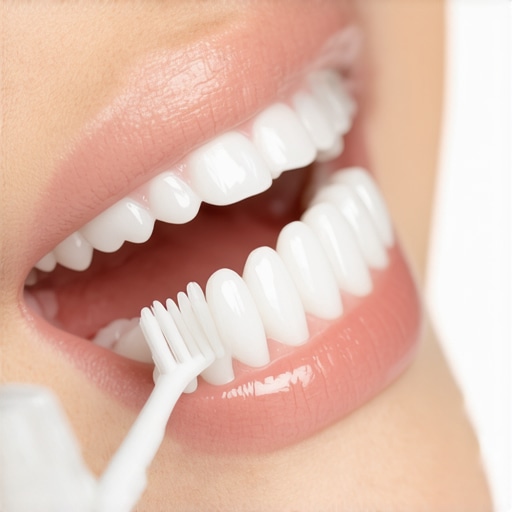
Switch to an Interdental Brush for the Heavy Lifting
Standard floss is great for natural teeth, but for a crown, it can sometimes glide right over the most recessed areas. I remember a camping trip where my back molar felt ‘heavy’ and thick. I used a tiny interdental brush—those little pine-tree-looking things—and the result was life-changing. When I pulled it through the gap, it brought out debris that my regular floss had missed for days. It was a wake-up call. These tools are the ‘teeth cleaning secrets’ that dental hygienists wish everyone knew. They physically scrub the sides of the crown and the neighboring tooth, ensuring no trapped proteins can sit and ferment. This is a core part of an oral health routine that prevents the ‘dumpster smell’ from ever returning.
Flush Away the Hidden Bio-Burden
If mechanical scrubbing is the brush, a water flosser is the power washer. For those with complex restorations, a water flosser can reach into the sulcus—the little pocket around your tooth—to flush out anaerobic bacteria. This is vital because the impact of regular teeth cleaning on overall oral wellness cannot be overstated; it’s not just about your mouth, but your systemic health. I started using a water flosser every night after my evening coffee, especially since I learned how the reason your coffee habit is ruining your crowns sealant often comes down to the acidic environment coffee creates, allowing bacteria to thrive.
Watch the Pressure to Keep Your Work Intact
There is a common myth that you need to scrub harder to get a crown clean. That is a dangerous mistake. I used to be a ‘hard brusher’ until my dentist showed me that I was actually receding my gums, exposing even more of the crown’s margin and making it easier for food to get stuck. Learning how to keep your dental crown from popping off while chewing or brushing involves using a soft-bristled brush and a gentle, circular motion. If you have kids, teaching them this early is a cornerstone of family dentistry focus, ensuring they don’t develop the same aggressive habits that lead to crown failure later in life.I used to think that as long as I went to my biannual checkup, the professionals would handle the heavy lifting. That is a dangerous trap. While the most comfortable way to get a professional deep cleaning is through your dentist, the 363 days in between are where the real war is won or lost. Everyone says that a crown is a permanent fix, but in my experience, a crown is actually a high-maintenance guest in your mouth. One massive ‘oops’ factor I see constantly is the over-reliance on mouthwash to kill ‘stinky crown breath.’ If why your mouth stings when you use alcohol-based mouthwash is a question you’ve asked, you might be doing more harm than good. Alcohol dries out the oral mucosa, reducing the saliva that naturally washes away debris. Without saliva, those sulfur-producing bacteria under the crown margin have a party, protected from the liquid by the very porcelain that was supposed to save your smile.
Can the cement under my crown actually dissolve over time?
The short answer is yes, and this is the nuance that most people miss. A study published in the Journal of Prosthetic Dentistry notes that ‘micro-leakage’ is a significant factor in restoration failure. The resin cements used to bond your crown are susceptible to ‘washout’—a process where acidic fluids slowly degrade the adhesive. This is why the reason your coffee habit is ruining your crowns sealant is so critical to understand. It’s not just about staining; it’s about the chemical integrity of the bond. When that cement washes out, even a fraction of a millimeter, it creates a cave where food particles ferment, completely out of reach of a standard toothbrush. 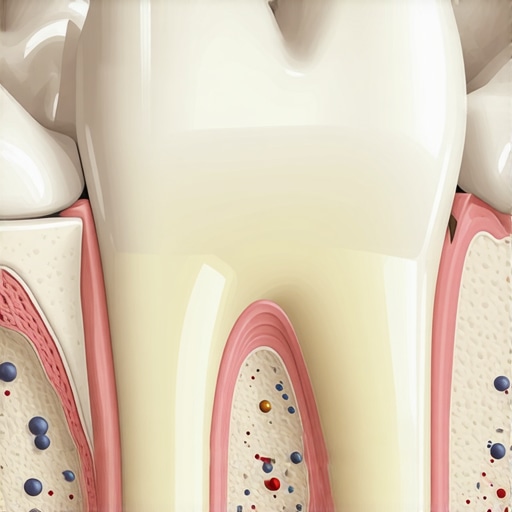 Another hidden danger is nocturnal grinding. If you have ever wondered about the reason your crown feels loose when you wake up, you are likely putting thousands of pounds of pressure on those margins every night. This mechanical stress flexes the crown, breaking the seal and allowing bacteria to be sucked into the space like a vacuum. This is where how a simple night guard can save you thousands in future dental work becomes the most important part of your oral health routine. You aren’t just protecting the porcelain; you are protecting the seal. Have you ever fallen into the trap of thinking a crown was ‘maintenance-free’ only to be surprised by a weird taste or smell? Let me know in the comments. We have to look at the impact of regular teeth cleaning on overall oral wellness as a holistic mission. It’s about more than just a bright smile; it’s about stopping the microscopic decay before it starts.Moving beyond the basics of brushing was the single biggest turning point in my oral health journey. I stopped treating my dental work like a static object and started treating it like a high-performance machine that requires specialized maintenance. I personally transitioned to an electric brush with a magnetic drive system—specifically the Oral-B iO series—because its pressure sensor is incredibly sensitive. A landmark meta-analysis by the Cochrane Oral Health Group found that electric toothbrushes with an oscillating-rotating motion reduce plaque by 11% more than manual brushes after just one to three months of use. When you have a crown, that 11% is the difference between a healthy gum line and a bacterial breeding ground. This switch is one of those teeth cleaning secrets that pays for itself by preventing the microscopic recession that leads to sensitivity and odor.
Get Serious About Your Plaque-Fighting Tech
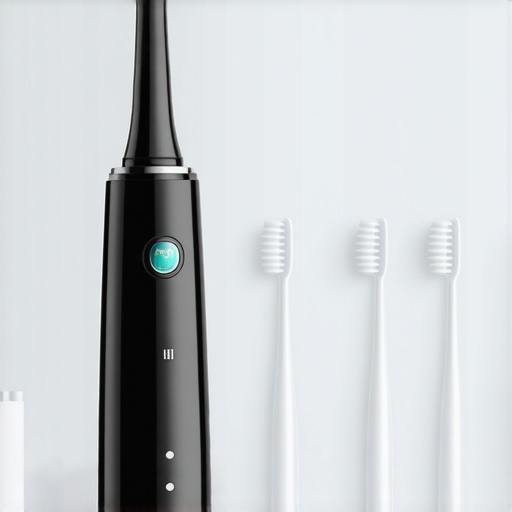 As I look toward the future, I see the landscape of oral health tips every family should follow in 2025 moving toward tele-dentistry and AI-assisted brushing. We are already seeing brushes that map your mouth in real-time on a smartphone, showing you exactly where you’ve neglected the margins of your restorations. I’ve started using these tracking features to ensure my back molars—the ones with the oldest crowns—get the attention they deserve. It’s no longer about how long you brush, but about the data-driven accuracy of where you brush.
How can I make sure my dental work stays solid forever?
The secret is in the scaling of your routine as you age. What worked for me in my twenties is a recipe for disaster in my forties. Beyond the hardware, I’ve incorporated a pH-neutralizing strategy. After my evening coffee, I use a simple xylitol-based rinse to counteract acidity. This protects the resin bond of the crown, which is a key part of maintaining your dental crowns over the long haul. For our household, this has evolved into a family dentistry focus where we teach our kids that preventing the ‘stink’ is a daily mechanical job. If you feel like you are falling behind, remember that the most comfortable way to get a professional deep cleaning is to stay ahead of the plaque with pro-level tools at home. My challenge to you: buy a pack of rubber-tipped interdental brushes today and use them just once after your final meal; the ‘gunk’ you find will convince you to follow this expert advice on crowns and teeth cleaning faster than any blog post could.
The Hardest Lessons I Learned About Keeping My Smile Fresh
Looking back at my years of dental struggles, the most profound realization I had was that a crown is a partnership between you and your dentist, not a one-sided solution. Here are the lightbulb moments that finally changed the game for me: first, your nose is your most honest diagnostic tool. If you detect a sour scent, it is an early warning system from your body that the seal is under siege, and ignoring it only leads to more expensive fixes later. Second, mechanical action beats chemical rinsing every single time. I used to pour money into fancy mouthwashes, but maintaining your dental crowns is about physically disrupting the plaque, not just masking it. Finally, I learned that dental work doesn’t make your mouth ‘invincible’; it actually makes you a ‘high-risk’ patient who needs to be more vigilant than someone with zero fillings.
The Essential Gear I Use to Protect My Investment
I don’t leave my oral health to chance anymore. My daily toolkit is focused on precision and pH balance. I swear by my oscillating-rotating electric toothbrush because it removes the guesswork of pressure. I also carry xylitol mints everywhere; they stimulate saliva and help neutralize the acids that lead to the reason your coffee habit is ruining your crowns sealant. For the margins, I use rubber-tipped stimulators which are gentler than wood but more effective at massaging the gum line around the porcelain. These tools, combined with expert advice on crowns and teeth cleaning, have completely eliminated that ‘French bakery dumpster’ smell I used to live with. I trust these methods because they focus on the biology of the mouth, not just the aesthetics of the smile.
Stop Worrying and Start Smiling Again
It is easy to feel defeated when your dental work starts to act up, but remember that you have the power to reverse the trend. You don’t have to live in fear of a loose cap or a sudden odor during a conversation. By implementing a dedicated oral health routine, you are doing more than just cleaning teeth; you are reclaiming your confidence. This is how how crowns can transform your dental confidence from a source of anxiety into a source of pride. You’ve invested the time and money into your dental work; now it’s time to give it the daily respect it deserves to last a lifetime. Have you ever been surprised by a weird taste or smell around an old dental crown? Let me know your experience in the comments below!