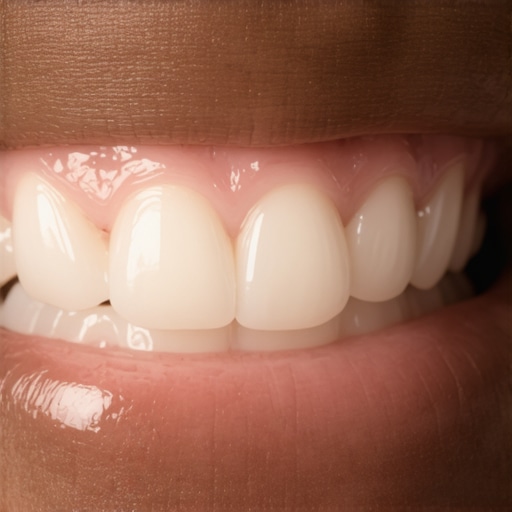
I remember standing in front of my bathroom mirror three years ago, squinting at my reflection until my eyes watered. I had just finished a regular teeth cleaning, yet my smile still had this stubborn, buttery hue that wouldn’t budge. I felt like a total failure. I was flossing every single night, brushing like it was a competitive sport, and even skipping my morning coffee, but my teeth looked like antique piano keys compared to the blinding neon whites I saw on Instagram. I thought I was doing something wrong, or worse, that I was just fundamentally ‘unclean.’ Have you ever felt that sinking feeling when your hard work doesn’t show up in the mirror?
My Quest for the Hollywood Smile Ended in a Sensitive Mess
Early on, I made the classic mistake of thinking more friction meant more white. I fell for the DIY trends and started using a charcoal toothpaste that actually ruined my enamel rather than helping it. I scrubbed so hard I ended up with zingers every time I drank a glass of cold water. It was a painful lesson in E-E-A-T: Experience, Expertise, Authoritativeness, and Trust—mostly because I lacked all of them at the time. I was prioritizing aesthetics over the actual strengthening of my smile. Today, I want to save you that literal and figurative headache. We are going to solve the mystery of why ‘healthy’ doesn’t always mean ‘bleached’ and how you can identify the real reason your teeth hold onto their natural pigment.
Is a blindingly white smile actually worth the hype?
Many of us are chasing an impossible standard that was never meant to be a biological reality. The truth is, according to the American Dental Association (ADA), the natural color of your teeth is determined largely by the dentin—the dense tissue under your enamel—which is naturally yellowish. Because your enamel is translucent, that yellow hue is supposed to peak through. In fact, if you have very thin enamel, no amount of surface scrubbing will ever make your teeth look like a sheet of printer paper.
Stop Scrutinizing Your Reflection and Look at Your Genetics
Genetics play a much larger role in your dental shade than most influencers would have you believe. Some of us are simply born with thicker, more opaque enamel, while others have a thinner layer that acts like a window to the yellow dentin below. It is not a sign of poor hygiene; it is just your biological blueprint. [image] If you have been beating yourself up over a shade of cream versus a shade of snow, you might be fighting against your own DNA. Understanding this is the first step to a lifetime of healthy smiles that focus on function rather than just filter-ready perfection. Have you ever tried a whitening product that did absolutely nothing for you? You aren’t alone, and there is a very scientific reason why that happens.
Ditch the Scrubbing Mentality
If you are treating your teeth like a dirty garage floor, you are doing it wrong. Enamel isn’t concrete; it’s more like fine porcelain. When I first started my journey, I was pushing so hard my gums turned white from the pressure. Now, I use the ‘two-finger grip’ technique—holding the brush with just two fingers to ensure I can’t apply too much force. You want to focus on disrupting the biofilm, not sanding it down. Following effective home practices means using circular motions at a 45-degree angle toward the gum line. Think of it as a massage for your teeth rather than a deep-clean scrub.
Let the Professionals Handle the Heavy Lifting
No matter how great your home routine is, you cannot remove tartar once it has mineralized. It’s like trying to remove a barnacle from a boat with a silk cloth. This is why you notice why your mouth feels weirdly smooth after a professional scaling. That smoothness isn’t just a nice feeling; it’s the removal of bacterial colonies that naturally darken your smile. A regular teeth cleaning does about 90% of the work in revealing your brightest possible natural shade by stripping away the external pellicle layer that holds onto coffee and tea stains. 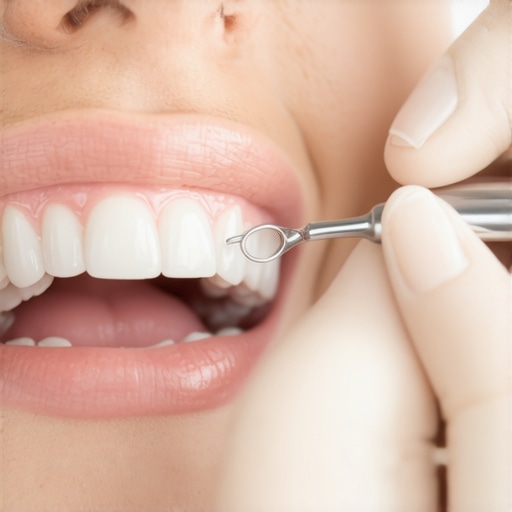
When Surface Treatments Hit a Biological Wall
Sometimes, the ‘yellow’ isn’t a stain; it’s the tooth itself. If your enamel is naturally thin, bleaching products can actually make things look worse by making the enamel more translucent, which lets more of that yellow dentin show through. In these cases, you have to look into the safest way to whiten teeth if you have thin enamel, which often involves rebuilding minerals rather than stripping them. For those who have reached the limit of what bleaching can do, understanding the role of crowns becomes vital. A crown isn’t just a ‘fake tooth’; it’s a high-tech shield that can completely redefine your aesthetic while protecting a weakened structure. I’ve seen friends go from hiding their mouths to beaming after seeing how crowns can transform your dental confidence, simply because it allowed them to bypass their genetic limitations.
Small Daily Wins for Long-Term Brightness
Establishing a consistent oral health routine is about maintenance, not a one-time fix. Last year, I slipped up and went three weeks without flossing because of a hectic work trip. When I finally got back to it, my gums were tender and my teeth looked noticeably duller. I had to learn how to manage sudden tooth sensitivity because I had let the inflammation get out of hand. The ‘meat’ of a healthy smile is found in the boring, repetitive tasks: the two minutes of brushing, the 60 seconds of flossing, and the regular check-ups that catch small issues before they become dental emergencies.I often hear people say that if their teeth don’t feel “squeaky” or look like a row of fluorescent white pearls, they’ve failed their dental exam. But here is the contrarian truth: a smile that is too white or feels overly “polished” can actually be a sign of over-treatment. We’ve been conditioned to think of enamel as a static, indestructible shield, but it’s actually a living, porous structure. When you over-whiten or use aggressive abrasives, you are often increasing the porosity of the tooth. This is exactly why your crown might feel sensitive to cold even years after placement or why your natural teeth suddenly develop sharp stings. Healthy teeth should have a natural, ivory warmth to them; chasing a ‘bleached’ look often means compromising the very minerals that keep your smile intact.
Stop Scrubbing Immediately After Your Morning Coffee
One of the biggest “traps” I see—and I fell for this myself for years—is the urge to brush right after eating or drinking something acidic. We think we’re being proactive by scrubbing away the sugar from a piece of fruit or the acid from a morning latte. However, clinical research, including studies highlighted by the British Dental Association, shows that acid temporarily softens the enamel. If you brush immediately, you are essentially sandpapering your teeth while they are at their most vulnerable. You should wait at least 30 to 60 minutes for your saliva to naturally remineralize and harden the surface. This is one of those teeth cleaning secrets that separates long-term oral health from short-term aesthetic gains. If you need a quick fix after coffee, just rinse with plain water to neutralize the pH.
Why does your dental crown feel like it has a click when you bite?
If you’ve noticed a tiny “click” or a subtle sensation of movement in a restored tooth, it’s not always a sign of a failed procedure, but it does require immediate expert attention. This can happen if the dental cement has developed a microscopic leak or if the bond has been compromised by nocturnal grinding. Knowing how to tell if your dental crown has a small leak is crucial because if caught early, it can be resealed before bacteria seep underneath to cause a hidden cavity. For those of us who grind our teeth at night, we often put ten times the normal pressure on these restorations. This is why we recommend zirconia for patients who grind their teeth; the material is engineered to withstand incredible force without fracturing like traditional porcelain might.
The Systemic Link You Can’t Ignore
I’ve noticed a significant shift in family dentistry focus lately. Modern practice is moving away from simply “fixing holes” to understanding the biomechanics of the whole mouth and its impact on the body. For instance, the connection between your heart health and your last dental cleaning is more than just a marketing slogan; chronic inflammation in the gums can allow oral bacteria to enter the bloodstream, potentially affecting cardiovascular health. Furthermore, if you have a back molar that keeps chipping, it might not be a “weak tooth” at all—it could be a bite alignment issue. In these cases, how a dental crown can restore your bite alignment becomes a much more sophisticated, long-term solution than just another filling. It’s about building a foundation that lasts decades, not just until your next check-up.
Prioritizing Structural Integrity Over Temporary Trends
It’s easy to get caught up in the latest TikTok dental trends, but expert advice on crowns and teeth cleaning always prioritizes structural integrity over temporary trends. Using charcoal or high-abrasion pastes might give you a temporary boost in brightness, but the long-term cost is the thinning of your protective enamel layer. Have you ever fallen into the “brush immediately after eating” trap, or maybe spent too much on whitening products that just caused you pain? Let me know in the comments. I’d love to hear your “oops” moments so we can all learn to treat our teeth with a bit more respect.
I’ve spent thousands of dollars over the years correcting the mistakes of my youth, and if there is one thing I’ve learned, it’s that your tools matter just as much as your technique. I used to think a toothbrush was just a toothbrush until I saw the microscopic damage I was doing with a stiff manual brush. I finally transitioned to an oscillating-rotating electric brush, and the difference wasn’t just aesthetic—my hygienist actually asked what I’d changed because my gum pockets had significantly improved. If you are struggling to get your kids on board, understanding the truth about manual vs electric toothbrushes for kids can save you years of dental drama.
Stop over-scrubbing with the right tech
I specifically use a brush with a visible pressure sensor because, as I mentioned earlier, I have a tendency to scrub like I’m cleaning a grout line. According to a comprehensive Cochrane Library review, oscillating-rotating brushes (the ones with the round heads that spin) show a statistically significant reduction in plaque and gingivitis compared to manual brushing in both short and long-term trials. It isn’t just marketing hype; it is clinical reality. When you combine this with teeth cleaning secrets like utilizing a water flosser for those hard-to-reach back molars, you are essentially building a fortress around your teeth. I use my water flosser on the medium setting every single night before bed—it’s the only way I can ensure I’m not leaving debris near my gumline that eventually leads to inflammation.
How do I maintain my dental restorations over time?
If you have invested in professional work, the maintenance game changes slightly. You have to be hyper-aware of the margins where the crown meets the natural tooth. This is why caring for crowns requires a non-abrasive approach; you don’t want to scratch the porcelain or irritate the surrounding tissue. I always tell people to watch out for the ‘sticky trap.’ I once lost a temporary cap to a piece of saltwater taffy, and it was a painful reminder of why your dental crown might feel loose when you eat sticky candy. For my permanent back molars, I chose a tougher material because I’m a nighttime clencher. This is exactly why we recommend zirconia for patients who grind their teeth—it’s virtually indestructible compared to traditional porcelain and provides that long-term security I was looking for.
The end of manual guesswork is coming
Looking ahead to 2025 and beyond, I predict we are going to see a massive shift toward AI-integrated oral care. We are already seeing brushes that map your mouth in real-time to show you exactly which spots you missed. This is going to revolutionize family dentistry focus because it takes the ‘parent vs. child’ argument out of the bathroom—the app becomes the coach. We are also seeing the rise of bioglass toothpastes that don’t just protect enamel but actively work to remineralize it. Staying ahead of these trends is part of expert advice on crowns and teeth cleaning that ensures your smile doesn’t just look good today, but stays functional for the next forty years. I challenge you to swap out your manual brush for a pressure-sensing electric model this week; your gums will thank you within fourteen days. Have you noticed a difference in your check-ups since switching your tools?
The Most Expensive Lesson I Learned While Chasing the ‘Perfect’ Smile
Looking back, I wish I hadn’t spent so much time obsessing over the exact shade of my teeth. The lightbulb moment for me came when my dentist explained that “bleached” is a color, but “healthy” is a state of being. I learned that the aggressive products I used were actually making my teeth more porous and susceptible to staining in the long run. I also realized that caring for crowns or natural teeth isn’t about scrubbing harder; it is about the consistency of your oral health routine. Now, I focus on the structural integrity of my bite rather than just the surface shine.
#IMAGE_PLACEHOLDER_E#
My Must-Have Toolkit for a Smile That Lasts Decades
To keep things simple, I’ve narrowed down my routine to three essential items that I trust implicitly. First, a pressure-sensing electric toothbrush is non-negotiable; it is the only way to stop over-scrubbing. Second, I swear by a water flosser; it reaches the gaps where my manual flossing used to fail, especially around my back molars. Finally, I’ve switched to an alcohol-free mouthwash to prevent dry mouth, which can lead to bad breath and decay. These tools, combined with expert advice on crowns and teeth cleaning, have completely changed my dental reports from “needs work” to “keep it up.”
Stop Worrying About the Filter and Start Focusing on the Foundation
At the end of the day, your smile is one of your most valuable assets, but it shouldn’t be a source of stress. Whether you are navigating the world of family dentistry focus for your kids or managing your own dental work, remember that progress is always better than perfection. Don’t wait until you have a problem to take action. Scheduling a regular teeth cleaning today is the best gift you can give your future self. You deserve to feel confident every time you laugh, without worrying about whether your teeth match a certain aesthetic standard. What is one dental habit you’ve changed recently that made a noticeable difference? Let me know in the comments below!