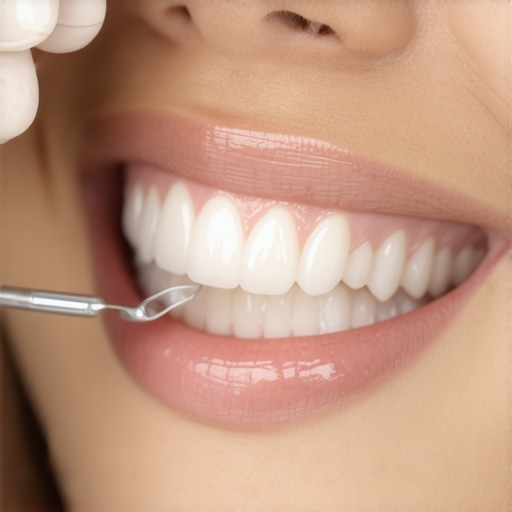
I remember the exact second it happened. I was biting into a piece of crusty sourdough bread—the kind that’s just a bit too tough for its own good—and I heard a sickening click. My tongue, acting as a tiny dental detective, immediately found the culprit: a jagged, razor-sharp edge on my front left incisor. It felt like I had a piece of broken glass sitting in my mouth. Every time I spoke or smiled, that sharp corner caught on my lip, making it impossible to focus on anything else. If you are sitting there right now, obsessively running your tongue over a new chip and wondering if your smile is ruined, take a deep breath. I’ve been exactly where you are, and I promise we can get this sorted out without a total dental meltdown.
Stop Your Tongue From Getting Sliced by That Jagged Tooth
Dealing with a chipped front tooth is more than just a cosmetic bummer; it is a physical nuisance. I spent three days trying to ‘get used to it’ before my tongue became so raw it actually started to bleed. That was my first big mistake. When you have a chip, especially if you have noticed why your front teeth are getting shorter as you age, the enamel is often thin and prone to further crumbling. My goal today is to show you how to protect your mouth right now and what your actual options are for a permanent fix. We are going to look at everything from dental wax to professional contouring, ensuring you don’t end up like me, trying to ignore a problem that only gets sharper with time. Before we dive into the ‘how-to,’ I have to ask: have you ever had a tooth just give up on you while eating something completely soft? It’s a bizarre feeling, isn’t it?
Will This Require an Expensive Dental Overhaul?
This is the fear that kept me out of the dentist’s chair for way too long. I assumed a chip meant I’d need a full porcelain cap. However, as noted by the American Dental Association, minor chips are often corrected with simple dental bonding or enameloplasty, which are significantly less invasive than a full crown. I once made the mistake of thinking I could just ‘file it down’ with a nail file at home—please, whatever you do, do not attempt that. I ended up with a tooth so sensitive to cold air that I couldn’t even breathe comfortably. If you have been looking into family dentistry focus areas, you know that keeping your natural enamel intact is the priority. We also need to consider why your teeth feel brittle and prone to chipping in the first place, because fixing the edge is only half the battle if the underlying structure is weak. Now, let’s get into the immediate steps you should take to save your sanity and your smile.
Cover the Sharp Edge Right Now
The very first thing you need to do is create a physical barrier between that razor-edged tooth and your soft tissues. I once tried to use a piece of sugar-free gum as a makeshift shield when I was at a restaurant, and it was a sticky, ineffective disaster that actually made the sensitivity worse. Instead, run to the nearest pharmacy and grab a pack of orthodontic wax. It is exactly like the stuff kids use for braces. You take a tiny pea-sized amount, warm it between your fingers, and press it firmly over the chip. This acts like a soft bumper on a sharp corner of a coffee table, preventing your tongue from looking like it went through a paper shredder. While this is in place, you must modify how you eat. Think of your tooth as a cracked windshield; any extra pressure could cause that crack to spiderweb. Stick to soft foods like yogurt or mashed potatoes until you can get a professional look at it. If you find yourself frequently dealing with structural issues, it might be time to revisit your oral health routine to ensure you are not inadvertently weakening your enamel. 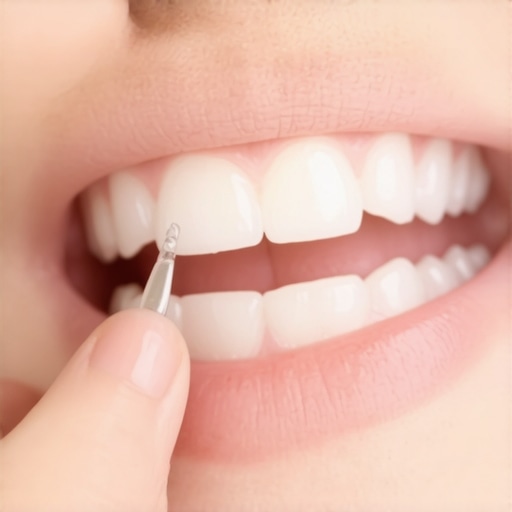
Choose the Right Fix for Your Smile
Once you are in the dental chair, the solution depends entirely on the size of the ‘pothole’ in your tooth. For a tiny nick, your dentist might perform an enameloplasty—which is just a fancy word for smoothing out the rough edges. It is quick, painless, and feels like a mini-manicure for your smile. However, if the chip is visible when you talk, dental bonding is the standard ‘spackle’ of the dental world. They apply a tooth-colored resin, shape it to match your natural tooth, and harden it with a UV light. It is incredibly effective, but you have to be careful with staining agents like coffee or red wine. If the damage goes deeper, the role of crowns in modern smile makeovers becomes the central focus. A crown acts as a protective helmet, encasing the entire tooth to prevent it from splitting in half. This is especially common if the tooth has been weakened by previous fillings or internal decay.
Protect Your Repair for the Long Haul
Getting the tooth fixed is only half the battle; the real work starts with maintenance. I learned the hard way that once a tooth has been bonded or crowned, you cannot treat it like a Swiss Army knife. I used to use my teeth to tear open ketchup packets or hold onto bobby pins, but that is a one-way ticket to a repeat appointment. You need to be diligent about maintaining your dental crowns and bonded surfaces by avoiding extreme ‘bite-and-twist’ motions with hard foods like apples or crusty bread. If you have a habit of grinding your teeth at night, a night guard is non-negotiable. Without it, you are basically sanding down your expensive dental work while you sleep. Additionally, pay attention to the seal around any new dental work. If you ever feel a strange sensation or a snag, knowing how to keep your dental crown from popping off involves keeping the surrounding gum tissue healthy and avoiding excessively sticky candies like taffy or caramel that can create a suction effect. High-quality home care, including effective home practices, ensures that the junction where the repair meets your natural tooth remains bacteria-free and strong.
There is a dangerous sense of security that comes after you leave the dentist with a brand-new, polished crown or a perfectly bonded tooth. You look in the mirror, see a flawless surface, and think, ‘Well, that tooth is safe forever.’ This is the biggest misconception I see in the world of family dentistry. Most people believe that because porcelain or resin cannot decay, the tooth underneath is somehow shielded by a magical, impenetrable force field. In reality, that tiny seam where the crown meets your gum line—the margin—is the most vulnerable real estate in your entire mouth. If you don’t keep that area pristine, bacteria will find its way under the restoration, leading to ‘secondary caries’ that you can’t even see until the whole thing literally falls out.
Stop Treating Your Crown Like a Suit of Armor
Everyone says that once you have a crown, you can stop worrying about that tooth, but in my experience, that is exactly when you need to double down on your hygiene. A study published in the International Journal of Prosthodontics emphasizes that the health of the supporting tooth structure and the integrity of the marginal seal are the primary factors in restoration longevity. This is why I always tell people that expert advice on crowns and teeth cleaning isn’t just about making them look shiny; it’s about preventing the silent decay that happens in the dark. The ‘oops’ factor here is assuming that if it doesn’t hurt, it must be fine. By the time a crowned tooth starts to ache, the damage is often so deep that you might be looking at a root canal or an extraction rather than a simple cleaning.
Why Your New Crown Feels Cold When You Breathe In
If you have recently had work done and notice a sharp zing when you inhale air or drink something chilly, you are not alone. You might be wondering, why your new crown feels cold when you breathe in, especially if the nerve is still intact. This sensitivity is often a sign that the tooth’s internal ‘pulp’ is adjusting to the preparation process, or that the margin is slightly exposed. While some sensitivity is normal for a few days, persistent ‘cold-zings’ should never be ignored. It could mean the seal isn’t as tight as it needs to be. This is why the one thing you must do before your next dental cleaning is to take a mental inventory of every single sensation—even the minor ones—so you can advocate for yourself in the chair. 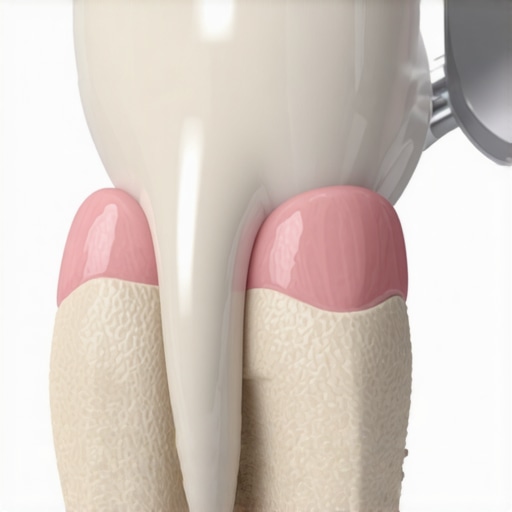
The Secret to Avoiding That ‘Old Food’ Smell
One of the more embarrassing ‘nuances’ that no one talks about is when a crown begins to develop a specific, unpleasant odor. If you’ve ever wondered how to stop your crown from smelling like old food, it’s usually because the seal has been compromised, allowing microscopic food particles to ferment underneath. This isn’t just a social problem; it’s a biological red flag. Relying on a basic oral health routine isn’t enough once you have complex dental work; you need to be surgical with your flossing and perhaps even use an interdental brush. Have you ever fallen into this trap of thinking a crown means you can skip the floss in that area? Let me know in the comments. We need to shift our focus toward caring for crowns as if they are more delicate than natural teeth, not less. Only by being obsessive about the margins can you ensure that your investment lasts decades instead of years.
I’ll be blunt: a standard toothbrush is essentially a broom for a floor that has a thousand tiny crevices. When you have crowns or complex bonding, you need something that functions more like a pressure washer. This is why I personally swear by a high-end water flosser with a specialized ‘plaque seeker’ tip. I started using one after my dentist showed me a high-definition photo of the plaque hiding right at the edge of my crown. It was eye-opening. If you want to keep that investment secure, you have to adopt some teeth cleaning secrets that go beyond the basic two-minute scrub. I use my water flosser on the medium setting—never the highest, as you don’t want to blast the gum tissue away from the margin—and I focus specifically on the junction where the porcelain meets the natural tooth. This simple shift in my oral health routine has likely saved me thousands in replacement costs.
Get a Water Flosser or Get Ready to Pay Twice
According to the FDI World Dental Federation, oral health is not just a standalone metric but a fundamental pillar of general health and well-being, particularly as we age. They emphasize that the maintenance of restorations is a ‘lifelong clinical journey,’ not a one-and-done event. This is why I always look for expert advice on crowns that focuses on the biological health of the root, not just the durability of the ceramic shell. If the root fails, the most expensive crown in the world is just a expensive paperweight. I also recommend switching to a high-quality electric toothbrush with a pressure sensor. I used to be a ‘scrubber,’ but I learned that why hard brushing actually makes your teeth look darker is due to enamel wear, which is even more dangerous around the margins of a crown.
How do I maintain my dental work over time?
The secret isn’t just better tools; it’s better timing. I started scheduling ‘maintenance checks’ instead of just ‘cleanings.’ There is a huge difference. A maintenance check involves your dentist checking the ‘occlusion’—the way your teeth bite together. Over time, your natural teeth wear down, but your porcelain crown doesn’t. This can create ‘high spots’ that eventually crack the restoration. You need to understand the impact of regular teeth cleaning and professional oversight on how your bite evolves. I also recommend using a pH-balancing mouthwash if you have a high-acid diet. It neutralizes the environment so bacteria can’t thrive near those vulnerable crown margins. If you are looking for oral health tips every family should follow in 2025, start with the baseline of professional surveillance. #IMAGE_PLACE_HOLDER_D#
The Future of Your Smile is Digital
Looking ahead, I see the industry moving toward ‘predictive dentistry.’ We are already seeing AI-powered apps that sync with your electric toothbrush to tell you exactly where you’re missing the margins of your crowns. Within the next few years, I expect we’ll all have 3D scans of our mouths saved in the cloud, allowing dentists to compare changes down to the micron before a chip even happens. It’s an exciting time for family dentistry, but for now, the best tool is still your own consistency. My advanced tip for today: Start using an interdental brush tonight—just once—on that one tooth that feels ‘tight’ or has a crown. You’ll be shocked at what your regular floss was leaving behind. Being proactive now is the only way to avoid the role of crowns becoming a recurring and expensive theme in your life.
The Hard Truths I Discovered After My First Crown
If I could go back in time to the moment I first chipped that incisor, I would tell myself that the repair is just the beginning of a new relationship with my mouth. One major lightbulb moment for me was realizing that the ‘seam’ between my crown and my gum is actually more important than the porcelain itself. I spent years focused on how white the tooth looked while ignoring the very area where bacteria love to hide. Another lesson learned: stress is the ultimate enamel thief. I didn’t realize that my daily habits were directly causing my teeth to become brittle until I saw the wear patterns on my other teeth. Most importantly, I learned that expert advice on crowns isn’t about selling you a service; it is about extending the life of your investment so you don’t have to pay for the same tooth twice.
A Proven Toolkit for a Lifetime of Strong Enamel
You don’t need a cabinet full of expensive gadgets, but you do need the right ones. My personal ‘must-haves’ include a high-quality water flosser—it reaches the margins of my dental work in a way that traditional string never could. I also recommend a non-abrasive fluoride toothpaste that focuses on remineralization rather than aggressive whitening. If you want to stay ahead of the curve, keep an eye on oral health tips every family should follow in 2025, which emphasize bio-compatible materials and pH balance. I also keep a stash of orthodontic wax in my travel bag at all times, just in case a new chip happens while I am away from home. These small tools bridge the gap between your biannual appointments and ensure that your family dentistry focus remains on prevention rather than emergencies. #IMAGE_PLACEHOLDER_E#
Your Path to a Confident Smile Starts Today
A chipped tooth can feel like a disaster in the moment, but it is often the wake-up call we need to prioritize our long-term wellness. Don’t let the fear of the dentist’s chair keep you from fixing a sharp edge that is currently ruining your day. Whether it’s a simple smoothing of the enamel or a full protective cap, getting it sorted now will save you from much more complex procedures down the road. Never underestimate the impact of regular teeth cleaning on your ability to catch these issues before they become painful. Your smile is a vital part of who you are, and taking care of it is one of the best ways to show yourself some respect. If you are ready to get that edge smoothed out once and for all, don’t hesitate to contact us and reclaim your dental confidence. Have you ever had a dental repair last longer than a decade? What is your secret for keeping your dental work looking brand new? Let me know in the comments below!