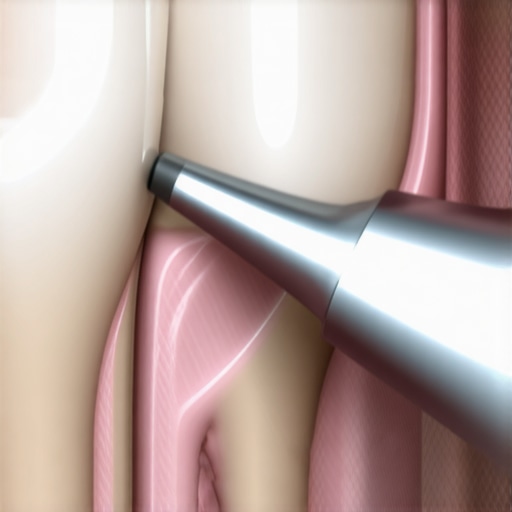
I remember sitting at a dinner party last summer, trying to enjoy a piece of crusty sourdough, when I felt that unmistakable *snap*. It wasn’t a full break, but suddenly, my tongue had a new, jagged neighbor that wouldn’t stop poking at my cheek. It drove me absolutely bananas. Every time I talked or swallowed, that sharp little edge reminded me it was there. I was terrified of going to the dentist because I thought they’d have to grind my tooth down to a nub or, worse, irritate my already sensitive gums to fix it. I actually made the classic mistake of thinking I could ignore it, which only led to a tiny sore on the inside of my lip. I even considered a DIY fix for a split second—please, for the love of everything, never try to file your own teeth. It was a huge mistake that I quickly realized could lead to permanent enamel loss. Have you ever spent an entire day obsessively running your tongue over a sharp tooth? It is the ultimate distraction. Today, I am going to show you exactly how to handle a jagged edge so you can protect your soft tissue and get back to smiling without that nagging irritation.
Stop That Sharp Edge from Tearing Up Your Mouth
When I finally sought help, I learned that fixing a minor chip is one of the most routine parts of family dentistry. You don’t have to live with the discomfort. The goal is to smooth the tooth while keeping your gum line completely untouched. If the chip is small, a simple process called dental contouring can round out the edge in minutes. However, if the damage is deeper, we might be looking at how crowns can transform your dental confidence by providing a brand-new, smooth surface. The key is acting before the sharp edge causes a secondary infection in your gums or cheek. According to the Cleveland Clinic, dental enamel is the hardest tissue in the human body, but its mineral structure makes it brittle and prone to these vertical fractures under pressure. This is why you need a professional touch to ensure the structural integrity of the tooth remains intact while removing the ‘knife-edge’ that’s bothering you.
Won’t professional smoothing just ruin my enamel?
This is the fear I had, and I’ll be honest: I was convinced that any ‘sanding’ would leave me with zingers every time I drank cold water. But here is the reality: a professional only removes a microscopic amount of the outer layer. It’s actually far safer than leaving a jagged edge that could eventually crack further. If you’re worried about the look, understanding the role of crowns can help you see that even more significant chips can be repaired to look completely natural. In my case, a quick smoothing and a focus on better teeth cleaning secrets at home kept my gums healthy and my tooth looking better than it did before the chip. You don’t need to fear the chair; you just need a plan to fix the sharp edge of a chipped front tooth before it turns into a larger problem.If you are currently dealing with a jagged edge, your first goal isn’t just aesthetic; it’s a rescue mission for your tongue. Think of a sharp tooth like a loose nail in a floorboard—you can’t just leave it there while people are walking around in socks. Your tongue is naturally inquisitive and will constantly find that ‘knife edge,’ leading to painful sores. If you notice the reason your tooth hurts only when you bite down hard, the fracture might be structural rather than just a surface chip. In my case, I tried to tough it out for three days until my inner cheek looked like raw hamburger meat. I finally bought a pack of dental wax from the drugstore. I remember meticulously molding a tiny bead over the sharp point before a big lunch meeting. It was a bit clumsy—I actually swallowed a piece while eating a sandwich later—but the immediate relief from the constant scraping was worth the awkwardness.
Stop the Scraping Before Your Cheek Gives Up
Before you can get to the office, you need a physical barrier. Sugar-free gum works in a pinch, but dental wax is the gold standard for home care. It stays put better and doesn’t harbor as much bacteria. This isn’t a cure, though; it’s just a bandage to prevent soft tissue damage. You still need to understand why your teeth feel brittle and prone to chipping to prevent this from happening to your other teeth in the future.
Seal the Gap with Orthodontic Wax
When applying wax, make sure the tooth is as dry as possible so it sticks. A quick dab with a cotton swab does the trick. Roll the wax into a small ball and press it firmly over the sharpest point. If the wax keeps falling off, you might be using too much; a pea-sized amount is usually plenty to create a smooth buffer against your lip.
Let a Professional Handle the Heavy Lifting
When you finally get into the chair, the solution is usually much faster than you would expect. For minor snags, we use a process called odontoplasty. Imagine a jeweler polishing a rough diamond; the dentist uses a series of fine-grit polishing discs to round off the sharp peaks. It shouldn’t hurt because there aren’t any nerves in the outer enamel. 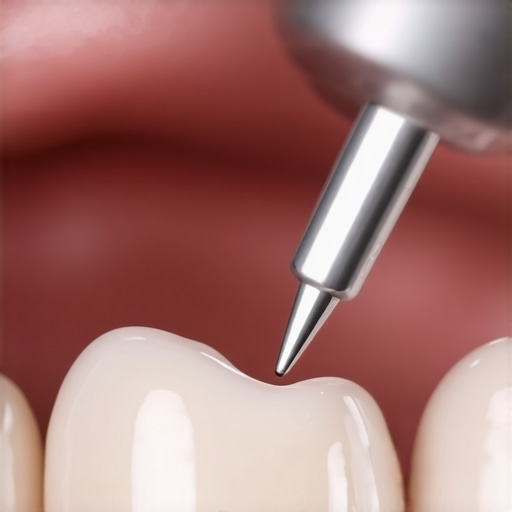 This process preserves the tooth’s health while eliminating the irritation. However, if the chip is significant, smoothing it might make the tooth look noticeably shorter or uneven. This is where expert advice on crowns and teeth cleaning for lasting results becomes vital. If the integrity of the tooth is compromised, a simple polish won’t suffice.
What to Do if the Chip Goes Deeper Than the Surface
Sometimes a chip is just the tip of the iceberg. If the fracture lines extend further down into the dentin, you may need a more robust restoration than simple contouring. A porcelain crown acts like a helmet, protecting the remaining tooth structure from further splitting. If you go this route, you will need to learn how to prevent your crown from popping off while eating by avoiding excessively sticky foods. Long-term success also depends on following updated oral health tips every family should follow in 2025, which emphasize gentle care over aggressive scrubbing. My own repair felt strange for about twenty-four hours—like my mouth didn’t quite recognize the new shape—but by day two, the ‘jagged neighbor’ was a distant memory.Most people assume a chipped tooth is a freak accident—a wayward popcorn kernel or a slippery fork. But in my years of obsessing over dental health after my own mishap, I’ve realized that a chip is often a ‘canary in the coal mine.’ We tend to treat family dentistry as a reactive service rather than a diagnostic one. If you just smooth the edge and go about your day, you’re missing the bigger picture. In many cases, you might be dealing with microscopic stress fractures that haven’t fully given way yet. One of the biggest traps I see people fall into is the ‘it’s just cosmetic’ mindset. They think that as long as the tongue isn’t bleeding, the tooth is fine. But a sharp edge usually indicates that the enamel’s protective ‘dome’ has been breached. If you don’t look into why your teeth feel brittle and prone to chipping, you’ll likely be back in the chair for the same tooth in six months.
Does professional cleaning actually wear down your enamel over time?
I hear this all the time: ‘If I go to the dentist too often, will the scraping thin out my teeth?’ It’s a common myth, but the opposite is true. According to a study published in the Journal of Periodontology, professional ultrasonic scaling and polishing remove biofilm and calculus that home brushing simply cannot touch, and the loss of tooth substance is clinically negligible compared to the massive damage caused by chronic inflammation. In fact, the impact of regular teeth cleaning on overall oral wellness goes far beyond just a shiny smile; it prevents the chemical erosion of enamel caused by bacterial byproducts. 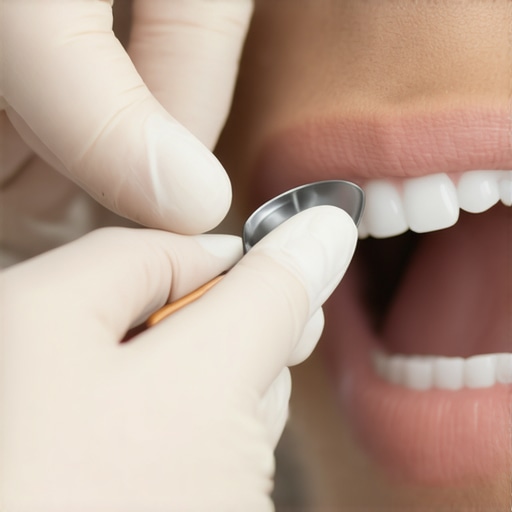 Another nuance people miss is the ‘strength’ of a repair. If you end up needing a crown, don’t make the mistake of thinking it’s a ‘fix and forget’ solution. I’ve seen people get a beautiful restoration and then immediately go back to crunching on ice or opening bags with their teeth. You have to be proactive about maintaining your dental crowns if you want them to last a decade instead of a couple of years. Even things you wouldn’t suspect, like the reason your coffee habit is ruining your crowns’ sealant, can compromise the longevity of your investment. One final warning: if you’ve had a chip fixed and you start to notice why you wake up with a sore jaw and a headache, it’s a sign that your ‘accident’ was actually caused by bruxism—nighttime grinding. Smoothing the edge solves the symptom, but not the cause. You need an oral health routine that accounts for mechanical stress, not just cavities. Have you ever fallen into this trap of fixing the symptom but ignoring the cause? Let me know in the comments!
Avoiding the trap of reactive dentistry means shifting your focus to the kit you use every single morning. I used to be a ‘manual brush and whatever floss is on sale’ kind of person, but that changed the moment I saw how quickly a repair can degrade without the right friction. I’ve become obsessed with using an electric toothbrush with a built-in pressure sensor. Why? Because most of us are actually ‘scrubbers,’ and that aggressive motion is exactly why your dentist wants you to stop using hard bristles. If you’ve had a tooth smoothed or a crown placed, you want to clean the area without vibrating the restoration into early retirement. I personally use the Oral-B iO series because the micro-vibrations feel less like a jackhammer and more like a gentle polish, which is vital for maintaining your dental crowns over the long haul.
The Gear That Actually Saved My Smile
Beyond the brush, the real game-changer for me was the water flosser. If you have a bridge or a crown, traditional string floss can sometimes catch on a tiny ledge and, in the worst-case scenario, pull the whole thing loose. A water flosser gets into those microscopic gaps where bacteria love to hide. According to a study in the International Journal of Computerized Dentistry, CAD/CAM technology has reduced the marginal gap of modern crowns to less than 50 micrometers, but that tiny space is still big enough for a colony of bacteria to set up shop. This is why I combine my flosser with specific teeth cleaning secrets like using lukewarm water to avoid sensitivity spikes. 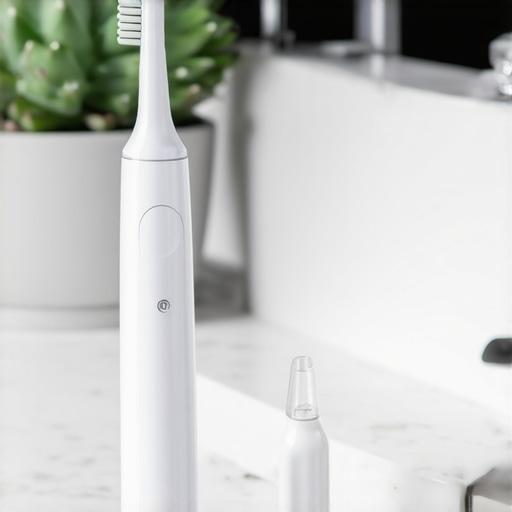
How can I keep my dental work from failing years down the road?
The secret isn’t a secret at all: it’s consistency and a refusal to use your teeth as tools. I predict that by 2030, we will have ‘smart’ night guards that sync to our phones to alert us when our grinding levels are high enough to cause another chip. Until then, you need to be proactive. This means adhering to the latest oral health tips every family should follow in 2025, which include switching to a hydroxyapatite-based toothpaste to help remineralize those tiny scratches before they become cracks. You also need to look at your oral health routine as a living thing that changes with your stress levels. If you’re going through a tough month at work, that’s when you need to be extra diligent about caring for crowns and checking for new rough spots. My advanced tip for you today: try ‘spot cleaning’ the margins of your dental work with a single-tufted brush once a week. It’s a precision tool that gets where normal brushes fail, ensuring your ‘jagged neighbor’ never moves back in.
The Hardest Lesson I Learned About My Chipped Tooth
I used to think my dental health was a series of isolated accidents—a wayward popcorn kernel here, a slippery fork there. But the real lightbulb moment was realizing that a jagged edge is usually a symptom of a much larger story. My biggest mistake was ignoring why your teeth feel brittle and prone to chipping in the first place. I learned that enamel doesn’t just give up for no reason; it is often the result of years of hidden mechanical stress. I also discovered that professional intervention is a form of preservation, not just a cosmetic fix. If I had known that modern family dentistry could resolve that annoying sharp point in five minutes, I would have saved myself weeks of discomfort and painful cheek sores. Lastly, I realized that restorations are incredibly resilient, but they aren’t magic—they require the same diligent care as your natural teeth to prevent future breaks.
My Personal Essentials for Dental Longevity
Building a resilient smile requires more than just a quick brushing session; it requires the right tools for the job. I have curated a small but powerful toolkit that I trust implicitly. First, I never skip using a custom-fitted night guard because I finally understood why you wake up with a sore jaw and a headache; it is the only way to stop the nighttime grinding that causes chips. I also rely on hydroxyapatite-based toothpaste, which acts like a liquid shield to fill in microscopic scratches. For my daily oral health, I strictly follow the oral health tips every family should follow in 2025, which emphasize gentle, sonic vibrations over aggressive manual scrubbing. These aren’t just suggestions; they are the foundation of expert advice on crowns and teeth cleaning for lasting results that I have gathered from years of dental consultations.
Don’t Let a Small Chip Become a Big Regret
Fixing that sharp edge isn’t just about comfort; it is about reclaiming your confidence and protecting your soft tissue. When you stop worrying about how your tooth feels against your lip, you can finally focus on the conversation you’re having. Your oral health routine is the best investment you can make in your future self. Whether you need a simple smoothing or you are looking into how how crowns can transform your dental confidence, taking action today is the only way to ensure your smile stays bright for decades. #IMAGE_PLACE_HOLDER_E# Remember, your teeth are meant to last a lifetime, but they need you to be their advocate. Have you ever ignored a small dental issue only for it to turn into a much bigger problem later on? Let me know your experience in the comments below!