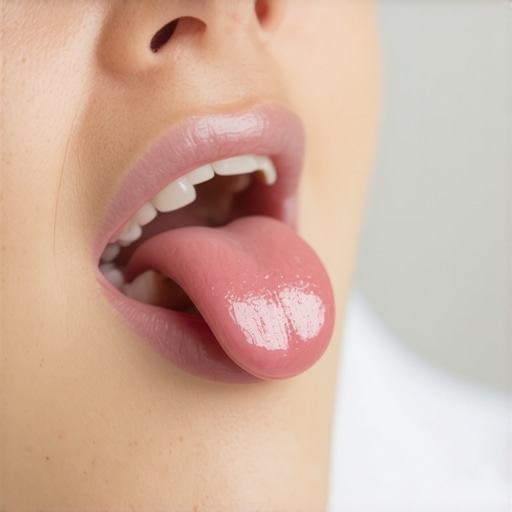
I still remember the absolute panic I felt last spring. I was standing in front of my bathroom mirror, doing my usual post-coffee check, when I stuck out my tongue. Instead of a healthy pink, I was staring at a thick, ghostly white film. Naturally, my mind went straight to the worst-case scenarios. I scrubbed at it so hard with my toothbrush that my gums started bleeding, but that stubborn film wouldn’t budge. It was incredibly frustrating, and honestly, a bit embarrassing. If you are dealing with this right now, I want you to take a deep breath. You do not need to hide your smile or panic. Today, I am going to share exactly how to clear up that white film using simple, proven home remedies that actually work, saving you from the frantic Google searches and useless scrubbing that I went through.
The Moment I Realized Brushing Harder Was Making It Worse
For days after my discovery, I went to war with my mouth. I bought the stiffest toothbrush I could find and brushed my tongue like I was trying to scrub rust off a car bumper. That was my first major mistake. Not only did my mouth sting for hours, but my tongue actually looked even whiter the next day. It turns out that aggressive scrubbing irritates the delicate papillae on your tongue, causing them to swell and trap even more debris. I had to learn the hard way that clearing this up requires a gentle, strategic approach rather than brute force. If you have been brushing until your mouth hurts, you are likely experiencing the real reason your tongue turns white even after brushing, which is often inflammation and trapped buildup rather than just poor hygiene. After shifting to a gentle routine, my oral health improved dramatically, and that ghostly coating finally vanished.
Is a white tongue actually a sign of something serious?
It is completely normal to worry that a white tongue means something is deeply wrong with your health. The good news is that for the vast majority of us, a white coating is simply a buildup of dead cells, food particles, and microbes trapped between inflamed papillae. However, it can sometimes point to oral thrush (a mild yeast imbalance) or chronic dry mouth. According to the Cleveland Clinic, a white coating that does not improve after a couple of weeks of gentle care or is accompanied by pain should be evaluated by a healthcare professional. Have you ever stood in front of the mirror, wondering if your morning breath and fuzzy tongue were signaling a bigger issue? Let me know in the comments below! If you want to dive deeper into general oral care, you might also find our guide on oral health tips every family should follow in 2025 helpful for keeping your entire household smiling brightly.
Step Away From the Harsh Scrapers
When I first faced my white tongue disaster, my immediate instinct was to scrape it like a lottery ticket. I went to the drugstore, bought a sharp plastic scraper, and dragged it across my tongue with force. The result was a raw, stinging tongue that actually produced a thicker white coat the next morning as my body tried to heal the micro-tears. To clear a white tongue safely, you must abandon aggressive scraping. Think of your tongue as a delicate velvet fabric rather than a dirty rug. Instead of scraping, switch to a soft-bristled toothbrush and use incredibly light, circular motions from the back of your tongue forward. This lifts the trapped dead cells and debris without triggering inflammation.
The Gentle Technique That Actually Works
To implement this, moisten your toothbrush with warm water. Avoid strong, alcohol-based mouthwashes during this process, as they dry out the tissues and make the white coating worse. In fact, if you suffer from dry mouth, you might notice why your mouth feels like sandpaper every morning, which creates the perfect environment for bacteria to multiply and build that white film. Brush your tongue gently for just 10 to 15 seconds. If you feel any stinging or discomfort, you are pressing too hard. Follow this up by rinsing thoroughly with plain water to wash away the loosened debris.
Neutralize the Buildup With a Warm Salt Rinse
During my second week of trying to fix my tongue, I realized that my normal brushing routine wasn’t enough to break down the sticky proteins keeping the debris glued to my papillae. I started using a simple, warm salt water rinse twice a day. Salt is a natural mild antiseptic that helps break down mucus, soothe irritated oral tissues, and balance the pH of your mouth. I mixed half a teaspoon of sea salt into a glass of warm water, swished it around my mouth for 30 seconds, and spat it out. Within three days, the stubborn, thick texture of the white film began to thin out significantly.
Hydrate From the Inside Out
Many people do not realize that a white tongue is often a dehydration warning sign. When you do not drink enough water, your saliva production drops. Your saliva is actually your mouth’s natural cleaning system, washing away food particles and keeping bacteria in check. When saliva is scarce, dead cells accumulate on the tongue. You can read more about how why your saliva is your best defense against decay and how keeping your mouth hydrated protects your entire smile. I made a conscious effort to drink eight full glasses of water a day, and the difference in my oral moisture and tongue color was night and day. If you want to elevate your entire family’s oral hygiene game beyond just tongue care, integrating these habits into your daily teeth cleaning secrets effective home practices for family dental health will ensure everyone enjoys clean breath and healthy gums.
The Great Flossing Illusion: Why Harder Work Leads to Worse Recessions
For years, I was convinced that if my gums weren’t slightly sore after flossing, I simply wasn’t doing it right. I brought this same aggressive mindset to my entire home hygiene routine. This is the single biggest trap in family dentistry: the belief that scrubbing harder equals a cleaner mouth. In reality, aggressive scrubbing destroys the delicate junction where your gums meet your teeth. When you force your floss or brush too hard against the gum tissue, you are likely wondering why your gums recede even if you brush twice a day. Our oral tissues require micromanagement, not brute force. Challenging the myth of “aggressive equals clean” is the first step toward saving your enamel and preventing costly dental work down the road.
Why does my new dental crown smell like old food even if I brush it?
This is a highly sophisticated issue that drives many patients crazy. They spend thousands on beautiful restorations, only to find an unpleasant odor coming from their dental work. The hard truth is that traditional brushing and flossing often fail around the margins of restoration work. Food particles and anaerobic bacteria love to hide in the microscopic gap between your natural tooth and the restoration. If you do not clean this area with specialized tools like interdental brushes, you will eventually have to deal with how to stop your crown from smelling like old food. According to a study published in the Journal of Prosthetic Dentistry, micro-leakage at the margin of a crown is the leading cause of secondary decay. It is not a failure of the crown itself, but a failure to clean the micro-gap correctly.
The Secret Trap of Post-Cleaning Sensitivity
Another common point of confusion occurs right after a patient gets a professional scaling. They walk out of the office, take a sip of cold water, and feel a sharp pain. Many assume the hygienist damaged their teeth. However, deep cleanings remove thick layers of tartar that were actually acting like a thermal blanket over exposed roots. Once that buildup is gone, the roots are suddenly exposed to temperature changes. Knowing how to manage this transition is a key part of your oral health routine strengthening your smile every day. Have you ever fallen into this trap of blaming your dentist for post-cleaning sensitivity? Let me know in the comments below! If you want to protect your investment in your smile, checking out caring for crowns essential tips for longevity and shine will keep your restorations looking brand new for decades.
Upgrade Your Routine with the Right Precision Tools
Once I abandoned the brute-force approach to my oral hygiene, I quickly realized that standard store-bought tools weren’t going to cut it. To maintain a healthy mouth, keep your breath fresh, and protect your investments like crowns or implants, you need tools that offer precision rather than aggressive scrubbing. This is where modern dental technology steps in to save our enamel. If you are serious about upgrading your daily regimen, understanding the nuances of the impact of regular teeth cleaning on overall oral wellness will help you see why these specific tools are so vital.
First, I highly recommend switching to a sonic-motion electric toothbrush. Unlike manual brushing, which relies on the physical pressure you apply, a high-quality sonic brush uses micro-vibrations to fluidly disrupt plaque biofilms even slightly below the gumline. I personally use a sonic brush with a pressure sensor that physically stops vibrating if I press too hard. This feature alone is a lifesaver for anyone prone to aggressive scrubbing and receding gums.
Second, if you have tight spaces or complex dental work, you must integrate interdental brushes into your nightly routine. I use ultra-fine, plastic-coated interdental brushes because they slide into the microscopic gaps around my rear molars and crown margins without scratching the restorations. For those hard-to-reach areas, mastering the proper way to use interdental brushes for best results will completely change how clean your mouth feels. These tiny brushes physically sweep out the sticky plaque that floss simply glides over, ensuring your crowns stay fresh and cavity-free.
How do I maintain my dental restorations and natural teeth over time?
Long-term maintenance is all about consistency and avoiding structural stress. According to clinical guidelines published by the American College of Prosthodontists, the longevity of dental restorations depends heavily on controlling both bacterial plaque and mechanical forces. This means that while keeping the margins clean with specialized brushes is crucial, you must also protect your teeth from the silent damage of nighttime grinding. I wear a custom-fitted nightguard every single night. It acts as a physical barrier, preventing my upper and lower teeth from grinding against each other, which could easily fracture a crown or wear down my natural enamel. Additionally, making sure you are implementing teeth cleaning secrets effective home practices for family dental health ensures that every member of your household keeps their natural teeth strong and their dental work intact for decades.
The Future of Home Dentistry: Smart Sensors and Bioactive Materials
Looking ahead, the landscape of home oral care is shifting rapidly toward personalization and bio-mimicry. In the next few years, I predict we will see widespread adoption of smart toothbrushes equipped with optical sensors that can actually detect active plaque buildup in real-time, signaling you via an app when a specific spot is truly clean. We are also seeing the rise of toothpaste formulations utilizing nano-hydroxyapatite—a biocompatible material that physically bonds with your enamel to microscopic levels, remineralizing weak spots far more effectively than traditional options. By staying ahead of these advancements and committing to a gentle, precise routine today, you are actively preventing the need for complex, invasive procedures down the road. If you are currently caring for active restorations, staying informed on caring for crowns essential tips for longevity and shine will keep your smile looking seamless and beautiful as these new technologies emerge. My advanced tip for you tonight: swap out your standard floss for a pack of micro-sized interdental brushes and spend just two minutes gently clearing the gaps around your back molars—you will be amazed at what your regular toothbrush has been leaving behind.
The Hardest Lessons I Learned About Restorations and Gentle Care
Reflecting on my long journey from a panicked morning in front of the mirror to maintaining a healthy mouth, I realized that many of our deeply ingrained dental habits are actually working against us. Here are the major personal revelations that changed my entire approach to oral health:
- Aggression is the enemy of longevity: Brushing with brute force doesn’t sterilize your mouth; it simply wears down your enamel and destroys delicate gum tissue. Realizing why hard brushing actually makes your teeth look darker was a massive lightbulb moment for me.
- Dehydration is a quiet destroyer: If you do not actively drink water, your saliva cannot do its job of naturally scrubbing your teeth and tongue clean, leading directly to a thick white buildup.
- Restorations require specialized care: Standard brushing simply cannot reach the microscopic gaps where crowns meet your natural teeth. Once I understood this, I stopped relying on basic floss and upgraded to targeted, gentle tools.
The Simple Tools I Personally Trust for Daily Oral Wellness
You do not need an array of expensive gadgets to keep your mouth fresh and protect your dental investments. Over the years, I have narrowed my personal routine down to just a few highly effective tools that prevent damage while maximizing cleanliness:
- A Sonic Toothbrush with a Pressure Sensor: This is the ultimate defense against receding gums. It does the cleaning work via micro-vibrations, physically stopping if you press too hard on your enamel or delicate restorations.
- Plastic-Coated Interdental Brushes: Essential for sweeping out trapped food and plaque from the tight spaces around rear molars and crown margins. Mastering the proper way to use interdental brushes for best results will prevent bad breath and localized decay far better than standard string floss.
- A Dedicated, Soft-Bristled Tongue Brush: Ditch the sharp plastic scrapers that cause micro-tears. A soft brush used with gentle, circular motions from back to front is all you need to clear away dead cells and debris safely.
Your Path to a Healthier and More Confident Smile
Taking control of your oral hygiene does not mean working harder; it means working smarter with a gentle, consistent touch. By stepping away from aggressive scrubbing, staying hydrated, and adopting precision tools, you protect your natural teeth and extend the life of your restorations. When you invest in a thoughtful, daily regimen, you are actively participating in family dentistry focus building a lifetime of healthy smiles. Let go of the panic, treat your mouth with the gentle care it deserves, and watch how quickly your smile transforms.
Have you ever struggled with a white tongue or noticed an unpleasant smell around an older dental crown? Let me know in the comments below!