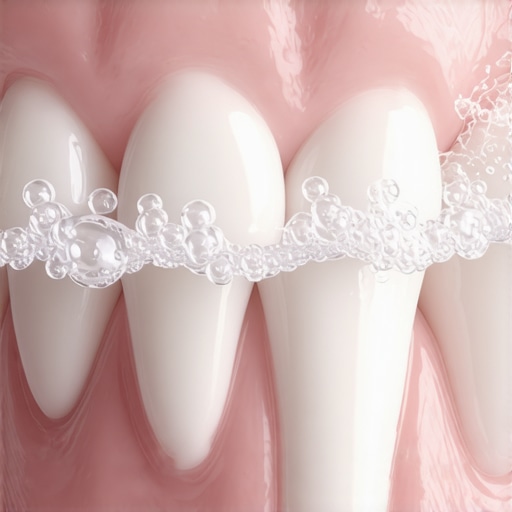
I stood there, gripping the edge of the sink, my eyes literally welling up with tears as I swished that neon-blue liquid for thirty long seconds. I thought I was being a hero for my hygiene, but in reality, I was just torturing my poor gums. For years, I believed the lie that if it didn’t hurt, it wasn’t working. It is a classic mistake many of us make while trying to improve our oral health routine, but that burning sensation is actually your body waving a red flag. Today, I want to show you why that ‘clean’ feeling shouldn’t feel like a chemical peel and how you can protect your mouth without the unnecessary drama.
Stop Treating Your Gums Like a Science Experiment
Most alcohol-based mouthwashes contain a high percentage of ethanol to kill bacteria, but that same alcohol is a desiccant—it dries out your mouth and irritates the delicate tissues. I once made the mistake of using the strongest stuff I could find right after a professional teeth cleaning, and the irritation was so bad I could not eat spicy food for two days. According to research from the American Dental Association, high-alcohol mouthwashes can exacerbate dry mouth, which actually makes it easier for bad bacteria to thrive in the long run. [image_placeholder] Have you ever had to cut a rinse short because the pain was just too much? You are certainly not alone, and honestly, you should not be forcing yourself through it.
Does it have to hurt to actually work?
The short answer is a resounding no. We have been conditioned by clever marketing to associate ‘intensity’ with ‘effectiveness,’ much like how some people think they need a hard-bristled toothbrush to get a deep clean. In reality, the sting is often just the alcohol reacting with your mucosal lining, not necessarily a sign that more plaque is being destroyed. If you have invested in crowns or specific dental work, that constant irritation can even make your gums recede over time, exposing sensitive areas that were never meant to see the light of day. We are going to look at the better way to freshen up without the fire and keep your mouth healthy without the burn.
Switch to Alcohol-Free Rinses Immediately
The first and most impactful change you can make is to ditch the bottle that feels like liquid fire. Think of your mouth like a delicate garden; alcohol is essentially salt on the soil, drying everything out and killing the good bacteria along with the bad. When I finally switched to a xylitol-based, alcohol-free rinse, the change was night and day. My mouth didn’t feel like a desert ten minutes later, and the chronic redness along my gum line finally started to fade. If you are practicing family dentistry principles at home, you want products that support the mouth’s natural ecosystem rather than nuking it. Essential oils like peppermint or tea tree can provide that fresh feeling without the caustic side effects.
Stop Rinsing Immediately After You Brush
It sounds counterintuitive, but if you swish with anything—even water—right after brushing, you are washing away the concentrated fluoride your teeth need to remineralize. I used to be a ‘brush-then-immediately-rinse’ person because I hated the texture of toothpaste. Then, my dentist explained that the thirty minutes after brushing are the ‘golden hour’ for enamel repair. By rinsing, I was basically flushing money and health down the drain. This is a vital part of a solid oral health routine that most people miss. Now, I wait at least half an hour before using a gentle mouthwash to ensure the fluoride has done its job. 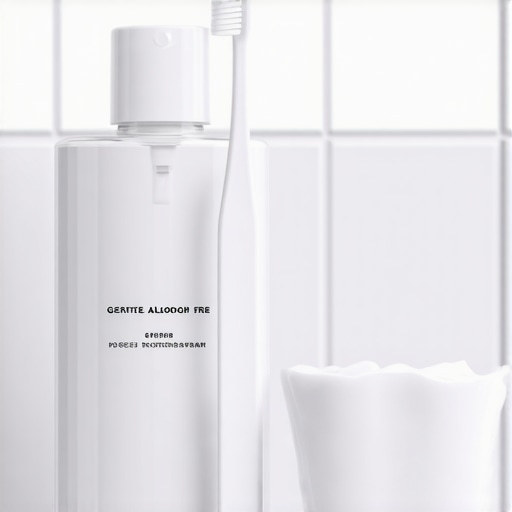
Give Your Crowns and Restorations Extra Attention
If you have dental work, your strategy needs to be even more precise. I remember a Tuesday night last November right after I got a new molar; I was so paranoid about bacteria getting under the edge that I used a 25% alcohol rinse three times a day. Within forty-eight hours, the gum tissue around the porcelain turned a ghostly white. It wasn’t ‘clean’—it was a chemical burn. When caring for crowns, you should focus on gentle, mechanical cleaning around the margin (where the tooth meets the gum) rather than relying on harsh chemicals to do the heavy lifting. Aggressive rinses can actually degrade some bonding agents over years of use, leading to that dreaded ‘click’ or a loose fit.
Combine Home Care with Professional Maintenance
No matter how perfect your home technique is, certain areas are simply unreachable. Tartar, or calculus, is like a coral reef that hardens on your teeth; once it’s there, no amount of mouthwash will dissolve it. Last year, I tried to skip my six-month visit because my gums felt ‘fine,’ only to find out I had early-stage inflammation starting in the back. Understanding how often you actually need a professional scaling is the only way to prevent the bone loss that eventually leads to loose teeth. A professional cleaning isn’t just about aesthetics; it is a reset button for your mouth’s health that allows your home routine to actually be effective. By combining a gentle, alcohol-free approach with consistent teeth cleaning from an expert, you stop the cycle of pain and start building real, lasting oral strength.Let’s dig deeper into the architectural nuances of your mouth. Most people assume that if they check every box—brushing, flossing, and using the right rinse—their smile is invincible. But here is the contrarian truth: you can actually ‘over-care’ for your teeth into a state of decline. I’ve seen patients who were so diligent they actually wore away their enamel through sheer force. This is where the ‘oops’ factor usually kicks in; you think you’re scrubbing away plaque, but you’re actually inviting sensitivity.
Stop Scrubbing Your Enamel into Oblivion
We’ve been told for decades that more is better, but a study published in the Journal of Clinical Periodontology highlights that ‘over-instrumentation’ during home care can lead to gingival recession that perfectly mimics the effects of periodontal disease. If you are using too much pressure, you are essentially sandpapering your teeth. This is especially dangerous if you are already focused on the impact of regular teeth cleaning on overall oral wellness. You want to be a surgeon with your toothbrush, not a construction worker.
Why do my gums still bleed despite perfect habits?
This is the question that haunts many of my readers. You might be falling for the hidden reason your gums still bleed even if you floss every day: the ‘Snap Trap.’ If you are snapping the floss between your teeth and hitting the gum tissue with force, you are creating micro-trauma every single night. That bleeding isn’t a sign of disease; it’s a sign of injury. Real family dentistry success comes from the ‘C-shape’ technique, where you wrap the floss around the tooth rather than just moving it up and down like a saw. 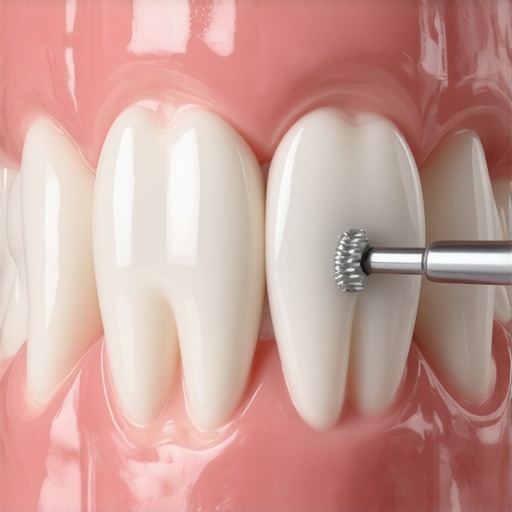
Never Ignore a Clicking Sensation in Your Dental Work
One of the most sophisticated mistakes people make involves their restorations. I once had a reader mention that their crown felt ‘mostly fine,’ but it made a slight noise when they chewed. They figured it was just part of aging. In reality, why your dental crown feels like it has a click when you bite usually points to a breakdown in the cement seal. If you wait, bacteria seep underneath, and by the time it actually hurts, the tooth underneath might be unsalvageable. When you are caring for crowns, you have to listen to these tiny sensory cues. If you catch a small issue early, you might just need a simple repair or learn how to fix a small chip in your front tooth without a full crown, saving you thousands. Don’t forget that nutrition plays a role too; including the 5 foods that act as natural toothbrushes for your family can provide a mechanical cleaning benefit that is far gentler than aggressive scrubbing. Have you ever fallen into this trap of ‘working too hard’ on your teeth? Let me know in the comments.Moving past the physical act of brushing, I had to completely re-evaluate the hardware I was using. For the longest time, I thought a basic brush and some string was enough, but as my dental needs evolved—especially after getting a few molars restored—I realized I needed better precision. I finally invested in a high-quality electric toothbrush with a built-in pressure sensor. Why? Because it takes the guesswork out of the ‘surgeon vs. construction worker’ debate I mentioned earlier. If I push even a fraction too hard, the ring turns red, forcing me to back off. This is one of the most effective teeth cleaning secrets for anyone prone to over-scrubbing. I also added a water flosser to my nightly routine, specifically because it can reach the tiny gaps where my gum meets my restoration without the mechanical trauma of traditional floss.
The Two Gadgets That Actually Saved My Gums
If you are serious about maintaining a healthy smile, you need tools that offer bio-feedback. I personally use an oscillating-rotating brush because a meta-analysis published in the Cochrane Database of Systematic Reviews confirmed that these specific models provide a statistically significant reduction in plaque and gingivitis compared to manual brushing. For my family, this has been a game-changer in family dentistry success, as it levels the playing field for my kids who might not have the best manual dexterity yet. It is about working smarter, not harder. 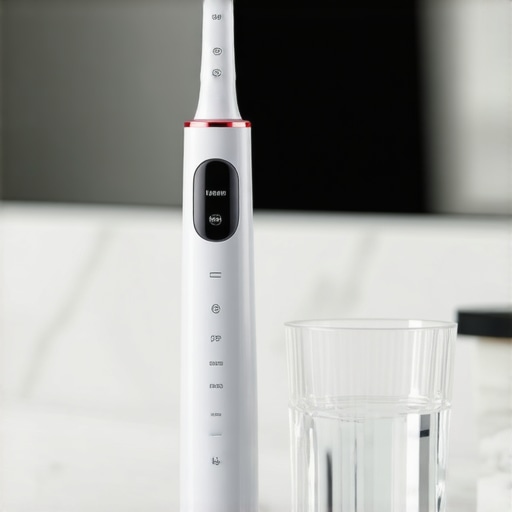
How do I maintain my crowns and professional results over time?
Longevity comes down to a mix of night-time protection and consistent professional checks. I learned the hard way that I was a ‘sleep-grinder,’ which was putting thousands of pounds of pressure on my new dental work every night. Now, I never go to bed without a custom-fitted appliance. Learning how a simple night guard can save you thousands in future repairs was the single most cost-effective lesson I ever received. Beyond that, you must follow the maintaining your dental crowns dos and donts strictly: avoid using your teeth as tools to open packages and keep up with your six-month visits. When you are in the chair, ask your hygienist about specialized tools; for example, why ultrasonic cleaning is faster and often more effective at clearing away the deposits that lead to recession.
Prepare for the Rise of AI-Driven Home Monitoring
Looking ahead, the way we manage our oral health tips for 2025 is shifting toward digital integration. We are already seeing toothbrushes that sync with apps to map exactly where you missed a spot, but the next step is AI-assisted imaging. I predict that within the next few years, we will have home-based cameras that can scan our teeth and alert us to the earliest signs of a failing seal or a new cavity before it is even visible to the naked eye. This proactive stance is the only way to maximize how long a porcelain crown actually lasts. I want you to try one thing tonight: grab your toothbrush with only two fingers. If you cannot get your teeth clean without a full-fist grip, you are pressing too hard. Try the feather-light touch for one week and see if your sensitivity starts to decrease.
The Brutal Lessons My Sensitive Gums Taught Me
Looking back at my years of dental mishaps, the biggest takeaway wasn’t about a specific brand; it was about respect. I finally learned that my gum tissue is a living organ, not a carpet to be scrubbed. When I stopped trying to ‘sanitize’ my mouth with fire and started trying to ‘balance’ it, the bleeding stopped almost overnight. I also realized that teeth cleaning secrets are usually about patience, not power. If you are rushing, you are losing the battle against plaque. Finally, I stopped viewing my dentist visits as an interrogation and started seeing them as a collaboration for my oral health tips for 2025.
Tools That Replaced My Old Brushing Habits
I didn’t just change my mindset; I changed my toolkit to be more precise. First, I traded my manual brush for an oscillating electric model with a pressure sensor—it is the best way to ensure I never press too hard. Second, I cannot overstate the value of a high-quality water flosser; it’s the only thing that effectively cleans around the margins of my maintaining your dental crowns dos and donts without causing mechanical irritation. I also keep the American Dental Association’s ‘Seal of Acceptance’ list bookmarked on my phone to vet any new products before they enter my bathroom. If you’re ever in doubt about a specific symptom, reaching out via a contact us page is the fastest way to get professional clarity.
Your Smile Deserves a Gentler Future
Transitioning from a ‘scrub-and-burn’ routine to a mindful one is the kindest thing you can do for your future self. You aren’t just protecting your enamel; you are ensuring that your previous investments, like knowing how a simple night guard can save you thousands, actually pay off over the decades. Take a breath, put down the harsh rinses, and let your mouth’s natural biology thrive. Have you ever had a dental product that felt like it was doing more harm than good? Let me know your story in the comments below!