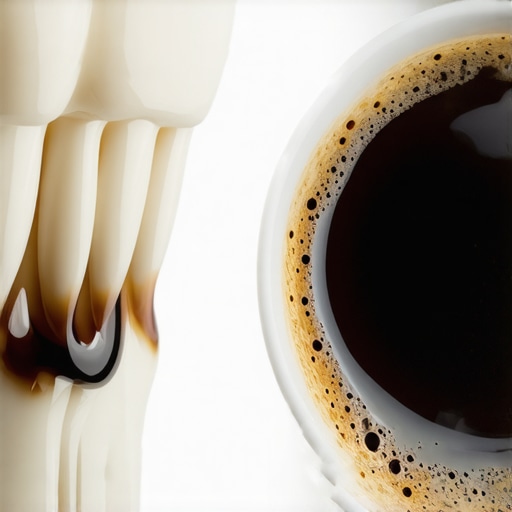
There I was, exactly three months after getting my first zirconia crown, nursing a steaming mug of dark roast. I took a slow sip, and instead of that cozy caffeine hit, I felt a sharp, metallic click followed by a jolt of ice-cold air. I panicked, thinking I had chipped the porcelain already. It turns out, my aggressive coffee ritual was literally compromising the bond between my tooth and its new cap. It was a wake-up call louder than any alarm clock. We spend a lot of time and money on our dental work, and realizing I was the one sabotaging it was a tough pill to swallow. Today, I am going to show you how to protect that investment without giving up your favorite brew. [image-placeholder]
Stop Your Coffee from Dissolving Your Smile
If you are like me, you probably did not realize that the acidity and temperature of your daily grind are a precision strike against the resins holding your dental work in place. It is heartbreaking when restorations fail early. The key to longevity is understanding how caffeine affects the marginal seal—the tiny line where the crown meets your natural tooth. When you constantly bathe your mouth in acidic liquids, that seal starts to degrade. You might even start wondering how to tell if your dental crown has a small leak before it turns into a full-blown cavity underneath. I wish I had known that my ceramic crowns were not invincible to the pH levels in my cup.
Can my morning brew really melt away my dental work?
The short answer is: not exactly melt, but it certainly erodes the glue. According to research published in the Journal of Conservative Dentistry, chronic exposure to acidic beverages like coffee can significantly decrease the micro-hardness of dental luting cements over time. That microscopic softening is where the trouble starts, allowing bacteria to seep into places your toothbrush cannot reach.
The Rookie Mistake I Made with Hot Drinks
When I first got my dental work, I ignored the expert advice on crowns and teeth cleaning that my hygienist gave me. I thought teeth cleaning only meant brushing the surface. I did not realize that the thermal expansion from piping hot coffee followed by a cold glass of water was creating micro-fractures in my sealant. It is a classic error in maintaining an oral health routine that I want to help you avoid. Have you ever felt a weird sensitivity or a loose feeling right after finishing your morning cup? Leave a comment and let me know, because you might be catching a problem before it requires a full replacement. We also need to look at why some crowns feel cold and what that says about your sealant’s integrity.
Neutralize the Acid Strike with a Water Buffer
Think of your dental luting cement like the grout in your bathroom tile; it is sturdy, but if you pour acid on it every day, it eventually turns to mush. The most immediate thing you can do to save your restorations is to adopt the ‘chaser’ method. For every sip of coffee, follow it with a sip of plain water. This is not just for hydration; it is about chemistry. You are effectively diluting the acids and rinsing away the pigments before they can settle into the margin of the crown. This simple habit is one of the most effective teeth cleaning secrets for people who cannot give up their morning brew. I started doing this after noticing my margins were getting darker, and the stabilization in color and sensitivity was almost immediate.
Stop the Thermal Seesaw from Cracking Your Sealant
Your natural tooth and your ceramic crown expand and contract at different rates when exposed to temperature changes. When you jump from a steaming hot espresso to a refrigerated bottle of water, you are putting incredible stress on the bonding agent. I learned this the hard way during a winter trip to Chicago. I was sipping a hot latte while walking in the freezing wind, then took a gulp of cold water. I felt a terrifying ‘click’ in my back molar. That click was the sound of thermal shock. This cycle can lead to why your dental crown might feel loose over time as the seal repeatedly flexes and fails. Try to let your coffee cool to a warm temperature, and avoid ice-cold drinks immediately afterward.
Why You Must Put Down the Toothbrush Right After Your Coffee
It sounds counterintuitive, but brushing your teeth immediately after finishing your coffee is one of the worst things you can do. The acidity in the coffee temporarily softens the outer layer of your enamel and the resin around your crown. If you scrub right then, you are essentially sandpapering away your protection. This is a vital rule in any oral health routine. Instead, wait at least 30 minutes for your saliva to naturally remineralize the area. This prevents you from inadvertently causing damage by brushing after acidic drinks like coffee or citrus.
Upgrade to Professional Scaling Before the Micro-Leaks Win
Even with perfect home care, your toothbrush cannot reach the microscopic shelf where a crown meets the gum line. Over time, coffee oils and biofilm accumulate there, creating a breeding ground for bacteria. This is where the impact of regular teeth cleaning becomes undeniable. Professional tools like ultrasonic scalers can vibrate away deposits that are literally wedged under the edge of your crown. If you skip these appointments, you risk developing a ‘leak’ under the cap. Learning how to tell if your dental crown has a small leak usually involves looking for localized gum inflammation or a strange taste when you floss that specific area. Staying ahead of this with professional help is the only way to ensure your zirconia crowns or porcelain work lasts for the decades they were intended to.Most people assume that if they buy the ‘Extra Whitening’ tube at the grocery store, they are doing their dental work a favor. In reality, you might be doing the exact opposite. One of the most common mistakes I see—and one I fell for myself—is trying to whiten a material that is literally incapable of changing color. Ceramic and zirconia do not have pores like your natural enamel; they are color-stable. When you use abrasive pastes, you are not whitening the crown; you are scouring the factory-grade polish off its surface. Once that polish is gone, the surface becomes ‘pitted,’ making it a magnet for the very coffee stains you are trying to avoid. A study published in the Journal of Prosthetic Dentistry highlights that high-abrasivity toothpastes can significantly increase the surface roughness of ceramic restorations. This microscopic roughening does not just look dull; it creates a ‘toehold’ for plaque. This is why I always tell people to check the Relative Dentin Abrasivity (RDA) of their paste. If you have been scrubbing your expensive work with charcoal or grit, you have fallen into a common trap. The truth about charcoal toothpaste and why it might be ruining your enamel is a lesson many of us learn too late. Have you ever noticed your crowns looking less ‘shiny’ over the years? Let me know in the comments if you have been using whitening products thinking they would help.
Why is my crown getting duller even though I am brushing more?
The ‘Oops’ factor here is usually the pressure and the grit. We often think that because a crown is ‘artificial,’ it is a tank. But the junction where that crown meets your gum is your weakest point. If you use a hard-bristled brush, you are not just cleaning; you are pushing the gum line back, exposing the root and the luting cement. This is why your dentist wants you to stop using hard bristles immediately. I have found that why manual toothbrushes are still effective if you use the right technique as long as you are not treating your mouth like a kitchen floor that needs a deep scrub. In family dentistry focus: building a lifetime of healthy smiles, we have to teach the kids that ‘clean’ does not mean ‘scoured.’ This is especially true for those with old metal fillings that might be cracking your teeth from the inside. Those old restorations are brittle, and aggressive care can actually accelerate the failure of the surrounding tooth structure. If you are managing a household of different dental needs, you need a strategy that prioritizes the ‘seal’ over the ‘shine.’ You cannot just apply a one-size-fits-all approach to maintaining your dental crowns: dos and donts for best results. Protect the whole family by balancing saliva pH throughout the day. It is not just about your coffee; it is about the hidden sugar in sports drinks that causes rapid tooth decay in your kids. When the mouth stays acidic, the bonding agent on your crowns remains in a state of perpetual stress. This is why oral health tips every family should follow in 2025 focus so heavily on neutralization. If you are serious about longevity, stop thinking of your dental work as a ‘fix and forget’ solution and start viewing it as a living part of your body’s ecosystem.
After realizing that my morning coffee was basically a chemistry experiment on my dental cement, I had to overhaul my entire kit. It is not enough to just brush; you need to think like an engineer maintaining a high-performance machine. I swapped my standard routine for a focused strategy on the margins—that vulnerable ‘seam’ where your crown meets the gum. If you want to know the truth about how long a porcelain crown actually lasts before replacement, look no further than the quality of your home-care tools. I personally started using a water flosser with a specialized ‘plaque seeker’ tip. Unlike string floss, which can sometimes catch on a slightly uneven margin, the pressurized water gets into the microscopic crevices without physical friction. This is one of the most effective teeth cleaning secrets for anyone with extensive restorative work.
The Nighttime Shield That Saved My Molars
The most expensive mistake I ever made was assuming my teeth stayed still while I slept. I eventually learned that stress-induced grinding was putting thousands of pounds of pressure on my new zirconia. According to a study published in the Journal of Oral Rehabilitation, nocturnal bruxism is a primary clinical factor in the mechanical failure of ceramic restorations. I finally bit the bullet and got a custom-fitted occlusal guard. It felt clunky at first, but knowing how a simple night-guard can save you thousands in future dental work made it worth the adjustment. If you wake up with a jaw that feels ‘tight’ or notice the reason your crown feels loose when you wake up, you are likely grinding away your investment. 
How do I maintain my dental crowns over time?
Consistency is your best friend, but so is professional intervention. You should be scheduling a visit to see what a professional prophy cleaning removes at least twice a year. I’ve noticed that during these sessions, my hygienist uses an ultrasonic tool. I used to be scared of the sound, but I learned why ultrasonic cleaning is faster and more comfortable for cleaning around crowns because it uses high-frequency vibrations to shatter tartar without scraping the porcelain. It is the gold standard for expert advice on crowns and teeth cleaning that actually yields results. I also keep a stash of alkaline mouthwashes to neutralize my mouth’s pH after meals, which helps avoid sudden tooth sensitivity to hot coffee by keeping the cement stable.
The Future of Proactive Smile Care
I predict that in the next five years, we will see home-based intraoral scanners becoming a staple in family dentistry focus: building a lifetime of healthy smiles. Imagine being able to take a 3D ‘snapshot’ of your mouth and having an AI compare it to last month’s scan to detect a 0.1mm shift in your gum line. This kind of tech will make oral health tips every family should follow in 2025 far more data-driven. We are moving away from ‘fix it when it hurts’ to ‘prevent it before it starts.’ This is why understanding the impact of regular teeth cleaning is so vital; it’s the baseline for all this future tech. My advice? Don’t wait for the technology. Start by calculating how often you actually need a professional scaling based on your own plaque buildup rate, not just a generic six-month rule. If you are serious about your oral health, try this: for one week, use a pH-neutralizing rinse every single time you finish a beverage other than water. You will be shocked at how much more ‘solid’ your teeth feel.
What I Only Realized After My First Crown Clicked
The most expensive lesson I learned was that crowns aren’t suits of armor; they are precision-engineered caps sitting on top of living tissue. Here are the lightbulb moments that changed everything for me:
- The margin is the mission: The tiny seam where the porcelain meets your gum is the most vulnerable point in your entire mouth. If coffee acids sit there too long, the glue fails, not the crown.
- Temperature shock is invisible: Jumping from hot lattes to iced water causes micro-expansion that stresses the bond. I now let my drinks reach a comfortable, warm temperature before I dive in.
- Polished is better than white: You can’t whiten a crown, but you can definitely dull it. Protecting the factory glaze is far more important for stain resistance than scrubbing with whitening paste.
By following these maintaining your dental crowns dos and donts, I managed to stop the sensitivity that was plaguing my mornings. I wish I had known that caring for crowns was more about pH management than raw scrubbing power.
My Personal Arsenal for Crown Longevity
I stopped relying on a basic manual toothbrush and upgraded to a toolkit specifically designed for restorative work. First, I integrated a water flosser with a low-pressure setting to flush the margins without irritating my gums. Second, I switched to a pH-neutralizing mouthwash that I use specifically after my second cup of coffee. Finally, I never skip my professional cleanings because I’ve seen the impact of regular teeth cleaning on my gum health. For those managing a household, keeping this family dentistry focus ensures that even the kids learn to neutralize acids early on. These tools are the foundation of a proactive oral health routine that prevents emergencies before they start.
Why Your Future Smile Depends on Today’s Cup
It is entirely possible to enjoy your coffee ritual while keeping your dental work in pristine condition for decades. You don’t have to choose between your caffeine and your crowns; you just have to be smarter than the acid. By neutralizing your mouth after you drink and respecting the thermal limits of your restorations, you are taking control of your dental destiny. This is the same expert advice on crowns and teeth cleaning that saves patients thousands of dollars in avoidable replacements. Take a breath, take a sip of water after that espresso, and enjoy the confidence of a stable, healthy smile. Have you ever noticed your dental work feeling a bit ‘weird’ or sensitive specifically after drinking something hot or cold? Let me know in the comments below!