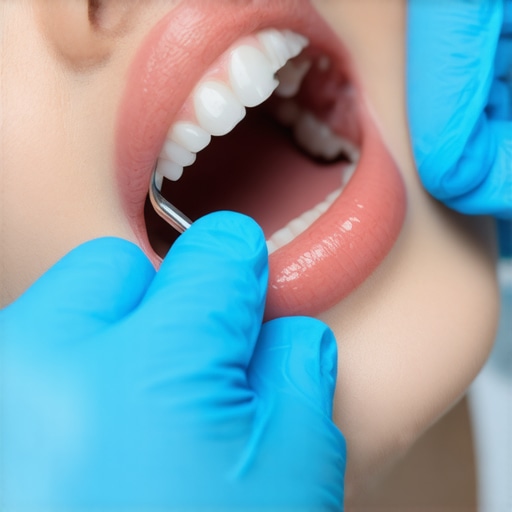
I’ll be honest with you. For years, I sat in that reclining chair, mouth wide open, wondering why on earth my dentist spent so much time tugging on my tongue with a piece of scratchy gauze. I figured they were just looking for a reason to keep me there longer. My focus was always on my latest crown or a routine teeth cleaning. But then, a routine exam caught something I hadn’t even noticed—a tiny, painless patch that could have turned into a massive problem. That lightbulb moment changed how I viewed family dentistry forever. Today, I am going to pull back the curtain on why that weird tongue-pulling and throat-poking is actually the most important part of your visit. We are going to talk about the early warning signs of issues that go way beyond a simple cavity and why your dentist checks your tongue with such focus. Have you ever felt awkward during this part of the exam, or did you realize its importance?
It Is Not Just About the Cavities Anymore
In my early twenties, I made a classic mistake. I thought as long as my oral health routine kept my teeth white and my breath fresh, I was invincible. I even ignored a persistent sore spot on the side of my tongue for weeks, assuming it was just a stubborn pizza burn. I was wrong. The reality is that your mouth is the gateway to your entire body. When we look at your tongue and throat, we are performing an oral cancer screening. According to the Oral Cancer Foundation, nearly 54,000 Americans are diagnosed with oral or oropharyngeal cancer every year, and the death rate is high primarily because it is discovered too late. By the time you feel pain, it has often progressed.
Is this extra screening just a waste of my time?
You might think that if you do not smoke or drink, you are in the clear. I used to think the same thing. But the truth is that other factors, like HPV, are on the rise, making these exams vital for everyone. Whether you are coming in for regular teeth cleaning or to discuss how crowns can transform your smile, this quick check takes less than two minutes but can literally save your life. It is about more than just looking for decay; it is about total wellness. Stick with me as I show you exactly what we are looking for and how you can spot the red flags at home.
Master the Steps of a Life-Saving Oral Exam
Think of your mouth as a high-traffic highway. While most of your focus is on the vehicles—your teeth—the dentist is looking at the guardrails and the quality of the pavement. This process isn’t random; it’s a systematic sweep designed to catch abnormalities before they become medical emergencies. When we perform a regular teeth cleaning, the screening actually starts the moment you sit down. We aren’t just making small talk; we are observing how you speak and how your jaw moves.
Inspect the High-Risk Zones First
The first stage is a visual audit of ‘the big three’: color, shape, and symmetry. Most oral issues don’t look like a horror movie; they appear as tiny, harmless-looking white or red patches. We pay extra attention to the floor of the mouth—the soft area under your tongue—and the ‘lateral borders,’ or the sides. This is exactly why your dentist checks your tongue with such intensity. We use sterile gauze to gently move the tissue so we can see into the nooks and crannies where 80% of oral cancers hide. If you are focused on strengthening your smile every day, you should be doing a quick mirror check for these same signs once a month during your own routine.
Apply Pressure to Detect What Lies Beneath
Vision only tells half the story. The physical touch, or palpation, is where we find hidden lumps that haven’t surfaced yet. We feel along the jawline and the neck to check your lymph nodes for any signs of swelling or firmness. This is also the time when your dentist asks about your medications, because certain prescriptions can cause the soft tissues to swell or change texture, mimicking more serious conditions. 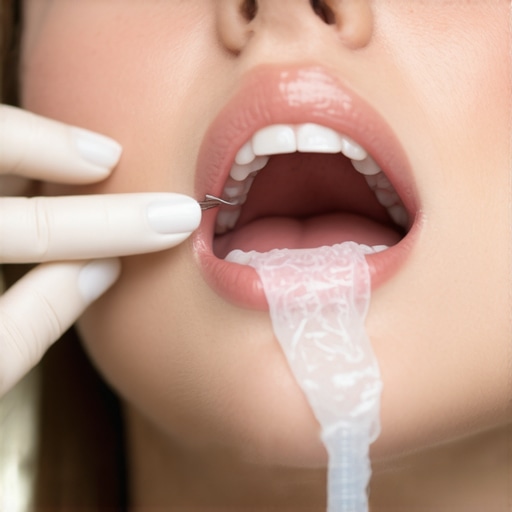 I once had a patient named Marcus who came in because his dental crown felt like it had a click. He just wanted a quick adjustment. During the routine physical exam of his throat and neck, I felt a slight resistance on the left side. It wasn’t painful for him, but it felt ‘rubbery’ to me—a classic red flag that something was wrong internally. Because we caught it during a standard visit for expert advice on crowns, he was able to get a biopsy that same week. It turned out to be an early-stage issue that was resolved with minimal intervention, but it had absolutely nothing to do with his teeth.
Integrate These Checks Into Your Home Care
You don’t need a medical degree to keep an eye on your health between visits. While you are following oral health tips every family should follow, take thirty seconds to feel under your own jaw. If you notice a spot that doesn’t heal within two weeks, or if your gums feel itchy or sore after eating certain foods without a clear cause, don’t wait for your six-month appointment. Early detection is the literal difference between a simple fix and a major life upheaval. We look for the unexpected so that you can keep smiling with genuine confidence.
When people talk about family dentistry, they usually think of the basics: fill a cavity, pull a tooth, or get a cleaning. But the more time I spend in this field, the more I realize that the ‘set it and forget it’ mentality is one of the most dangerous myths in oral health. For instance, I often see patients who believe that once they get a restoration, that tooth is essentially bulletproof. It is a common misconception that a crowned tooth cannot decay. In reality, while the porcelain itself is immune to bacteria, the tiny margin where the crown meets your natural gum line is a high-stakes battleground. If you do not know how to tell if your dental crown has a small leak, you might be harboring a colony of bacteria underneath a perfectly white surface, leading to a silent emergency.
Why a Crown Doesn’t Make Your Tooth Invincible
The biggest ‘oops’ factor I encounter is the belief that caring for crowns is the same as caring for natural enamel. It’s actually more nuanced. Because the margin is so delicate, aggressive brushing can cause recession, exposing the root and the edge of the crown. This is often why some crowns look like real teeth while others have a dark line at the base over time. A study published in the Journal of the American Dental Association (JADA) highlights that the longevity of a restoration is more dependent on the health of the surrounding periodontium than the material of the crown itself. If you aren’t paying attention to that microscopic seal, even the best porcelain crown will eventually fail. It is about protecting the foundation, not just the architecture.
Does your charcoal toothpaste do more harm than good?
We are currently living in an era of ‘wellness’ trends that can be surprisingly destructive. I see so many patients switching to charcoal-based products, thinking they are being more natural. However, the truth about charcoal toothpaste is that it is often far too abrasive. It acts like sandpaper on your enamel. Over time, it wears down the outer layer of your teeth, exposing the yellow dentin underneath. You end up with teeth that look darker and feel significantly more sensitive, which is the exact opposite of what you wanted. I always tell my patients to skip the gimmicks and focus on effective home practices that prioritize enamel preservation over quick-fix whitening.
Another subtle trap is the ‘clean mouth’ feeling we all crave. You might think that brushing right after a healthy snack of sliced oranges or a glass of lemonade is the right move, but you should never brush your teeth immediately after eating citrus. The acid temporarily softens your enamel, and your toothbrush effectively scrubs that softened enamel right off your teeth. Waiting just 30 minutes allows your saliva to re-mineralize the surface. Furthermore, don’t confuse a cosmetic polish with a therapeutic visit; there is a significant difference between a standard cleaning and gum therapy. One is for maintenance, while the other is for treating an active infection that can affect your heart health. Have you ever fallen into this trap or noticed your teeth becoming more sensitive after switching products? Let me know in the comments.
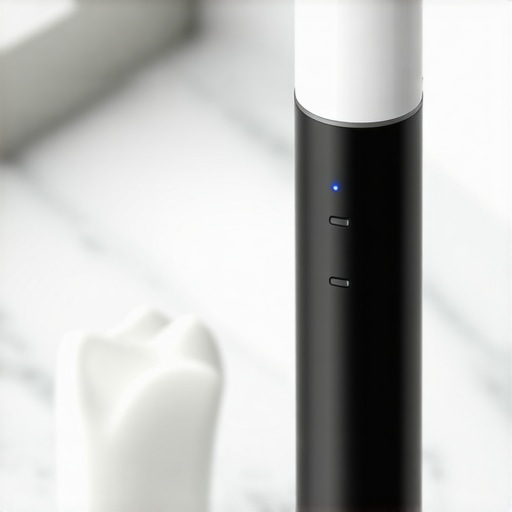
I have spent a lot of time talking about what happens in the dentist’s chair, but the real work that determines the longevity of your smile happens in your bathroom mirror every morning and night. If you want expert advice on crowns and teeth cleaning, it starts with the specific hardware you choose for your daily routine. I am often asked if an expensive toothbrush is just a marketing gimmick. To be blunt: if you are still using a manual brush, you are working significantly harder for inferior results. A 2014 Cochrane Review—one of the gold standards in medical research meta-analysis—found that electric toothbrushes reduce plaque by 21% more than manual ones after just three months of use. Personally, I use a brush with a built-in pressure sensor. Why? Because the most common way people ruin their gums and restorations is by scrubbing like they are cleaning floor grout. The sensor flashes red when I press too hard, protecting that delicate margin where your crown meets the gum line.
Stop Scrubbing and Let the Tech Do the Work
When you come in for a visit, you might notice why your hygienist uses that high-pitched water tool on your gums instead of just traditional scrapers. That is an ultrasonic scaler. I am a huge advocate for this technology because ultrasonic cleaning is faster and more comfortable than hand scaling, especially for patients with sensitive roots. It uses high-frequency vibrations to blast away tartar without the aggressive physical pressure. For home use, I recommend a similar mindset of gentle efficiency. Transitioning to a water flosser changed my personal health and the lives of my patients who struggle with traditional string. It reaches the areas under modern smile makeovers where a standard string simply cannot navigate effectively. If you are a parent, the truth about manual vs. electric toothbrushes for kids is that the novelty of the vibration often turns a nightly battle into a fun habit, ensuring they get a proper teeth cleaning every single time.
The One Tool That Actually Saves Your Crowns
If you have invested in a restoration, you need to understand that your biggest enemy isn’t actually sugar—it is mechanical friction. Most of us carry our daily stress in our jaws, leading to nocturnal clenching. I have seen patients snap even the best porcelain crowns because they were grinding their teeth at 3 AM without realizing it. This is exactly how a simple night guard can save you thousands in future dental work. It is a literal insurance policy for your mouth. Whether you choose zirconia crowns for back molars or ceramic for the front, the pressure of a nocturnal clench is enough to cause micro-fractures in the material. I tell everyone: if you have a crown, you should have a guard. It is the difference between a restoration that lasts five years and one that lasts twenty-five. I predict that in the next few years, we will see AI-integrated toothbrushes that map your mouth in real-time to provide a heatmap of missed spots, making ‘perfect’ oral health accessible to everyone.
What can I do to keep my results from fading away?
Maintenance is about consistency rather than intensity. Stick to an oral health routine that prioritizes the health of your supporting tissues. My advanced tip for you is this: tonight, use your tongue to feel the back of your lower front teeth. If it feels ‘fuzzy,’ that is biofilm already colonizing. Use a water flosser at a 90-degree angle to the gum line before you brush. Doing this consistently is the secret to building a lifetime of healthy smiles. Don’t wait for a minor toothache to become an emergency; take the night guard leap today and protect the investment you have already made in your confidence.
What Years in the Chair Taught Me About True Longevity
I used to think that a successful dental visit meant simply leaving without any new cavities. I was wrong. The hardest lesson I learned is that dental health isn’t a destination; it is a moving target. If you focus only on the white parts of your teeth, you miss the vital signs happening in the soft tissues and the structural foundation. Real success in family dentistry comes from catching the silent changes before they require a surgical fix.
Another lightbulb moment for me was realizing that my dental insurance shouldn’t dictate my health. Most plans cover two cleanings, but that doesn’t mean two is enough for everyone. If you have a history of gum issues, waiting six months is like waiting for a small leak in your roof to become a flood. I’ve learned that expert advice on crowns and teeth cleaning is only useful if you actually apply it every single night before bed.
The Tools I Personally Use to Protect My Investment
To keep my own smile in top shape, I rely on a few specific resources that I believe are worth every penny. First, a high-quality electric toothbrush with a pressure sensor is non-negotiable. It prevents the ‘over-scrubbing’ that leads to gum recession and damaged margins. Second, I cannot recommend a water flosser enough, especially for anyone who has undergone modern smile makeovers. It flushes out bacteria from places string simply can’t reach.
Finally, I keep a close eye on the Oral Cancer Foundation’s latest guidelines. Awareness is your best defense. I also make sure my oral health routine includes a monthly self-exam. If you are looking for effective home practices, start by becoming your own health advocate between professional checkups.
Building a Smile That Lasts as Long as You Do
Your mouth is a reflection of your overall vitality. When you take the time to protect your restorations and prioritize deep cleanings, you aren’t just saving money—you are investing in your long-term quality of life. Don’t let fear or a busy schedule keep you from the care you deserve. Remember that how a simple night guard can save you thousands isn’t just a catchy phrase; it’s a reality for anyone who wants to keep their natural teeth for a lifetime. Your future self will thank you for the extra two minutes of care you put in today. Have you ever noticed a difference in your gum health after switching to an electric toothbrush or a water flosser? Let me know below.