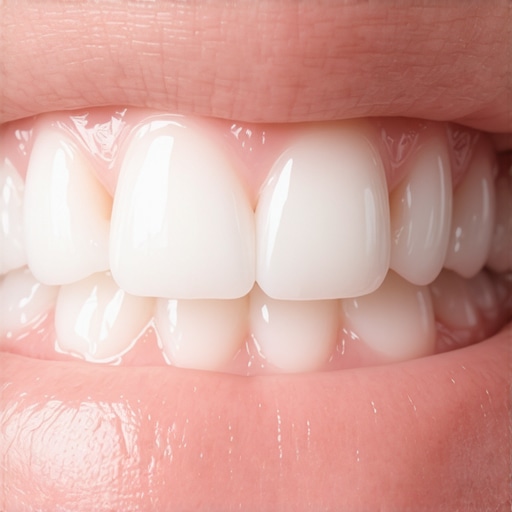
I will never forget the Tuesday morning I stood over my bathroom sink, staring at a pink-tinged foam after brushing. I was frustrated—no, I was actually angry. I had spent fifteen minutes the night before meticulously flossing between every single tooth, including that tricky spot where my new dental crown sits. I followed every rule of a consistent oral health routine, yet my gums were acting like I lived on a diet of soda and neglect. It felt like no matter how much I cleaned, I was losing a battle I didn’t even understand.
My ‘Perfect’ Routine Was Actually Harming My Smile
For the longest time, I assumed that if my gums bled, it meant I wasn’t flossing enough. So, what did I do? I flossed harder. I was practically sawing into my gingival tissue, thinking I could scrub the ‘weakness’ away. This was my first big mistake. I thought more pressure equaled more health. In reality, I was causing trauma to the very tissue I was trying to protect. The truth is, your gums are the ultimate early-warning system. They aren’t just reacting to the food stuck between your molars; they are responding to your hormones, your stress levels, and even how you breathe at night. I eventually learned that maintaining your dental crowns and natural teeth isn’t just about the physical act of flossing, but about the way you do it and what is happening inside your body. Today, I am going to pull back the curtain on why that sink still looks like a crime scene even when you are doing everything right. We are going to look at the subtle habits and hidden biological triggers that your toothbrush simply can’t reach.
Is my DNA just programmed for gum disease?
It is a terrifying thought, right? You wonder if you are just unlucky. But before you blame your parents, consider this: the American Academy of Periodontology notes that tobacco use and certain systemic diseases like diabetes are actually more significant risk factors than genetics alone for most people. Often, the bleeding isn’t a lack of effort—it is a sign that your standard cleaning isn’t reaching the deep pockets where bacteria hide. I used to ignore the small stuff, like when my dentist asked about my medications. I thought it was just paperwork! Little did I know, some common prescriptions for blood pressure or even simple allergies can dry out your mouth, making your gums infinitely more sensitive to even the gentlest floss. Have you ever felt like you are doing everything the professional told you, but your gums still won’t stop bleeding? I want to hear about your experience—let’s figure out which ‘hidden’ factor might be playing tricks on your health.
Stop Sawing and Start Sweeping
To stop the bleeding, you have to change your mental model of what ‘clean’ feels like. Most of us brush like we are trying to remove rust from a car bumper. Instead, think of your gums like delicate silk. You need to master the right way to use a manual toothbrush for better plaque removal, which involves a 45-degree angle toward the gum line. I remember the exact moment I realized my mistake. I was using a medium-bristled brush, thinking I needed the extra ‘scrubbing power’ to get rid of that fuzzy film that makes your teeth feel furry by the end of the day. Within two weeks, my gums hadn’t just stopped bleeding—they were literally retreating. My dentist gently explained that why soft-bristled brushes are the only ones that should touch your gums is because they flex into the sulcus (that tiny gap between tooth and gum) without slicing the tissue. Think of it as a massage for your gingiva rather than a deep-clean for your floorboards. 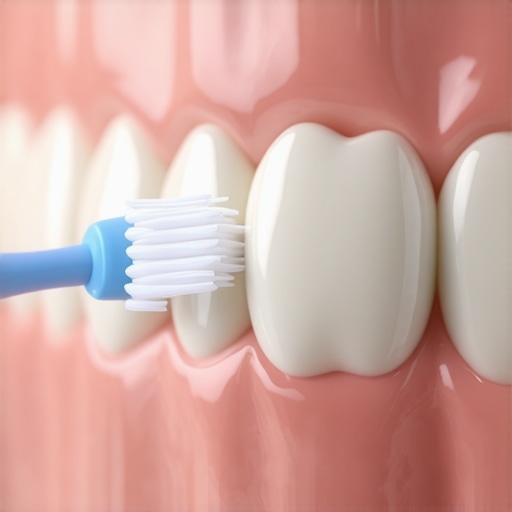
Treat Your Crowns Like High-End Porcelain
If you have restorations, you are playing a slightly different game. When I got my first porcelain restoration, I treated it like a regular tooth, but I quickly learned that caring for crowns requires essential tips for longevity and shine. A crown is like a protective helmet for your tooth, but the ‘margin’—the area where the crown meets your natural tooth structure—is a high-traffic zone for bacteria. If you use a water flosser, you must be precise; the common mistake you are making with your water flosser is pointing the jet directly into the gum pocket at high pressure, which can actually blast bacteria deeper or irritate the attachment. Instead, trace the gumline horizontally with a low-to-medium setting to clear debris without trauma.
Why the C-Shape Floss Move Saves Your Gums
Most people ‘snap’ the floss between their teeth. That ‘snap’ is a guillotine for your gingiva. The goal is to wrap the floss around the tooth in a ‘C’ shape and slide it gently under the gum line. This is the safest way to remove food stuck between your teeth without causing inflammation or trauma. I used to be a ‘snapper’ until I saw the tiny, microscopic lacerations it left behind in the mirror. Now, I focus on the friction against the tooth surface rather than the force of entry. This transition from aggressive to precise is one of the most effective teeth cleaning secrets for any home routine. When you finally go for a professional visit, pay attention to what that high-pitched water tool is actually doing to your plaque. It uses ultrasonic vibrations to shake debris loose—a level of gentle precision we should all try to mimic at home by letting the bristles do the work rather than our arm muscles.
Wait, I have a crown, so that tooth is immune now, right? I hear this all the time, and it is perhaps the most dangerous myth I encounter in family dentistry focus building a lifetime of healthy smiles. We tend to view these restorations as impenetrable shields, but in reality, they are more like a high-tech armor with a very specific, vulnerable seam. If you ignore that seam, you are basically inviting trouble to live under your expensive investment. I have learned the hard way that crowns do not make you bulletproof; they actually demand a higher level of tactical precision in your daily habits.
The hidden trap of ‘indestructible’ teeth
Let’s talk about the ‘Oops’ factor that costs people thousands: the assumption that professional cleanings are just for ‘real’ teeth. When you skip the impact of regular teeth cleaning on overall oral wellness, you aren’t just missing a polish. You are missing the chance for a professional to check for ‘micro-leakage.’ This is where the cement begins to wash out or the gum recedes, leaving the underlying tooth exposed to the elements. Research published by the American College of Prosthodontists highlights that secondary decay at the crown margin—not the failure of the porcelain itself—is the primary reason for restoration failure. Most people believe that if it doesn’t hurt, it is fine, but bacteria don’t need an invitation to slide under a loose margin.
How can I tell if my crown is actually failing before it hurts?
By the time a crowned tooth hurts, you are usually looking at a root canal or an extraction. You have to be more proactive than the average patient. For instance, knowing how to tell if your dental crown has a small leak involves looking for a dark shadow at the gumline or noticing a persistent, odd taste after meals. Another subtle sign is purely mechanical: why your dental crown feels like it has a click when you bite is a question you should never ignore. That ‘click’ often means the bond has broken, and every time you chew, you are essentially pumping bacteria into the dark, warm space between the tooth and the crown.
Stop using abrasive pastes on your porcelain
I once met a friend who thought they were being extra safe by using a gritty, charcoal-based whitening toothpaste to keep their new restorations bright. This is a classic trap. While ceramic crowns are the best choice for your front teeth because they are resistant to staining, those abrasive pastes can actually micro-scratch the protective glaze. Once that smooth surface is compromised, it becomes a magnet for the very plaque and biofilm you are trying to avoid. Instead, focus on following expert advice on crowns and teeth cleaning for lasting results, which emphasizes non-abrasive care and specialized flossing. Have you ever noticed a weird sensation around an old crown but figured it was fine because it didn’t ‘ache’? Let me know in the comments—you might be catching a leak before it turns into a disaster. Your oral health routine strengthening your smile every day must adapt as your dental work age.
I used to think that as long as I was moving the brush, I was doing the work. Then I switched to a high-end sonic brush, and my perspective on home care shifted entirely. If you want to stop the cycle of endless dental repairs, you have to upgrade your toolkit. Personally, I swear by a brush that delivers at least 31,000 brush strokes per minute. Why? Because manual scrubbing simply cannot create the ‘fluid dynamics’ needed to flush out the bacteria hiding under the gumline of a crown. When you are looking at the truth about manual vs electric toothbrushes for kids and adults alike, the consistency of an electric motor wins every time. It removes the human error of ‘scrubbing too hard’ that I mentioned earlier, as most modern brushes now vibrate or light up when you apply too much pressure.
The real killer of porcelain isn’t always sugar
We often blame a piece of cake for our dental woes, but for many of us, the real enemy is physics. If you have spent a significant amount on restorations, you need to realize that nocturnal bruxism (grinding) is like taking a sledgehammer to your investment every single night. I didn’t realize I was doing it until my dentist pointed out the wear facets on my opposing teeth. This is why learning how to stop grinding your teeth while you sleep is the single most important ‘insurance policy’ for your crowns. I started wearing a custom-fitted night guard, and the morning jaw tension vanished along with the fear of cracking a tooth. If you are a heavy grinder, this is often why we recommend zirconia for patients who grind their teeth, as it is one of the few materials that can withstand those intense mechanical forces.
How can I keep my dental work looking new for decades?
Maintenance is not a one-time event; it is a cumulative process. According to a study in the Journal of Prosthetic Dentistry, the marginal integrity of a crown—how well it fits against the tooth—is the most significant factor in its lifespan, but that integrity depends heavily on the health of the surrounding tissue. To maintain that ‘new’ look, you should focus on pH balance. I’ve started using an alkaline mouthwash to neutralize the acids from my morning coffee. This protects the bond between the crown and the tooth. Also, consider how to maintain a bright smile without using abrasive strips, as keeping your natural teeth bright ensures your crowns (which don’t whiten) don’t end up looking yellow by comparison over the years. 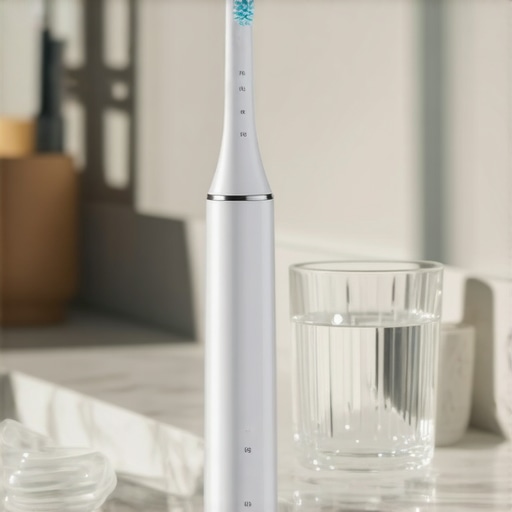
The future of your bathroom vanity
Looking ahead, I predict we are about to enter the era of ‘Smart Bio-Monitoring’ in oral health. We are already seeing brushes that map your mouth in 3D, but the next step is saliva-diagnostic sensors built into your toothbrush. Imagine getting a notification on your phone that your gum inflammation markers are up 10% before you even see a drop of blood in the sink. This kind of proactive data will make expert advice on crowns and teeth cleaning for lasting results easier to follow because you won’t be guessing anymore. You will know exactly which molar needs more attention. For now, my best advanced tip for you is this: tonight, try ‘dry brushing’ for the first minute. Use no water and no paste. It allows you to feel exactly where the bristles are hitting the margins of your crowns, giving you a tactile sense of cleanliness that paste often masks. Give it a shot and see if you notice the difference in how smooth your teeth feel afterward.
What I Discovered While Saving My Own Smile
One of the biggest shifts in my mindset was realizing that consistency beats intensity every single time. I used to think a vigorous scrub once a week could make up for a lazy Tuesday, but the mouth doesn’t work that way. I also learned that the truth about how often you should really replace your toothbrush is non-negotiable; frayed bristles are just bacteria sticks that can irritate the precise margins of your dental work. Most importantly, I realized that knowing how to fix a sensitive tooth flare-up before your next appointment often starts with calming the gum tissue rather than reaching for painkillers. My lightbulb moment was realizing my crowns weren’t failures of my body, but second chances to get my hygiene right.
The Tools That Actually Make a Difference
I don’t believe in over-complicating things, but these three items changed my life. First, a high-quality electric brush—it removes the guesswork and the ‘human error’ of scrubbing too hard. Second, a water flosser for those tight margins around my restorations where traditional floss might catch. Third, a commitment to the impact of regular teeth cleaning on overall oral wellness by seeing a pro every six months. I trust these tools because they shifted my results from ‘bloody sinks’ to ‘zero cavities’ at my last three checkups. If you are looking for a team to help you navigate this, I highly recommend checking out a practice with a strong family dentistry focus building a lifetime of healthy smiles.
#IMAGE_PLACE_HOLDER_E#
Your Smile Is an Investment Worth Protecting
You’ve already done the hard work of educating yourself—now it’s just about the daily execution. Don’t let the fear of a little bleeding stop you from being thorough; usually, that is just the sign you need to keep going gently. Your oral health routine strengthening your smile every day is the most effective way to ensure those dental crowns last for decades rather than years. You deserve a smile that feels as good as it looks. If you’re ever in doubt or need a professional touch-up, don’t hesitate to contact us for guidance. You’ve got this!
Have you ever felt like your dental routine was a chore rather than a choice? Let me know in the comments below!