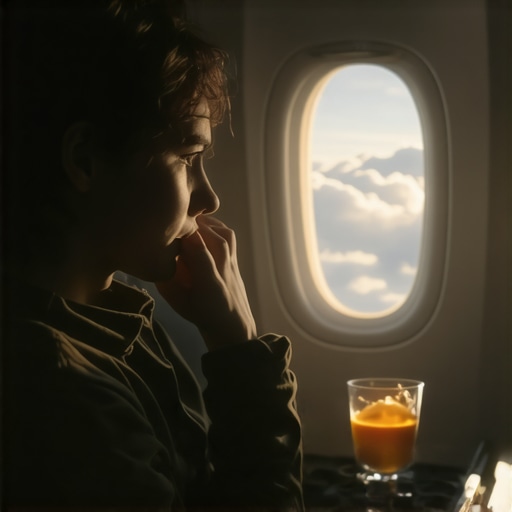
I’ll never forget that flight from London to New York. Three hours in, my left molar decided to declare war. Every pulse of the plane’s engine felt like a direct hit to my jaw. I hadn’t packed a single painkiller. I sat there, gripping the armrests, sweating, and genuinely wondering if I could ask the pilot to land in Greenland for an emergency extraction. It was a classic ‘I should have known better’ moment. I’d noticed a tiny twinge weeks before while thinking about the impact of regular teeth cleaning, but I ignored it. That was my first big mistake. Today, I’m going to share exactly how you can survive that high-altitude agony and what you need in your ‘toothache survival kit’ so you don’t end up crying over a tiny bag of pretzels like I did. Have you ever felt that sudden, sharp zap while cruising at 35,000 feet?
Why Altitude Turns a Tiny Ache Into a Crisis
I used to think a toothache was just a toothache, no matter where you were. I was wrong. When you are flying, the cabin pressure drops, and any gas trapped in your dental pulp or under a loose filling expands. It is pure physics, but it feels like a personal attack. This is why I always tell my friends that learning how to fix a sensitive tooth flare up before you board is non-negotiable. I once tried to just ‘power through’ a flight with a known cavity, and by hour six, I was begging the flight attendant for ice cubes just to numb my face. This phenomenon, known as barodontalgia, is a real risk for anyone with underlying dental issues.
Is it actually possible to stop the pain in a cramped cabin?
You might be skeptical. After all, you can’t exactly call a dentist from seat 24B. But there are tactical moves you can make using nothing but what is in your carry-on or the galley. Whether you are dealing with a crown that feels weirdly sensitive—which might make you wonder how to tell if your dental crown has a small leak—or a full-blown nerve strike, you have options. According to research published in the Journal of Conservative Dentistry, pressure changes in the aircraft cabin can trigger acute pain in teeth that otherwise feel fine on the ground. We are going to look at the best ways to handle a sudden toothache in the middle of the night or, in this case, in the middle of the Atlantic.
Kill the Pressure Before it Kills Your Vacation
Imagine your tooth is like a sealed bag of pretzels. At sea level, it looks normal. But as the cabin pressure drops, the air inside that bag—or the tiny pocket of gas trapped under an old filling—starts to push outward. This is exactly what is happening inside your jaw. To fight back, you need to address the inflammation immediately. If you have ibuprofen in your carry-on, take it. It is an anti-inflammatory, which is far more effective for dental pressure than a standard painkiller. I learned this the hard way when I tried to use a generic aspirin that did absolutely nothing for the localized swelling in my gums. While you wait for the meds to kick in, avoid the temptation of that complimentary hot coffee. Heat expands those trapped gases even further. Instead, stick to room temperature water or, better yet, something cold to help constrict the blood vessels. This is a primary step in the best way to manage a toothache that wakes you up at night or during a red-eye flight.
Turn a Beverage Napkin Into a Pain Barrier
I remember frantically signaling the flight attendant, not for a drink, but for a handful of ice cubes. I wrapped them in a thin airline napkin and pressed it against my cheek. It wasn’t pretty, and I definitely got some weird looks from the guy in 12C, but it slowed the blood flow to that throbbing nerve. If the pain is coming from your gums rather than the tooth itself, ask for a cup of warm water and a salt packet from the galley. Performing the salt water trick that calms gum inflammation in minutes can actually work wonders even in a cramped lavatory. It draws out excess fluid and provides a temporary antiseptic barrier.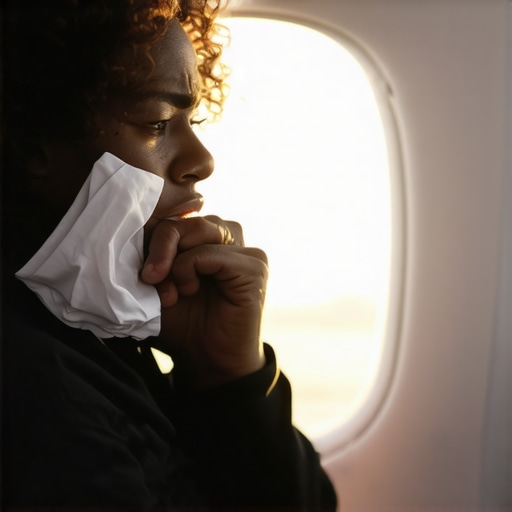
How to Re-Seat a Crown That Popped Off
There is nothing more terrifying than feeling a hard, porcelain shell roll across your tongue while you are eating an airplane snack. If your crown comes loose, do not panic and, whatever you do, do not swallow it. First, clean the inside of the crown as best as you can. If you don’t have dental adhesive, a tiny dab of toothpaste or even a piece of sugar-free gum can act as a temporary ‘glue’ to keep the tooth protected from the air. This is a critical move for how to handle a loose dental crown before you can see the dentist once you land. This keeps the sensitive underlying dentin covered, preventing that agonizing ‘zap’ every time you breathe in the dry cabin air.
Use Sugar-Free Gum as an Emergency Anchor
During a flight to Rome, my travel partner actually lost a filling. We used a small piece of softened, sugar-free cinnamon gum to plug the hole. It wasn’t a permanent fix, but it created a seal that blocked the pressure changes from hitting the nerve directly. While you are doing this, be mindful of maintaining your dental crowns dos and donts for best results so you don’t accidentally cause more damage by biting down too hard on the temporary fix. Once you land, your priority is to how to fix a sensitive tooth flare up by finding a local clinic, but these tactical maneuvers will at least get you through the descent without tears. If you suspect the issue isn’t a cavity but a structural problem, you might want to look into how to tell if your dental crown has a small leak before your next trip to avoid a repeat performance.Let’s dig deeper into the mechanics of why that flight was so miserable. Most travelers assume their teeth are ‘fine’ because they don’t have a visible hole, but that is a dangerous baseline. In my experience, the biggest myth in family dentistry is that pain is the first sign of trouble. It’s actually the last. By the time you feel that zing at 30,000 feet, the structural damage is already advanced. You see, oral health tips every family should follow in 2025 focus on the silent progression of plaque under the gum line, something even the best electric toothbrush can’t fully eradicate. This is where what a professional prophy cleaning removes that your toothbrush cant touch becomes your best defense against ‘airplane tooth.’
Why ‘Waiting for Pain’ is the Most Expensive Mistake You Can Make
If you wait for a pulse to visit the dentist, you are essentially gambling with your wallet and your wellbeing. When I ignored that tiny twinge before my flight, I wasn’t just risking a bad afternoon; I was ignoring the fact that the impact of regular teeth cleaning isn’t just about a bright smile—it’s about managing the biofilm that eats away at your tooth’s internal structure.
Why do some crowns fail while others last thirty years?
It’s not just about luck or how much you spent. The nuance lies in the material choice and the environment of your mouth. For example, why we use different materials for front crowns versus back molars is a decision based on bite force and aesthetics. If you are a grinder, a beautiful porcelain crown on a molar might crack within years. This is why we recommend zirconia for patients who grind their teeth. According to a study published in the Journal of Oral Rehabilitation, the survival rate of crowns is significantly higher when the material’s mechanical properties match the patient’s specific occlusal (bite) forces, which is why gold is still one of the most durable materials for back crowns in high-pressure areas. If your dentist hasn’t discussed your ‘bite load,’ you might be falling into a common trap. 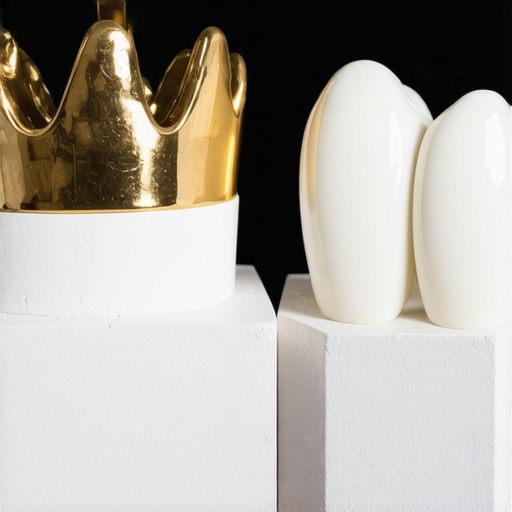
Stop Sandpapering Your Enamel After Breakfast
One ‘oops’ factor I see constantly is the rush to ‘clean’ after a meal. I used to think I was being proactive by brushing immediately after a glass of orange juice. I was actually scrubbing acid directly into my enamel. You should never brush your teeth immediately after eating citrus. You have to give your saliva time to neutralize the pH—usually about 30 to 60 minutes. If you don’t, you’re essentially sandpapering your teeth. Similarly, I’ve seen people destroy their existing dental work by using ‘fad’ cleaners; the truth about charcoal toothpaste and long-term enamel wear is that it’s often far too abrasive for daily use. Have you ever fallen into this trap? Let me know in the comments. We often think we’re helping, but the nuances of caring for crowns and natural teeth require a more tactical approach than just ‘brushing harder.’ Whether it’s why your old metal fillings might be cracking your teeth from the inside or how to properly use a water flosser, the details of family dental health are what save you from an emergency extraction over the Atlantic.I’ll never forget that flight from London to New York. Three hours in, my left molar decided to declare war. Every pulse of the plane’s engine felt like a direct hit to my jaw. I hadn’t packed a single painkiller. I sat there, gripping the armrests, sweating, and genuinely wondering if I could ask the pilot to land in Greenland for an emergency extraction. It was a classic ‘I should have known better’ moment. I’d noticed a tiny twinge weeks before while thinking about the impact of regular teeth cleaning, but I ignored it. That was my first big mistake. Today, I’m going to share exactly how you can survive that high-altitude agony and what you need in your ‘toothache survival kit’ so you don’t end up crying over a tiny bag of pretzels like I did. Have you ever felt that sudden, sharp zap while cruising at 35,000 feet?
Why Altitude Turns a Tiny Ache Into a Crisis
I used to think a toothache was just a toothache, no matter where you were. I was wrong. When you are flying, the cabin pressure drops, and any gas trapped in your dental pulp or under a loose filling expands. It is pure physics, but it feels like a personal attack. This is why I always tell my friends that learning how to fix a sensitive tooth flare up before you board is non-negotiable. I once tried to just ‘power through’ a flight with a known cavity, and by hour six, I was begging the flight attendant for ice cubes just to numb my face. This phenomenon, known as barodontalgia, is a real risk for anyone with underlying dental issues.
Is it actually possible to stop the pain in a cramped cabin?
You might be skeptical. After all, you can’t exactly call a dentist from seat 24B. But there are tactical moves you can make using nothing but what is in your carry-on or the galley. Whether you are dealing with a crown that feels weirdly sensitive—which might make you wonder how to tell if your dental crown has a small leak—or a full-blown nerve strike, you have options. According to research published in the Journal of Conservative Dentistry, pressure changes in the aircraft cabin can trigger acute pain in teeth that otherwise feel fine on the ground. We are going to look at the best ways to handle a sudden toothache in the middle of the night or, in this case, in the middle of the Atlantic.
Kill the Pressure Before it Kills Your Vacation
Imagine your tooth is like a sealed bag of pretzels. At sea level, it looks normal. But as the cabin pressure drops, the air inside that bag—or the tiny pocket of gas trapped under an old filling—starts to push outward. This is exactly what is happening inside your jaw. To fight back, you need to address the inflammation immediately. If you have ibuprofen in your carry-on, take it. It is an anti-inflammatory, which is far more effective for dental pressure than a standard painkiller. I learned this the hard way when I tried to use a generic aspirin that did absolutely nothing for the localized swelling in my gums. While you wait for the meds to kick in, avoid the temptation of that complimentary hot coffee. Heat expands those trapped gases even further. Instead, stick to room temperature water or, better yet, something cold to help constrict the blood vessels. This is a primary step in the best way to manage a toothache that wakes you up at night or during a red-eye flight.
Turn a Beverage Napkin Into a Pain Barrier
I remember frantically signaling the flight attendant, not for a drink, but for a handful of ice cubes. I wrapped them in a thin airline napkin and pressed it against my cheek. It wasn’t pretty, and I definitely got some weird looks from the guy in 12C, but it slowed the blood flow to that throbbing nerve. If the pain is coming from your gums rather than the tooth itself, ask for a cup of warm water and a salt packet from the galley. Performing the salt water trick that calms gum inflammation in minutes can actually work wonders even in a cramped lavatory. It draws out excess fluid and provides a temporary antiseptic barrier.
How to Re-Seat a Crown That Popped Off
There is nothing more terrifying than feeling a hard, porcelain shell roll across your tongue while you are eating an airplane snack. If your crown comes loose, do not panic and, whatever you do, do not swallow it. First, clean the inside of the crown as best as you can. If you don’t have dental adhesive, a tiny dab of toothpaste or even a piece of sugar-free gum can act as a temporary ‘glue’ to keep the tooth protected from the air. This is a critical move for how to handle a loose dental crown before you can see the dentist once you land. This keeps the sensitive underlying dentin covered, preventing that agonizing ‘zap’ every time you breathe in the dry cabin air.
Use Sugar-Free Gum as an Emergency Anchor
During a flight to Rome, my travel partner actually lost a filling. We used a small piece of softened, sugar-free cinnamon gum to plug the hole. It wasn’t a permanent fix, but it created a seal that blocked the pressure changes from hitting the nerve directly. While you are doing this, be mindful of maintaining your dental crowns dos and donts for best results so you don’t accidentally cause more damage by biting down too hard on the temporary fix. Once you land, your priority is to how to fix a sensitive tooth flare up by finding a local clinic, but these tactical maneuvers will at least get you through the descent without tears. If you suspect the issue isn’t a cavity but a structural problem, you might want to look into how to tell if your dental crown has a small leak before your next trip to avoid a repeat performance.Let’s dig deeper into the mechanics of why that flight was so miserable. Most travelers assume their teeth are ‘fine’ because they don’t have a visible hole, but that is a dangerous baseline. In my experience, the biggest myth in family dentistry is that pain is the first sign of trouble. It’s actually the last. By the time you feel that zing at 30,000 feet, the structural damage is already advanced. You see, oral health tips every family should follow in 2025 focus on the silent progression of plaque under the gum line, something even the best electric toothbrush can’t fully eradicate. This is where what a professional prophy cleaning removes that your toothbrush cant touch becomes your best defense against ‘airplane tooth.’
Why ‘Waiting for Pain’ is the Most Expensive Mistake You Can Make
If you wait for a pulse to visit the dentist, you are essentially gambling with your wallet and your wellbeing. When I ignored that tiny twinge before my flight, I wasn’t just risking a bad afternoon; I was ignoring the fact that the impact of regular teeth cleaning isn’t just about a bright smile—it’s about managing the biofilm that eats away at your tooth’s internal structure.
Why do some crowns fail while others last thirty years?
It’s not just about luck or how much you spent. The nuance lies in the material choice and the environment of your mouth. For example, why we use different materials for front crowns versus back molars is a decision based on bite force and aesthetics. If you are a grinder, a beautiful porcelain crown on a molar might crack within years. This is why we recommend zirconia for patients who grind their teeth. According to a study published in the Journal of Oral Rehabilitation, the survival rate of crowns is significantly higher when the material’s mechanical properties match the patient’s specific occlusal (bite) forces, which is why gold is still one of the most durable materials for back crowns in high-pressure areas. If your dentist hasn’t discussed your ‘bite load,’ you might be falling into a common trap.
Stop Sandpapering Your Enamel After Breakfast
One ‘oops’ factor I see constantly is the rush to ‘clean’ after a meal. I used to think I was being proactive by brushing immediately after a glass of orange juice. I was actually scrubbing acid directly into my enamel. You should never brush your teeth immediately after eating citrus. You have to give your saliva time to neutralize the pH—usually about 30 to 60 minutes. If you don’t, you’re essentially sandpapering your teeth. Similarly, I’ve seen people destroy their existing dental work by using ‘fad’ cleaners; the truth about charcoal toothpaste and long-term enamel wear is that it’s often far too abrasive for daily use. Have you ever fallen into this trap? Let me know in the comments. We often think we’re helping, but the nuances of caring for crowns and natural teeth require a more tactical approach than just ‘brushing harder.’ Whether it’s why your old metal fillings might be cracking your teeth from the inside or how to properly use a water flosser, the details of family dental health are what save you from an emergency extraction over the Atlantic. I’ve spent years testing gadgets because, frankly, I never want to feel that airplane toothache again. People ask me if the $200 toothbrush is worth it. My answer? It depends on your technique. I personally swear by sonic technology over oscillating heads because it creates ‘fluid dynamics’ that reach beyond the bristles. Research suggests that the vibrating motion can disrupt plaque even a few millimeters away from the brush tip. This is exactly why your hygienist uses what that high-pitched water tool is actually doing to your plaque during a prophy. If you aren’t using a water flosser, you are leaving half the job unfinished. But be careful—the common mistake you are making with your water flosser is using it on the highest setting right away. If you have any inflammation, that high-pressure stream can push bacteria deeper into the pocket rather than flushing it out. I always suggest starting on the ‘sensitive’ setting and working your way up over two weeks.
The Specialized Gear That Keeps My Smile From Cracking
Maintenance isn’t just a daily chore; it’s a structural necessity. For my own crowns, I follow expert advice on crowns and teeth cleaning for lasting results by using a non-abrasive gel rather than a heavy whitening paste. Many people don’t realize that standard pastes can be far too abrasive for porcelain. The Journal of Prosthetic Dentistry notes that while 3D milling has revolutionized fit, the ‘micro-gap’ at the margin—the area where the crown meets the natural tooth—is still the primary site for recurrent decay. I ensure my oral health routine strengthening your smile every day includes a high-fluoride rinse at night to chemically ‘seal’ those edges. When I finally got back from that trip, my first stop wasn’t the couch; it was the hygienist’s chair. I finally understood why your mouth feels weirdly smooth after a professional scaling—it’s because the bacterial colonies have been physically dismantled. No home tool can replicate that, but we can certainly extend the results. I’ve found that teeth cleaning secrets effective home practices for family dental health often come down to the ‘interproximal’ space. I use a specific brand of interdental brushes that are plastic-coated so they don’t scratch the metal substructure of my back crowns.
How do I keep my dental work looking like new for decades?
The secret isn’t just in the tools; it’s in the physics of the cleaning. If you have a bridge, you must learn the best way to clean plaque from under a dental bridge using super-floss or a dedicated proxy brush. 
The Near Future of Home Dental Monitoring
I predict that by 2030, we won’t just be guessing if we missed a spot. We’re moving toward AI-integrated mirrors that highlight biofilm in real-time using specific light frequencies. Until then, sticking to oral health tips every family should follow in 2025 remains our best defense. One thing I’ve learned from years of family dentistry visits is that why soft-bristled brushes are the only ones that should touch your gums is a rule that prevents irreversible recession. My best advice for you today? Grab a water flosser, set it to ‘low,’ and spend two full minutes tonight just tracing your gum line—you’ll be shocked at what your ‘perfect’ brushing routine actually missed.
What I Wish I Knew Before That Flight to NYC
Reflecting on that agonizing flight across the Atlantic, the biggest “lightbulb moment” for me was realizing that preventative care isn’t just about avoiding cavities; it’s about structural integrity. I used to think I was safe because I didn’t see any holes, but I learned the hard way that asymptomatic issues thrive in the quiet spaces between professional visits. Another realization? You can’t out-brush a bad habit. Even the most rigorous oral health routine strengthening your smile every day can fail if you are ignoring the early warning signs like gum sensitivity or a slight click in your bite.
Perhaps the most humbling lesson was that “powering through” is a financial disaster. A simple cleaning is a fraction of the cost of an emergency root canal or a replacement crown. By shifting my mindset toward family dentistry focus building a lifetime of healthy smiles, I stopped viewing the dentist as a “fix-it shop” and started seeing them as a preservation partner.
The Daily Toolkit That Replaced My Fear
I don’t leave my oral health to chance anymore. After years of trial and error, I’ve narrowed down the essentials that keep my smile stable whether I’m at home or in a hotel. First, a high-quality water flosser is non-negotiable for me, but remember the common mistake you are making with your water flosser—don’t blast your gums on the highest setting immediately. Second, I always carry interdental brushes that are plastic-coated; they are specifically designed for maintaining your dental crowns dos and donts for best results because they won’t scratch your expensive dental work.
Finally, I rely on teeth cleaning secrets effective home practices for family dental health that prioritize consistency over force. I trust these tools because they aren’t just gadgets—they are science-backed methods to keep the biofilm at bay. When I travel now, my “survival kit” includes ibuprofen, dental wax, and a mini-bottle of alcohol-free mouthwash, just in case the cabin pressure decides to test me again.
Your Smile Deserves a Better Story
You don’t have to wait for a crisis to start prioritizing your oral health. Whether you are prepping for a dream vacation or just want to get through a workday without a “zing” in your molar, the power is in the small, daily choices you make. Start tonight with a gentle brush and a commitment to that long-overdue checkup. Your future self, sitting comfortably in seat 12A without a care in the world, will thank you. Have you ever dealt with a dental disaster while on vacation? Let me know in the comments below!