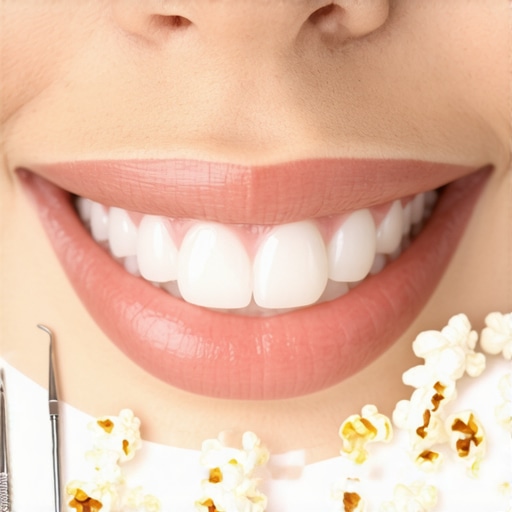
Ever had that sinking feeling when you realize there’s a tiny popcorn kernel lodged deep under your gums, refusing to budge no matter how much you rinse or poke at it? I remember the first time it happened to me during movie night. I was chewing that last buttery piece, blissfully unaware of the tiny disaster unfolding behind my smile. Suddenly, a sharp, persistent ache reminded me I wasn’t alone in that tiny crevice. I tried everything—floss, toothpick, even brushing harder—but that kernel stayed put, making me dread every single bite afterward.
Why Getting That Kernal Out Matters More Than You Think
This little incident might seem trivial, but it exposes a common and surprisingly frustrating issue many of us face—how to effectively remove a popcorn kernel or any piece of popcorn stuck deep under the gum line. Left unchecked, it can lead to inflammation, lingering discomfort, or even infection. I learned the hard way that ignoring the problem can turn a minor discomfort into a dental nightmare, impacting not just your oral health but your overall well-being. According to the American Dental Association, unresolved food impactions like popcorn kernels can contribute to gum disease if not addressed promptly.
Is It Actually Worth the Hype to Try and Remove It Yourself?
Early on, I made the mistake of trying to force it out with whatever was at hand—sharpened toothpicks, maybe a pin. The result? Gums irritated, bleeding, and a bigger mess. That taught me a valuable lesson about the importance of understanding when to seek professional help. If you’re skeptical about tackling this alone or fear damaging your delicate gums, you’re not alone. Many wonder if home remedies are safe or if they should just schedule a visit. Rest assured, there’s a better way—you can handle this safely and effectively, and I’ll show you how.
Ready to stop the discomfort and learn exactly how to get that stubborn kernel out without risking more damage? Let’s walk through the practical steps, with the confidence that you’re equipped to handle it—or know when it’s time to call in the pros.
Identify the Exact Location and Grit Your Teeth
First, examine your gums and teeth carefully using a mirror. Shine a flashlight if necessary, and feel around gently with your tongue or clean fingers to pinpoint where the kernel is lodged. Remember, if it’s deeply embedded under the gum line or causing persistent pain, it’s better to consult a professional rather than risk damaging your tissue.
Prepare Your Workspace and Tools Carefully
Use sterile, clean tools like dental floss or a soft, damp cotton swab. Avoid using sharp or metal objects, which can harm your gums or enamel. Think of it like gardening: you want to gently loosen the stuck debris without tearing up the surrounding tissue. If you don’t have dental floss, a piece of clean, unwaxed floss is ideal, as it slides between teeth smoothly.
Gentle Dislodging Using Floss or Soft Picks
Cut a piece of floss enough to reach the affected area comfortably. Wrap it around your fingers and carefully slide it down between your teeth, gently sawing back and forth. Use a gentle, controlled motion—imagine trying to untangle a knot without pulling too hard. As I did when I faced this issue, I carefully guided the floss around the kernel, leveraging gentle pressure to dislodge it without irritating my gums. Be patient; if resistance builds or bleeding occurs, stop immediately.
When Floss Isn’t Enough
If flossing doesn’t free the kernel, a cotton swab can sometimes help. Dampen the swab and gently nudge or lift the kernel out from the side—never poke directly or force into the gum tissue. This is similar to removing a stubborn sticker—you may need a bit of gentle lever action without tearing the paper.
Prevent Further Damage and Know When to Seek Help
If pain or bleeding increases, or if you’re unable to dislodge the kernel after several gentle attempts, it’s wise to contact a dentist. Pushing or poking too aggressively can cause gum recession or infections, which are more troublesome than the popcorn kernel itself. Remember, maintaining good oral health routines, like regular professional cleanings, can prevent such issues. Learn more about how regular teeth cleaning supports your overall well-being.
Additional Tips for Comfort and Safety
Use warm saltwater rinses to soothe irritated gums and reduce inflammation after attempting removal. To avoid future incidents, consider dietary adjustments or mindful chewing habits, especially if popcorn tends to cause blockages. For those with dental restorations like crowns, understanding their maintenance is crucial—visit this guide to keep your smile healthy.
Remember, patience and gentle handling are key. Sometimes, the smallest objects require the most careful approach—like navigating a tiny, treacherous mountain pass. If doubts arise, professional help is the safest route, ensuring your comfort and oral health stay protected.
 Many assume that once they’ve had a professional cleaning or a crown fitted, their dental health is set for life. However, a common misconception is that dental treatments serve as a quick fix rather than part of a broader, ongoing process. In reality, family dentistry encompasses much more than routine checkups; it involves understanding the subtleties of maintaining oral health across different ages and circumstances. For example, some believe that crowns are a permanent solution that doesn’t require special care, but studies highlight that improper maintenance can lead to microleakage and early replacement needs.
One trap to avoid is the overreliance on immediate cosmetic fixes. Many think whitening or veneers alone can solve long-term issues, but without proper oral hygiene, decay and gum problems can still develop underneath. Advanced mistakes include neglecting the importance of regular, thorough cleanings—that’s where professional cleaning plays a vital role in preventing unseen plaque buildup that can threaten restorations.
For those considering crowns, it’s crucial to recognize the importance of proper placement and material choice. Not all crowns are created equal, and a mismatch in shade or a poorly fitted crown can lead to discomfort or even bite problems. As explained in this guide, understanding the nuances of crown placement improves longevity and function.
Are Your Oral Habits Sabotaging Your Smile?
Many people underestimate how daily habits impact their dental restorations and overall health. Biting nails, using teeth as tools, or neglecting to clean the tongue contribute to problems that can undermine even the most well-done procedures. It’s a nuanced interplay where habits and genetics influence outcomes more than most realize. For instance, evidence suggests that patients with severe periodontal issues often have habits that exacerbate their condition—revealing why personalized oral health routines are essential. Regularly reviewing your routine with guidance from expert sources can make a significant difference, as discussed in this article.
In essence, understanding these hidden nuances and avoiding common pitfalls ensures that your family’s oral health remains robust. The goal is to see your dental treatments as investments in long-term well-being, not just short-term fixes. If you want to learn more about how to maintain your restorations and optimize your oral health, visit our contact page to get personalized advice. Remember, a proactive approach today prevents complex problems tomorrow. Have you ever fallen into this trap? Let me know in the comments.
Maintaining long-term oral health, especially after restorative procedures like crowns, requires the right tools and a consistent routine. Personally, I rely on a combination of high-quality equipment and strategic methods that ensure durability and health. For example, I swear by using the Soniclean UltraPlus Sonic Toothbrush. Its gentle yet effective cleaning action reaches deep into periodontal pockets, making it a game-changer over conventional brushes, especially for those with crowns or periodontal concerns. Its oscillating-rotating technology helps remove plaque more thoroughly, which is essential in preventing microleakage around crowns—a common issue outlined in this guide.
Beyond brushing, I highly recommend investing in a Water Flosser by Waterpik. The pulsating water stream dislodges debris trapped in hard-to-reach areas—particularly invaluable around crowns and bridging. I personally use the Waterpik Ultra Water Flosser because it’s gentle on delicate gum tissues yet powerful enough to remove stubborn plaque, which helps to prolong the life of restorations and prevent gum inflammation. Regular use of such tools not only maintains cleanliness but also supports gingival health, reducing the risk of recession and sensitivity over time.
Future of Family Dental Tools and Techniques
Looking ahead, I believe we will see more integration of AI-driven oral health monitoring devices. Devices like smart toothbrushes that track brushing habits and provide feedback can help families develop consistent routines that adapt to individual needs, ensuring better long-term results. As technology advances, dental professionals will likely recommend personalized oral care routines based on data collected over time.
How do I keep my dental routines effective long-term?
One of the most crucial aspects of maintaining your family’s oral health is establishing a schedule for professional cleanings and checkups. Regular visits, such as scheduling cleanings every six months, are essential for catching issues early and ensuring that your tools and routines are effective. Additionally, updating your routine with the latest tools, like sonic brushes and flossers, can make a significant difference. Don’t forget to complement these with a consistent oral health routine at home, including flossing, brushing, and tongue cleaning, as discussed in this resource.
To start, try incorporating one advanced tip today—perhaps upgrading to a sonic toothbrush or integrating a water flosser into your daily routine. These steps can substantially improve how well your family maintains their oral health, ensuring that crowns, teeth cleaning, and general well-being stay in top shape for years to come.


Reflecting on my journey with family dentistry, I’ve realized that the true secret lies in proactive maintenance rather than reactive fixes. One lesson that struck me profoundly was how overlooked habits and misconceptions can silently undermine long-term oral health. For instance, I once believed that a crown could be a permanent shield, but understanding the nuances of proper care and regular checkups has transformed that mindset. It’s about cultivating a mindset where every brushing, flossing, and consultation becomes an investment in your family’s brightest, healthiest smiles.
Lessons From the Trenches That Changed My Approach
- Overconfidence Can Be Costly: Believing my dental treatments were foolproof led me to neglect routine maintenance, which almost resulted in preventable complications. The real takeaway? Even the best restorations need consistent care.
- Tools Matter More Than I Thought: Upgrading to sonic toothbrushes and water flossers significantly improved my family’s oral health, proving that quality tools make a tangible difference.
- Habit Tracking Is Key: Simple routines like tongue cleaning and avoiding sugary snacks helped prevent issues before they arose, reinforcing that small daily actions build up over time.
My Toolbox for a Healthy Smile Future
- Expert Resources: Regularly consulting professional cleaning tips helps me stay ahead of potential problems and reinforces best practices.
- Effective Devices: I personally rely on the electric toothbrushes and water flossers to reach tricky areas and ensure thorough cleaning, especially around crowns and restorations.
- Educational Insights: Books like expert advice on crowns and cleaning have deepened my understanding of long-term care strategies.
Take Action for Your Smile Today
Empower yourself and your loved ones by embracing a proactive, informed approach to family dentistry. Remember, the habits you develop now set the foundation for lifelong oral health, confidence, and happiness. Don’t wait for a dental emergency to prompt action—start today, and watch your family’s smiles flourish for years to come.
What small change will you commit to this week to improve your family’s oral health? Share your plan below and inspire others on their journey toward healthier smiles!