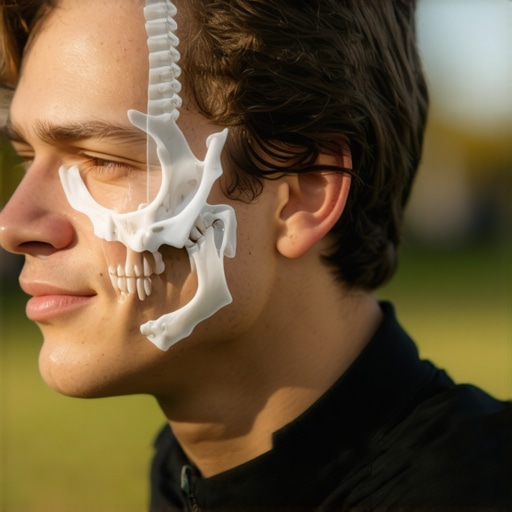
I remember hitting the pavement last October; the air was crisp, and I was finally finding my stride during my morning jog. But about two miles in, every time my foot hit the ground, a sharp, rhythmic throb shot through my upper left molar. I panicked. My first thought? ‘Great, there goes my weekend and a few hundred bucks on a new dental crown.’ I actually stopped mid-run, poked at my gum, and felt totally defeated. I’ve always been diligent about my oral health routine, so why was my mouth betraying me now?
The Real Reason Your Mouth Thumps With Every Step
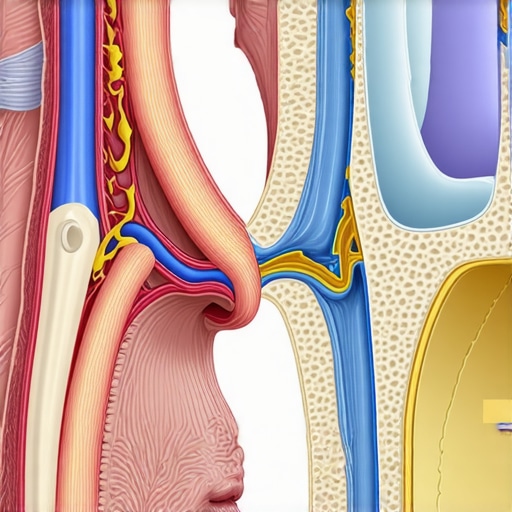
It turns out, I wasn’t dealing with a sudden cavity. I was dealing with biology. If you’ve ever wondered why your teeth throb after you finish a workout, you aren’t alone. Most of us assume that a hurting tooth equals a dental problem. But your upper teeth are basically roommates with your maxillary sinuses. When those sinuses get inflamed—whether from a cold, flu, or those pesky seasonal allergies—they put direct pressure on the nerves at the roots of your teeth. I made the classic mistake of scheduling an emergency appointment and paying a co-pay, only to find out my teeth were perfect; my head was just stuffed.
Does this mean I should just ignore the pain?
This is the big question that kept me up at night. You don’t want to play amateur doctor and miss a genuine abscess, but you also don’t want to run to the clinic for a head cold. According to the American Dental Association, the roots of your upper molars can actually sit right against or even inside the sinus cavity floor. This is why the reason your teeth hurt when you lean forward is often related to fluid shift rather than tooth decay. Today, I’m going to show you how to distinguish between a sinus “echo” and a real dental emergency so you don’t waste time or money. Have you ever had to cut a workout short because your teeth felt like they were about to vibrate out of your jaw? Tell me about it in the comments.
How to Spot the Difference Before You Call the Dentist
Before you start worrying about maintaining your dental crowns or scheduling a deep clean, try a few simple physical tests. If the pain is confined to your upper teeth and changes intensity when you jump or move your head, it’s likely your sinuses. Learning how to tell if your dental pain is actually a sinus infection can save you a lot of unnecessary stress. I spent years thinking my teeth were brittle before I realized my seasonal allergies were the true villain in my running routine.
When your teeth start rhythmically pounding during a run, the first thing you need is clarity, not a drill. It is easy to assume the worst, but you can usually figure out the culprit with a few simple physical movements. I remember one morning after a heavy rain when the pollen count was sky-high. I thought a molar was literally cracking open. I performed the ‘Jump Test’—I literally hopped on one foot in my kitchen while holding my jaw. The pain spiked in my entire upper left quadrant rather than one specific point. That was my first clue that this wasn’t a job for my dentist, but for a decongestant.
Practical Ways to Tell if it is a Sinus Headache or a Cavity
Jump and Jiggle to Move the Fluid
Gravity is your best diagnostic tool when you are trying to find the source of dental discomfort. If you hop on one foot or lean forward and the pain intensifies across several teeth simultaneously, it is almost certainly your sinuses. This happens because the reason your teeth feel loose when you have a cold is often just the internal pressure pushing against the nerve endings. If the pain stays localized to one single tooth despite how much you move your head, that is when you should start worrying about a localized infection or a decay issue.
Check for Temperature Sensitivity
Grab a glass of ice water and take a slow sip. If the cold makes you wince in one specific spot, you might be looking at a real nerve issue or an exposed root. Sinus pressure is a ‘physical’ pain—it usually does not care about the temperature of your drink. If you have recently had restorative work, you might wonder why your new crown feels cold when you breathe in, which is normal for a short period, but persistent throbbing that ignores temperature is usually a byproduct of congestion in the maxillary sinus.
Evaluate Your Crown Integrity
Sometimes the pain is real dental fatigue rather than just a cold. If you have older restorations, knowing how to keep your dental crown from popping off while chewing becomes a vital part of your self-check. Use your tongue to feel for any movement, gaps, or sharp edges around the gum line. If the crown feels rock-solid but the gum tissue above it is tender to the touch when you press your finger against your cheek, focus on clearing your nose first. This pressure can mimic the sensation of a failing restoration even when the tooth is perfectly healthy.
Maintenance that Prevents Phantom Pain
The best way to avoid a panic attack every time you get a sniffle is to keep your foundation strong. Following a strict oral health routine and mastering teeth cleaning secrets ensures that when your mouth hurts, you can rule out hygiene issues immediately. I used to be inconsistent with my flossing until a ‘sinus’ pain turned out to be a tiny piece of popcorn hull stuck under the gum for a week. Now, I prioritize professional check-ups and maintaining your dental crowns so that my only concern during allergy season is finding enough tissues, not finding an emergency dentist.
When your teeth start rhythmically pounding during a run, the first thing you need is clarity, not a drill. It is easy to assume the worst, but you can usually figure out the culprit with a few simple physical movements. I remember one morning after a heavy rain when the pollen count was sky-high. I thought a molar was literally cracking open. I performed the ‘Jump Test’—I literally hopped on one foot in my kitchen while holding my jaw. The pain spiked in my entire upper left quadrant rather than one specific point. That was my first clue that this wasn’t a job for my dentist, but for a decongestant.
Practical Ways to Tell if it is a Sinus Headache or a Cavity
Jump and Jiggle to Move the Fluid
Gravity is your best diagnostic tool when you are trying to find the source of dental discomfort. If you hop on one foot or lean forward and the pain intensifies across several teeth simultaneously, it is almost certainly your sinuses. This happens because the reason your teeth feel loose when you have a cold is often just the internal pressure pushing against the nerve endings. If the pain stays localized to one single tooth despite how much you move your head, that is when you should start worrying about a localized infection or a decay issue.
Check for Temperature Sensitivity
Grab a glass of ice water and take a slow sip. If the cold makes you wince in one specific spot, you might be looking at a real nerve issue or an exposed root. Sinus pressure is a ‘physical’ pain—it usually does not care about the temperature of your drink. If you have recently had restorative work, you might wonder why your new crown feels cold when you breathe in, which is normal for a short period, but persistent throbbing that ignores temperature is usually a byproduct of congestion in the maxillary sinus.
Evaluate Your Crown Integrity
Sometimes the pain is real dental fatigue rather than just a cold. If you have older restorations, knowing how to keep your dental crown from popping off while chewing becomes a vital part of your self-check. Use your tongue to feel for any movement, gaps, or sharp edges around the gum line. If the crown feels rock-solid but the gum tissue above it is tender to the touch when you press your finger against your cheek, focus on clearing your nose first. This pressure can mimic the sensation of a failing restoration even when the tooth is perfectly healthy.
Stop Treating Your Crowns Like They Are Indestructible Armor
The most common mistake I see people make is assuming that because a crown is made of porcelain or gold, the tooth underneath is shielded forever. This is the “set and forget” trap. While the crown itself won’t decay, the tiny margin where the restoration meets your natural tooth is incredibly vulnerable. If you slack on maintaining your dental crowns, bacteria can seep under that edge, causing a cavity that is nearly impossible to see until it is too late. Experts often point out that the “seal” is more important than the material of the crown itself.
Why Scrubbing Harder Actually Makes Your Teeth Look Yellow
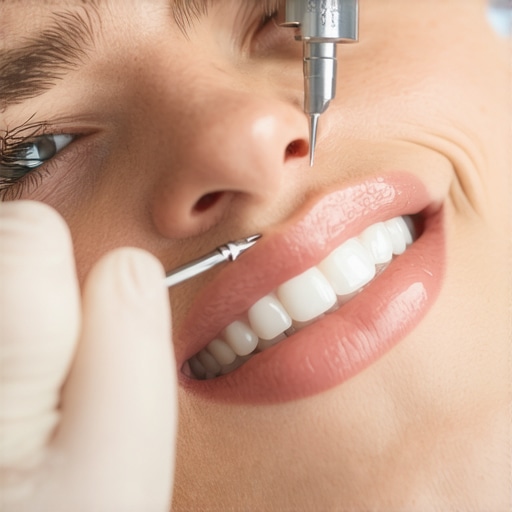
Here is a contrarian truth: the harder you brush, the worse your smile often looks over time. Many patients believe they are doing a great job by vigorously scrubbing, but why hard brushing actually makes your teeth look darker is due to enamel erosion. You are literally wearing away the bright, white protective layer to reveal the yellowish dentin underneath. Furthermore, if you are falling for the truth about the charcoal whitening trend, you might be using highly abrasive particles that scratch your porcelain crowns and natural enamel alike. A study published in the Journal of Clinical Periodontology confirms that non-carious cervical lesions—notches near the gum line—are frequently caused by aggressive brushing rather than decay.
Is that tiny gap at the gum line a dental emergency?
When you look in the mirror and see a dark line or a tiny gap at the base of your crown, your first instinct is panic. However, this isn’t always a sign of failure. As we age, our gums naturally recede, which can expose the “junction” of the crown. The real test is whether that area is sensitive to sugar or feels “sticky” when you run a fingernail over it. If it is just a visual change, it may be a cosmetic issue. But if it catches, you need to revisit family dentistry focus practices to ensure the margin is still sealed. Never ignore the impact of regular teeth cleaning; a professional hygienist can clear out the plaque that accumulates in these microscopic gaps that your toothbrush simply cannot reach. Have you ever fallen into the trap of ‘over-cleaning’ only to end up with more sensitivity? Let me know in the comments.
To really keep your smile in top shape, you need to think beyond the basic manual brush. I’ve personally switched to a high-end sonic toothbrush with a dedicated pressure sensor because I realized I was one of those people who brushed like I was scrubbing a floor. If you want to master teeth cleaning secrets, you have to realize that it’s about frequency and technique, not force. I also swear by a water flosser. It’s the only way to effectively clear the area around the base of a crown without risking the ‘pop-off’ that sometimes happens with aggressive string flossing. It’s a vital part of maintaining your dental crowns for the long term.
How do I maintain my dental restorations over the next twenty years?
Consistency is the boring but necessary answer. You have to treat your dental work as a living part of your anatomy. A study in the Journal of Oral Rehabilitation highlights that the marginal fit of a crown can be compromised by acidic environments, so I’ve started using an alkaline mouthwash instead of the harsh, alcohol-based ones that can irritate sensitive tissues. If you have ever wondered why your gums sting when you use alcohol-based mouthwash, it’s often because the formula is too aggressive for your mouth’s natural microbiome. Following expert advice on crowns and teeth cleaning suggests that bi-annual professional check-ups are non-negotiable for spotting microscopic leaks before they become expensive failures.
The Future of Personalized Dental Care
Looking ahead, the trend is moving away from reactive ‘drilling and filling’ toward proactive monitoring. We are already seeing the rise of smart toothbrushes that map your mouth in 3D, and I predict that within the next five years, we’ll see smart sensors embedded directly into crowns. These sensors will alert your phone if bacteria levels are rising or if the seal is weakening due to night-time grinding. Integrating these technologies into your oral health tips every family should follow in 2025 will be the difference between a crown that lasts ten years and one that lasts a lifetime. For now, focus on the fundamentals and consider caring for crowns by using a night guard if you tend to clench when stressed. I want you to try one thing tonight: switch to an extra-soft brush head and use half the pressure you normally do. You might be surprised at how much calmer your gums feel by morning.
The Truth My Dentist Finally Admitted About Phantom Nerve Pain
After years of panic-calling my clinic every time I felt a twinge during a run, I finally realized a few things that changed my perspective on family dentistry focus and self-care:
- Your Sinuses Are Noisy Neighbors: They do not just cause pressure; they can mimic the exact vibration of a failing root canal. If the pain moves when you tilt your head or jump, it is rarely the tooth itself.
- Gums Are the Gatekeepers: You can have the most expensive gold crown in the world, but if your oral health routine ignores the gum line, the foundation will eventually fail.
- Stress is a Silent Tooth-Cracker: I spent months chasing sensitivity only to find out I was clenching my jaw at 3 AM. Learning how to stop clenching your teeth when you are stressed was more effective than any numbing gel or special toothpaste.
#IMAGE_PLACE_FINAL#
Tools That Actually Protect Your Smile Between Checkups
I have tested dozens of products, but these are the non-negotiables I use to stay out of the emergency chair. First, throw away the hard-bristled brushes; why hard brushing actually makes your teeth look darker is a lesson I learned the hard way after scrubbing away my bright enamel. I now rely on a sonic brush with a pressure sensor to ensure I am being gentle. Second, I recommend an alkaline mouthwash to balance pH levels. If you have ever wondered why your gums sting when you use alcohol-based mouthwash, it is because those formulas are often stripping your natural defenses. Finally, keep a water flosser handy for caring for crowns without the risk of snagging the edges of your restorations with traditional string.
Building a Smile That Lasts a Lifetime
Taking control of your dental health does not have to be a source of anxiety. By distinguishing between sinus pressure and actual decay, you can approach your oral health routine with confidence rather than fear. Remember that your teeth are part of a complex system, and often, the throb you feel is just your body asking for a little more rest or a better cleaning technique. Stick to the expert advice on crowns and teeth cleaning, and you will find that those panic-inducing moments become a thing of the past. Have you ever gone to the dentist for a toothache only to find out it was just a sinus infection or seasonal allergies? Let me know in the comments below!