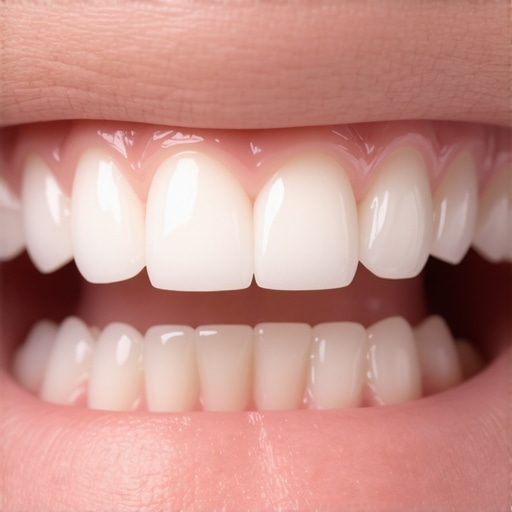
I will never forget the Tuesday afternoon my seven-year-old, Leo, ran up to show me his new trick. He opened his mouth wide, and my heart nearly stopped. Right there, behind his perfectly sturdy lower incisors, two white tips were poking through the gums like tiny mountain peaks. It looked like he was growing a second row of teeth. My mind went straight to expensive surgeries and late-night emergency calls. I felt like a total failure—had I not pushed the flossing enough? Was his jaw too small? If you have just spotted the same thing in your child’s mouth, take a deep breath. You are not alone, and your kid isn’t actually turning into a predator. Today, I am going to share exactly why this happens, why my initial panic was totally unnecessary, and the simple steps we took to get Leo’s smile back on track without a single tear.
Don’t Panic Over That Second Row of Teeth
The technical term for this is ectopic eruption, but most of us parents just call them shark teeth. It happens when the permanent tooth does not quite get the memo that it is supposed to dissolve the root of the baby tooth directly above it. Instead, it takes the path of least resistance and sprouts up behind the existing tooth. When I first saw this, I frantically searched for why some kids get shark teeth and found out it is actually incredibly common. In our family dentistry focus, we often overlook that dental development isn’t always a straight line. Sometimes it is a bit crowded and messy. The good news? In most cases, the tongue eventually does the heavy lifting, pushing that new tooth forward once the baby tooth finally decides to vacate the premises. Have you ever looked into your child’s mouth and felt that immediate jolt of “oh no, what now?”
Is this a dental emergency or just a weird phase?
This is the question that kept me up that first night. According to the American Association of Orthodontists, ectopic eruptions occur in a significant portion of developing smiles, and many of these cases resolve themselves without any aggressive intervention. You aren’t failing as a parent if your child’s mouth looks a little crowded right now. However, it is a great time to review your oral health tips to ensure those new, hard-to-reach teeth stay clean while they are stuck in that awkward back row position. It is all about patience and monitoring.
My Early Mistake with My Son’s First Shark Tooth
I will admit it: I tried to be the hero. I thought if I could just force that baby tooth out with some aggressive wiggling and a few extra-crispy apples, the permanent tooth would magically snap into place. I spent three days encouraging Leo to “really give it a go” until his gums were red and he was practically hiding from me whenever I mentioned his teeth. It was a classic rookie mistake. By forcing the issue, I made him anxious about his mouth, which is the last thing you want when you are trying to build a lifetime of healthy habits. If I had just stayed calm and consulted our dentist first, I could have avoided the drama. If your little one is already nervous, you might need to find ways to help a child who is terrified of any dental changes. The reality is that nature usually knows what it is doing, and our job is mostly to monitor and keep the area free of plaque until that baby tooth finally gives up the ghost.
Check the Wiggle Factor First
Before you start worrying about extractions, you need to assess the situation at home. I remember sitting on the sofa with Leo, asking him to give his front tooth a tiny nudge with his tongue while I watched carefully. If that baby tooth is already wobbling like a loose fence post, you are in the clear. The permanent tooth is already doing its job of dissolving the root; it just happened to sprout a few millimeters too far back. In these cases, your only job is to encourage the wiggle. Think of the baby tooth like a stubborn guest at a party—eventually, the pressure from the newcomer will make them leave. However, if that baby tooth is rock solid and shows no signs of budging after several weeks, it might be time to consider why some kids get shark teeth that require a little extra help.
Keep Both Rows Sparkling Clean
One of the biggest challenges with ectopic eruption is the ‘plaque trap’ created between the two rows of teeth. Because the permanent tooth is sitting behind the baby tooth, it creates a narrow canyon that is incredibly difficult to reach with a standard brush. If plaque builds up here, you risk decay on the brand-new adult tooth before it is even fully out. When we were dealing with this, I had to take over the brushing duties again, even though Leo thought he was a pro. We used some teeth cleaning secrets like angling the brush vertically to reach the back of that second row. It is also the perfect time to remind your little one why soft-bristled brushes are the only ones that should touch your gums, as the area is likely tender from all the movement.
Let Crunchy Snacks Do the Work
Instead of trying to pull the tooth yourself (which I’ve learned is a recipe for disaster), let physics and firm food do the heavy lifting. I started packing Leo’s lunch with what we called ‘tooth-movers’—think whole apples, thick carrot sticks, and crusty bread. This natural resistance provides the gentle, consistent pressure needed to further loosen the baby tooth. It is a much safer way to speed up the process than manual tugging. Plus, incorporating the 5 foods that act as natural toothbrushes for your family keeps the rest of the mouth healthy while the transition happens. Just be sure to avoid sticky treats during this phase, as why fruit snacks are often worse for kids than chocolate bars is often because they can painfully snag a loose tooth without actually helping it fall out.
When It Is Time for a Pro to Step In
While most shark teeth resolve themselves as the tongue pushes the adult tooth forward into the newly vacant spot, there are limits to the ‘wait and see’ approach. If your child is experiencing significant pain, or if the permanent tooth has grown to the same height as the baby tooth without any loosening, you need a professional opinion. In our family dentistry focus, we look for signs of overcrowding. Sometimes, a quick ‘wiggle’ from the dentist is all it takes to clear the path. Furthermore, it is a good idea to discuss the long-term alignment, as you might want to understand why your child might need braces even if their teeth look straight later on. Keeping a close eye on the oral health routine during this transitional phase ensures that once the shark teeth are gone, the smile left behind is strong and cavity-free.
While seeing a second row of teeth in your child’s mouth is enough to make any parent sprint for the phone, it is often just the first of many dental nuances you will encounter as your family grows. Let’s dig deeper into the stuff that usually gets glossed over in the waiting room. We often treat dental care as a set of rigid rules—brush twice, floss once, see the dentist every six months—but the reality is far more nuanced. For instance, many parents believe that once a tooth is fixed with a restoration, the ‘problem’ is solved forever. This is a classic misconception I had to unlearn quickly.
The ‘set it and forget it’ crown trap
Whether it is a stainless steel crown for a child’s molar or a high-end porcelain version for yourself, there is a common myth that these teeth are now ‘bulletproof.’ In reality, maintaining your dental crowns dos and donts for best results is actually more demanding than caring for natural enamel. The ‘trap’ here is the margin—the tiny seam where the crown meets your natural tooth. If you relax your oral health routine, bacteria can seep under that edge, causing a cavity that is nearly impossible to see until the crown literally falls off. Professional expert advice on crowns and teeth cleaning for lasting results emphasizes that the gum line around a crown is the most vulnerable square millimeter in your mouth. Have you ever fallen into this trap of thinking a crown was indestructible? Let me know in the comments.
Why your gums still bleed even if you floss every day
This is the question that puzzles the most diligent brushers. You are doing the work, yet you still see pink in the sink. Most people assume they are ‘flossing too hard’ and back off, which is actually the exact opposite of what you should do. According to a report by the American Dental Association (ADA), persistent bleeding is almost always a sign of remaining subgingival biofilm, not physical trauma from the floss. This is often the hidden reason your gums still bleed even if you floss every day; you might be missing the pockets where bacteria hide. If you stop flossing because of the blood, you are essentially letting the infection throw a party. Instead of stopping, this is the time to refine your technique and perhaps look into teeth cleaning secrets that involve better angling of your tools.
Wait an hour before brushing after that lemonade
Here is a nuanced ‘oops’ factor that most ‘Type A’ parents (including myself) get wrong: brushing immediately after your child eats fruit or drinks juice. We think we are being proactive by scrubbing away the sugar, but we are actually scrubbing away the enamel. When you consume acidic foods, your enamel temporarily softens. If you brush right away, you are essentially using your toothbrush to sand down your teeth. This is why you should never brush your teeth immediately after eating citrus. You should wait at least 30 to 60 minutes for your saliva to neutralize the acid and ‘re-harden’ the surface. In our family dentistry focus, we’ve found that small timing shifts like this make a bigger difference over a decade than almost any other habit. Remember, the truth about how often you should really replace your toothbrush and when you use it are equally important for long-term health.
It is not just about when you brush; it is about the equipment you use to fight the daily battle against biofilm. For years, I assumed my standard manual brush was doing enough until I saw the difference a high-quality sonic motor made for my back molars. If you are serious about maintaining your dental crowns dos and donts for best results, you have to upgrade your toolkit. Manual brushing often misses the microscopic debris at the crown’s margin. I eventually switched to a sonic brush because the fluid dynamics create micro-bubbles that reach into crevices standard bristles simply cannot touch.
Stop treating your crowns like regular enamel
One of the biggest shifts in my routine happened when I realized that dental work requires a different strategy. I used to be a ‘power brusher,’ thinking more pressure meant cleaner teeth. In reality, that is a fast track to recession. Instead, I now focus on the ‘Bass Technique’—a method pioneered by Dr. Charles Bass, which involves angling bristles at 45 degrees toward the gum line. According to the Journal of Clinical Periodontology, this specific angle is the most effective at disrupting subgingival plaque. For those of us with restorations, this technique ensures the gum tissue stays tight against the crown, preventing that dreaded dark line from appearing. If you are still using a basic plastic handle, you might want to learn the truth about how often you should really replace your toothbrush to ensure you aren’t just moving bacteria around.
How do I maintain my family’s dental work over the long haul?
Consistency is the boring but honest answer. However, the secret weapon in our house is the water flosser. If you have been using one and feeling like it is just a messy squirt gun, you are likely making the common mistake you are making with your water flosser: using the wrong tip or the wrong pressure. For my crowns, I use the ‘plaque seeker’ tip on a medium setting, tracing the gum line slowly. For the kids, especially during the shark-tooth phase, a low-pressure setting helps flush out that ‘plaque canyon’ between the two rows of teeth without causing discomfort. It is also much easier to how to transition your child to an electric toothbrush without a fight when they see you using cool gadgets too.
The future of dental care is in your spit
I predict that the next decade of family dentistry will move away from ‘drilling and filling’ and toward ‘microbiome management.’ We are already seeing the rise of at-home saliva diagnostic kits that can identify specific pathogens before they cause a visible cavity. Instead of waiting for a toothache, we will be using specialized probiotics to balance the mouth’s ecosystem. This is a massive shift from the traditional oral health tips we grew up with. We won’t just be cleaning teeth; we will be farming healthy bacteria. To stay ahead of the curve, I recommend trying one advanced tip this week: switch to an alcohol-free, pH-balanced mouthwash. It preserves the ‘good’ bacteria that protect your enamel from acid attacks. Give it a shot and see if that ‘fuzzy’ feeling on your teeth at the end of the day starts to disappear.
The Messy Truth Behind Every Healthy Family Smile
Looking back on Leo’s shark teeth scare, I realize that the panic usually comes from a lack of information. Here is what I wish someone had whispered to me that first Tuesday: Dental growth isn’t a race, and your child’s mouth is incredibly resilient. One of the biggest ‘aha’ moments for me was realizing that maintaining your dental crowns dos and donts for best results applies even to us parents—our kids watch how we value our own restorations. Secondly, I learned that professional intervention isn’t a failure; sometimes why your hygienist uses that high-pitched water tool on your gums is simply about reaching the spots we physically cannot at home. Finally, I discovered that our own anxiety as parents is the most contagious part of any dental visit, so staying calm is just as important as the flossing itself.
The Gadgets and Habits That Saved My Sanity
To stay on top of things, I’ve curated a small list of essentials that move beyond the basics. I swear by my water flosser—once you learn to avoid the common mistake you are making with your water flosser, it becomes a game-changer for those tricky ‘plaque canyons’ between shark teeth. I also keep a stock of soft-bristled brushes because why soft-bristled brushes are the only ones that should touch your gums is a lesson you only want to learn once. For parents looking to stay ahead of the curve, I highly recommend checking out these oral health tips every family should follow in 2025 to keep your routine modern, effective, and stress-free.
Building a Legacy of Confident Smiles
At the end of the day, those temporary shark teeth are just a milestone in your child’s development. Don’t let the stress of a crowded mouth steal the joy of watching them grow and change. Focus on the daily habits, keep the communication open with your dentist, and trust that nature usually knows the way. Your family’s journey toward a healthy smile is a marathon, not a sprint, and every wiggle counts toward that goal. Have you ever spotted a ‘second row’ of teeth in your child’s mouth, or did a dental crown ever catch you by surprise? Let me know your story in the comments below!