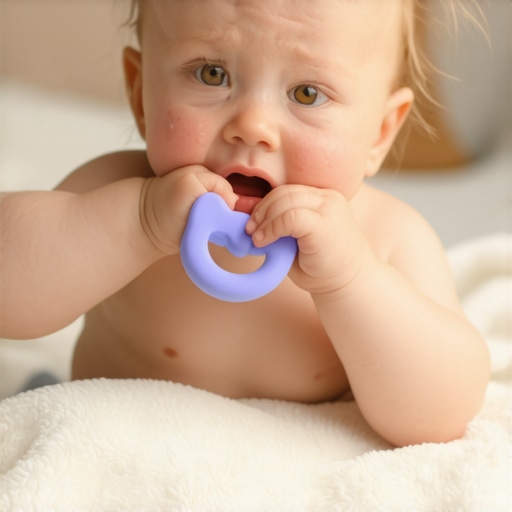
I remember the 3:00 AM haze like it was yesterday, rocking my sobbing two-year-old while his forehead felt like a radiator. I was certain it was those stubborn back molars. I had the frozen washcloths ready and was already mentally prepared for a week of drool and fussiness. I even checked to see if the reason his gums were so red was finally the breakthrough we needed. But after three days of misery, a high fever hit, and a trip to the pediatrician revealed a raging double ear infection. I felt like a failure for missing the signs, but that’s the thing about toddlers—they can’t exactly give you a detailed symptoms report. Today, I’m going to help you skip that guilt and learn how to tell when your little one’s dental drama is actually a medical issue that needs a doctor’s attention.
The Night My Teething Toys Failed Us
We’ve all been there, desperately trying to soothe a teething baby without using medicated gels, only to realize the usual tricks aren’t working. Early on, I made the classic mistake of assuming that any time my son tugged on his ear, it was just ‘referred pain’ from his jaw. While that can happen, I learned the hard way that a tugging hand combined with a flat-out refusal to lie down is a major red flag. If your ‘helpful neighbor’ advice is failing and the family dentistry focus you’ve maintained isn’t explaining the distress, it’s time to look deeper.
Is it really that hard to tell the difference?
You might be skeptical, thinking a tooth and an ear are miles apart, but for a tiny human, everything from the jaw to the Eustachian tube is interconnected. However, one surprising fact from the American Academy of Pediatrics is that teething rarely causes a true fever over 101°F. If the thermometer is climbing, you’re likely dealing with an infection, not a new tooth. Have you ever spent a week convinced a molar was coming in, only to end up in the pediatrician’s office with a prescription for antibiotics?
Spotting the Red Flags Your Child Can’t Tell You About
When we talk about strengthening your smile every day, we usually focus on brushes and floss, but for toddlers, oral health is often the first place we see systemic issues. If your child has a runny nose or bad breath despite regular brushing, their body might be fighting more than just a tooth breaking through the surface. Ear infections often follow a cold, whereas teething is a solo act. If your toddler screams the second their head hits the crib mattress, that’s the pressure in the middle ear talking, not a sore gum.
Look for the Fever that Teething Never Causes
The most reliable way to stop guessing is to pull out the thermometer. I remember a particularly rough Tuesday when my daughter was biting everything in sight and pulling her ears. I was certain it was a molar, but when she felt warm, I checked her temp. It was 102.1°F. True teething might cause a slight rise in body temperature, often called a ‘teething rubor,’ but it almost never crosses that 101°F threshold. If you are seeing numbers higher than that, you aren’t looking at a dental milestone; you are looking at an immune response to a virus or bacteria. This is where oral health tips every family should follow in 2025 come into play, emphasizing that we must look at the whole child, not just the mouth. High fevers are your signal to call the pediatrician rather than reaching for another teething ring.
Watch How They Act When They Lay Down
Gravity is a tell-tale sign that helps distinguish ear pain from gum pain. Think of it like this: teething pain is a constant, dull throb that stays relatively the same whether the child is standing, sitting, or lying down. However, an ear infection creates fluid pressure. When a toddler lies flat, that fluid shifts and presses against the eardrum, causing a sharp, stabbing sensation. I once spent three nights trying to soothe what I thought was a ‘dental flare-up’ by rocking my son, only to realize he was perfectly fine as long as he was upright. The moment I tucked him in, the screaming began. That postural change in pain levels is a classic red flag for an ear issue. 
Check for More Than Just Red Gums
You need to play detective and look for ‘companion symptoms.’ Teething is a lonely traveler; it rarely brings a cough, thick nasal discharge, or a change in breath. If you notice that your child’s saliva turns thick and sticky, it is often a sign of dehydration or the body fighting a respiratory infection. Similarly, if you notice your toddler has bad breath despite regular brushing, this often points toward a sinus infection or mouth-breathing caused by swollen adenoids, not a new tooth. Teething saliva is usually clear and prolific—the ‘drool waterfall’ we all know too well.
Get Back to the Basics of Daily Care
Even when your child is miserable, you cannot let their routine slip. If the gums are truly the source of the problem, you can use the salt water trick that calms gum inflammation in minutes by using a damp gauze pad to gently wipe the area. If they are resisting the brush because of the discomfort, it might be the right time to transition your child to an electric toothbrush without a fight, as the vibrations can actually feel like a massage to sore, erupting gums. Knowing how to manage a sudden toothache effectively involves identifying if the pain is localized to the gum line or if it radiates from the jaw toward the ear canal. If it’s the latter, and it’s accompanied by a runny nose, skip the teething gel and head to the doctor.Just as we can misread a toddler’s ear tug for a teething signal, adults often fall into a similar trap of misinterpreting the signals their own dental work sends. One of the biggest mistakes I see—and I’ll admit I fell for this early in my dental journey—is the ‘set it and forget it’ mentality toward restorations. Many people believe that once a tooth is capped, it’s basically invincible. This couldn’t be further from the truth. In fact, a crowned tooth requires more strategic care than a natural one because the margin—that tiny seam where the crown meets your gum line—is the ultimate playground for bacteria.
Stop Treating Your Dental Crowns Like They Are Bulletproof
While a crown protects the visible part of your tooth, the root and the area under the gum line are still very much alive and susceptible to decay. The ‘oops’ factor here is ignoring the gum line. If you stop focusing on a rigorous oral health routine, plaque can seep under that margin. According to a study published in the Journal of Dentistry, secondary caries are the leading cause of restoration failure, often because patients assume the porcelain shield is a barrier against all bacteria. This is why expert advice on crowns and teeth cleaning emphasizes cleaning *under* the edge of the crown, not just the shiny surface. If you’ve been skipping the floss because ‘it’s just a fake tooth anyway,’ you are setting yourself up for a very expensive surprise. 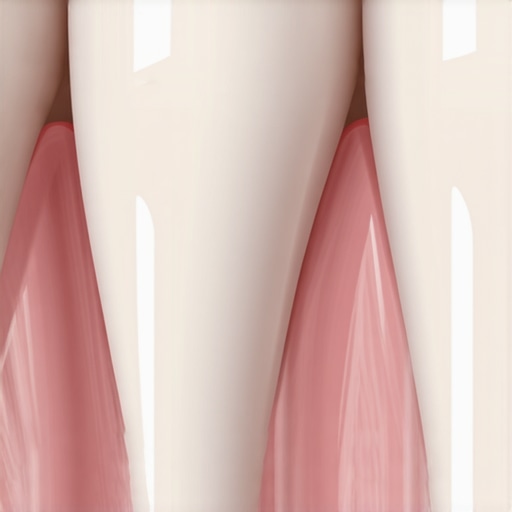
Why Zirconia is the Workhorse of Modern Dentistry
When we talk about family dentistry focus, we have to look at the materials that actually last. A common myth is that all crowns are created equal. I used to think porcelain was the gold standard for everything, but for those of us who grind our teeth at night, porcelain can be too brittle for the back of the mouth. This is where choosing zirconia crowns for back molars becomes a game-changer. Zirconia is virtually indestructible, whereas ceramic crowns are the best choice for your front teeth because they mimic the light-reflecting properties of natural enamel. If your dentist suggests a metal or zirconia option for a molar, don’t feel like you’re getting a ‘lesser’ product; you’re getting a restoration built for the heavy lifting of chewing.
Why Does a Crowned Tooth Still React to Cold?
It seems counterintuitive, right? If the tooth is covered in a thick layer of zirconia or ceramic, why do you still feel that sharp zing when drinking iced tea? This often happens because the crown material conducts temperature differently than natural enamel, or the gum has receded slightly, exposing the sensitive root. If you are caring for crowns properly but still feel sensitivity, it might be a sign that the seal is slightly compromised. Another advanced trap is ruining your enamel with charcoal toothpaste. While these trendy products promise a white smile, they are often too abrasive for the margins of your dental work, potentially scratching the finish or irritating the surrounding tissue. Stick to non-abrasive pastes to ensure maintaining your dental crowns remains a success for decades rather than years. Have you ever assumed a crown was ‘fixed for life’ only to have a surprise at the dentist? Let me know in the comments below!
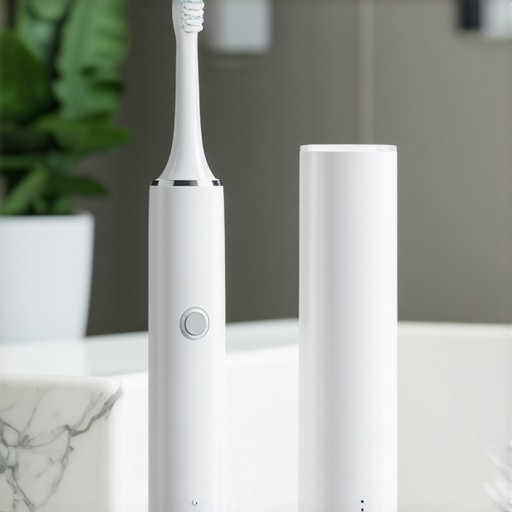
After spending thousands on crowns and years perfecting my routine, I realized the hard way that my manual toothbrush was like bringing a knife to a gunfight. I finally upgraded to a high-end electric model because the motor performs the micro-movements I physically cannot mimic with my hand. This isn’t just my opinion; the American Dental Association (ADA) Professional Product Review notes that power toothbrushes with oscillating-rotating technology can reduce plaque by up to 21% more than manual brushes over a three-month period. If you want to see the impact of regular teeth cleaning on overall oral wellness, you have to be consistent at home before you even step into the clinic.
The Tools I Trust to Keep My Smile Intact
The real secret weapon in my bathroom cabinet isn’t actually the brush; it is the water flosser. I use it on a medium-high setting, usually around 70 to 80 PSI, to blast out the debris that hides in those tricky margins where my zirconia crowns meet the gum line. It is one of those teeth cleaning secrets that completely changed my checkups. My hygienist actually stopped asking if I was flossing and started asking what I had changed in my daily habits.
How do I maintain my dental work over the long haul?
The most overlooked part of keeping your smile working is addressing the ‘silent destroyer’ known as bruxism. I used to wake up with a sore jaw and dull headaches, not realizing I was essentially trying to chew through my own expensive dental work while I slept. I finally accepted that how a simple night guard can save you thousands in future dental work is not just marketing—it is a legitimate financial strategy. By wearing a custom-fitted guard, I am protecting the porcelain and zirconia from the sheer mechanical force of my jaw muscles. If you do not know how to stop grinding your teeth while you sleep, you are basically putting a ticking clock on every restoration in your mouth.
Smart Tech is the Future of Your Family Dentistry Focus
Looking ahead, I predict we are going to see a massive shift toward smart at-home diagnostics. Imagine a toothbrush that uses AI to map your mouth in real-time and flag inflammation before it becomes a full-blown cavity. We are already seeing the beginning of this with apps that track your brushing coverage. While this tech is incredible, it still does not replace the need for professional intervention. I still make sure to schedule my professional cleanings because what a professional prophy cleaning removes that your toothbrush can’t touch is the calcified tartar that no amount of home vibration can budge. I also ask my dentist why ultrasonic cleaning is faster and more comfortable than hand scaling during my visits, as it is much easier on my sensitive gums. My family dentistry focus is all about longevity, and that means combining the best new tech with old-school consistency. If you are serious about your smile, I challenge you to swap your manual brush for an electric one this week—it is the single easiest upgrade you can make for your future self.
Hard Truths I Learned After Thousands in Dental Bills
After years of navigating toddler tantrums and my own restorative work, I’ve realized that waiting for pain is the biggest mistake you can make. By the time a crowned tooth hurts or your toddler’s ear is pulsing, the problem has often been brewing for weeks. I used to think a crown was the ‘end’ of a tooth’s problems, but now I know it’s just a new chapter in expert advice on crowns and teeth cleaning that requires even more vigilance. Another lightbulb moment? Realizing that how a simple night guard can save you thousands in future dental work isn’t just about the money—it’s about waking up without that nagging tension in your jaw or a cracked restoration.
#IMAGE_PLACEHOLDER_E#
My Daily Lineup for a Resilient Smile
To keep my own dental work from failing and to stay ahead of my kids’ needs, I rely on a few non-negotiables. First, I’ve swapped manual scrubbing for an oscillating power brush to ensure I’m actually following the best oral health routine. I also keep a high-quality water flosser on my counter—it is the only way to truly flush out the debris from those zirconia margins. For my kids, I prioritize the impact of regular teeth cleaning by making sure we never skip a six-month checkup, even when life feels chaotic. These simple tools are far more effective than any trendy charcoal paste or manual brush could ever be.
Build a Legacy of Dental Health
Investing time in your family’s teeth today means fewer emergencies tomorrow. Whether you are deciphering a toddler’s cries or learning the best way to maintain your dental confidence with crowns, you are taking control of your well-being. Don’t wait for a 3:00 AM fever to start paying attention to the small signals your body and your children’s bodies are sending. Follow these oral health tips every family should follow in 2025 to ensure every milestone is a happy one. What is the one dental ‘red flag’ you’ve been ignoring lately? Let me know in the comments below!