
I woke up at 3:00 AM with a heavy, throbbing pressure behind my temples that felt like a localized thunderstorm. I did what most of us do: I stumbled to the kitchen, downed two ibuprofen, and blamed my late-night scrolling. But after three weeks of this ritual, I realized my ‘stress headaches’ weren’t coming from my brain—they were coming from my jaw. I had spent a small fortune on ergonomic pillows and lavender oils, but the real culprit was a molar that had finally had enough of my midnight grinding. We often dismiss these dull, morning aches as part of a busy life, but if you are consistently waking up feeling like you have gone ten rounds in a boxing ring, your teeth are trying to tell you something urgent.
Stop Blaming Your Busy Schedule for Your Aching Temples
For the longest time, I thought I was just ‘carrying my stress’ in my neck. It turns out, I was actually manifesting that stress through my bite. When we sleep, our bodies should be recovering, but for many of us, our mouths are working overtime. If you notice a persistent tightness when you first open your mouth, you might need to learn how to stop grinding your teeth while you sleep before you crack a perfectly good tooth. I made the mistake of ignoring a faint clicking sound in my jaw for months, thinking it was just a quirk of getting older. It wasn’t. It was the sound of my jaw joint under siege.
Is a simple headache really worth the emergency dental chair?
I get the skepticism. Who wants to pay an emergency fee for a headache? But here is the thing: a dull ache that radiates from the jaw to the ear is often a red flag for a deep-seated infection or a structural failure. Sometimes, the pain is so deceptive that it mimics other issues entirely. I’ve seen people treat themselves for months for congestion, never realizing there is a deep connection between sinus infections and upper tooth pain that only a professional can untangle. According to the American Academy of Sleep Medicine, sleep bruxism can exert up to 250 pounds of force on your molars—far more than the force used for normal chewing. This kind of pressure doesn’t just cause a headache; it can lead to a shattered crown or a vertical root fracture that requires immediate attention. Have you ever woken up with a sore jaw and just assumed it was the way you slept? You might be surprised to find it is actually a sign that you need to handle a sudden toothache before it turns into a permanent loss. Let’s look at the specific signals that mean your morning fog is actually a dental SOS.
Check Your Jaw Range Before Your First Coffee
Identifying the source of morning pain requires a quick self-assessment. Before the caffeine kicks in, try the three-finger test. You should be able to fit three fingers vertically between your front teeth without discomfort or a ‘catch’ in your jaw hinge. If you struggle to open wide enough to brush your back teeth, your muscles are in a state of chronic fatigue from overnight grinding. This isn’t just about sore muscles; it’s about the structural integrity of your enamel. When I finally sought help, my hygienist showed me the edges of my molars—they weren’t bumpy and natural anymore; they were flat, like polished stone. This erosion is why the impact of regular teeth cleaning on overall oral wellness goes beyond just a bright smile; it’s an early detection system for mechanical wear that can lead to total tooth failure.
Test the Three-Finger Opening
If you feel a sharp pinch or hear a distinct ‘click’ during this test, you are likely dealing with TMJ inflammation. I spent years thinking I was just a ‘stress-headache person’ until a Tuesday afternoon when a piece of sourdough bread literally snapped my bottom molar in half. The sound was like a dry twig breaking under a heavy boot. My dentist explained that months of clenching had created micro-cracks I couldn’t see. Knowing how to stop a minor toothache from becoming a major emergency starts with recognizing that limited jaw movement is your body’s way of sounding the alarm before the break happens.
Wipe Out the Biofilm That Your Floss Misses
Home care is your daily maintenance, but professional scaling is the deep-clean your mouth craves to reset. Think of your teeth like a car’s engine; you can check the oil at home, but you need a mechanic for the deep-seated grit. Many patients wonder why your mouth feels weirdly smooth after a professional scaling. It is because the hygienist has removed calcified plaque—tartar—that acts like sandpaper against your gums and tongue. When this rough surface is gone, your soft tissues can finally heal. 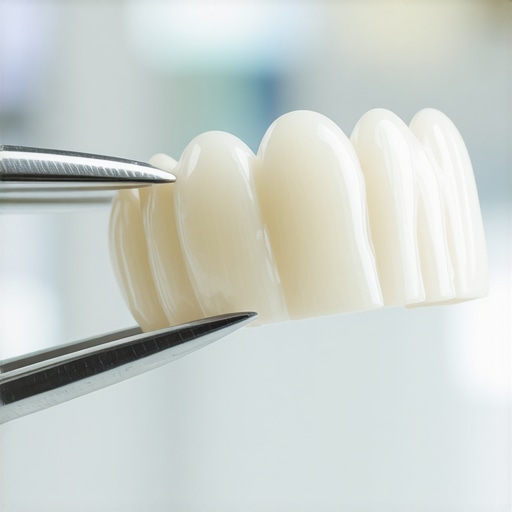 This process is vital because that ‘furry’ feeling you get by 5:00 PM is actually an active colony of bacteria that releases acids, softening your enamel and making your teeth more susceptible to the pressure of grinding.
Why Zirconia Is the Best Defense Against Heavy Clenching
If the damage is already done and you’ve cracked a tooth like I did, you need a material that can withstand the literal hundreds of pounds of pressure your jaw generates. This is why we recommend zirconia for patients who grind their teeth. Unlike older porcelain-fused-to-metal options, zirconia is a solid ceramic that doesn’t chip away under stress. It’s essentially the body armor of the dental world. When my dentist placed my first crown, I was terrified it would feel bulky or cold, but modern fabrication makes it feel identical to a natural tooth. However, once that armor is in place, you have to be diligent about maintaining your dental crowns. Sticky candies or using your teeth as tools to open packages are the fastest ways to compromise a high-end restoration.
Master the Mechanics of Daily Maintenance
Proper cleaning isn’t just about the time spent brushing; it’s about the angle of attack. Most people scrub horizontally, which actually pushes debris further under the gum line or wears down the delicate gingival tissue. Understanding the right way to use a manual toothbrush for better plaque removal involves a technique called the Bass Method—angling the bristles at 45 degrees toward the gums and using tiny, circular vibrations. When I switched to this focused method, the chronic bleeding I experienced during my morning routine vanished within ten days. It’s a simple mechanical shift that prevents the need for more invasive gum therapy down the road.
But even with the best brushing technique, there is a nuance most people miss when it comes to restorative work. Most people treat a dental crown like a ‘set it and forget it’ solution, but that is a dangerous misconception. In my years of obsessing over dental mechanics, I’ve realized that a crown isn’t a suit of armor; it’s a high-precision gasket. If that gasket has even a microscopic gap, bacteria will move in like uninvited houseguests. This is why caring for crowns is actually more demanding than cleaning natural enamel. You aren’t just brushing the ceramic; you are defending the vulnerable ‘margin’—the seam where the crown meets your natural tooth. If you ignore this, you risk ‘recurrent decay,’ which is just a professional way of saying your tooth is rotting under its expensive new hat. One contrarian view I hold: a crown doesn’t solve a dental problem; it manages it. If the underlying cause of the initial break—like the 3:00 AM grinding I mentioned earlier—isn’t addressed, even the strongest zirconia will eventually fail.
Why Your Crown Needs More Love Than a Natural Tooth
The ‘Oops’ factor often comes from over-enthusiasm. I’ve seen patients scrub their restorations so hard with abrasive ‘whitening’ pastes that they actually scratch the porcelain glaze. The truth about charcoal toothpaste is that it can be incredibly destructive to the smooth finish of your crown, creating micro-fissures where plaque can take root. Instead, you should be focusing on expert advice on crowns and teeth cleaning that prioritizes chemical balance over physical scrubbing. If you’ve been using charcoal to ‘brighten’ your crowns, you might actually be dulling them and inviting permanent staining into those tiny scratches. 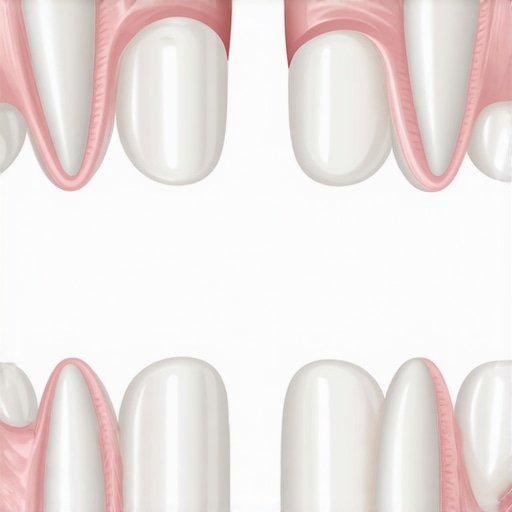
How can you tell if your crown is actually cracked versus just losing its cement?
It’s a terrifying feeling when you bite down and feel a slight ‘give’ or a clicking sensation. You need to know how to tell if your dental crown is cracked or just the cement because the solution for each is vastly different. A loose crown might just need a quick re-bond, but a crack in the ceramic can harbor bacteria that lead to an abscess. Research published in the Journal of Prosthetic Dentistry indicates that marginal leakage is one of the leading causes of secondary caries, often remaining asymptomatic until the damage is significant. This is precisely why knowing how to tell if your dental crown has a small leak is a skill every patient should have before the tooth underneath becomes unsalvageable.
Protect the Family Smile Without the Force
In family dentistry, the ‘trap’ is often passing down bad habits. We often tell our kids to brush hard to get the ‘sugar bugs’ out, but building a lifetime of healthy smiles requires teaching finesse, not force. If you’re teaching your kids effective home practices for family dental health, start with the ‘touch of a feather’ rule. Aggressive brushing is a major reason why your teeth look longer as you get older—it is gum recession, not actual growth. Professional intervention via the impact of regular teeth cleaning on overall oral wellness acts as a safety net for these common mechanical errors that we make at home. The hidden nuance that even regular flossers miss is the ‘pocket depth’ around a restoration. If you are experiencing sensitivity after getting a new dental crown, it might not be the tooth reacting to the cold; it could be the gum tissue reacting to the shape of the crown or trapped debris. You have to consider how often you actually need a professional scaling to prevent bone loss around your dental work to keep that foundation solid. Have you ever fallen into this trap of thinking your crown was invincible? Let me know in the comments.
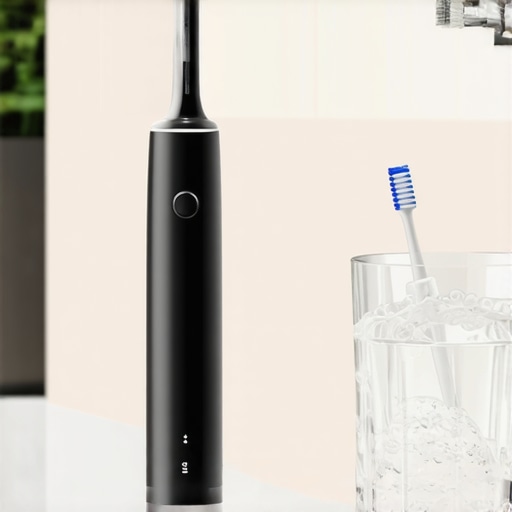
I used to think that as long as I brushed twice a day, my dental work was safe. I was wrong. After investing in zirconia, I realized that standard maintenance isn’t enough for high-precision restorations. If you want your smile to last, you have to upgrade your toolkit beyond the drug-store basics. I’ve personally transitioned to using a high-powered water flosser every single night because it is the only way to reach the ‘micro-gap’ at the crown margin that standard floss simply skips over. When you commit to
Ditch the String and Get a Water Flosser
The real game-changer for me was realizing that the texture of my gums changed once I started using a water flosser. It’s not just about the convenience; it’s about the hydraulic force that dislodges plaque from under the gum line where a manual brush can’t reach. I always follow
How Do I Maintain My Restorations Over the Long Haul?
Consistency is your only defense against mechanical failure. I’ve seen people get beautiful work done and then disappear for two years, only to return with a loose crown and a hefty bill. Your
The Smart Dental Tech Coming in 2026
The future of family dentistry is leaning heavily into bioactive materials that actually release calcium and phosphate to help the tooth underneath the crown stay strong. We are moving away from passive materials to active ones. But even with the best tech, you still need the fundamentals of
The Most Expensive Lesson My Molar Taught Me
The biggest shift for me was realizing that my teeth aren’t just tools—they’re an early warning system for my stress levels. When my jaw starts to feel tight, it’s a signal to check my posture and my mental load, not just my bite. I’ve also learned that a crown is a partnership between your dentist’s skill and your daily diligence. If you’ve been considering understanding the role of crowns in modern smile makeovers, remember that the most beautiful ceramic is still vulnerable to neglect at the gum line. I used to think a restoration meant the work was over, but it’s actually where the commitment begins.
My Personal Arsenal for a 20-Year Smile
I don’t recommend products lightly, but a few specific tools changed my life. First, a high-quality water flosser is non-negotiable if you have restorations because it flushes the margins that traditional floss often skips. Second, I swear by interdental brushes for that ‘just-scaled’ feeling between appointments. I also suggest following oral health tips every family should follow in 2025 to stay ahead of the curve. Finally, switching to the benefit of using an alcohol-free mouthwash for dry mouth stopped the irritation I used to feel every morning, keeping my gum tissue calm and healthy around my zirconia work.
#IMAGE_PLACEHOLDER_E#
Rewrite Your Dental Future Starting Tonight
Your journey toward a pain-free, durable smile doesn’t have to be overwhelming. It starts with one small mechanical change tonight—maybe it’s adopting the 45-degree brush angle or finally scheduling that long-overdue professional scaling. Consistency in your oral health routine strengthening your smile every day is what separates a temporary fix from a lifetime of confidence. You’ve invested the time to learn the ‘why’ behind your dental health; now it’s time to show your teeth the respect they deserve. Have you ever felt that strange ‘click’ in your jaw during a stressful week? Let me know in the comments how you managed it.