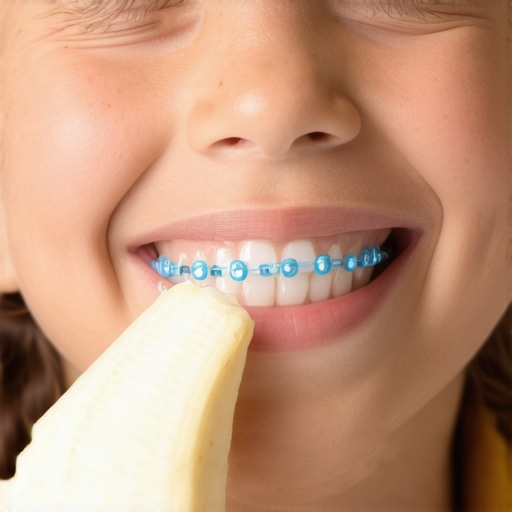
I’ll never forget the Tuesday my son, Leo, walked through the front door with a sheepish grin and a crumpled napkin in his hand. Inside that napkin sat a tiny, translucent blue ring—his dental spacer. He’d lost it during a particularly aggressive encounter with a slice of cafeteria pizza. My heart sank. We were only three days away from his expander fitting, and I knew that without that spacer, the gap we’d worked so hard to create would close faster than a laptop at 5:00 PM. It felt like a minor dental emergency that I was totally unprepared for. I initially tried to ‘fix’ it myself by nudging it back with a toothpick—a mistake that only led to irritated gums and a very unhappy child.
School Lunch is the Natural Enemy of Orthodontic Progress
For a kid, school is a gauntlet of sticky, crunchy, and chewy temptations. Whether it’s a ‘swap’ at the lunch table or a celebratory birthday cupcake in class, your child’s mouth is under constant siege. In my early days as an ortho-parent, I made the classic mistake of thinking a quick morning reminder would be enough. It wasn’t. Building a lifetime of healthy smiles requires more than just luck; it requires a tactical plan for when you aren’t there to supervise every bite. We are going to solve this today by looking at prep work, lunchbox substitutions, and the ’emergency kit’ every kid should have in their backpack. It is a bit like why a dental crown might feel loose when you eat something it wasn’t designed for—the hardware simply isn’t a match for taffy or hard crusts.
Are these tiny rubber bands really worth the constant stress?
You might be wondering if it’s even worth the hassle. Can’t the dentist just shove the hardware in there anyway? The truth is, spacers (or separators) perform a vital job. According to the American Association of Orthodontists, these small devices create the precise amount of space needed for metal bands to fit comfortably around the molars. If they fall out and stay out, the teeth drift back, and the next appointment becomes a painful exercise in frustration. Have you ever had to rush to the dentist because a spacer went missing during a school field trip? It is a special kind of stress. Often, the child’s gums are red or tender where the spacer was, making them more likely to fiddle with it with their tongue. We need to move beyond just hoping it stays in and start ensuring it stays in by addressing the habits that knock them loose.
Swap Out the Saboteurs in the Lunchbox
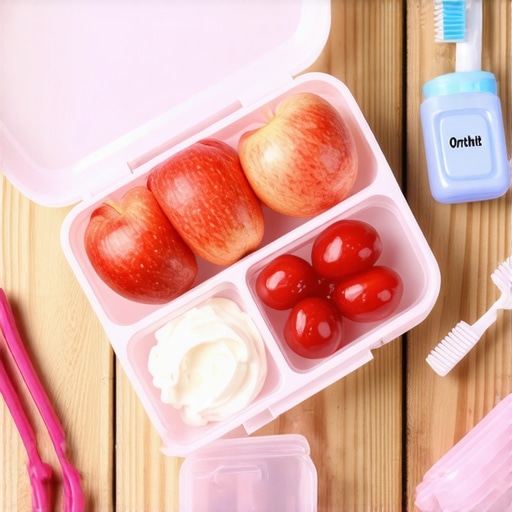
The first line of defense is the lunchbox. You have to be ruthless. Think of spacers as tiny, temporary doorstops that are only held in by friction and hope. Anything remotely sticky acts like a high-grade industrial adhesive that wants to pull them out. I learned this the hard way after Leo’s pizza incident. Now, we follow a strict ‘No-Pull’ policy. This means trading in the fruit leathers for sliced apples and swapping the chewy granola bars for yogurt or soft muffins. It is a vital part of family dentistry focus: building a lifetime of healthy smiles because it teaches your child that their diet directly impacts their dental progress. In fact, why fruit snacks are often worse for kids than chocolate bars is because that gummy residue lingers exactly where the spacers are trying to do their job, eventually prying them loose during a casual chew.
The Small Kit That Saves Big Appointments
I started sending Leo to school with what we call his ‘Ortho-Ammo’ kit. It’s a simple plastic container that lives in his backpack side pocket. Inside, we keep a small handheld mirror, some orthodontic wax, and a few interdental brushes. If a spacer feels like it’s slipping or if he gets food caught, he can actually see what’s going on rather than poking at it blindly with a finger. Knowing the safest way to remove food stuck between your teeth is a game-changer for a ten-year-old. When he feels that familiar ‘itch’ or pressure, he uses the mirror instead of his tongue. Tongue-thrusting is the number one reason spacers go missing; it’s like a subconscious wrecking ball hitting the hardware every few seconds. By giving him the tools to manage the discomfort, he stopped ‘fishing’ for the spacer during math class.
Master the Art of the Gentle Brush
When you have hardware in the mouth, your standard brushing technique needs an upgrade. You can’t just ‘scrub and go’ like you’re cleaning a floor. You have to think of it like detailing a classic car. We moved Leo toward using soft-bristled brushes to avoid aggravating the gums, which often get tender around the molars. I recommend parents look into teeth cleaning secrets and effective home practices for family dental health to ensure they aren’t accidentally brushing the spacers right out of the sockets. I remember one morning Leo was brushing so vigorously I could hear the bristles from the hallway—sure enough, he spit out a blue ring thirty seconds later. Now, he uses a circular motion and avoids flossing the specific contacts where the spacers are located, which is the only time ‘not flossing’ is actually the correct medical advice.
What to Do When the Hardware Actually Moves
Even with the best prep, things shift. If your child comes home and says something feels ‘pokey’ or loose, don’t panic. If it’s a wire, you can often use the back of a clean spoon or a pencil eraser to gently tuck it back. Learning how to fix a loose wire on your teenager’s braces is a skill you’ll use more than once. For spacers, if they fall out a day before the appointment, it’s usually fine because the space has already been created. However, if they fall out early, you need to call the office immediately. We keep a spare set of ‘home instructions’ on the fridge so Leo knows that if a spacer hits the floor, it goes in a Ziploc bag, not back in his mouth. This proactive approach turns a potential ‘dental emergency’ into a minor scheduling tweak.
It’s easy to assume that if the spacers are in and the wires aren’t poking, we’ve won the battle. But let’s dig deeper into the nuances that even seasoned ortho-parents miss. Most of us are taught that ‘more is better’—more pressure when brushing, more ‘natural’ ingredients, or more whitening. In reality, I’ve found that the most dedicated parents often accidentally sabotage their children’s progress through over-zealousness. For instance, the ‘Oops’ factor often comes from the trend of switching to fluoride-free alternatives. While well-intentioned, why natural toothpastes without fluoride might be a risk for your kids is a conversation every family should have before abandoning the gold standard of cavity prevention. According to a study published in the Journal of the American Dental Association (JADA), many ‘natural’ or charcoal-based pastes lack the remineralization properties necessary to protect enamel from the acid attacks of school-day snacks.
Stop scrubbing your enamel into oblivion
I’ve seen it time and again: a parent who is so worried about plaque that they encourage their child to scrub until their gums bleed. This is a massive mistake. Over-brushing leads to gingival recession and enamel abrasion, which is irreversible. You aren’t cleaning a driveway; you are maintaining a delicate biological system. I shifted Leo to a high-quality electric brush with a pressure sensor precisely to avoid this. If you aren’t careful, you’ll end up needing restorative work far sooner than you think. Understanding the impact of regular teeth cleaning on overall oral wellness means realizing that a gentle, consistent approach beats an aggressive, sporadic one every time.
Why do cavities still appear when your brushing seems perfect?
It is the million-dollar question for many frustrated parents. Sometimes, we focus so much on the surface that we miss the structural integrity and the environment of the mouth. In family dentistry focus: building a lifetime of healthy smiles, we have to look at the chemistry of the saliva. If your child’s saliva pH is constantly acidic due to juice or sports drinks, even the best brushing won’t stop the demineralization. This is remarkably similar to how adults view their own crowns. Many people believe a crown is a ‘forever fix,’ but the truth about how long a porcelain crown actually lasts before replacement is that it’s highly dependent on the health of the gum line surrounding it. I used to think a crown was like a suit of armor, but if the gums recede, that armor has a glaring gap where bacteria can invade the underlying tooth structure.
The truth about that dark line near your gums
Another hidden nuance is the ‘dark line’ phenomenon that often appears at the base of older dental work. You might see it on a friend or even notice it in your own mirror and worry it’s decay. Understanding why some crowns look like real teeth while others have a dark line often comes down to the material used—porcelain-fused-to-metal (PFM) versus all-ceramic options. If you aren’t getting expert advice on crowns and teeth cleaning for lasting results, you might miss the fact that your gum health is the primary factor in keeping that restoration looking natural and seated properly.  We also have to recognize that professional care removes the hardened tartar that no home routine can touch. Have you ever fallen into this trap of focusing on the ‘white’ instead of the ‘healthy’? Let me know in the comments.
Stop guessing where the plaque is hiding
I used to think my morning routine was a gold-standard performance until I bought my first water flosser. It was a humbling experience to see what my manual brush had been missing for years. For anyone with restorative work, traditional flossing is often the ‘weakest link.’ If you have a bridge or a crown, you know the struggle of trying to navigate a piece of string through a tiny gap. I personally switched to a high-pressure water flosser with a specific ‘Plaque Seeker’ tip, which is a life-saver for cleaning plaque from under a dental bridge without shredding your gums. It isn’t just about the gadget; it’s about the targeted pressure that reaches the sulcus—the space between the tooth and the gum—where bacteria love to throw a party.
The specific tools that saved my dental budget
Maintenance isn’t just a chore; it’s a financial strategy. When you invest in crowns, you are essentially buying a small piece of custom-engineered jewelry for your mouth. I treat mine as such. I’ve found that using a non-abrasive, high-fluoride gel once a week has made a massive difference in preventing that dreaded secondary decay at the margin. When I look at caring for crowns and essential tips for longevity, I focus on the junction where the crown meets the natural tooth. This is the ‘frontier’ where most restorations fail. To keep things looking pristine, I’m also careful about staining agents. I’ve learned how to keep your porcelain crown from staining over time by simply rinsing with water after my morning espresso—a small habit that saves me from expensive polishing appointments later.
How do I maintain my dental work over the long haul?
Consistency beats intensity every single time. I tell my friends that an oral health routine for strengthening your smile shouldn’t feel like a workout; it should feel like a ritual. According to the FDI World Dental Federation, the global shift from ‘treating disease’ to ‘proactive biological monitoring’ is the most significant advancement in modern dentistry. This means we are no longer just waiting for a hole to appear. We are watching the mineral density and the microbiome of the mouth. For my own family, this means quarterly ‘check-ins’ rather than just bi-annual cleanings. We’ve seen that the impact of regular teeth cleaning on overall oral wellness is profound, specifically in how it reduces systemic inflammation. If you aren’t using an interdental brush in addition to your electric toothbrush, you are essentially leaving the ‘sides’ of your teeth dirty.
Why smart tech is the future of your bathroom vanity
Looking ahead, the trend is moving toward real-time data. I predict that within five years, our toothbrushes won’t just tell us if we are brushing too hard; they will analyze our saliva pH and send a report to our dentists before we even feel a twinge of pain. We are moving away from the era where we only wonder how long a porcelain crown actually lasts before replacement and moving toward an era where we can extend that life indefinitely through bio-hacking our oral environment. I’ve already started using pH-balancing mouth melts after meals to neutralize acid instantly, and the difference in my sensitivity levels has been night and day. If you want to take your routine to the next level, I highly recommend picking up some GUM Soft-Picks—they are far more effective and less traumatic than wooden toothpicks for those midday food traps. **Your advanced tip for today:** Try the ‘red light’ test. Use a disclosing tablet tonight after you think you’ve finished brushing. It will show you exactly where your technique is failing, and I guarantee it will change how you brush tomorrow morning.
The Biggest Dental Lessons I Learned the Hard Way
Reflecting on our journey with Leo’s braces and my own restorative work, I’ve realized that the most expensive mistakes aren’t usually from accidents, but from small gaps in our daily knowledge. For example, I used to think that brushing harder meant cleaner teeth, but I quickly learned that gentleness is the key to longevity and protecting the impact of regular teeth cleaning on overall oral wellness. One of my biggest lightbulb moments was realizing that prevention is a financial strategy. By investing in a simple solution like how a simple night guard can save you thousands in future dental work, we avoided the costly cracking of molars that often comes with nighttime stress. I also learned that you can’t outsource your child’s dental success to the dentist alone; it happens in the kitchen and at the bathroom sink every single night.
My Personal Toolkit for a Stress-Free Family Smile
If you want to move beyond the ‘brush and pray’ method, I recommend building a dedicated station in your bathroom with these specific items. First, a high-quality electric brush with a pressure sensor is non-negotiable, especially when you are trying to figure out how to transition your child to an electric toothbrush without a fight. Second, I swear by disclosing tablets—they turn plaque into a colorful game that kids actually want to win. For those of us with existing dental work, a water flosser is a must-have for maintaining your dental crowns and following the essential dos and donts. Finally, keep a ‘dental emergency’ contact list on your fridge. Knowing exactly who to call when a wire snaps or a spacer vanishes reduces the panic and ensures you get expert advice on crowns and teeth cleaning before a minor issue spirals.
Taking the First Step Toward a Lifetime of Confidence
At the end of the day, all the gadgets and kits in the world matter less than the consistency of your care. We are all trying our best to balance busy schedules with health goals, and it’s okay if there are minor setbacks along the way. The goal of a family dentistry focus: building a lifetime of healthy smiles is to create habits that feel like second nature. By staying proactive and using an oral health routine for strengthening your smile every day, you ensure that your family’s teeth remain strong, functional, and beautiful for decades to come. Don’t wait for a toothache to act—the best time to start was yesterday, but the second best time is right now. #IMAGE_PLACEHOLDER_E# Have you ever had a dental spacer or a crown pop out at the most inconvenient time possible? Let me know your story in the comments below!