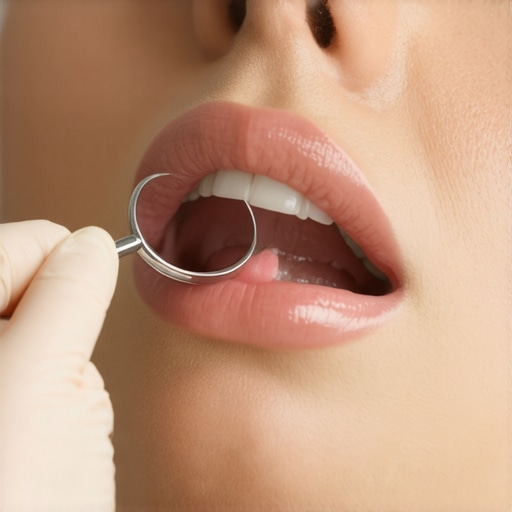
I was sitting in the dental chair, staring at a poster of a sunset, while my mind wandered through a million to-do lists. Then, it happened. My dentist reached in with a square of sterile gauze and gently but firmly pulled my tongue to the side. I’ll be honest: it felt invasive and, frankly, a bit ridiculous. I was there for a standard teeth cleaning, not a tongue gymnastics session. I remember thinking, “Is he looking for leftover spinach from lunch?” It turns out, that five-second maneuver was probably more vital than the actual cleaning itself.
That Weird Moment the Gauze Comes Out
Most of us think a trip to the dentist is strictly about cavities, crowns, or getting that professional shine. We focus on the teeth because that’s what we see in the mirror. But our mouths are an ecosystem, and your tongue is the ultimate whistleblower. When your dentist does that spot check, they aren’t just being nosy; they are performing a life-saving screening. I made a huge mistake early on by assuming that if nothing hurt, nothing was wrong. I had this tiny, painless white patch on the side of my tongue that I completely ignored for six months. I figured I’d just bitten it while sleeping. It wasn’t until a routine exam where my dentist actually looked that I realized how lucky I was it was just a benign irritation. If it had been something else, those six months of “waiting it out” could have been a disaster. Today, I’m going to walk you through exactly what we are hunting for during those awkward seconds and why you should never skip your family dentistry appointments.
Is This Just an Excuse for a Higher Bill?
You might be skeptical. You might think, “I brush every day, I have a solid oral health routine, surely I’d notice a massive lump?” The truth is, oral cancer often starts as tiny, painless discolorations that blend right into the background of your mouth. According to the Oral Cancer Foundation, early detection during a routine exam can increase the survival rate to 80-90%. That’s a massive jump compared to when things are caught late.
Your Tongue Is a Window Into Your Whole Body
It’s not just about cancer, though that’s the big one. Your tongue can show signs of vitamin deficiencies, dehydration, and even systemic issues like diabetes. We are looking for changes in texture, symmetry, and color every time we perform this check. Have you ever noticed a weird bump after a stressful week and wondered if you should call the office? Tell me in the comments—I’ve definitely been there, staring into a magnifying mirror at midnight. Beyond the tongue, this check extends to the floor of your mouth and your throat. It’s a core part of why we check your tongue and throat so diligently. We want to make sure the soft tissues are just as healthy as the hard enamel. If you’re currently dealing with a toothache, don’t wait for your next cleaning; you should learn how to stop a minor toothache from becoming a major emergency before it escalates.
Turn Your Bathroom Mirror Into a Life-Saving Tool
You do not have to wait six months for a professional to tell you something is wrong. Think of your mouth like the engine of a car; the teeth are the visible bodywork, but the soft tissues are the sensors that flash a check engine light. I remember a specific Tuesday when I found a tiny, angry red bump near my back molars. I had been working hard on my oral health routine, so I felt invincible. My first instinct was to ignore it, but I used the gauze trick I learned from my hygienist. I pulled my tongue to the side and saw that the bump was actually rubbing against the edge of one of my crowns that had developed a slight chip. It wasn’t a disease, but it was a mechanical failure that could have led to a massive infection if I had not looked.
Grab Some Gauze and Pull
To do this right, you need more than just a quick glance. Use a clean square of gauze—or even a paper towel—to get a firm grip on the tip of your tongue. Gently pull it forward and then to each side. You are looking for the lateral borders, which is where many oral issues hide. If you see a patch that looks like a bruise or a crusty white area that does not scrape off, take note. While we usually focus on teeth cleaning secrets for a whiter smile, this manual check is what keeps you healthy between professional visits.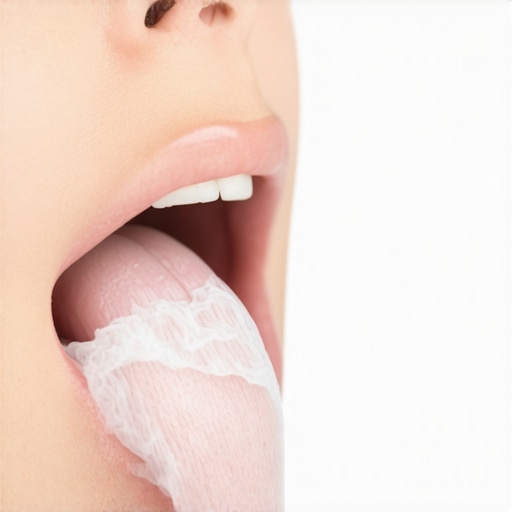
Look for the Red and White Warning Signs
A healthy tongue should be pink and covered in tiny bumps called papillae. If you see erythroplakia (bright red patches) or leukoplakia (white patches), do not panic, but do not wait. These are the two biggest red flags your dentist hunts for during family dentistry checkups. Sometimes these are just temporary irritations from spicy food or a canker sore, but if they persist for more than two weeks, you need a pro to look. These spots are often painless, which is why they are so easy to ignore until they become serious.
Feel the Jawline and Neck for Lumps
The check does not stop inside the mouth. Use your fingers to feel along your jawline and the side of your neck. You are feeling for lymph nodes that are hard, fixed, or painless. Think of it like checking your tire pressure—it is a quick preventative measure that saves you from a breakdown later. This is exactly why your dentist checks your tongue and neck so thoroughly. They are looking for anything that feels asymmetrical. If one side feels like it has a marble and the other does not, that is your cue to call the office. Even if you have recently had a teeth cleaning, things can change quickly, and early detection is your best defense. If you notice a flare-up of sensitivity during this check, you might need to learn how to fix a sensitive tooth flare-up before it becomes a distraction from your overall wellness.
Why Your Porcelain Crown Needs More Care Than a Natural Tooth
Many people treat a dental restoration like a ‘get out of jail free’ card. They assume that because porcelain cannot decay, the tooth is suddenly invincible. I used to think the same until I saw how many patients ignore the margin—the exact point where the crown meets the natural tooth. If you aren’t focused on caring for crowns with precision, that tiny seam becomes a highway for bacteria. It is a common ‘oops’ factor to believe a crown is a permanent shield; in reality, a study published in the Journal of Dentistry highlights that marginal microleakage remains a leading cause of secondary decay. This is precisely why we stress the impact of regular teeth cleaning; it is not just for the shine, but to clear the debris from those microscopic gaps.
How Can Bacteria Actually Bypass a Sealed Dental Margin?
Even the most expensive restoration has a lifespan. You should be asking about the truth about how long a porcelain crown actually lasts because the cement eventually degrades. Once that seal is compromised, you can’t see the decay in your bathroom mirror. It hides underneath the cap until the tooth becomes sensitive or the crown feels loose. If you have ever felt a weird ‘tug’ while flossing, you need to learn how to tell if your dental crown has a small leak.
Don’t Let Your Old Silver Fillings Become a Ticking Time Bomb
Another nuance many overlook is the structural integrity of old restorations. While expert advice on crowns and teeth cleaning usually focuses on aesthetics, the real danger is often mechanical. Silver amalgam fillings act like a wedge because they expand and contract at different rates than your tooth enamel. Over time, this creates internal pressure. I often show patients why your old silver fillings might be causing micro-cracks that lead to sudden, painful fractures. It is far better to replace a failing filling before it splits the tooth in half. Have you ever fallen into this trap of waiting for pain before seeking treatment? Let me know in the comments—I’ve seen how much trouble a little proactive care could have saved.The mechanical stress on your teeth isn’t just a byproduct of old fillings; it is often exacerbated by the very tools we use to clean them. If you are serious about keeping your restorations in top shape, you need to look beyond the basic manual brush. I personally made the switch to a high-end oscillating electric toothbrush after realizing that my hand speed could never match the 30,000-plus strokes per minute required to disrupt the biofilm effectively. While many debate the manual vs. electric choice, the data is clear for anyone with extensive dental work. Dr. Gordon Christensen, a world-renowned expert in restorative dentistry and founder of Clinical Research Associates, has frequently highlighted that electric brushes are superior for patients with crowns because they require less pressure to achieve a better result, reducing the risk of gum recession at the margin.
Stop Blasting Your Gums and Start Aiming for the Gaps
I see many people using water flossers on the highest setting, thinking they are power-washing their teeth. This is a mistake. You aren’t trying to strip paint; you are trying to flush out loose debris and bacteria. I recommend using a mid-range pressure setting and aiming the tip at a 90-degree angle to the tooth surface. This is particularly vital for maintaining your dental crowns where the seam meets the gumline. If you have a bridge or a retainer, you know the struggle of traditional flossing. Learning how to clean under a permanent retainer without the struggle often involves using these specialized water tools or a stiff-ended ‘super-floss’ to navigate the hardware.
How do I maintain my dental work over time?
The secret is a combination of home technology and professional intervention. I predict that within the next five years, we will see smart toothbrushes equipped with AI sensors that can detect the chemical composition of your saliva in real-time, alerting you to acidity spikes before they cause decay. Until then, you have to be the sensor. This is why I advocate for expert advice on crowns and teeth cleaning that goes beyond the standard ‘brush twice a day’ mantra. You should also be aware of oral health tips every family should follow in 2025, which increasingly focus on the microbiome and pH balance rather than just scrubbing.
Why 30,000 Vibrations Per Minute Might Be Your Best Investment
If you are still using a manual brush because you think it’s ‘good enough,’ you are likely missing the microscopic plaque buildup that leads to gum disease. When you sit in my chair and hear that high-pitched sound, it is because ultrasonic cleaning is faster and more comfortable than old-school hand scaling. You can bring a version of that efficiency home. I tell my patients that if they want to avoid a minor toothache from becoming a major emergency, they should invest in a brush with a pressure sensor. It’s the single most effective way to stop yourself from scrubbing away your enamel. My advanced tip for today: Once a week, brush with your non-dominant hand. It forces you to slow down, pay attention to every surface, and break the ‘autopilot’ habits that lead to missed spots. Try it tonight and see how much more you notice about the texture of your teeth.
The Hardest Lesson I Learned About Trusting My Gums
For years, I believed that if I wasn’t in pain, my mouth was perfectly healthy. It was a dangerous assumption that many of us make. One major lightbulb moment for me was discovering that gum disease and early oral cancer are often silent; by the time you feel something, you’re already in the ’emergency’ zone. I also learned the hard way that marginal integrity is everything when it comes to restorations. If you don’t know how to tell if your dental crown has a small leak, you might be harboring a cavity right under that expensive porcelain without even knowing it. This realization shifted my focus from just ‘having white teeth’ to understanding the impact of regular teeth cleaning on my entire body’s longevity. Now, I treat my routine checkups as a diagnostic scan rather than just a polishing session.
#IMAGE_PLACEHOLDER_E#
My Personal Toolkit for a Bulletproof Smile
I get asked all the time what I actually use in my own bathroom. I’m a firm believer in high-quality tools because they do the hard work for you, preventing manual errors. First, an oscillating electric toothbrush is non-negotiable; it’s the difference between a manual sweep and a professional-grade scrub that protects the enamel. Second, I always keep specialized ‘super-floss’ on hand, especially for those tricky areas under dental work. If you struggle with hardware, learning how to clean under a permanent retainer without the struggle will change your daily experience. I also recommend switching to an alcohol-free rinse to maintain a healthy microbiome. You can find more expert advice on crowns and teeth cleaning in my curated guides, but start with the basics: clean tools and a gentle touch.
Take Charge of Your Mouth Before It Takes Charge of You
Investing ten minutes a day into a rigorous oral health routine is the best insurance policy you can buy. Whether it’s doing your own gauze-check at the mirror once a week or staying on top of your family dentistry appointments, these small actions compound over time. Don’t be afraid of what you might find; be afraid of what you might miss by waiting. Your future self—and your wallet—will thank you for being the person who noticed the small red spot or the slightly loose crown before it became a crisis. Have you ever found a weird spot or a bump in your mouth that turned out to be a total mystery? Let me know in the comments below!