I vividly remember the moment I realized my ‘permanent’ dental fix wasn’t as invincible as I’d hoped. It happened on a quiet Sunday afternoon while I was mindlessly snacking on a piece of saltwater taffy. I felt a strange, sickeningly smooth sensation against my tongue, followed by a dull ‘clink’ against my bottom teeth. I’d just lost my first porcelain crown. I sat there in total shock, holding that little white cap in my hand and wondering where I’d gone wrong. I’d followed the rules—or so I thought—but that moment taught me that the lifespan of dental work is rarely a ‘set it and forget it’ situation.
Stop Treating Your Crown Like It Is Bulletproof
I used to think that because porcelain can’t get a cavity, I could slack off on my oral health routine. That was a massive mistake. Early in my journey, I neglected the margin where the porcelain meets the natural tooth, thinking the cement was a magic barrier. In reality, that tiny seam is the front line of a constant battle against bacteria. If you’ve ever wondered why your dental crown might feel loose when you eat sticky candy, it’s often because that bond has been compromised over years of subtle neglect. I’ve learned the hard way that maintaining your dental crowns requires even more precision than caring for natural enamel because the stakes are so much higher.
Is it really worth the money if it eventually fails?
It’s a fair question to be skeptical about. Why spend hundreds or thousands on something that isn’t a forever fix? Here is the reality: while research published in the International Journal of Prosthodontics indicates that many crowns can technically survive for over 20 years, the typical ‘clinical’ lifespan we see in the real world is often closer to 10 or 15. But here’s the kicker—without that crown, you’re often looking at losing the tooth entirely. When I finally got my replacement, I made sure to choose ceramic crowns for my front teeth because they look natural, but I also changed my entire mindset. I stopped seeing the porcelain as a shield and started seeing it as a partner that needed my help to stay in place. Have you ever felt that terrifying little wiggle in a crown you thought was solid as a rock? Let me tell you, that’s usually the first sign that your daily habits need a serious audit. We are going to look at exactly how to extend that 10-year average into a 20-year victory.To hit that 20-year mark, you have to change how you physically interact with your teeth. It starts with the way you clean that hidden junction where the porcelain meets your gum.
The Daily Maintenance Drill That Actually Works
Most people brush their teeth like they are scrubbing a kitchen floor—lots of horizontal pressure and not much focus. With a crown, you need to think more like a detail-oriented car restorer. You aren’t just cleaning a surface; you are protecting a seam. One of the best teeth cleaning secrets effective home practices for family dental health involves the 45-degree angle technique. You want those soft bristles to gently massage the space under the gum line where the crown sits. I used to be aggressive with my brushing until my hygienist pointed out that I was actually receding my gums, exposing the sensitive root below the crown. Now, I strictly use soft-bristled brushes to avoid permanent damage to the margin.
Pull the Floss Through Instead of Snapping Up
Here is a mistake I made for years: I would snap the floss up and out between my teeth. One Tuesday morning, I heard a ‘pop’ and realized I’d caught the edge of my crown and slightly loosened the cement bond. If you have a crown, never pull the floss back up through the contact point. Instead, release one end of the floss and pull it through the side. This simple change eliminates the upward leverage that can eventually unseat the restoration. It’s a core part of expert advice on crowns and teeth cleaning for lasting results. 
Identify Potential Failures Before They Get Expensive
You shouldn’t wait for your annual checkup to see if something is wrong. You need to be your own first responder.
Look Closely for the Telltale Gap
Think of your crown’s cement like the grout in your shower. If it cracks, moisture gets behind it and causes rot. I once noticed a tiny, dark shadow right at the gum line of my molar. I ignored it because it didn’t hurt. By the time I went in, bacteria had seeped underneath, and I had a cavity on a tooth that was already crowned. Knowing how to tell if your dental crown has a small leak—look for shadows, persistent bad tastes, or sensitivity to cold—can save you from a full replacement. This level of vigilance is essential when caring for crowns and preventing underlying decay.
Stop the Grind Before the Porcelain Shatters
Porcelain is incredibly strong under vertical pressure, but it is brittle when subjected to lateral shearing forces from grinding. I learned this when I woke up with a sore jaw and a tiny chip in my new ceramic work. There is a direct connection between your nightly snoring and your worn-down teeth. If you clench at night, you are effectively using a hammer on your investment. A custom night guard acts as a shock absorber for your dental work. Without it, even the most expensive zirconia crowns for back molars can eventually succumb to the sheer force of your jaw muscles over time.But even with a night guard and a soft brush, there is a nuance that most people—and even some general dentists—overlook. We are taught from childhood to brush immediately after eating to ‘get the sugar off.’ In my experience, this is the quickest way to ruin a high-end restoration. When you eat, especially something acidic, your enamel and the bond of your crown temporarily soften. Brushing right then is like sanding a wet piece of wood. It is far better to wait thirty minutes for your saliva to re-mineralize the area. This is why you should never brush your teeth immediately after eating citrus fruits or heavy meals. During that window, the acid environment in your mouth is at its peak; introducing an abrasive toothpaste immediately can accelerate the wear on the microscopic edge where your crown meets the tooth.
Why Your High-Tech Water Flosser Might Be Backfiring
Many of my readers swear by their water flossers, thinking they are the ultimate tool for family dentistry focus and hygiene. However, there is a dangerous trap here. If you aim the jet directly into the gum pocket at high pressure, you aren’t cleaning; you are ‘power-washing’ bacteria deeper into the periodontal space. This can lead to localized infections that threaten the root supporting your crown. Understanding the common mistake you are making with your water flosser is vital—always use a low setting and aim across the tooth, not down into the gum. A study published in the Journal of Periodontology suggests that while oral irrigators are effective, improper technique can actually increase the risk of bacteremia in patients with existing gum issues. 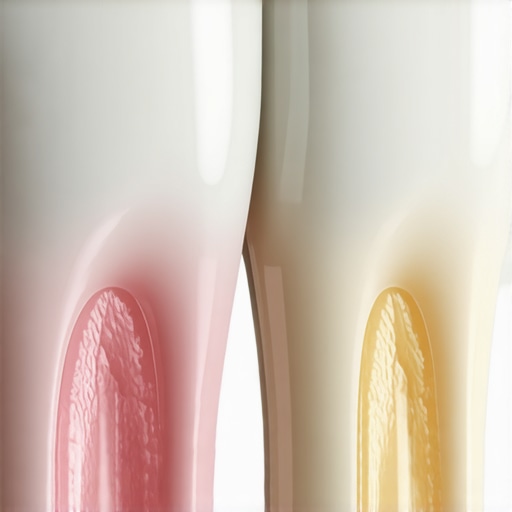
Why does my crown still feel sensitive after the ‘honeymoon’ phase?
If your crown has been in for months and suddenly starts reacting to temperature, it’s rarely the porcelain itself. Often, it’s ‘occlusal trauma’—essentially, your bite has shifted by a fraction of a millimeter, and that tooth is taking too much force. People often mistake this for a cavity, but it’s actually a mechanical issue. Learning how to manage sensitivity after getting a new dental crown involves recognizing that your mouth is a dynamic environment. A quick bite adjustment at the office—where a dentist buffs away a microscopic high spot—is often all it takes to stop the pain and save the ligament from permanent damage.
Don’t Fall for the Fluoride-Free Marketing Trap
In the world of ‘natural’ wellness, many are ditching fluoride. For someone with crowns, this is a massive gamble. The margin of your crown is the most vulnerable spot in your mouth. Without the fortifying effects of fluoride, that tiny seam is defenseless. I’ve seen parents try to go ‘all natural’ only to realize that natural toothpastes without fluoride might be a risk for your kids and their own expensive dental work. The impact of regular teeth cleaning on overall oral wellness cannot be overstated, but you need the right chemistry to keep the bacteria at bay. Have you ever fallen into this ‘all-natural’ trap or noticed sensitivity months after a procedure? Let me know in the comments.Moving beyond the basics of brushing, I had to realize that my bathroom counter needed a serious upgrade if I wanted my dental work to survive into my retirement. For years, I just used whatever was on sale at the grocery store. Now, I am religious about using a sonic toothbrush with a built-in pressure sensor. Why? Because the human hand is naturally too aggressive. If you see a red light flash on your brush, you are literally scrubbing away the lifespan of your restoration. This is a core part of an advanced oral health routine. I personally use the Philips Sonicare ProtectiveClean because it doesn’t just vibrate; it uses fluid dynamics to push water between the teeth, which is essential for flushing out the microscopic debris that hides under the crown margin.
Switch to Interdental Brushes Before Your Gaps Get Bigger
While I mentioned the floss-pull technique earlier, I have largely swapped my traditional string for interdental brushes like the TePe brand. These tiny, mascara-wand-looking tools are far more effective at cleaning the concave surfaces of the tooth roots that floss simply skips over. If you have ever struggled with the safest way to remove food stuck between your teeth, these are your best friend. They allow you to mechanicaly scrub the gum line of the crown without the ‘snapping’ risk that leads to the most common reason dental crowns fall out. 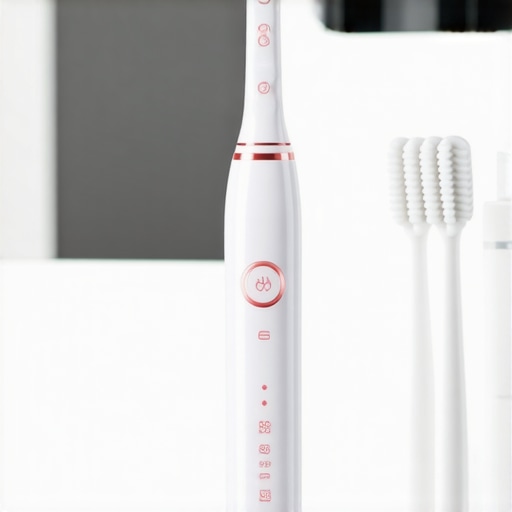
How do I maintain my dental crowns for thirty years instead of ten?
The secret lies in a concept called ‘bio-maintenance.’ You aren’t just cleaning a tooth; you are managing a biological ecosystem. Dr. Gordon Christensen, a world-renowned expert in restorative dentistry, has noted in his clinical research that patients who use high-concentration fluoride gels at night can double the life of their margins. I’ve started applying a tiny drop of 1.1% sodium fluoride to my interdental brush once a week before sliding it between my crowned teeth. This creates a chemical shield right at the ‘seam’ where failure usually starts. It is the ultimate level of expert advice on crowns and teeth cleaning for lasting results.
The Future of Smart Dental Care
Looking ahead, I suspect we are moving toward ‘smart crowns’ embedded with sensors that can detect pH changes or bacterial shifts before a cavity even forms. Until then, we are the sensors. You have to pay attention to why your mouth feels weirdly smooth after a professional scaling and try to replicate that feeling at home every single day. The trend in family dentistry focus is shifting from ‘drill and fill’ to ‘predict and prevent.’ My advice? Grab a pack of size-appropriate interdental brushes tonight and try the side-pull floss method just once—you will be shocked at what your standard toothbrush has been leaving behind.
The Hardest Truths I Learned About Living with Porcelain
When I first started this journey, I thought a crown was a final destination. I quickly learned that it’s actually a new beginning for your oral health. One major lightbulb moment for me was realizing that the crown is only as strong as the gum tissue surrounding it; if your gums aren’t healthy, the foundation is doomed. Another insight: expensive dental work isn’t an excuse to skip your family dentistry checkups—it’s the reason to go more often. Finally, I realized that my lifestyle—everything from my coffee habit to my stress-induced grinding—had a much bigger impact on my crowns than the material they were made of. Teeth cleaning isn’t just about the white surfaces; it’s about the invisible margins.
My Personal Essentials for a Flawless Restoration
To keep my smile intact, I rely on a few non-negotiable tools. First, a high-quality sonic toothbrush is mandatory to ensure teeth cleaning is effective but gentle. Second, I’ve found that understanding the role of crowns in modern smile makeovers helped me appreciate why I needed to invest in specific interdental brushes like TePe, which reach areas floss misses. I also keep oral health tips every family should follow in 2025 in mind by using a pH-balanced mouthwash to neutralize acidity. These aren’t just gadgets; they are the insurance policy for my smile.
Your Path to a Lifetime of Confident Smiles
Maintaining your dental work might feel like a chore at first, but once you see the results in the mirror, it becomes a source of pride. Seeing how crowns can transform your dental confidence firsthand made me realize that these restorations are worth every bit of extra care. Don’t wait for a “clink” in your mouth to start paying attention. By incorporating these habits today, you are choosing a future free of dental emergencies. If you ever find yourself in a pinch, knowing how to handle a loose dental crown before you can see the dentist can save you a lot of stress. Keep your oral health a priority, and your crowns will serve you well for decades. Have you ever struggled with a crown that felt slightly ‘off’ or loose while eating? Let me know your experience in the comments below!