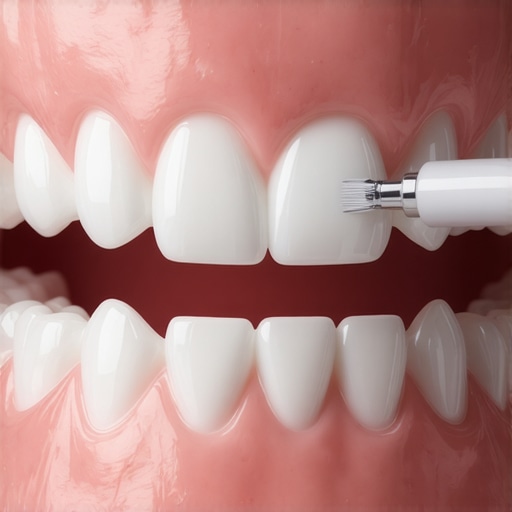
I’ll never forget the morning I leaned in to kiss my spouse and saw that slight, polite recoil. It wasn’t just my morning breath; I’d already brushed and used mouthwash. It was that localized, metallic funk coming straight from under my three-unit bridge. I had spent thousands of dollars on a beautiful smile, yet I was walking around with a microscopic compost pile stuck under my fake tooth. It was embarrassing. It was gross. And honestly? It was completely my fault. I thought that as long as the porcelain looked white, I was doing a great job. I was wrong. I was cleaning the surface, but I was ignoring the ‘tunnel’ underneath.
Stop Treating Your Bridge Like a Natural Tooth
The biggest hurdle I faced—and maybe you’re feeling this too—is that a dental bridge creates a unique architectural challenge in your mouth. Unlike natural teeth where you can just floss straight down, a bridge has a ‘pontic’ (the fake tooth) that is literally suspended over your gum line. That tiny gap? It’s a magnet for plaque. If you aren’t careful, you’ll start to notice that your teeth feel furry by noon, especially around the base of the metal or porcelain structure. When I first got mine, I just brushed the surface and called it a day, which is a common mistake many make with dental crowns and bridges. We need to get under the hood to ensure the longevity of the restoration. In this guide, I’m going to show you the exact routine I use to keep my gums healthy and my breath fresh, without spending twenty minutes in front of the mirror every night.
Does cleaning under there really have to be this hard?
I hear this all the time from neighbors and friends. They’re terrified of ‘tugging’ on the bridge and popping it loose. Here is a little secret: your bridge is tough, but your gums are sensitive. The fear shouldn’t be that you’ll break the bridge; it’s that the plaque building up underneath will lead to a minor gum infection that forces the whole thing to be removed. Have you ever felt that localized throb after eating something particularly fibrous or felt that weird taste near the bridge? That’s your body screaming for a deeper clean, not a sign that you should stop touching it.
The One Mistake I Made That Almost Cost Me the Bridge
Early on, I relied exclusively on a standard toothbrush. I figured if I scrubbed hard enough, the bristles would magically curve under the pontic. Spoiler alert: they don’t. This led to massive inflammation. According to researchers at the American Academy of Periodontology, plaque can begin to calcify into tartar in as little as 24 to 72 hours, making it nearly impossible to remove at home. If you miss that window under your bridge, you’re looking at a professional scaling session just to fix the damage. I had to learn the hard way that effective home practices for family dental health require more than just a manual brush; they require specialized ‘threading’ techniques. [IMAGE_PLACEHOLDER] When I finally sat down with my dentist for expert advice on crowns and cleaning, she pointed out that I was leaving behind nearly 40% of the plaque because I wasn’t accessing the gap. It was a lightbulb moment. Since then, I’ve refined a toolkit that makes the process effortless. Have you ever felt like you were just guessing if you got everything out from under your bridge? You aren’t alone, but it doesn’t have to be a guessing game anymore.
Grab These Three Tools Before You Start
To keep the ‘tunnel’ under your bridge clean, you need more than just hope. Think of your bridge like a coastal pier; while the top looks great, the real decay happens underneath the waterline where you can’t easily see. I learned very quickly that why soft-bristled brushes are the only ones that should touch your gums applies double here because the tissue under a bridge is often more sensitive than the rest of your mouth. My toolkit consists of three non-negotiables: a specialized threader floss, an interdental brush, and a water flosser. These tools allow you to access the hidden areas where a standard brush simply cannot reach. If you aren’t using these, you’re basically just washing the hood of a car while the engine is covered in mud.
The Art of Threading Without the Frustration
The biggest challenge is the ‘pontic’—the part of the bridge that replaces the missing tooth. Since it’s fused to the teeth on either side, you can’t floss ‘down’ into it. You have to go ‘through.’ I remember one morning before a big presentation when I tried to force regular, thick floss through that gap. It shredded, got caught on a tiny porcelain ridge, and I spent fifteen minutes with a pair of tweezers trying to get it out while my gums bled. It was a mess. Now, I always use a threader. You slide the stiff end of the floss through the gap at the gum line, pull it through until the fuzzy part is under the bridge, and gently ‘see-saw’ it back and forth. This movement lifts the biofilm that causes that metallic smell I mentioned earlier. 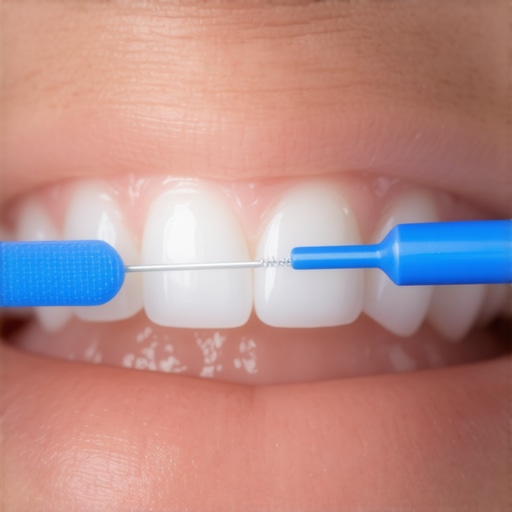
Why the Interdental Brush is Your Secret Weapon
For those who find threading too fiddly, the interdental brush is a lifesaver. These look like tiny pipe cleaners designed for your mouth. You don’t need to force them; you just need to find the right size that slides comfortably into the space. When you are caring for crowns or bridges, these little brushes do the heavy lifting by mechanically scrubbing the sides of the ‘anchor’ teeth. It’s the most safest way to remove food stuck between your teeth without risking the integrity of the dental cement. I usually dip mine in a bit of alcohol-free mouthwash for an extra hit of freshness before sliding it through.
Why Your Water Flosser Angle Is Failing You
If you own a water flosser, you’re halfway there, but most people use it like a garden hose rather than a precision tool. I used to blast my teeth at a 90-degree angle, which just resulted in a wet shirt and a dirty bridge. The secret is to tilt the tip so it aims slightly upward (for lower bridges) or downward (for upper ones), directly into the space between the gum and the bridge. This creates a vortex that flushes out debris. However, you must be careful about the setting. One of the common mistake you are making with your water flosser is using the ‘high’ setting on sensitive bridge work. High pressure can sometimes irritate the gum attachment at the anchor teeth. Start low and slow.
Establishing a Bulletproof Evening Habit
It sounds like a lot of work, but once you have the rhythm, this entire process takes ninety seconds. Your oral health routine shouldn’t feel like a chore; it should feel like protecting an investment. When I started being diligent about this, the ‘furry’ feeling disappeared, and my hygienist actually asked if I had started coming in for extra cleanings. Consistency is what prevents the need for expert advice on crowns and cleaning to turn into a consultation for a bridge replacement. Just focus on one thorough pass every night before bed to ensure no food sits there for eight hours while you sleep.
There is a pervasive myth in the world of family dentistry that the harder you scrub, the cleaner you get. In my early days with my bridge, I treated my gums like a dirty grout line in a kitchen. But here’s the contrarian truth: aggressive brushing is actually the enemy of a long-lasting restoration. When you over-scrub, you aren’t just ‘cleaning’; you’re potentially causing the gums to pull away from the anchor teeth. I’ve seen so many people ask why your gums might recede even if you never had a cavity, and often, the answer is ‘over-zealous hygiene.’ You want to disrupt the biofilm, not sand down your porcelain. Gentle, circular motions are far more effective at keeping the junction between your bridge and your gums healthy than sheer force.
The Sixty-Minute Rule You Are Probably Breaking
The ‘Oops’ factor often happens right after breakfast. Most of us are taught to brush immediately after we eat to remove food particles. However, if you’ve just had a glass of orange juice or a piece of fruit, your enamel is temporarily softened by the acid. Brushing immediately is like using sandpaper on wet wood. A study published in the Journal of Dentistry suggests that you should wait at least 30 to 60 minutes for your saliva to re-mineralize the area before picking up a toothbrush. This is especially critical for the margins of your bridge. If you ignore this, you’re essentially inviting enamel erosion right where your bridge meets your natural tooth, creating a gap that bacteria will exploit. Instead, rinse with plain water and wait for your mouth’s chemistry to stabilize.
How do I know if my bridge has a silent leak?
This is the question that keeps many patients up at night because you can’t always see decay under a crown or bridge until it’s too late. One subtle sign of trouble is a persistent, faint ‘sour’ taste or a slight sensitivity to cold that doesn’t go away. This often indicates micro-leakage, where the dental cement has started to wash out. If you suspect this, you need to know how to tell if your dental crown has a small leak before the underlying tooth is compromised. Falling into the trap of ‘if it doesn’t hurt, it’s fine’ is the quickest way to lose a bridge entirely. Experts at the Forsyth Institute have highlighted that the ‘crevicular fluid’ around dental restorations is chemically unique; it can trap inflammatory markers if the bridge isn’t cleaned with precision, leading to localized bone loss that won’t show up on a standard mirror check.
The real nuance of the impact of regular teeth cleaning on overall oral wellness isn’t just about the teeth; it’s about managing the bacterial reservoir in your mouth. 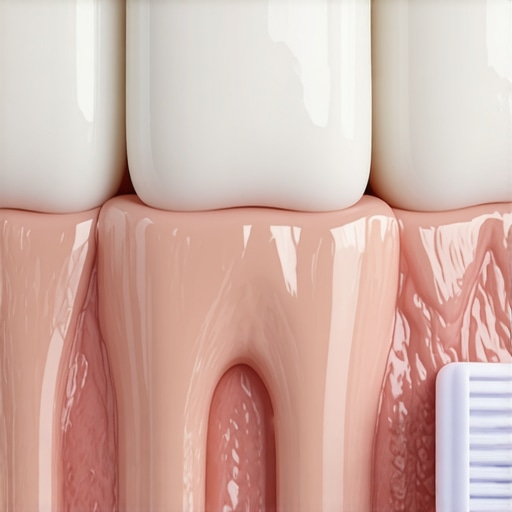 In the context of family dentistry focus: building a lifetime of healthy smiles, we often overlook the fact that our oral microbiome is shared. If you have active decay under a bridge, you are carrying bacteria that can affect the rest of your mouth and even your family members. This is why oral health tips every family should follow in 2025 will likely emphasize that your hygiene is a communal effort. When I shifted my focus from ‘scrubbing’ to ‘maintaining the seal’ through effective home practices, my oral health transformed. Have you ever fallen into the trap of thinking a crown means you can skip flossing that area? Let me know in the comments.
I used to be a manual toothbrush purist until I realized that my hand simply cannot vibrate 30,000 times per minute, nor can it replicate the precise pressure sensors of a high-end electric model. When you are maintaining your dental crowns and bridges, the tool you choose is the single most important factor in your daily success. I personally switched to an oscillating-rotating electric brush because the small, round head can pivot around the distal surface of my anchor teeth in a way that wider sonic brushes simply can’t. This mechanical advantage ensures that plaque doesn’t have a chance to calcify at the margins, which is where 90% of bridge failures begin. 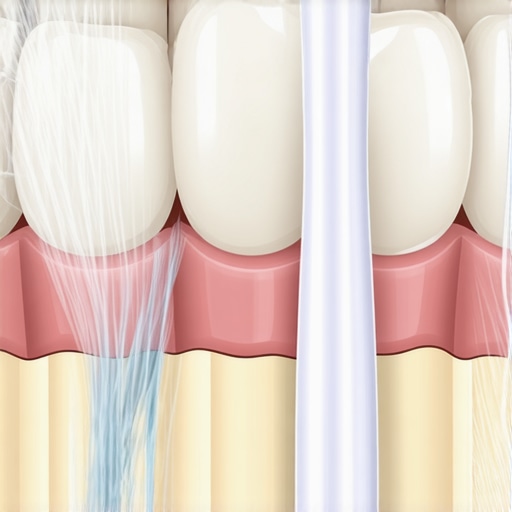 Following expert advice on crowns and teeth cleaning, I’ve found that these tools do the precision work for you, provided you let the bristles do the movement rather than scrubbing manually.
Why the High-Pitched Hum is Your Best Friend
Even with the best home routine, you will eventually need professional intervention. If you’ve ever wondered why your hygienist uses that high-pitched water tool on your gums, it’s because they are using an ultrasonic scaler to shatter the biofilm that your brush can’t reach. This process, known as scaling, is non-negotiable for anyone with a three-unit bridge. The tool uses high-frequency vibrations to flush out the tunnel under your pontic, ensuring that the ‘metallic funk’ never returns. In my experience, these sessions are the ultimate insurance policy for your investment. The impact of regular teeth cleaning on overall oral wellness cannot be overstated; it’s the difference between a bridge that lasts five years and one that lasts twenty.
How do I make this bridge work for the long haul?
Longevity is the result of a partnership between you and your dentist. In a landmark 2020 report from the Gordon J. Christensen Clinicians Report, an independent dental research organization, researchers noted that the longevity of fixed restorations is inextricably linked to the ‘biological width’ and the meticulous management of the gingival margin by the patient. This means you must be proactive. I make it a habit to use my interdental brushes first, before I even pick up my toothbrush. This ensures the gaps are clear so the fluoride in my toothpaste can actually reach the vulnerable anchor teeth. By prioritizing caring for crowns with this ‘gap-first’ mentality, you protect the seal of the dental cement. This is a cornerstone of family dentistry focus: building a lifetime of healthy smiles, where we treat restorations as living parts of our anatomy rather than set-it-and-forget-it hardware.
Predicting the Future of Smart Smile Care
As we look toward oral health tips every family should follow in 2025, I predict we will see AI-integrated cameras in our toothbrushes that specifically flag inflammation around dental work. We are already seeing ‘smart’ brushes that track coverage, but the next step is actual diagnostic imaging at home that can detect micro-leakage before it becomes a cavity. For now, we rely on teeth cleaning secrets and effective home practices to bridge the gap between technology and traditional care. I want you to try one specific thing tonight: switch your water flosser to its lowest setting and spend thirty extra seconds focusing solely on the junction where the bridge meets your gum. You’ll be surprised at what your standard brush was leaving behind.
Hard Truths I Learned the Hard Way About Bridge Hygiene
Looking back at my journey, there are a few ‘lightbulb moments’ that changed everything. First, I realized that a bridge is an investment in your confidence, but it requires a different kind of discipline than natural teeth. If I could go back, I’d tell myself that the ‘metallic smell’ is actually a late-stage warning, not a minor inconvenience. It’s the result of bacteria thriving in an oxygen-free environment under your pontic.
Second, I learned that consistency beats intensity every single time. You don’t need to scrub your gums raw; you just need to disrupt the biofilm once every 24 hours. When you focus on maintaining your dental crowns and bridges with a gentle touch, you prevent the recession that often leads to exposed margins and sensitivity.
Finally, I stopped fearing the dental office. Knowing what that high-pitched water tool is actually doing to your plaque changed my perspective from ‘dreading the drill’ to ’embracing the deep clean.’ Those professional sessions are the only way to reach the areas your home tools might miss. [IMAGE_PLACEHOLDER_FINAL]
My Non-Negotiable Toolkit for a Pristine Smile
If you want to keep your breath fresh and your gums pink, you need more than just a standard toothbrush. Here is the gear I rely on every single night to keep my restoration in top shape:
- Specialized Bridge Floss: I use a stiff-ended threader floss. It allows me to navigate the gap without the frustration of shredding traditional floss. It’s the backbone of a solid oral health routine.
- Electric Toothbrush with Pressure Sensors: This is a game-changer for protecting your gums. It ensures you’re cleaning the junction between your bridge and your natural teeth without causing the gums to pull away.
- Alcohol-Free Mouthwash: I use this to soothe my gums and keep the area hydrated. Avoiding alcohol prevents dry mouth, which can otherwise lead to an increase in plaque-producing bacteria.
- Water Flosser: Essential for flushing out debris after meals, provided you use the correct angle we discussed earlier.
Take Control of Your Dental Investment Today
Your bridge isn’t just a piece of porcelain; it’s a vital part of your smile and your overall health. By committing to these small, daily habits, you are ensuring that your investment lasts for decades rather than just a few years. It might feel a bit tedious at first, but once you experience the feeling of a truly clean mouth, you’ll never want to go back. If you ever feel like your restoration is shifting or something feels off, make sure you know how to handle a loose dental crown or bridge before it becomes an emergency. You have the tools and the knowledge now—all that’s left is to put them into practice tonight. Have you found a specific tool that makes cleaning under your bridge easier? Let me know in the comments below!