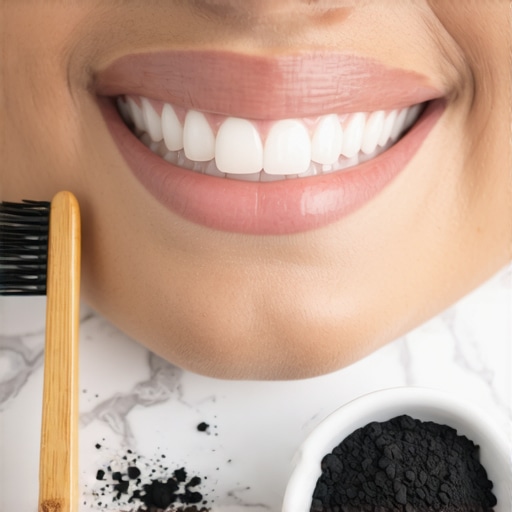
I remember the morning I stood over my sink, face smeared with what looked like war paint, spitting out a jet-black slurry into my porcelain basin. I had seen the viral videos—everyone looked so chic with their obsidian smiles, promising a Hollywood glow for just a few dollars. But as I wiped the black splatters off my mirror, a sharp ‘zing’ of sensitivity hit my front teeth. That was my first clue that something was wrong. I had fallen for the hype, and my teeth were paying the price. Today, I want to pull back the curtain on this trend and show you why that jar of black powder might be doing more harm than good for your oral health.
My Bathroom Looked Like a Coal Mine and My Teeth Still Weren’t White
The mistake I made was thinking that more grit meant more clean. I spent weeks scrubbing away, thinking I was polishing my way to perfection. In reality, I was basically using sandpaper on my most precious asset: my enamel. If you are looking for a way how to maintain a bright smile without using abrasive strips, you have to realize that charcoal is the ultimate abrasive. It does not actually bleach your teeth; it just scratches off surface stains along with the protective layer of your tooth. I learned the hard way that once that enamel is gone, it is gone for good. This lead to a frantic search for how to manage sudden tooth sensitivity to hot coffee or tea because my teeth had become porous and vulnerable.
Does This Black Paste Actually Live Up to the Hype?
You see it everywhere, but the science tells a different story. According to the Journal of the American Dental Association (JADA), there is currently insufficient clinical evidence to support the safety or efficacy of charcoal-based powders and pastes. In fact, many dentists are seeing a rise in patients with thinned enamel and exposed dentin because of these products. When you look at the truth about charcoal toothpaste and long-term enamel wear, it becomes clear that we are trading long-term health for a temporary, superficial fix. I am curious—have you ever tried one of these DIY whitening ‘hacks’ only to find your teeth felt more sensitive afterward? If so, you are definitely not alone. It is a common pitfall in our quest for a perfect smile, but there are much safer ways to achieve those results without risking your oral health routine. In the next section, I will break down exactly what happens to your teeth when you use these materials and what the safer alternatives are for your family.
Why Your Enamel Acts Like the Clear Coat on a Sports Car
Think of your tooth enamel as the clear coat on a high-end sports car. It is incredibly tough, but once you scratch it with something abrasive like charcoal or sand, the shine disappears and the underlayer is exposed. When I first realized I was scrubbing away my protection, I had to completely overhaul my teeth cleaning secrets effective home practices for family dental health. I stopped looking for the roughest materials and started looking for chemical helpers that lift stains rather than grinding them down. If you have already done some damage, you might find that why your teeth feel brittle and prone to chipping is directly related to that lost thickness.
Ditch the Hard Bristles and Embrace the Soft Sweep
The first concrete step I took was throwing away every ‘medium’ or ‘hard’ toothbrush in my house. I used to think a stiff brush meant a cleaner mouth, but I was actually speeding up my gum recession. I remember one specific Tuesday morning after my sensitivity flare-up; I switched to a micro-soft brush and focused on a circular motion rather than a saw-like scrub. Within two weeks, the ‘zing’ in my front teeth started to fade because I stopped aggravating the nerves. This is why why your dentist wants you to stop using hard bristles—it is about preservation, not just cleaning.
How a Professional Scale and Polish Beats Any Viral Hack
While charcoal only hits the surface, a professional cleaning reaches the places your brush simply cannot. I used to skip my six-month appointments, thinking my DIY whitening was enough. Then, my hygienist showed me the tartar buildup behind my lower teeth that no amount of black powder could touch. Investing in the impact of regular teeth cleaning on overall oral wellness is actually the cheapest way to whiten your teeth. It removes the dull, yellow calcification that makes your smile look aged, and it does so without thinning your enamel. If you are worried about the cost, consider how a simple night guard can save you thousands in future dental work by preventing the cracks that lead to expensive repairs.
Repairing the Damage with Modern Restorative Options
Sometimes, the damage from ‘natural’ whitening trends is too deep for just a change in toothpaste. If you have worn your teeth down to the dentin, they will naturally look more yellow because that inner layer is darker. This is where understanding the role of crowns in modern smile makeovers becomes vital. I have seen friends who used charcoal so aggressively they ended up needing porcelain covers to protect what was left of their teeth. These why ceramic crowns are the best choice for your front teeth because they mimic the light-reflecting properties of natural enamel without the sensitivity. If you are noticing your teeth look shorter or more translucent at the edges, it is time to stop the DIY hacks and look into family dentistry focus building a lifetime of healthy smiles to get a professional assessment of your enamel thickness.
Mastering the Art of the Non-Abrasive Routine
To keep your teeth white daily without the grit, focus on pH balance. After I drink my morning coffee, I no longer reach for the charcoal. Instead, I rinse with water to neutralize the acid. This simple habit prevents the stains from setting in the first place. You can also look into the safest way to use whitening strips without damaging your gums if you want a boost, as long as you avoid the generic, high-acid versions. Remember, a healthy oral health routine is about consistency and gentle care, not aggressive scrubbing. If you keep your enamel thick, your teeth will naturally stay brighter and less sensitive for decades to come. Check the truth about how often you should really replace your toothbrush to ensure you aren’t using frayed bristles that can harbor bacteria and irritate your gums further.Most people assume that if their teeth are white, they are automatically healthy, but this is one of the most dangerous misconceptions in modern dentistry. You can have a “Hollywood smile” that is structurally failing because the focus was placed entirely on bleaching rather than on the foundation of gum health. This is where expert advice on crowns and teeth cleaning for lasting results becomes essential. If you are only cleaning for aesthetics, you are likely missing the pathogenic biofilm that hides under the gumline. A study by the American Academy of Periodontology highlights that chronic inflammation from this hidden plaque can actually degrade the bone supporting your teeth, regardless of how bright the enamel looks. Have you ever fallen into this trap of prioritizing whiteness over health? Let me know in the comments.
Stop Ignoring the Silent Warning Signs of a Failing Crown
One of the biggest “oops” factors I see involves the way people treat their dental restorations. Many patients believe that once a crown is placed, that tooth is “shielded” forever. In reality, maintaining your dental crowns dos and donts for best results is a more nuanced task than caring for natural teeth. The crown itself won’t decay, but the margin where the porcelain meets your natural tooth is a magnet for bacteria. If you notice a strange taste or a slight “click” when you bite down, you should immediately investigate how to tell if your dental crown has a small leak. Ignoring these micro-movements can lead to internal decay that destroys the tooth under the crown without you ever feeling a bit of pain.
Why do some dental crowns look like real teeth while others have a dark line?
This is a question I get asked constantly by people who are unhappy with their older dental work. That tell-tale dark gray line at the gumline is usually a result of metal-based crowns or gum recession. In modern family dentistry focus building a lifetime of healthy smiles, we often move toward metal-free options. Understanding why some crowns look like real teeth while others have a dark line is the first step in choosing the right material for your smile makeover. High-translucency zirconia or lithium disilicate can mimic the way natural light passes through a tooth, ensuring your restoration remains invisible even when you laugh or speak in bright sunlight.
Identify a Failing Crown Before It Breaks Your Budget
Waiting for a crown to fall out while you are at dinner is the most expensive way to handle dental care. Usually, there are months of warning signs that the cement is degrading or the fit is changing. By focusing on the impact of regular teeth cleaning on overall oral wellness, your hygienist can catch these leaks using high-definition imaging before they become emergencies. This proactive approach is a cornerstone of oral health tips every family should follow in 2025. If you have been relying on viral hacks or “natural” remedies to fix pain, you are likely masking a problem that requires a professional hand. True dental confidence comes from knowing your restorations are sealed, your enamel is thick, and your routine is backed by science rather than social media trends.
I have realized that the real secret to a lasting smile isn’t a one-time procedure; it is the infrastructure you build at home. After my charcoal disaster, I had to get serious about the tools I was putting in my mouth every morning and night. I shifted from a ‘brush harder’ mentality to a ‘clean smarter’ strategy. If you want to avoid the common pitfalls of aging teeth, you need to look at oral health tips every family should follow in 2025 that prioritize preservation over abrasion. For me, the game-changer was moving to a sonic toothbrush with a built-in pressure sensor. This isn’t just about bells and whistles; it is about preventing the mechanical wear that leads to gum recession and exposed roots.
Why Your Dental Crown Needs More Than Just a Toothbrush
Once you have invested in restorative work, your maintenance routine has to level up. A standard brush often misses the microscopic gap where your crown meets your gumline. I personally swear by the Waterpik or any high-quality water flosser. Why? Because string floss can sometimes catch on the edge of a restoration, while pressurized water flushes out the bacteria without physical friction. This is a critical part of caring for crowns essential tips for longevity and shine. I have found that using a water flosser once a day has significantly reduced the ‘puffy’ feeling I used to get around my back molars.
How do I maintain my dental restorations over the long term?
The longevity of your crowns and fillings depends heavily on your diet and night-time habits. I learned that the reason your coffee habit is ruining your crowns sealant isn’t just about the staining; it is the acidity that slowly dissolves the bonding agent. If you can’t give up your latte, at least commit to a quick water rinse afterward. Furthermore, for those who grind their teeth, maintaining your dental crowns dos and donts for best results must include a custom-fitted night guard. A study published in Clinical Oral Investigations found that ceramic crowns are significantly more likely to fracture in patients with untreated bruxism compared to those who use protective splints. This small tool can be the difference between a crown lasting five years or twenty-five.
The Future of Enamel Health is Bio-Active
Looking ahead, I believe we are moving away from simple fluoride pastes toward bio-active glass and hydroxyapatite-based products. These materials actually work to remineralize the tiny pores in your teeth rather than just coating them. It is an exciting time for family dentistry focus building a lifetime of healthy smiles because we are finally getting the tools to ‘heal’ early-stage decay. While we wait for these to become the global standard, your best bet is to stay consistent with expert advice on crowns and teeth cleaning for lasting results. Don’t be afraid of the technology; why ultrasonic cleaning is faster and more comfortable than hand scaling is a perfect example of how modern tools make the dentist’s chair a much less scary place.
Make the Switch to High-Tech Cleaning Today
If you take one thing away from my journey, let it be this: stop treating your teeth like they are indestructible. Invest in a high-quality electric toothbrush with a pressure sensor this week. It is the single most effective way to ensure you aren’t accidentally scrubbing away your future. By combining these smart home tools with the impact of regular teeth cleaning on overall oral wellness, you can ensure that your natural teeth and your restorations stay functional and beautiful for a lifetime. If you are worried about your current setup, it is never too late to ask about understanding the role of crowns in modern smile makeovers to repair the damage and start fresh.
Hard Lessons from a Former Charcoal Addict
The most important realization I had was that transparency is not a sign of cleanliness. When my teeth started looking ‘clear’ at the edges, I thought they were getting whiter, but I was actually seeing through my thinning enamel. If you are struggling with the aesthetic, it helps to know the real reason some teeth are naturally yellower than others despite care—it is often about the internal structure, not just surface stains. Another lightbulb moment was realizing that gum health is the foundation for everything else; even the most expensive how crowns can transform your dental confidence won’t matter if your gums aren’t healthy enough to support them. Finally, I learned that ‘natural’ does not mean ‘safe.’ Arsenic is natural, and so is abrasive charcoal; science-backed minerals are always the better choice for your daily oral health routine.
My Non-Negotiable Kit for Dental Longevity
If you want to keep your smile intact for the next fifty years, I recommend focusing on tools that protect rather than destroy. First, ditch the wooden toothpicks for the safest way to remove food stuck between your teeth, which usually involves a soft interdental brush or a water flosser. Second, if you wake up with a sore jaw, look into how a simple night guard can save you thousands in future dental work by shielding your enamel from nighttime grinding. I also swear by a simple the salt water trick that calms gum inflammation in minutes whenever my mouth feels slightly irritated—it is cheap, effective, and completely non-abrasive. These simple shifts in your teeth cleaning secrets effective home practices for family dental health make a massive difference over time.
#IMAGE_PLACEHOLDER_E#
Your Journey to a Pain-Free Smile Starts Now
You don’t have to live with the ‘zing’ of sensitivity or the fear that a tooth might chip at any moment. By letting go of the viral hacks and embracing a routine built on preservation, you are giving your smile a second chance. Whether you need to repair past damage by understanding the role of crowns in modern smile makeovers or you are just starting to take your oral health tips every family should follow in 2025 seriously, every small step counts. Your teeth are meant to last a lifetime, and with the right care, they absolutely will. Have you ever tried a whitening hack that you later regretted, or do you have a favorite gentle tool that changed your routine? Let me know in the comments below!