I still remember the metallic taste and the sudden, panicked realization that my gums had turned a ghostly shade of white. It was 11 PM on a Tuesday, and I had just peeled off a set of generic ‘extra-strength’ whitening strips. I thought the stinging meant it was working. I was wrong. My gums weren’t just irritated; they were chemically burned. It took a week of rinsing with salt water and avoiding anything remotely spicy before I could smile without wincing. That was my wake-up call. I realized that a brighter smile shouldn’t come at the cost of the very tissues that support my teeth. Today, I’m going to share the exact method I’ve developed to get professional-level results at home—safely. We’re going to talk about how to [IMAGE_PLACEHOLDER] how to whiten teeth without that sharp stinging pain and the small tweaks that make a world of difference for your comfort. Have you ever experienced that weird, cold-sensitive ‘zing’ after whitening, or did your gums change color like mine did?
Stop Letting Whitening Strips Eat Away at Your Gums
When I first started experimenting with at-home kits, I made the classic mistake: I assumed the strips were one-size-fits-all. I’d just slap them on, press them into the cracks, and go about my business. But our mouths are as unique as our fingerprints. When a strip overlaps onto your gum tissue, the peroxide doesn’t know it’s supposed to be on your enamel—it just starts oxidizing whatever it touches. According to the American Dental Association (ADA), excessive exposure to high concentrations of peroxide can cause localized tissue sloughing, which is exactly as unpleasant as it sounds. This is why establishing a solid oral health routine is the foundation of any cosmetic work. If your gums are already inflamed from a lack of teeth cleaning secrets, adding whitening chemicals is like pouring gasoline on a fire. You need a healthy baseline before you even think about bleaching. If you’ve noticed why your gums turn white around a new dental crown or after a whitening session, your body is telling you to slow down.
Is that stinging sensation a sign it’s actually working?
There’s a common myth that if it doesn’t hurt, it isn’t ‘getting deep’ into the stains. Let’s clear that up right now: pain is a warning, not a metric of success. If you have thin enamel, you are even more susceptible to that deep, throbbing sensitivity that makes drinking iced coffee feel like an electric shock to the brain. My early mistake was ignoring that ‘zing’ and pushing through for the full 30 minutes. Don’t do that. We are going to prioritize the health of your smile over speed, ensuring you don’t end up needing a rescue mission for your mouth.
Tailor Your Tools to Fit Your Unique Smile
The biggest mistake people make with at-home whitening is treating the kit like a finished product. It’s actually a raw material. Think of it like buying a pair of pants that are three inches too long—you wouldn’t just trip over them; you’d hem them. I remember sitting at my kitchen table with a pair of tiny cuticle scissors, meticulously trimming the top millimeter off a whitening strip. It felt ridiculous at the time, but that was the first night I didn’t wake up with throbbing gums. By trimming the strip to match the ‘scalloped’ edge of your teeth, you ensure the peroxide stays on the enamel and away from the sensitive soft tissue.
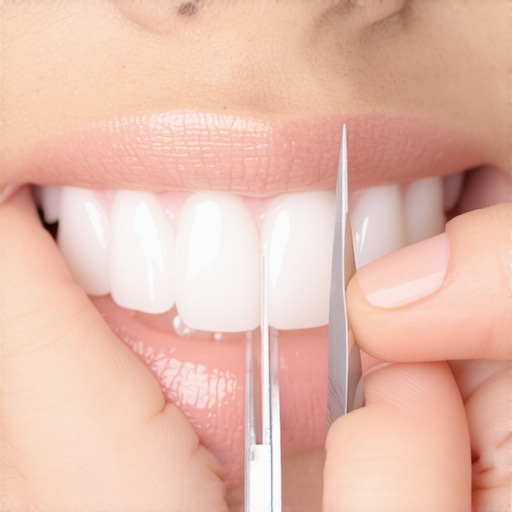
Trim Your Strips for Gum Protection
Before you even peel the backing, look at your gum line in a magnifying mirror. If you have thin enamel or receding gums, that area is highly porous and will absorb chemicals instantly. Cut the strips so they stop just short of the gum. It is better to have a tiny sliver of tooth near the gum that isn’t quite as white than to have a chemical burn that forces you to stop the treatment entirely. If you’re unsure if you can pull this off, you might want to look into how to choose between professional whitening and at-home custom trays, as custom-molded trays are built specifically to protect your tissue.
How Pre-Treatment Prep Saves Your Enamel
Never whiten right after a heavy meal or a session of aggressive brushing. You want your teeth to be clean, but not freshly abraded. If you’ve just used the teeth cleaning secrets of a pro, wait at least an hour for your saliva to naturally remineralize the surface. I also recommend applying a tiny bit of vitamin E oil or even a thin layer of petroleum jelly to your gums before the strip goes on. This acts as a raincoat, shielding the skin from any stray peroxide that leaks out.
Stop the Zingers Before They Start
If you start feeling that electric ‘zing,’ your teeth are telling you that the tubules in your dentin are exposed. This is common if you are managing sensitivity after getting a new dental crown or have existing work. To combat this, use a desensitizing toothpaste containing potassium nitrate for two weeks before you start whitening. It essentially ‘plugs’ the holes in your teeth so the whitening agent can’t reach the nerve. Don’t be fooled by marketing; the truth about whitening toothpastes is that most are too abrasive to use alongside strips. Stick to a gentle, sensitive formula during your whitening window.
Maintenance Without the Abrasive Damage
Once you reach your desired shade, the goal shifts to preservation. You don’t need to keep bleaching every week. In fact, learning how to maintain a bright smile without using abrasive strips is the key to long-term health. Avoid ‘staining’ culprits like turmeric or red wine for 48 hours after a session, as your teeth are essentially like sponges during this time. If you have older restorations, be aware that peroxide won’t change their color, which is one of the expert advice on crowns and teeth cleaning tips I give most often—your natural teeth will whiten, but your porcelain won’t, potentially creating a mismatch.
While whitening is a great entry point into cosmetic dentistry, true expertise lies in knowing that your smile is a living, breathing ecosystem. Most people view a routine checkup as a simple ‘buff and shine,’ but that’s a dangerous oversimplification. In reality, the most critical work happens where you can’t see it. Transitioning from a basic oral health routine to a proactive prevention strategy is what separates those who keep their natural teeth for eighty years from those who don’t.
The High-Pitched Secret to Saving Your Bone Density
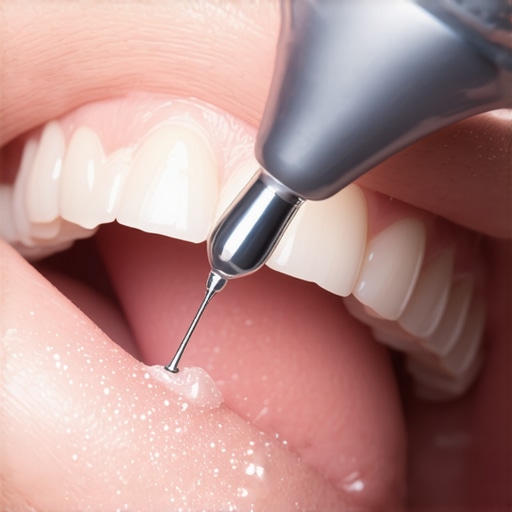
When you sit in that chair, you might wonder why your hygienist uses that high-pitched water tool on your gums instead of just the manual scrapers. This isn’t just about saving time. It’s about ultrasonic cavitation. These tools create microscopic bubbles that implode, shattering the cell walls of harmful bacteria deep in the periodontal pockets. A study published in the Journal of Clinical Periodontology highlights that ultrasonic scaling is significantly more effective at biofilm disruption than manual scaling alone. By embracing the impact of regular teeth cleaning on overall oral wellness, you aren’t just cleaning teeth; you are preventing the systemic inflammation that triggers bone loss. This is the cornerstone of family dentistry focus building a lifetime of healthy smiles.
The Dangerous Myth of the Permanent Restoration
Here is a contrarian view: Your dental crown is not a ‘set it and forget it’ solution. Many patients believe that because porcelain doesn’t decay, they can relax their hygiene around it. That is the ultimate trap. While the crown itself is inert, the margin where the porcelain meets your natural tooth is the most vulnerable square millimeter in your mouth. If you don’t know how to tell if your dental crown has a small leak, you could have a cavity forming underneath the most expensive ‘shield’ in your mouth. This is why expert advice on crowns and teeth cleaning for lasting results focuses so heavily on the health of the underlying structure. Even if how crowns can transform your dental confidence was your initial motivation, maintenance is what keeps that confidence alive.
How can you spot a failing crown before it becomes an emergency?
Advanced oral health means being attuned to the ‘silent’ signals of failure. Most people wait for pain, but by the time a crown hurts, the decay has often reached the nerve. You should be looking for a subtle ‘click’ when you bite or a persistent metallic taste—both can indicate that the cement is washing out. Understanding the truth about how long a porcelain crown actually lasts before replacement helps you plan for maintenance rather than reacting to a crisis. Don’t fall for the ‘oops’ factor of assuming durability equals invincibility. Your restorations require even more meticulous care than your natural teeth to prevent marginal failure. Have you ever fallen into the trap of thinking a crown was permanent only to have a surprise at your next checkup? Let me know in the comments.
I used to be a manual toothbrush purist. I loved the control and the tactile feedback. But the data doesn’t lie. When I finally switched to a pressure-sensing electric brush, my hygienist asked what I’d changed within three months. If you want to keep your mouth in peak condition, you need to think like a professional. Expert advice on crowns and teeth cleaning for lasting results always starts with removing the ‘human error’ from your daily routine. A manual brush is fine if you have the dexterity of a surgeon, but most of us don’t.
Stop Guessing and Start Investing in Better Tech
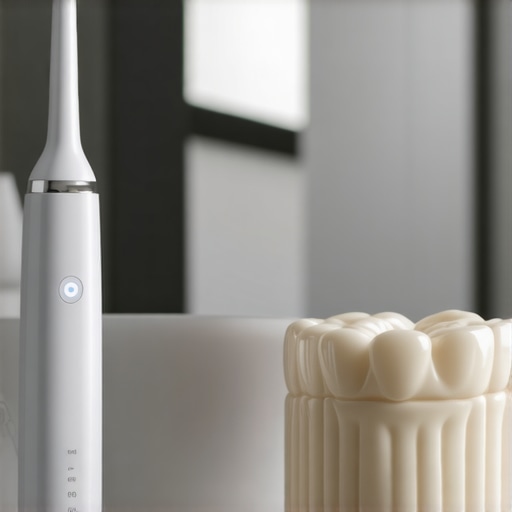
The most important tool in my bathroom isn’t the fanciest; it’s the one that prevents me from destroying my own enamel. I specifically use a brush with a visible pressure sensor because I have a tendency to scrub too hard when I’m stressed. This habit is exactly what leads to receding gums and the need for restorations. A 2024 meta-analysis from the Cochrane Library, the gold standard for evidence-based medicine, concluded that powered toothbrushes provide a 21% reduction in plaque after three months compared to manual brushing. By automating the motion, you ensure that every surface—especially the tricky margins where you are maintaining your dental crowns—gets the same level of attention.
Why My Electric Toothbrush is a Non-Negotiable Tool
It’s not just about the vibration; it’s about the timer and the specialized heads. I alternate between a soft-bristled head for daily use and a precision tip for getting around my permanent retainer. This level of detail is a core part of the oral health tips every family should follow in 2025. We are moving away from the ‘one brush for everyone’ mentality. If you have children, family dentistry focus building a lifetime of healthy smiles means teaching them that tools are personalized. For instance, if you grind your teeth, how a simple night guard can save you thousands in future dental work is a conversation you should have early, as it protects both natural teeth and expensive porcelain.
How do I maintain my dental investment for the long haul?
Maintenance is about consistency and the right chemicals. I have stopped using any mouthwash that contains alcohol because it dries out the soft tissue and can actually weaken the bonding agents used in some restorations. Instead, I look for pH-balanced rinses that promote a healthy microbiome. When caring for crowns properly, you want to avoid anything that could cause the gums to pull back, exposing the underlying tooth. The impact of regular teeth cleaning on overall oral wellness cannot be overstated; those professional appointments are when we use tools you simply can’t buy at the drug store to reset your oral health clock.
The Future of Your Bathroom Countertop
I predict that within the next decade, our ‘tools’ will become even more diagnostic. We are already seeing the rise of smart mirrors equipped with AI that can flag early-stage gingivitis or a small leak in a dental crown before you even feel a twinge. We are shifting from reactive repairs to proactive bio-monitoring. If you want to get ahead of the curve, my top recommendation is to start using a water flosser once a day. It reaches the sub-gingival areas that string floss often misses, providing a deep clean that mimics the results of a professional scaling. Try switching to an alcohol-free mouthwash tonight to protect your oral microbiome and see how much better your mouth feels in the morning.
The Brutal Truth About My DIY Dental Disasters
Reflecting on my 11 PM chemical burn panic, I realized that the most important part of any cosmetic routine is physiological safety. One major lightbulb moment for me was realizing that my gum health actually dictates how white my teeth look; inflamed red gums make even the brightest teeth look yellow by contrast. Another revelation was that teeth cleaning secrets aren’t about scrubbing harder, but about being more strategic with the angles of your brush to protect the enamel. I also learned that knowing how to tell if your dental crown has a small leak is a skill every patient should have, as catching a failure early saves thousands in retreatment costs. Finally, I stopped chasing ‘instant’ results and started focusing on the impact of regular teeth cleaning on overall oral wellness, which naturally made my whitening results last three times longer.
The Tools That Saved My Smile From Myself
If you are serious about your dental health, there are a few items I recommend without hesitation. First, a pressure-sensing electric toothbrush is non-negotiable; it prevents you from literally brushing your enamel away when you’re in a hurry. Second, high-quality water flossers are essential for caring for crowns properly, as they reach the margins string floss often misses. I also rely on pH-balanced rinses found in our guide on oral health tips every family should follow in 2025. These tools move the needle from ‘hopeful’ hygiene to ‘predictable’ health, and I trust them because they’ve personally saved me from returning to that state of painful sensitivity.
Why Your Future Self Will Thank You for Starting Today
It’s easy to get discouraged when you hit a snag like sensitivity or a loose restoration, but remember that your mouth is incredibly resilient when given the right environment. By shifting your focus toward a family dentistry focus building a lifetime of healthy smiles, you’re making an investment that pays dividends in confidence and comfort for decades. Don’t let a single ‘zing’ stop you—just adjust your technique, protect your tissue, and keep moving forward. You deserve a smile that feels as good as it looks. Have you ever had to change your dental routine because of sudden sensitivity? Let me know in the comments below!