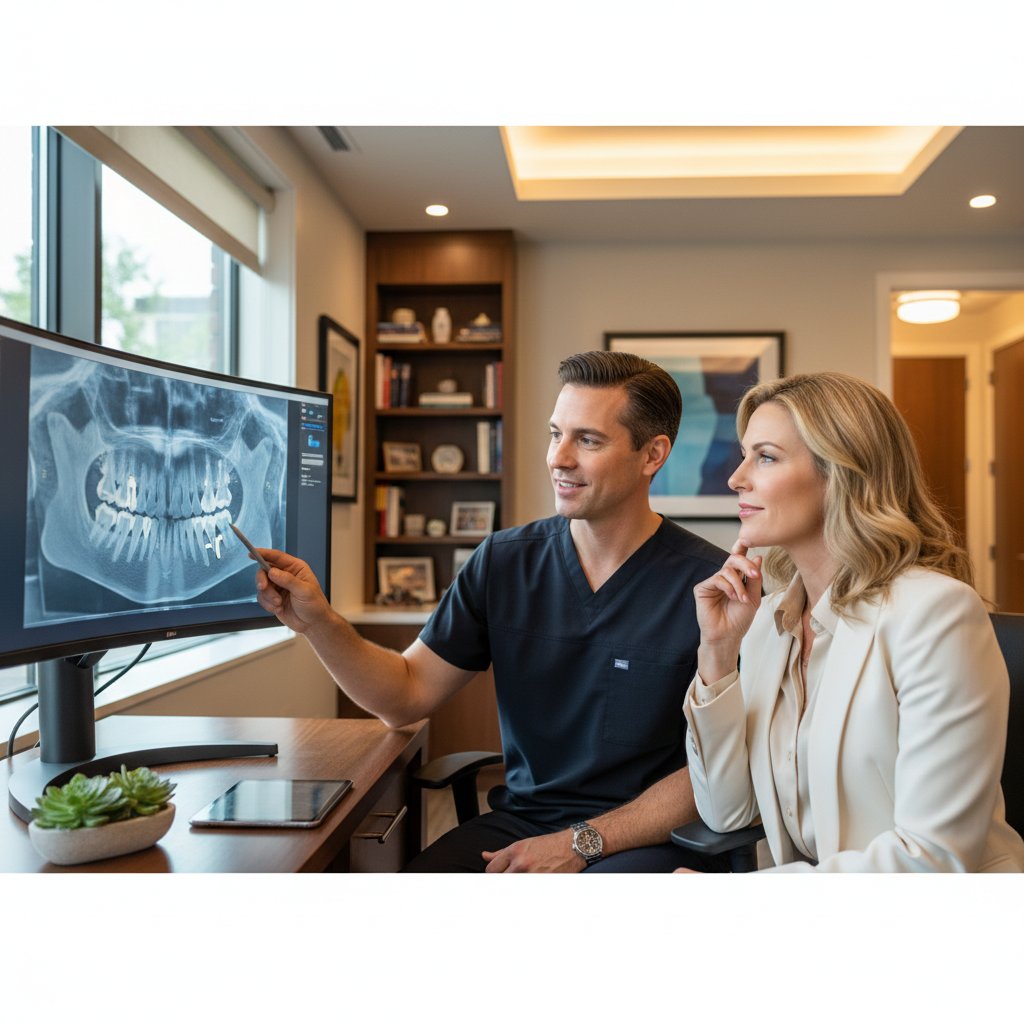
Advanced Interventions to Save Your At-Risk Teeth
Advanced Periodontics for Lasting Systemic Health.
General dentistry focuses on routine maintenance. When you face severe attachment loss, deep periodontal pockets, or failing implants, you require specialized intervention. We provide the definitive clinical protocols necessary to halt disease progression and restore your oral-systemic health.
The Clinical Expertise Behind Periodontist Care
I am Dr. Daniel Ziskind, a prosthodontist and master clinician in implant dentistry. I created this publication to bridge the gap between routine dental care and advanced periodontal reality. Patients frequently arrive at specialist offices with 7-millimeter periodontal pockets and severe bone loss, confused because they brush twice daily. The truth is that advanced periodontitis requires aggressive, targeted intervention, not just better flossing habits.
We focus on the undeniable physiological connection between your gingival health and your systemic wellness. Chronic periodontal inflammation directly impacts cardiovascular health, glycemic control in diabetics, and overall immune response. Treating the gums is treating the entire body.
Here, we detail the exact protocols used to arrest bone resorption, treat peri-implantitis, and execute guided tissue regeneration. You will find precise, clinical realities rather than vague promises of a whiter smile. We equip you with the knowledge to understand your diagnosis and have informed conversations with your treating specialists.
Our editorial standard demands rigorous adherence to peer-reviewed science. Whether you are facing a full-mouth rehabilitation or trying to save a single compromised molar, we provide the factual, unvarnished information you need to make critical decisions about your oral health.
Clinical Conditions and Periodontal Pathologies We Cover
Advanced Periodontitis
Detailed protocols for managing attachment loss and pocket depths exceeding 5 millimeters.
Peri-Implantitis
Evidence-based interventions to arrest bone loss around failing dental implants and restore tissue health.
Gingival Recession
Surgical and non-surgical approaches to treating exposed root surfaces and preventing further mucogingival defects.
Systemic Inflammation
Analysis of the biological pathways connecting chronic gum disease to cardiovascular events and poor glycemic control.
Refractory Periodontitis
Management strategies for patients who continue to experience active attachment loss despite standard scaling and root planing.
Alveolar Bone Loss
Techniques involving guided bone regeneration and grafting to rebuild the structural foundation of your jaw.
How to Navigate Our Clinical Resources
1
Identify Your Specific Pathology
Search our database using your exact clinical diagnosis, whether that is Stage III periodontitis or localized gingival recession.
2
Review the Treatment Protocols
Read detailed breakdowns of the surgical and non-surgical interventions your periodontist will perform.
3
Prepare for Your Specialist Visit
Download our 12-point consultation checklist to ensure you ask your treating clinician the right questions about your prognosis.
Documented Clinical Outcomes in Periodontal Therapy

54-year-old diabetic patient
Before: Presented with 8mm pockets and chronic bleeding on probing across all four quadrants.
After: Achieved pocket depth reduction to 3mm and stable clinical attachment levels.
⏱ 120 days post-osseous surgery
62-year-old with failing implants
Before: Severe peri-implant mucositis and 4mm of crestal bone loss around two mandibular implants.
After: Arrested active bone resorption and completely resolved tissue suppuration.
⏱ 6 weeks post-debridement
41-year-old with severe recession
Before: Class II Miller recession defects on maxillary canines causing acute thermal sensitivity.
After: Achieved 100 percent root coverage and eliminated all dentin hypersensitivity.
⏱ 8 weeks post-connective tissue graft
Frequently Asked Questions
What is the difference between a routine cleaning and periodontal maintenance?
A routine prophylaxis removes plaque above the gumline for healthy patients. Periodontal maintenance is a targeted medical procedure performed every 90 days to disrupt bacterial colonies in deep pockets and prevent further alveolar bone loss.
Can lost alveolar bone be regenerated?
Yes. Through guided tissue regeneration and bone grafting procedures, a specialist places biocompatible materials into the defect. This process predictably stimulates your body to grow new bone and periodontal ligament over a 6-month healing period.
Why does my general dentist want to refer me to a periodontist?
General dentists refer patients when pocket depths reach 5 millimeters or greater, indicating active bone destruction. Specialists possess the surgical training and specific instruments required to access and debride these deep root surfaces effectively.
How does gum disease affect my heart health?
Periodontal pathogens enter the bloodstream through ulcerated gum tissue, triggering a systemic inflammatory response. This inflammation increases C-reactive protein levels and accelerates arterial plaque buildup, directly elevating your risk for myocardial infarction.
Arm Yourself with Specialist Knowledge
Do not wait until tooth extraction is your only remaining option. Access our complete library of clinical guides to understand your treatment alternatives today.
Written & Reviewed By
Dr. Daniel Ziskind
Prosthodontist, Master clinician implant …
Dr. Daniel Ziskind is a highly accomplished Prosthodontist and a recognized Master Clinician in Dental Implantology. With a rigorous academic background from the Hebrew University and Hadassah in Jerusalem, Dr. Ziskind has further honed his specialized skills through prestigious international programs. He completed the Master Clinician program in Dental Implantology at the gIDE Institute and the UCLA School of Dentistry in the United States, positioning him at the forefront of restorative and surgical dental care. His expertise spans the complex intersection of prosthodontics and periodontics, focusing on the long-term health and aesthetic restoration of the gums and supporting structures. On periodontistcare.com, Dr. Ziskind leverages his extensive clinical experience to provide authoritative insights into advanced implant procedures and periodontal maintenance. With over a decade of specialized practice since his advanced training in 2010, he is dedicated to clinical excellence and evidence-based treatment planning. His dual perspective as a prosthodontist and implant specialist ensures that readers receive comprehensive advice on
Latest from Our Blog
Why Your Gums Bleed Even When You Use the Softest Toothbrush
I used to think I was doing everything right. Every night, I stood in front of the bathroom mirror, carefully…
Why Your Gums Bleed Even When You Use the Softest Toothbrush
I stood over my bathroom sink last Tuesday, staring at a small pink spit of toothpaste in utter defeat. I…
Why your teeth hurt when you go outside in the winter
It was a crisp, clear January morning when I stepped onto my porch, took a deep, refreshing breath of winter…